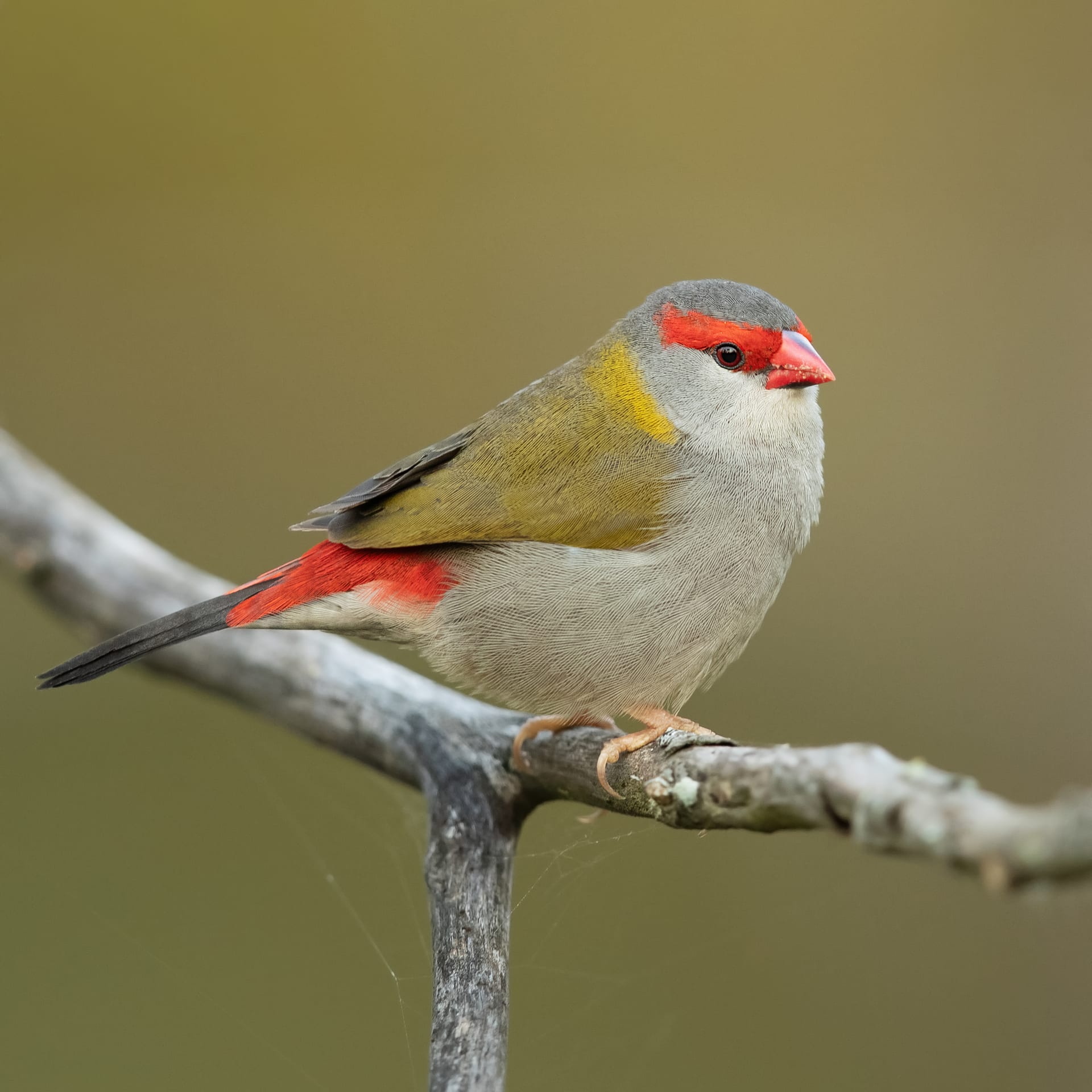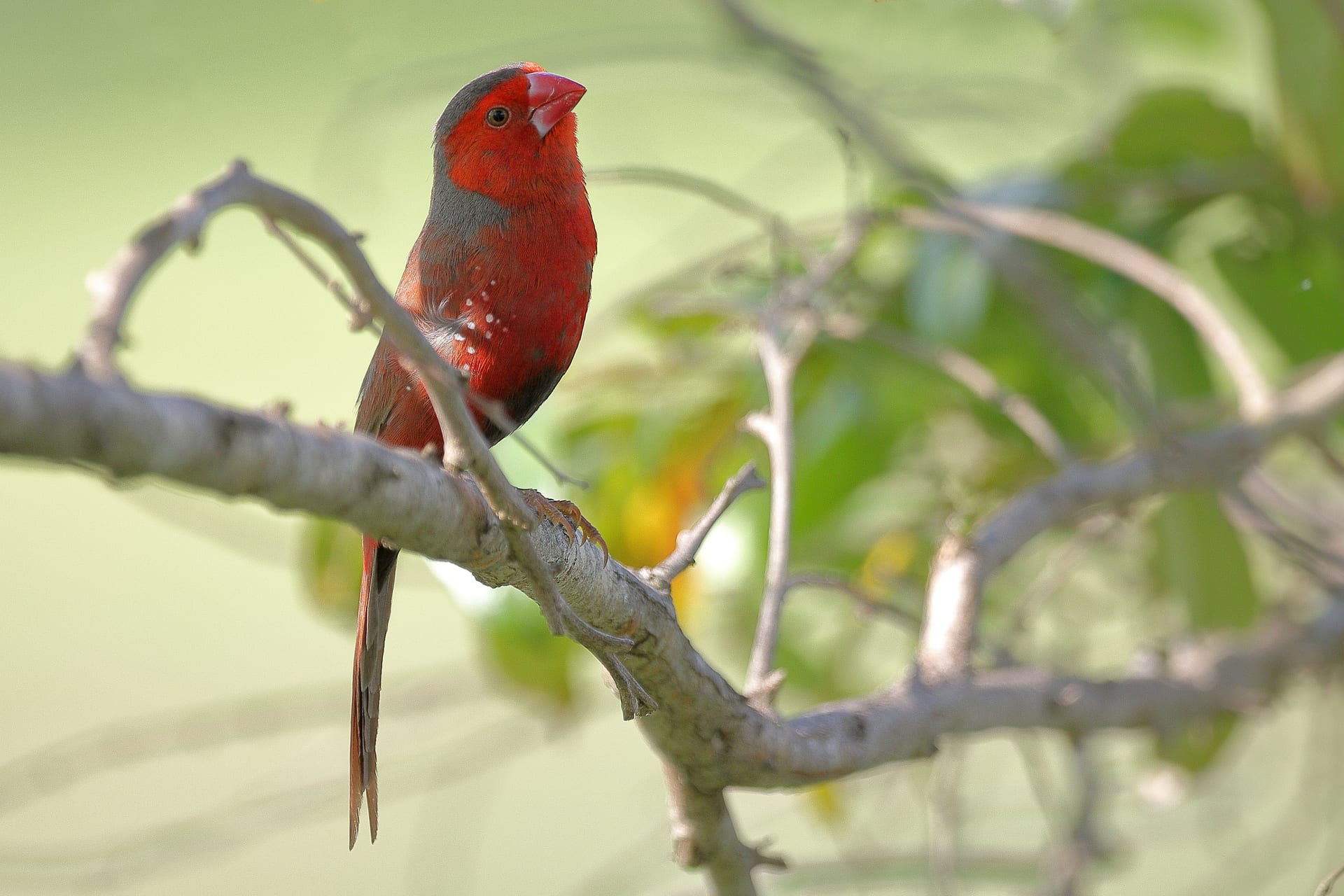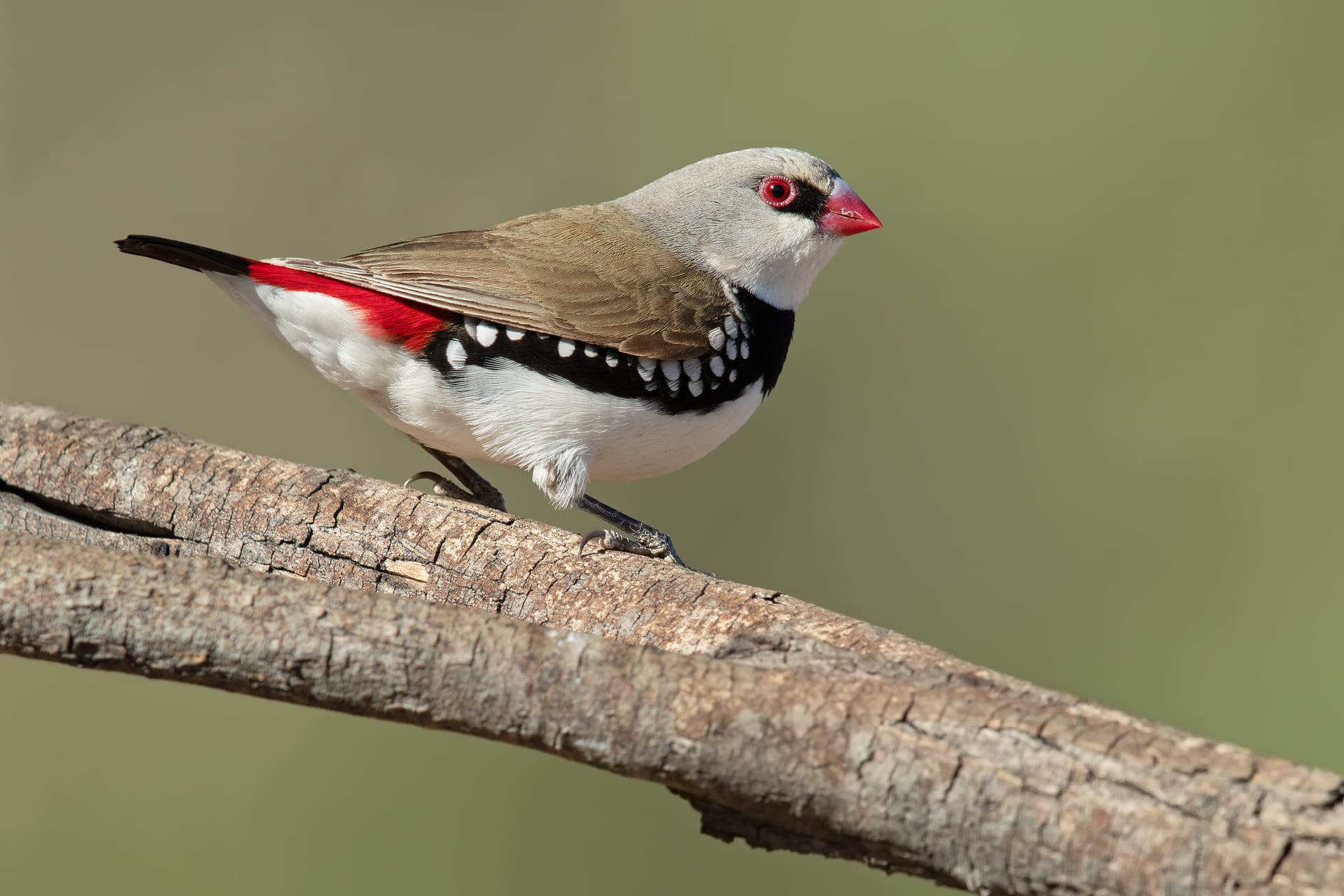
Source: Wikimedia Commons
Masked Finch
BeginnerPoephila personata
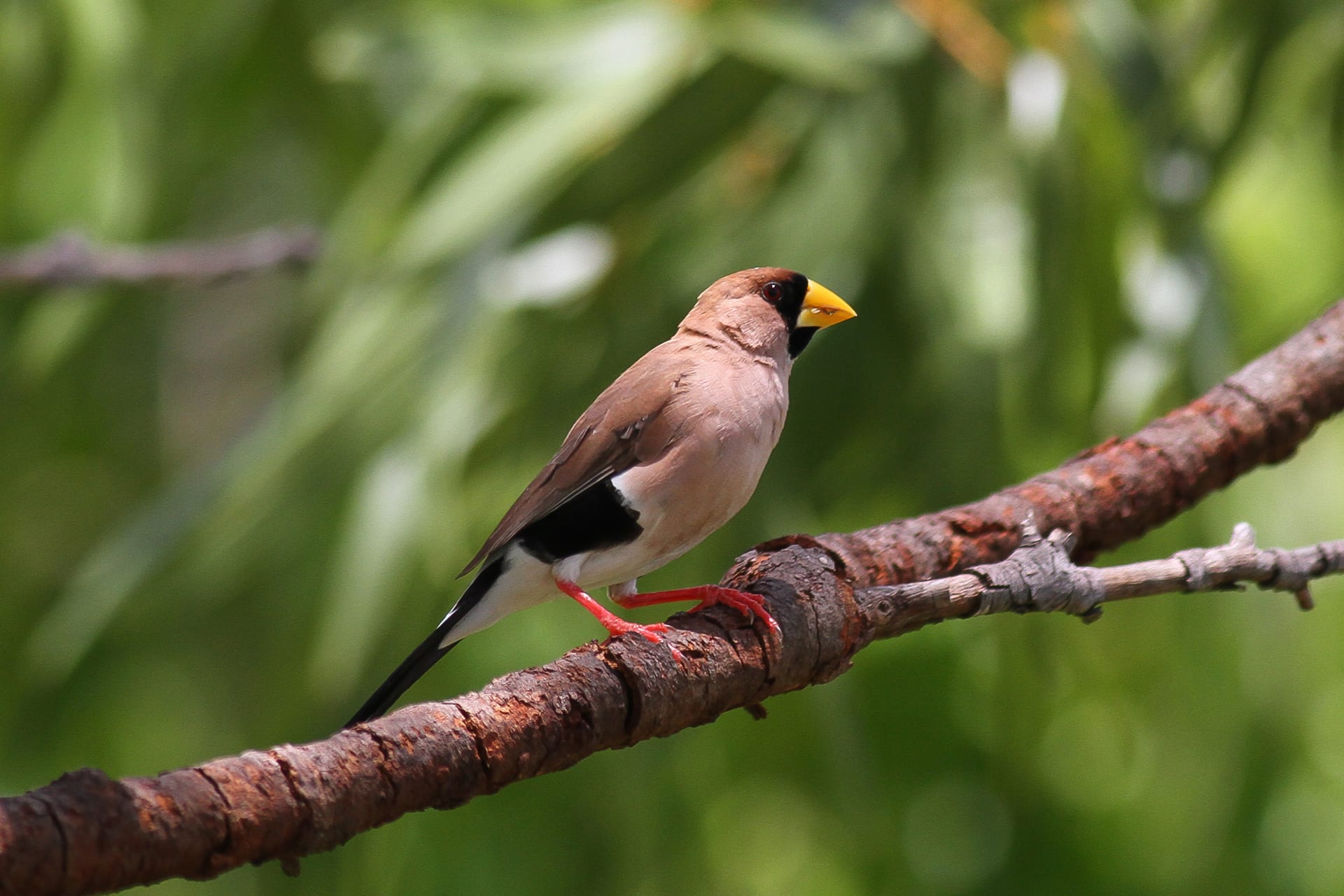
A northern Australian estrildid identified by its heavy yellow bill and black face mask. Cinnamon-brown with a white rump and a pointed black tail, it always lives near water.
Difficulty
Beginner
Temperature
15〜30℃
Lifespan
5-8 years
Size
12.5-13.5cm
Humidity
40〜60%
Diet
Mixed seed, spray millet, greens, small livefood when breeding
About
The masked finch (Poephila personata) is an estrildid finch of dry savanna across northern Australia. It is 12.5-13.5 cm long; the male is larger but the sexes are otherwise similar. It is cinnamon-brown above and paler below with a white rump, a black mark on the flanks, a black face mask, a heavy yellow bill and a pointed black tail. The eastern subspecies leucotis has whitish cheeks. Its range runs from the Kimberley across the Top End and Gulf country to Chillagoe in the southern Cape York Peninsula, but always near water. Pairs or small flocks forage through the day, mostly on the ground for grass seeds, and in the evening and early morning large numbers, sometimes thousands, gather at waterholes to drink, bathe and preen, flicking their tails sideways and chattering incessantly. In the late wet or early dry season pairs build a domed grass nest lined with fine grass, feathers and charcoal, sited anywhere from twenty metres up to deep in long grass, and lay five to six white eggs.
Source: Wikipedia (CC BY-SA 4.0)
Lifespan of the Masked Finch
The Masked Finch lives 5-8 years.
Size of the Masked Finch
The Masked Finch grows to 12.5-13.5cm.
Basic Info
Origin
Dry savanna of northern Australia from the Kimberley across the Top End and Gulf country to the southern Cape York Peninsula, always near water
Lifespan
5-8 years
Size
12.5-13.5cm
Care Specifications
References & Sources
Edited & verified by: BreederDirect editorial team
The taxonomic, regulatory, and husbandry data on this page are compiled and verified against the authoritative primary sources below.
Taxonomy & Authority
Accepted name: Poephila personata Gould, 1842
Authority databases: GBIF
Nomenclature follows global taxonomic authority databases.
Regulations & Conservation Status
Not CITES-listedIUCN LC · Least Concern
Poephila personata. The family Estrildidae is not listed in the CITES Appendices, so this species is not covered. The IUCN assesses it as Least Concern. Australia bans the export of wild birds, so traded birds are captive bred.
Sources: CITES Appendices (Estrildidae not listed) / IUCN Red List
Regulations may change. Always verify the latest information with the relevant authorities.
Masked Finch Listings
Loading latest listingsFind listings for this species