Source: Wikimedia Commons
Long-tailed Finch
BeginnerPoephila acuticauda
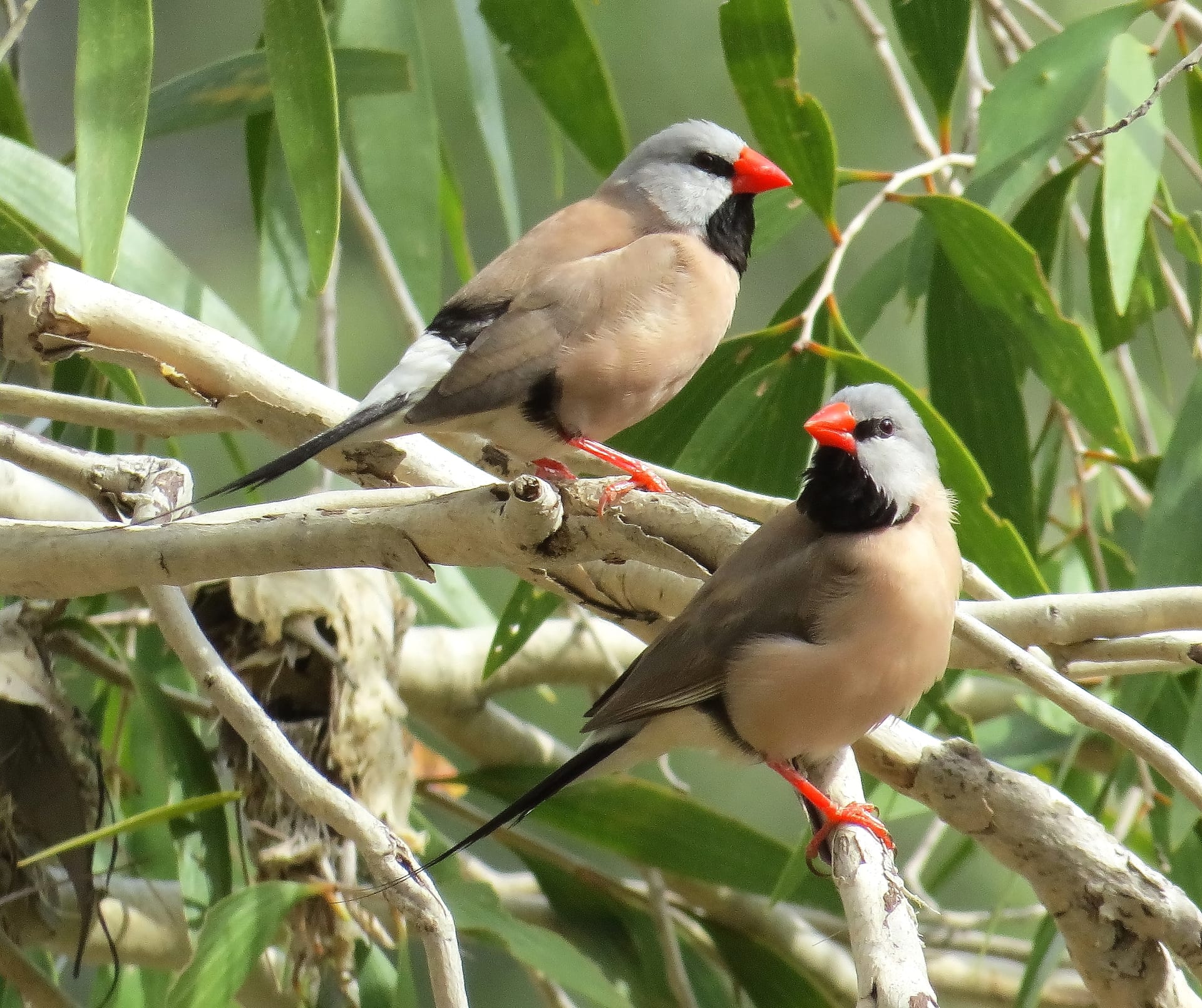
A northern Australian estrildid with a grey head, a black throat bib and a long pointed black tail. Bill colour varies from red through orange to yellow, and it is a hardy, free-breeding aviary standard.
Difficulty
Beginner
Temperature
15〜30℃
Lifespan
Around 5-8 years
Size
About 16cm including the tail
Humidity
40〜60%
Diet
Mixed seed, spray millet, greens, small livefood when breeding
About
The long-tailed finch (Poephila acuticauda) is an estrildid finch of northern Australia. A prominent roundish black bib covers the throat and upper chest and the long pointed tail is black. The upperparts are pinkish brown with paler plumage below the bib, the head is grey with a white ear patch and black lores, black patches mark the upper flanks, and the rump and undertail coverts are white. Bill colour varies from red through orange to yellow. The sexes are similar, females being slightly duller with a marginally smaller bib, though measurements overlap. Gould described it in 1840 as Amadina acuticauda from a specimen collected by Benjamin Bynoe, surgeon on HMS Beagle, at Derby on the north-west coast. It adapts readily to captivity, needs an aviary rather than a cage and must be kept out of damp. It breeds readily, sometimes raising two broods a year, but a breeding pair turns aggressive towards other small finches.
Source: Wikipedia (CC BY-SA 4.0)
Lifespan of the Long-tailed Finch
The Long-tailed Finch lives Around 5-8 years.
Size of the Long-tailed Finch
The Long-tailed Finch grows to About 16cm including the tail.
It is around 160 mm long including the tail, males weighing 13.5-16.2 g and females 11.4-17.6 g.
Basic Info
Origin
Dry savanna of northern Australia
Lifespan
Around 5-8 years
Size
About 16cm including the tail
Care Specifications
References & Sources
Edited & verified by: BreederDirect editorial team
The taxonomic, regulatory, and husbandry data on this page are compiled and verified against the authoritative primary sources below.
Taxonomy & Authority
Accepted name: Poephila acuticauda (Gould, 1840)
Synonyms: Amadina acuticauda
Authority databases: GBIF
Nomenclature follows global taxonomic authority databases.
Regulations & Conservation Status
Not CITES-listedIUCN LC · Least Concern
Poephila acuticauda. The family Estrildidae is not listed in the CITES Appendices, so this species is not covered. The IUCN assesses it as Least Concern. Australia bans the export of wild birds, so traded birds are captive bred and colour mutations have been established.
Sources: CITES Appendices (Estrildidae not listed) / IUCN Red List
Regulations may change. Always verify the latest information with the relevant authorities.
Long-tailed Finch Listings
Loading latest listingsFind listings for this species