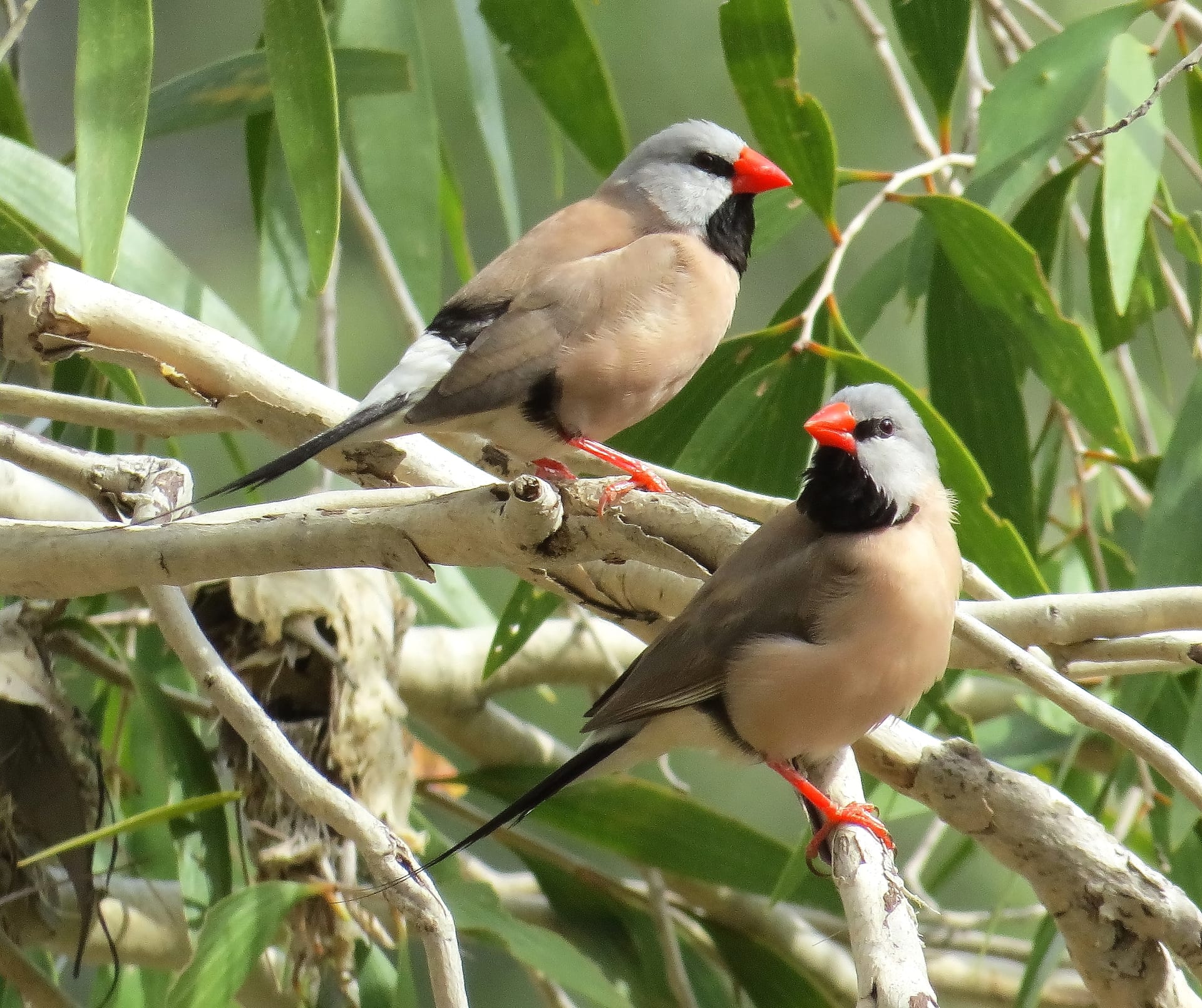
 © Graham Winterflood / CC BY-SA 4.0
Long-tailed Finch
The Long-tailed Finch is a member of the estrildid finch family native to northern Australia. Its grey head, rounded black bib, and long, slender black tail give the species its name and distinctive profile. Beak color varies between individuals, ranging from red through orange to yellow, so no two birds look quite alike. They are hardy birds that breed readily, which has made them a long-standing favorite among finch keepers. Naturally social and active, they do well in small groups where their flock dynamics are fun to watch. With a beginner-friendly reputation, the Long-tailed Finch is a solid choice for anyone considering their first pet bird.
View Long-tailed Finch encyclopedia →0% commission on your first sales!Register by September 30, 2026 and your first 2 sales are commission-free!
Breeder Wanted!
List on BreederDirect and sell directly to customers nationwide!
Six Transparency Commitments from BreederDirect
All Birds listings include complete Breeder transparency: hand-raised status, DNA sex determination, and health certification details.
- Hand-Raised
- DNA Sex-Determined
- Health Certified
- Origin Disclosed
- Color Variation Specified
- Age in Months Disclosed
Browse all 247 breeds
Care Level
Verified breeders wanted for Birds
Breeders are signing up now ahead of launch. Subscribe to be notified when new listings go live.
Getting alerts is free with a member account. When new listings match your saved search, we'll notify you by email and in-app.
Browse other categories
Verified breeders (preview)
Long-tailed Finch key facts
- Care level
- Beginner-friendly
- Lifespan
- Around 5-8 years
- Size
- About 16cm including the tail
- Diet
- Mixed seed, spray millet, greens, small livefood when breeding
- Cage
- An aviary suits it better than a cage and damp must be avoided, with enough depth that the long tail is not damaged.
- Temperament
- Normally peaceable, but a breeding pair becomes aggressive to other small finches, so separate pairs when they breed.
- Vocalization
- The contact call is a short carrying note and the song is simple, so noise is seldom a problem.
- Notes
- It breeds freely and may raise two broods a year; continuous breeding drains the parents, so manage nutrition year round or remove nest material. In Japan this bird is often sold under the trade name that properly belongs to the related Parson Finch (Poephila cincta), so check for the scientific name Poephila acuticauda; this is the species with the long, pointed black tail.
About Long-tailed Finch
A hardy, easy-to-breed estrildid finch native to northern Australia, known for its grey head, black bib, and long black tail — a popular choice for beginner bird keepers.
7 things to know before welcoming a Long-tailed Finch
1A Social, Flock-Loving Bird
Long-tailed Finches bond strongly with their own kind and tend to show their natural behavior best when kept in small groups rather than alone. When introducing a new bird, let it get acquainted with any existing birds gradually to ease the transition.
2Cage Size for a Long Tail
Adults reach about 16cm including the tail, and their long tail plus active movement call for a cage with generous depth and height to avoid feather or tail damage. Position perches so the tail has room to clear them.
3Watch for Cold Weather
Because this finch originates from the warmer regions of northern Australia, sudden drops in temperature during winter need extra care. Keep the cage away from cold drafts near windows and adjust room temperature with the seasons.
4Balanced Seed and Extras
A finch seed mix forms the base diet, and you'll often see them selectively husking different seeds. Adding leafy greens and a calcium source like cuttlebone helps round out their nutrition.
5Beak Color Varies by Bird
Beak color ranges from red to orange to yellow depending on the individual, giving each bird its own look even within the same species. This natural variation is simply an individual trait, not a general indicator of health.
6Hardy and Ready to Breed
Their hardy constitution and readiness to breed have made them a long-time favorite as a starter finch. If you'd rather not breed them, consider pair choices and nesting material carefully to manage that.
7A Commitment of 5-8 Years
With a lifespan of roughly 5 to 8 years, caring for a Long-tailed Finch is a long-term commitment. Alongside daily feeding and temperature control, keep an eye on activity levels and molting patterns to catch changes early.
Frequently asked questions about Long-tailed Finch
- Q.Is this finch suitable for a first-time bird owner?
- A.Yes, the Long-tailed Finch is hardy and generally considered beginner-friendly. With attentive daily feeding and temperature control, it's a good choice for someone keeping their first pet bird.
- Q.Is it okay to keep just one on its own?
- A.A single bird can be kept, but since this finch bonds strongly with others of its kind, a small group tends to bring out more natural behavior. If you do keep just one, make an effort to interact with it regularly.
- Q.Can individuals be told apart by beak color?
- A.Beak color ranges from red to orange to yellow and varies from bird to bird, which is a fun way to spot differences between individuals. That said, the color itself isn't an indicator of health, just a natural individual trait.
- Q.How long will I need to care for one?
- A.Their lifespan is typically 5 to 8 years, so caring for a Long-tailed Finch is a long-term commitment. It helps to set up a care routine and environment with that timeframe in mind before bringing one home.
- Q.How big does it get?
- A.Adults reach about 16cm including the tail. That long, slender tail makes up a large part of the bird's overall length and visual impression.
Useful tools for Long-tailed Finch care
Learn more about Long-tailed Finch in the encyclopedia
View Long-tailed Finch encyclopedia entry →
Care difficulty, lifespan, size and diet — all basics covered.
More in this category
Can't find the one you're looking for?
Post your wishes for free and breeders with matching animals will contact you with introductions.