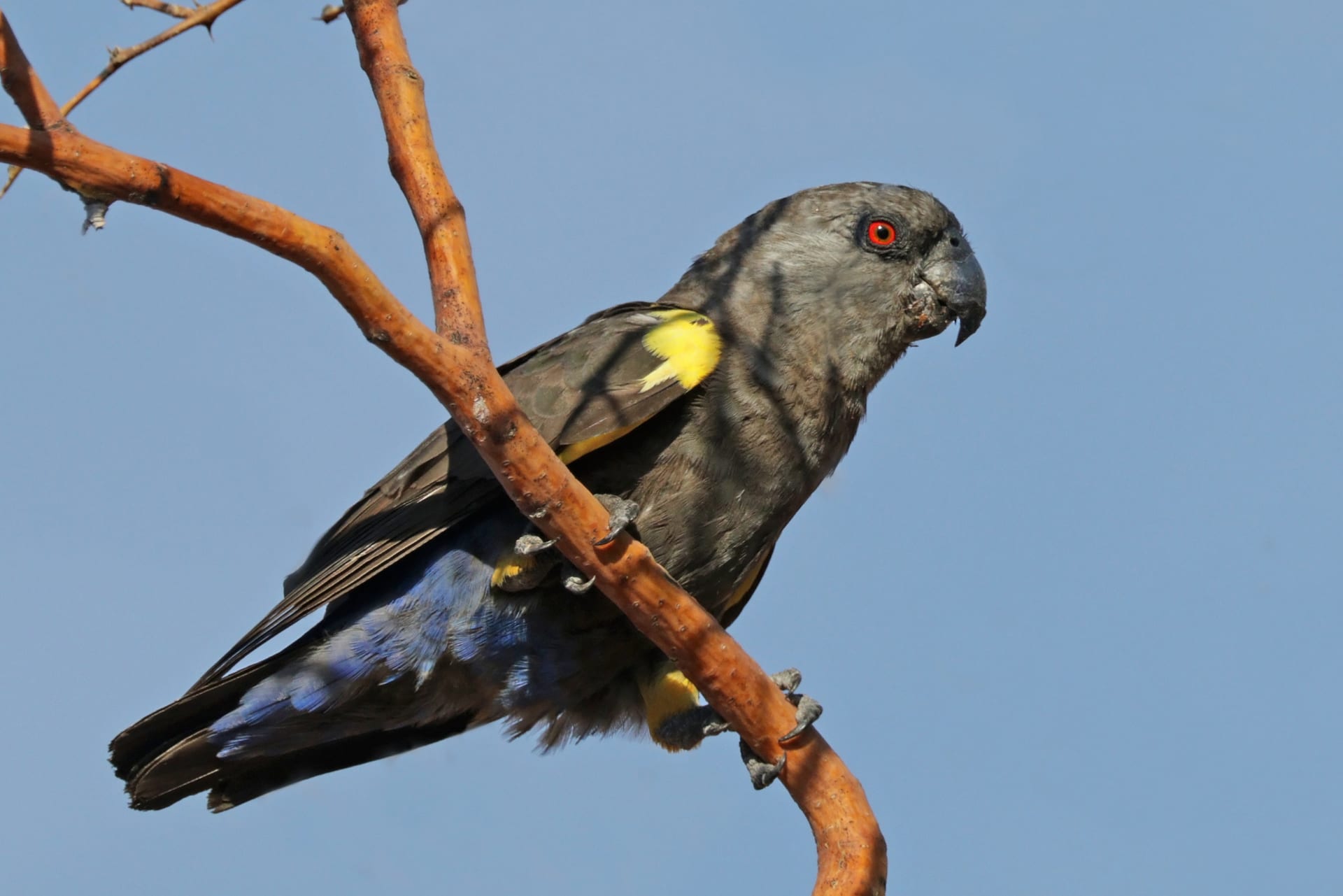
 © Charles J. Sharp / CC BY-SA 4.0
Ruppell's Parrot
The Rüppell's Parrot is a small parrot, measuring 22–25cm, known for its soft grayish-brown plumage accented with bright yellow at the wing bend and thighs. Native only to the area around Namibia, it has a distinctive trait: mature females develop a blue tinge on the lower back and rump, while males lose that blue coloring as they age, making the sexes distinguishable by sight. Like many Poicephalus parrots, Rüppell's Parrots tend to be quiet and even-tempered, rarely calling loudly, though they can be cautious around change. With an intermediate care level, this bird suits keepers who already have some parrot-keeping experience.
View Ruppell's Parrot encyclopedia →0% commission on your first sales!Register by September 30, 2026 and your first 2 sales are commission-free!
Breeder Wanted!
List on BreederDirect and sell directly to customers nationwide!
Six Transparency Commitments from BreederDirect
All Birds listings include complete Breeder transparency: hand-raised status, DNA sex determination, and health certification details.
- Hand-Raised
- DNA Sex-Determined
- Health Certified
- Origin Disclosed
- Color Variation Specified
- Age in Months Disclosed
Browse all 247 breeds
Care Level
Verified breeders wanted for Birds
Breeders are signing up now ahead of launch. Subscribe to be notified when new listings go live.
Getting alerts is free with a member account. When new listings match your saved search, we'll notify you by email and in-app.
Browse other categories
Verified breeders (preview)
Ruppell's Parrot key facts
- Care level
- Intermediate
- Lifespan
- 25-35 years
- Size
- 22-25cm (105-156g)
- Diet
- Mixed seed, nuts, fruit, greens, vegetables and pellets
- Cage
- A walk-in aviary 2.1 m long, or an indoor cage at least 1.8 m long, is recommended, with a vertical nest box about 31 x 31 x 61 cm and a permanent shallow water bowl.
- Temperament
- It likes foot toys, food-finder toys and preening toys, plus unsprayed fir, pine, willow and elder branches.
- Vocalization
- It repeats monotonous, quick, sharp notes; the alarm call is a shriek rising in pitch, but the species is quieter than other Poicephalus.
- Notes
- Listed on CITES Appendix II, so import requires an export permit. The bird is rare in the trade.
About Ruppell's Parrot
Rüppell's Parrot is a small parrot with soft grayish-brown plumage and bright yellow at the wing bend, native only to the area around Namibia. Mature males and females can be told apart by color, and care is considered intermediate-level.
7 things to know before welcoming a Ruppell's Parrot
1Quiet, Even-Tempered Nature
Like many Poicephalus parrots, Rüppell's Parrots are generally quiet and rarely call loudly, which makes them a popular choice for apartment living. That said, individual personalities vary, so it's best to watch how your bird settles in before assuming its temperament.
2Sexes Differ Once Mature
As Rüppell's Parrots mature, females develop a blue tinge on the lower back and rump, while males lose that blue coloring. Young birds can be hard to sex visually, so check adult plumage if you want to confirm the sex.
3Needs Safe Chew Toys
Like all parrots, Rüppell's Parrots have a strong instinct to chew with their beak. Providing wooden toys and other safe chew items in the cage helps them satisfy this natural urge.
4Active Despite Small Size
At 22–25cm, this is a small parrot, but it's an active mover that benefits from a cage larger than its size might suggest. Arranging perches at different heights gives it room to climb and move around.
5Balanced Diet Matters
A diet built around pellets, supplemented with vegetables and fruit, is the basic approach. Keep an eye on what your bird actually eats day to day to avoid nutritional imbalances.
6Endemic to the Namibia Region
Rüppell's Parrots occur naturally only in the area around Namibia. You can't recreate their native habitat exactly, but keeping room temperature stable and avoiding sudden changes helps them feel secure.
7Better Suited to Experienced Keepers
Care for this species is considered intermediate-level, so it can be challenging for someone with no prior parrot experience. Picture your daily routine and care setup in advance to make sure it's a sustainable commitment before bringing one home.
Frequently asked questions about Ruppell's Parrot
- Q.Are Rüppell's Parrots noisy?
- A.As with many Poicephalus parrots, they're generally considered fairly quiet birds. That said, individual personalities vary, so noise level can't be guaranteed for every bird.
- Q.How can I tell males and females apart?
- A.Once mature, females develop a blue tinge on the lower back and rump, while males lose that blue coloring. Young birds are harder to sex by appearance alone.
- Q.Is this a good species for beginners?
- A.Care is considered intermediate-level, so keepers with some prior parrot experience will likely find it easier to manage. First-time owners should research the daily care routine thoroughly before bringing one home.
- Q.How big do Rüppell's Parrots get?
- A.They typically measure 22–25cm in length and weigh around 105–156g. That makes them a small parrot species.
- Q.Can they live alongside other parrots?
- A.Compatibility varies by individual, so there's no universal answer. When introducing a new bird, it's best to go slowly and make sure each bird has its own space, watching carefully as they adjust.
Useful tools for Ruppell's Parrot care
Learn more about Ruppell's Parrot in the encyclopedia
View Ruppell's Parrot encyclopedia entry →
Care difficulty, lifespan, size and diet — all basics covered.
More in this category
Can't find the one you're looking for?
Post your wishes for free and breeders with matching animals will contact you with introductions.