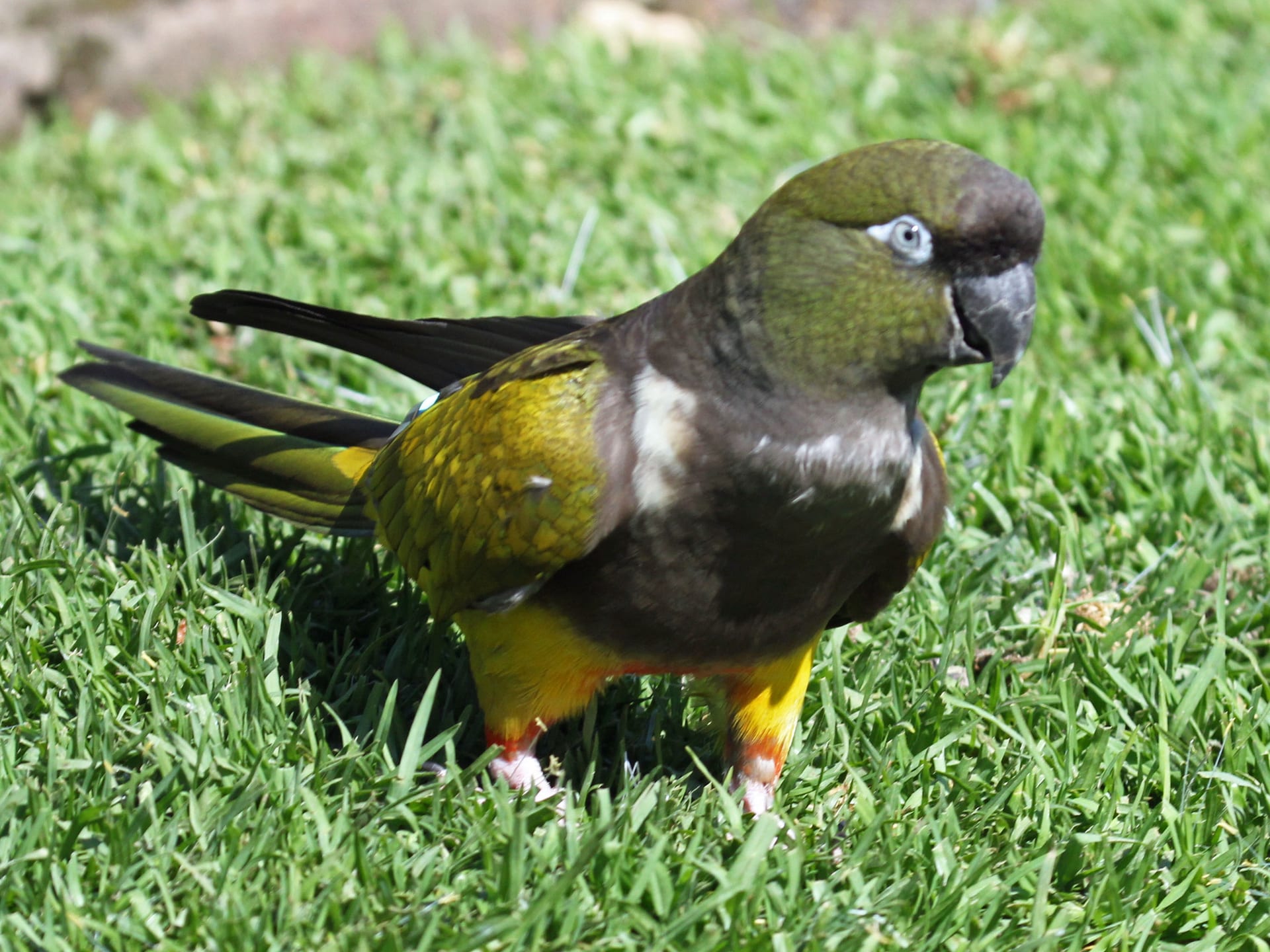
 © DickDaniels (http://theworldbirds.org/) / CC BY-SA 3.0
Burrowing Parrot
The burrowing parrot is one of the largest members of the conure group, native to South America, where it nests colonially in burrows dug into cliff faces. Its olive-brown body offset by red and yellow on the belly makes for a striking look, and its colony-based background often translates into an affectionate, sociable, and intelligent companion. That same background means it needs plenty of room to fly and consistent daily interaction, making it a bird best suited to experienced keepers. With a lifespan of up to 35 years, it's a long-term companion with real presence.
View Burrowing Parrot encyclopedia →0% commission on your first sales!Register by September 30, 2026 and your first 2 sales are commission-free!
Breeder Wanted!
List on BreederDirect and sell directly to customers nationwide!
Six Transparency Commitments from BreederDirect
All Birds listings include complete Breeder transparency: hand-raised status, DNA sex determination, and health certification details.
- Hand-Raised
- DNA Sex-Determined
- Health Certified
- Origin Disclosed
- Color Variation Specified
- Age in Months Disclosed
Browse all 247 breeds
Care Level
Verified breeders wanted for Birds
Breeders are signing up now ahead of launch. Subscribe to be notified when new listings go live.
Getting alerts is free with a member account. When new listings match your saved search, we'll notify you by email and in-app.
Browse other categories
Verified breeders (preview)
Burrowing Parrot key facts
- Care level
- Advanced
- Lifespan
- Up to 35 years
- Size
- 39-52cm (including tail)
- Diet
- Soaked or sprouted sunflower seed, maize, beans, whole rice, vegetables, fruit
- Cage
- The World Parrot Trust recommends a walk-in aviary 4.5-7 m long. It is unsuited to any setup that cannot provide room to fly.
- Temperament
- Playful and gentle, and affectionate once tame. It may mimic words and sounds from its surroundings.
- Vocalization
- Very noisy, with shrieking calls and a repeated gyee alarm call when alerted.
- Notes
- Strongly social, so a solitary bird frustrates easily. It is traded as the Patagonian conure, so confirm the scientific name.
About Burrowing Parrot
Meet the burrowing parrot, a large South American conure that nests in cliffside colonies. Learn about its striking olive, red, and yellow coloring and the spacious flight area experienced keepers need to provide.
7 things to know before welcoming a Burrowing Parrot
1Needs ample flight space
As one of the largest members of the conure group, this bird isn't suited to spending its life in a cramped cage. Plan ahead for a large enclosure that allows full wing extension, or a room where it can fly freely during out-of-cage time.
2Best suited to experienced keepers
Its large size, powerful voice, and high exercise needs mean this species is generally recommended for keepers with prior bird-keeping experience. First-time parrot owners should research thoroughly and ideally consult someone experienced before bringing one home.
3A long-term commitment
With a lifespan of up to 35 years, this bird represents a truly long-term commitment that may span major changes in your own life circumstances. Before bringing one home, carefully consider whether you can provide consistent care for decades to come.
4Sociable, colony-rooted nature
Because it nests colonially in cliffside burrows in the wild, this species tends to be highly social and enjoys interacting with flock mates and caregivers alike. A home where you can dedicate consistent daily interaction time is a good fit.
5Consider its vocal volume
Like many large parrots, it can vocalize quite loudly at times. If you live in an apartment or close to neighbors, it's worth thinking through noise considerations before bringing one home.
6A balanced, varied diet
A pellet-based diet supplemented with a balanced variety of vegetables and fruits forms the foundation of good health. Since nutritional imbalance can lead to health issues, it's wise to work with an avian veterinarian to fine-tune the diet.
7Daily mental and physical enrichment
Its intelligent, active nature means it needs regular enrichment through toys and supervised out-of-cage time. A lack of stimulation can contribute to behaviors like feather plucking, so thoughtful daily environment design matters.
Frequently asked questions about Burrowing Parrot
- Q.Is the burrowing parrot subject to CITES?
- A.Burrowing Parrot is listed in CITES Appendix II. International trade requires a permit from the exporting country, but as far as CITES is concerned, no registration is needed to buy or sell individuals already legally in Japan.
- Q.Is this bird suitable for beginners?
- A.This species is generally rated as suitable for experienced keepers rather than beginners. Its size, exercise needs, and vocal tendencies are all factors that benefit from prior bird-keeping experience.
- Q.How large does it grow?
- A.As an adult, it reaches roughly 39 to 52 cm including the tail, making it one of the largest birds among the New World parrots collectively known as conures.
- Q.How long can I expect to spend with one?
- A.They can live up to around 35 years. When considering one, it's important to think about whether you can provide consistent long-term care, including how your future living situation might change.
- Q.What besides a cage do I need to prepare?
- A.Because of its large size and need for flight space, it's a good idea to prepare a room or area where it can safely fly outside the cage, in addition to the cage itself. Toys and other daily enrichment are also worth having on hand.
Useful tools for Burrowing Parrot care
Learn more about Burrowing Parrot in the encyclopedia
View Burrowing Parrot encyclopedia entry →
Care difficulty, lifespan, size and diet — all basics covered.
More in this category
Can't find the one you're looking for?
Post your wishes for free and breeders with matching animals will contact you with introductions.