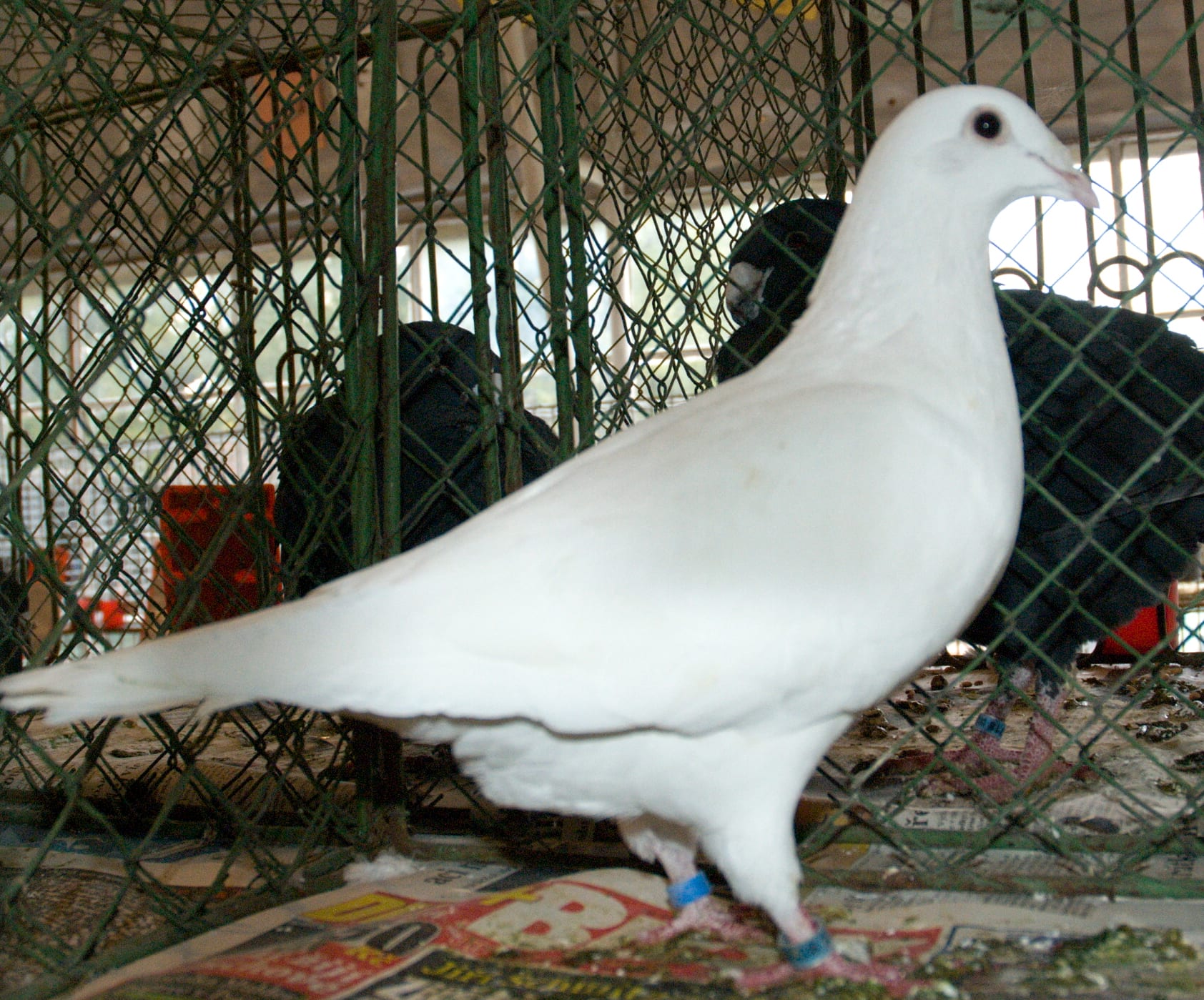
 © Bodlina / CC BY-SA 3.0
Racing Homer
The Racing Homer is a working pigeon breed developed for its homing instinct and stamina in flight. These birds can cover distances of roughly 965 km at an average speed of about 97 km/h, with recorded bursts of up to 160 km/h over shorter stretches. Intelligent and highly trainable, Racing Homers form a strong bond with their home loft and reliably find their way back over long distances. They're kept mainly by pigeon fanciers who enjoy racing and the daily routine of training and bonding with their birds. This breed is considered suitable for intermediate keepers, so some prior experience with loft management and flight training is helpful before bringing one home.
View Racing Homer encyclopedia →0% commission on your first sales!Register by September 30, 2026 and your first 2 sales are commission-free!
Breeder Wanted!
List on BreederDirect and sell directly to customers nationwide!
Six Transparency Commitments from BreederDirect
All Birds listings include complete Breeder transparency: hand-raised status, DNA sex determination, and health certification details.
- Hand-Raised
- DNA Sex-Determined
- Health Certified
- Origin Disclosed
- Color Variation Specified
- Age in Months Disclosed
Browse all 247 breeds
Care Level
Verified breeders wanted for Birds
Breeders are signing up now ahead of launch. Subscribe to be notified when new listings go live.
Getting alerts is free with a member account. When new listings match your saved search, we'll notify you by email and in-app.
Browse other categories
Verified breeders (preview)
Racing Homer key facts
- Care level
- Intermediate
- Lifespan
- About 15 years
- Diet
- Pigeon grain mixes, pulses, maize, greens and grit
- Cage
- The loft needs a landing board so returning birds can walk straight in. Electronic timing systems, in which a chip in the leg band records the arrival automatically, are now widespread.
- Temperament
- The birds tame easily and are simple to handle, but keeping their form depends on training flights over steadily longer distances. They can race from about six months old and the average racing career is three to four years.
- Vocalization
- The voice is the low cooing of the rock dove and is quiet, but wingbeats and landings make noise, so site the loft with the neighbours in mind.
- Notes
- Banding, ownership registration, taking in strays and vaccination are required. Two bodies run registration and racing in Japan: the Japan Homing Pigeon Association and the Japan Racing Pigeon Association.
About Racing Homer
The Racing Homer is a working pigeon bred for homing instinct and endurance, covering distances of about 965 km at roughly 97 km/h. Kept by fanciers for competitive racing; suited to intermediate-level keepers.
7 things to know before welcoming a Racing Homer
1A Dedicated Loft Is Essential
Racing Homers are kept based around an outdoor loft. You'll need a structure that shields them from wind and rain, with space for daily access and proper ventilation prepared in advance.
2Homing Training Is Central
Training centers on releasing young birds at gradually increasing distances so they build the ability to find their way home. Consistent training is what draws out the breed's natural homing ability.
3Suited to Intermediate Keepers
Some prior experience with birds makes it easier to get started with a Racing Homer. Day-to-day care, from loft management to building a training schedule, benefits from a bit of familiarity.
4Kept in Groups by Nature
Racing Homers are highly social birds, and it's common to keep several together in one loft. Group living suits their natural behavior better than keeping a single bird alone.
5Regular Health Checks
Daily observation of feather condition, appetite, and droppings is important. If anything seems off, consult a veterinarian experienced with birds.
6Nutrition During Molting
Molting periods are physically demanding. A balanced, grain-based diet along with a constant supply of clean water helps maintain flight condition.
7Prepare for Individual ID
Many fanciers identify and track individual birds with leg rings. It helps to think through identification and record-keeping before bringing a bird home.
Frequently asked questions about Racing Homer
- Q.Can Racing Homers be kept indoors?
- A.Racing Homers are typically kept in an outdoor loft rather than indoors. They need space suited to flight and homing training.
- Q.Is this breed suitable for first-time keepers?
- A.Racing Homers are generally considered suitable for intermediate keepers. Some background in loft management and training routines makes getting started easier.
- Q.How far can a Racing Homer fly?
- A.Racing Homers have covered distances of about 965 km at an average speed of roughly 97 km/h, with recorded speeds up to 160 km/h over shorter distances. Endurance is a defining trait of the breed.
- Q.Do they need to be kept with other pigeons?
- A.Racing Homers are highly social birds, and it's common to keep several together in one loft. Group housing suits their natural behavior better than a single bird alone.
- Q.Are there any legal restrictions on keeping a Racing Homer?
- A.Racing Homers are not subject to CITES.
Useful tools for Racing Homer care
Learn more about Racing Homer in the encyclopedia
View Racing Homer encyclopedia entry →
Care difficulty, lifespan, size and diet — all basics covered.
More in this category
Can't find the one you're looking for?
Post your wishes for free and breeders with matching animals will contact you with introductions.