Source: Wikimedia Commons
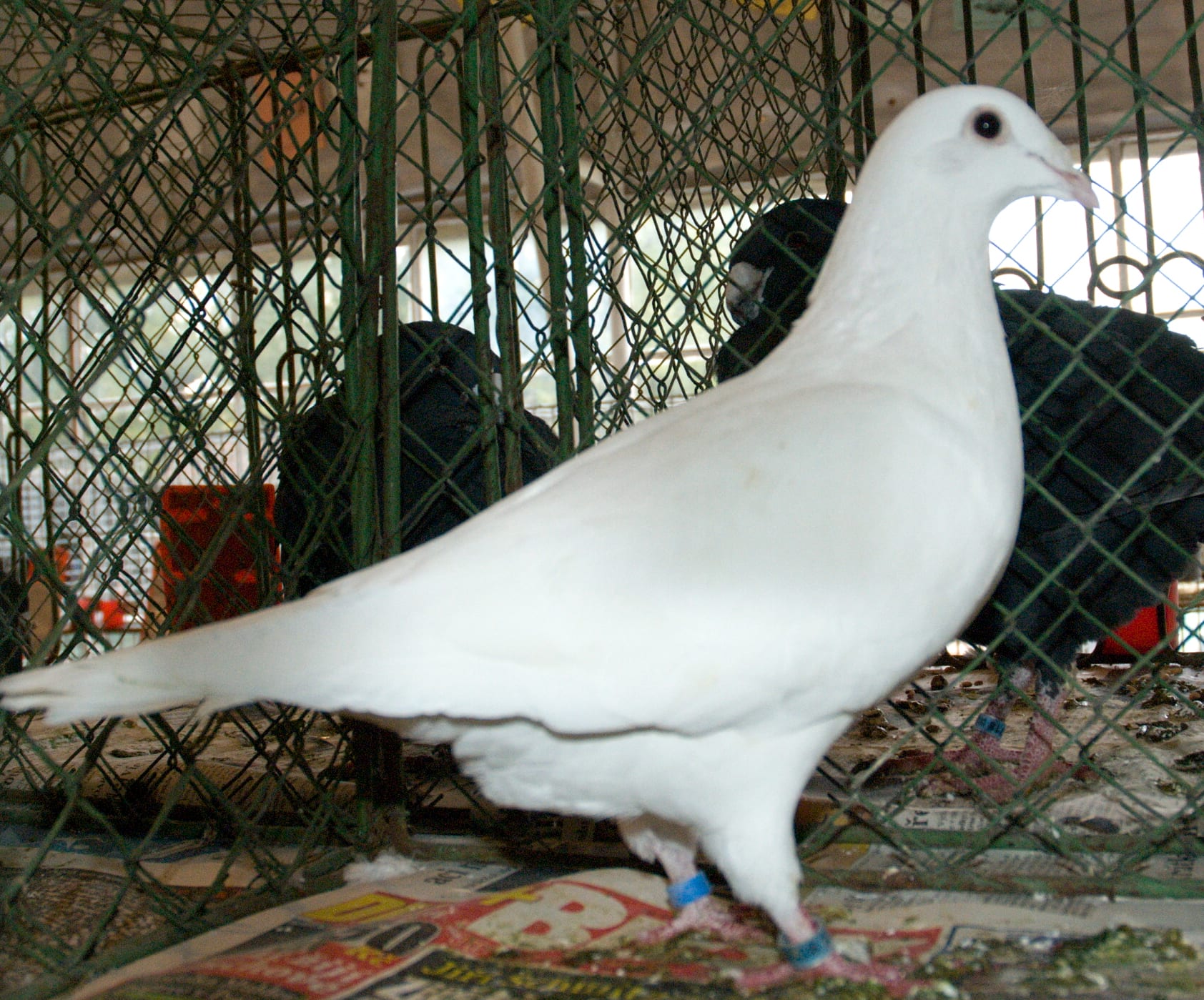
Racing Homer
IntermediateColumba livia domestica
A working pigeon breed selected for homing instinct and sustained flight. Over distances of about 965 km it averages some 97 km/h, and speeds of up to 160 km/h have been recorded over short stretches. It is kept by fanciers for racing.
Difficulty
Intermediate
Temperature
15〜30℃
Lifespan
About 15 years
Humidity
40〜60%
Diet
Pigeon grain mixes, pulses, maize, greens and grit
About
The Racing Homer (Columba livia domestica) is a working pigeon breed developed simultaneously in Belgium and England in the mid-19th century by crossing the Smerle, French Cumulet, English Carrier, Dragoon and Horseman. From the high-flying Cumulet it took the stamina to stay on the wing for hours, and from the Carrier the ability to find its way home from a distance. Races run from roughly 100 km to 1,000 km, and flights of 1,800 km have been recorded in the United States. Over about 965 km the birds average some 97 km/h, and up to 160 km/h has been observed over short stretches. A bird can compete from about six months old and some are still racing past ten, though the average racing career is three to four years. Identification uses a permanent numbered leg band fitted at about five days old. In Japan the birds are treated as working animals under the Ministry of Agriculture, Forestry and Fisheries, and banding, ownership registration, taking in strays and vaccination are required.
Source: Wikipedia (CC BY-SA 4.0)
Lifespan of the Racing Homer
The Racing Homer lives About 15 years.
Basic Info
Origin
Belgium and England, where the breed was developed in the mid-19th century
Lifespan
About 15 years
Temperature
15〜30℃
Humidity
40〜60%
Diet
Care Specifications
PeacefulGroupBreeding: Easy
Sources: Wikipedia - Pigeon racing (founding breeds, race distances of 100 to 1,000 km, age at first race, racing career of three to four years, banding at about five days old, timing methods) / Wikipedia - Homing pigeon (average speed about 97 km/h, top speed 160 km/h, recorded flights of 1,800 km) / Japanese Wikipedia - Homing pigeon (designation as a working animal in Japan, banding and ownership registration, taking in strays, vaccination, the two governing bodies, electronic clocking systems)
References & Sources
Edited & verified by: BreederDirect editorial team
The taxonomic, regulatory, and husbandry data on this page are compiled and verified against the authoritative primary sources below.
Primary sources
- Wikipedia
- CITES Appendices (the domestic pigeon Columba livia domestica not listed; checked against the edition valid from 25 November 2023)
- Ministry of the Environment, Japan - List of Invasive Alien Species designated under the IAS Act (birds)
- Wildlife Protection, Control and Hunting Management Act (Ministry of the Environment, Japan)
- Wikipedia - Homing pigeon (average speed about 97 km/h, top speed 160 km/h, recorded flights of 1,800 km)
- Japanese Wikipedia - Homing pigeon (designation as a working animal in Japan, banding and ownership registration, taking in strays, vaccination, the two governing bodies, electronic clocking systems)
- GBIF
Taxonomy & Authority
Accepted name: Columba livia domestica Gmelin, 1789
Synonyms: Columba livia f. domestica
Authority databases: GBIF
Nomenclature follows global taxonomic authority databases.
Regulations & Conservation Status
Not CITES-listed
Domestic law: Only captive-bred birds are traded, and banding with registration of ownership is a precondition. Free-living rock doves in Japan are covered by the Wildlife Protection Act, and taking or killing them is in principle not permitted.
The domestic pigeon (Columba livia domestica), and its wild ancestor the rock dove Columba livia, appear in none of the CITES Appendices. It is not designated an Invasive Alien Species in Japan either; the seven birds so designated are the Canada goose, red-vented bulbul, four Garrulax species and the red-billed leiothrix. In Japan racing pigeons are treated as working animals under the Ministry of Agriculture, Forestry and Fisheries, and banding, ownership registration, taking in strays and vaccination are required.
Sources: CITES Appendices (the domestic pigeon Columba livia domestica not listed; checked against the edition valid from 25 November 2023) / Ministry of the Environment, Japan - List of Invasive Alien Species designated under the IAS Act (birds) / Wildlife Protection, Control and Hunting Management Act (Ministry of the Environment, Japan)
Regulations may change. Always verify the latest information with the relevant authorities.
Racing Homer Listings
Loading latest listingsFind listings for this species