Source: Wikimedia Commons
Fantail Pigeon
BeginnerColumba livia domestica
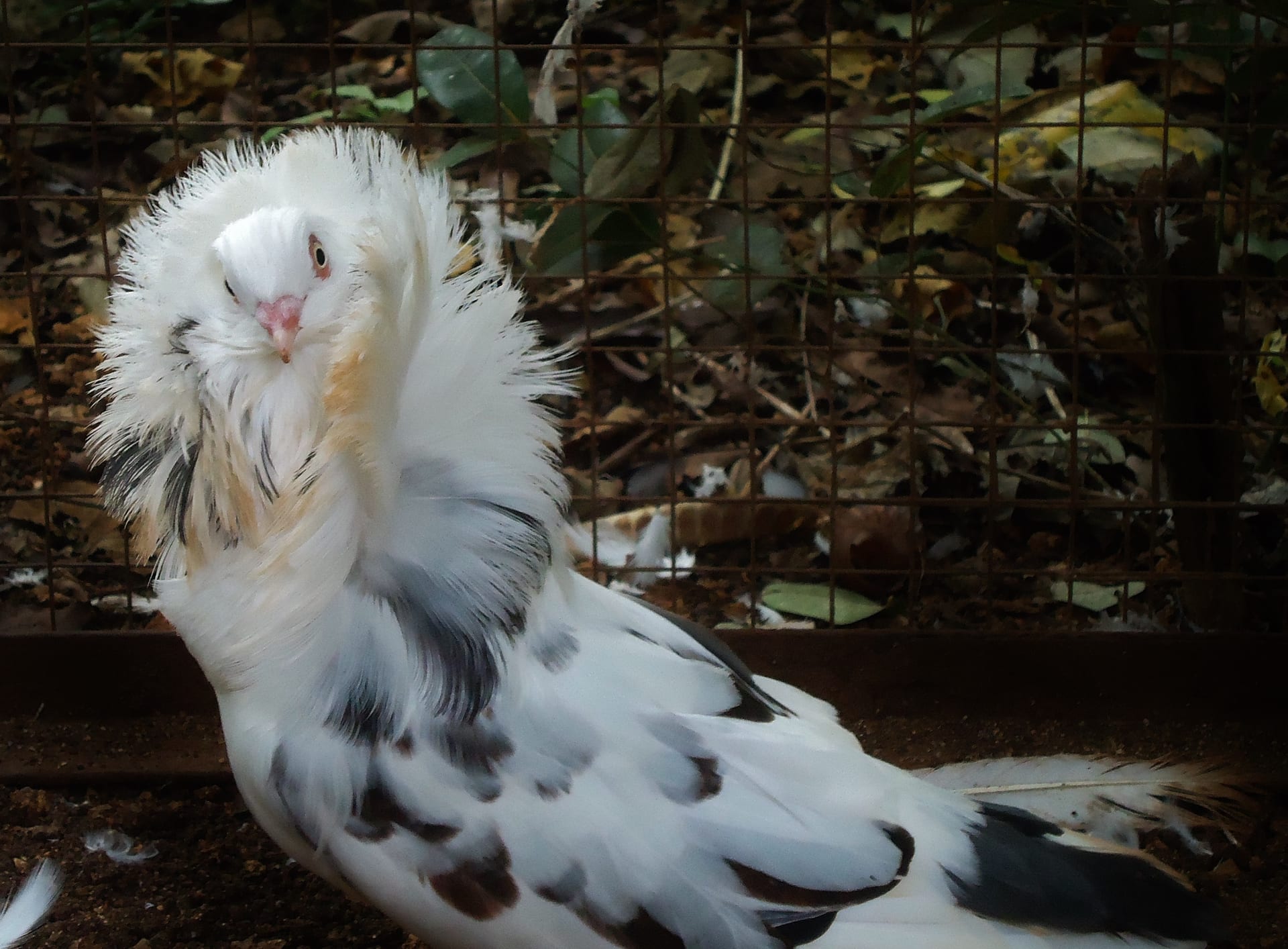
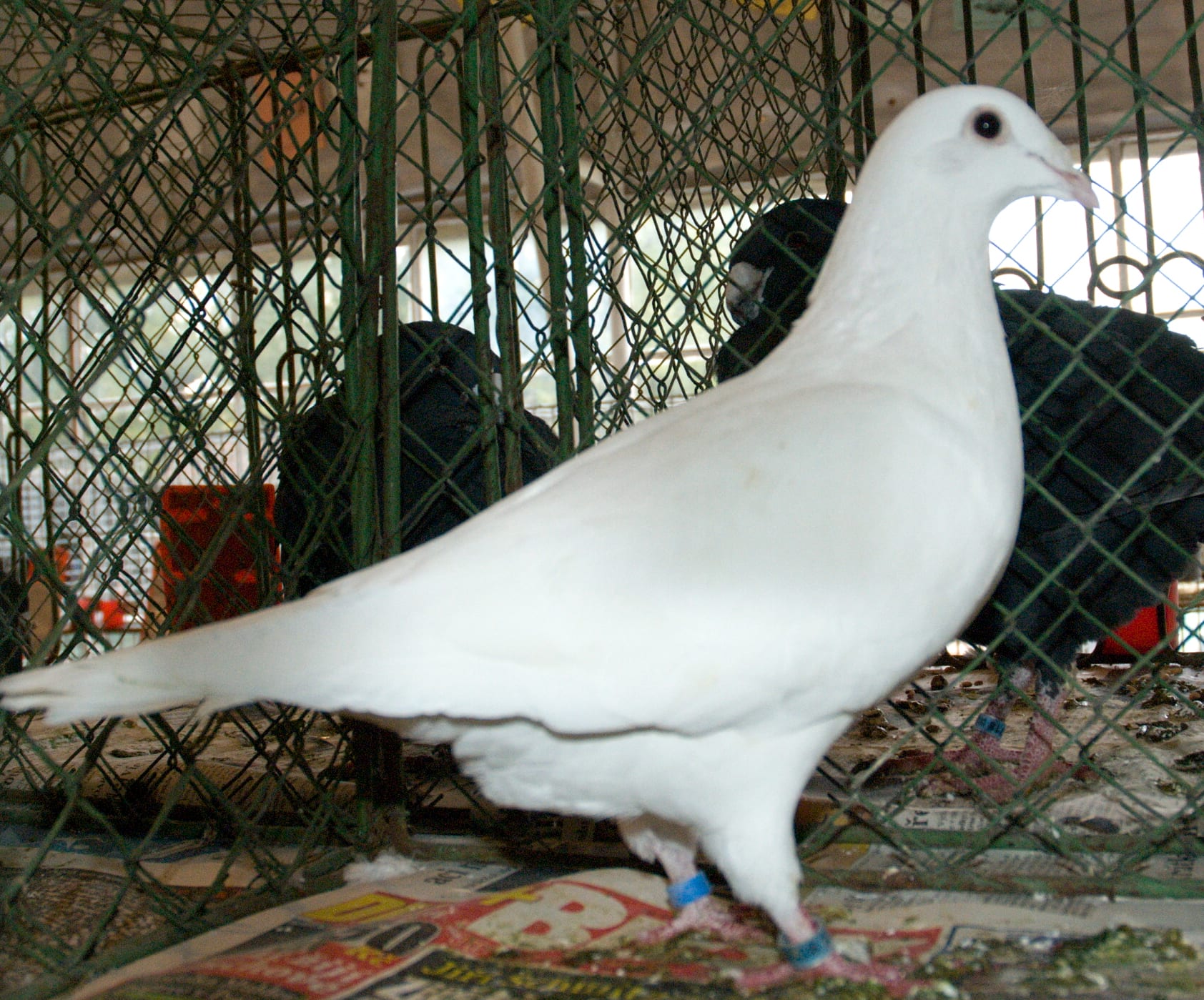
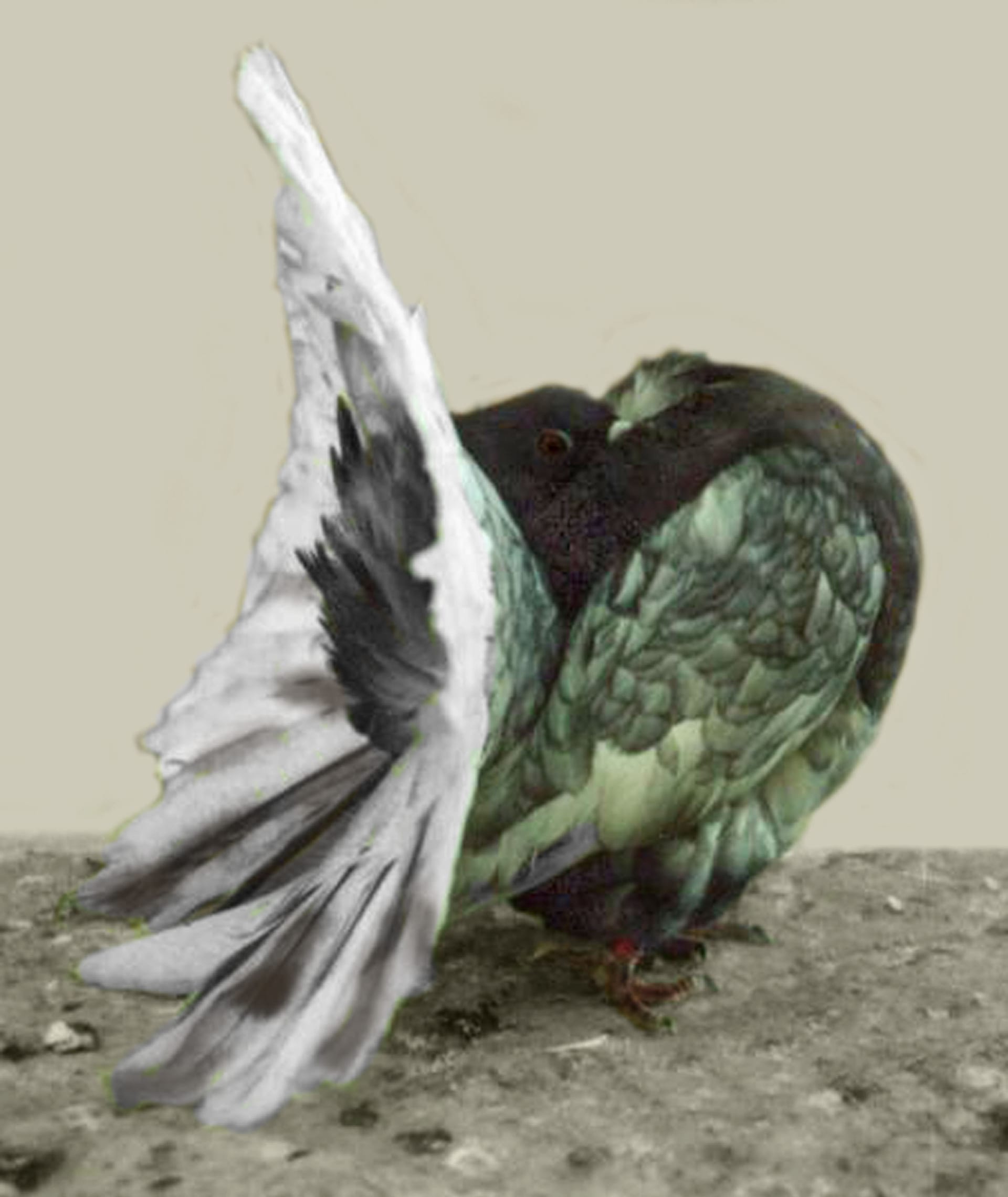
An ornamental pigeon breed that spreads its tail into a wide fan. It carries 30 to 40 tail feathers where most pigeons have 12 to 14, stands with the breast held high, and flies poorly, spending most of its time on the ground.
Difficulty
Beginner
Temperature
15〜30℃
Lifespan
About 15 years
Size
Average length 28cm and average weight 369g (figures for the Indian Fantail)
Humidity
40〜60%
Diet
Pigeon grain mixes, wheat, pulses, greens and grit
About
The Fantail (Columba livia domestica) is a group of domestic pigeons known for the fan-shaped tail. It carries 30 to 40 tail feathers, far more than the 12 to 14 usual in the pigeon family. Its origin is unsettled, being attributed to Pakistan, India, China, Japan or Spain. Charles Darwin used the breed as an example in the first chapter of On the Origin of Species and held it to be descended from the rock dove. A feather mutation called Silky gives the tail a lace-like texture. Clutches are of two eggs, the young can fly at four to six weeks and are fed by the parents until six weeks old. Pigeon flyers also place Fantails on the loft landing board as droppers, to call flying birds back in.
Source: Wikipedia (CC BY-SA 4.0)
Lifespan of the Fantail Pigeon
The Fantail Pigeon lives About 15 years.
Size of the Fantail Pigeon
The Fantail Pigeon grows to Average length 28cm and average weight 369g (figures for the Indian Fantail).
English, Indian, Thai and Miniature lines exist; the Indian carries a peak crest and foot feathering and is larger, averaging 28 cm in length and 369 g in weight.
Basic Info
Origin
Origin unsettled; the breed is variously attributed to Pakistan, India, China, Japan or Spain
Lifespan
About 15 years
Size
Average length 28cm and average weight 369g (figures for the Indian Fantail)
Care Specifications
PeacefulPairBreeding: Easy
Sources: Wikipedia - Fantail pigeon (tail feather count, origin, sub-varieties, Silky mutation, use as droppers) / Wikipedia - Indian Fantail (average length 28cm, average weight 369g, clutch of two, fledging at four to six weeks) / Japanese Wikipedia - Rock dove (voice, breeding and legal status of the ancestral species in Japan)
References & Sources
Edited & verified by: BreederDirect editorial team
The taxonomic, regulatory, and husbandry data on this page are compiled and verified against the authoritative primary sources below.
Primary sources
- Wikipedia
- CITES Appendices (the domestic pigeon Columba livia domestica not listed; checked against the edition valid from 25 November 2023)
- Ministry of the Environment, Japan - List of Invasive Alien Species designated under the IAS Act (birds)
- Wildlife Protection, Control and Hunting Management Act (Ministry of the Environment, Japan)
- Wikipedia - Indian Fantail (average length 28cm, average weight 369g, clutch of two, fledging at four to six weeks)
- Japanese Wikipedia - Rock dove (voice, breeding and legal status of the ancestral species in Japan)
- GBIF
Taxonomy & Authority
Accepted name: Columba livia domestica Gmelin, 1789
Synonyms: Columba livia f. domestica
Authority databases: GBIF
Nomenclature follows global taxonomic authority databases.
Regulations & Conservation Status
Not CITES-listed
Domestic law: Only captive-bred birds of the breed are traded. Free-living rock doves in Japan are covered by the Wildlife Protection Act, and taking or killing them, removing their eggs or interfering with the rearing of their young is in principle not permitted.
The domestic pigeon (Columba livia domestica), and its wild ancestor the rock dove Columba livia, appear in none of the CITES Appendices. It is not designated an Invasive Alien Species in Japan either; the seven birds so designated are the Canada goose, red-vented bulbul, four Garrulax species and the red-billed leiothrix. The rock dove was once a game bird in Japan but was removed from the quarry list, partly because of the risk of shooting racing pigeons by mistake.
Sources: CITES Appendices (the domestic pigeon Columba livia domestica not listed; checked against the edition valid from 25 November 2023) / Ministry of the Environment, Japan - List of Invasive Alien Species designated under the IAS Act (birds) / Wildlife Protection, Control and Hunting Management Act (Ministry of the Environment, Japan)
Regulations may change. Always verify the latest information with the relevant authorities.
Fantail Pigeon Listings
Loading latest listingsFind listings for this species