Fantail (Fan-Tailed Goldfish) Care Guide | How to Raise Hardy Twin-Tailed Goldfish for Beginners | ブリちょく
Goldfish| ✍️ BreederDirect Editorial
Fantail (Fan-Tailed Goldfish) Care Guide | How to Raise Hardy Twin-Tailed Goldfish for Beginners
A beginner-friendly guide to caring for fantail (fan-tailed goldfish). As a representative round-bodied species alongside the Ryukin, this complete guide covers fantail characteristics, which are relatively cold-hardy compared to single-tailed varieties, tank setup, feeding, and disease prevention—useful for choosing your first fancy goldfish.
Key Takeaways
A beginner-friendly guide to caring for fantail (fan-tailed goldfish). As a representative round-bodied species alongside the Ryukin, this complete guide covers fantail characteristics, which are relatively cold-hardy compared to single-tailed varieties, tank setup, feeding, and disease prevention—useful for choosing your first fancy goldfish.
Fantail goldfish are an ideal variety for beginners looking to seriously enjoy goldfish keeping. With their round body shape and charming open fan-like tail, they are beloved worldwide as a representative of twin-tailed goldfish (fish with split, double tails) alongside the Ryukin. This article provides a detailed explanation of fantail characteristics, from their care environment and feeding to health management.
✍️
BreederDirect Editorial
The BreederDirect editorial team specializes in care information for animals, covering veterinary care and breeding to deliver beginner-friendly guides.
Find Goldfish on BreederDirect
Buy directly from verified breeders
Browse Related Listings
Find Goldfish listings related to this article on BreederDirect. Buy directly from verified breeders.
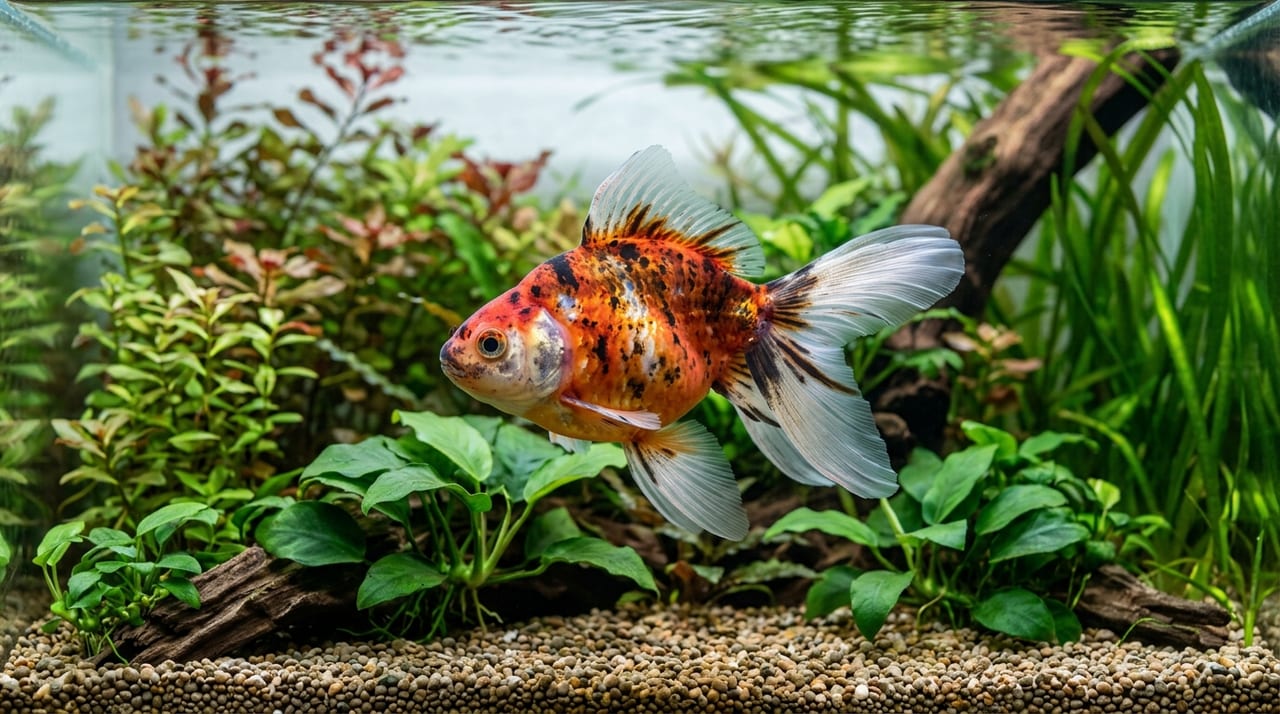
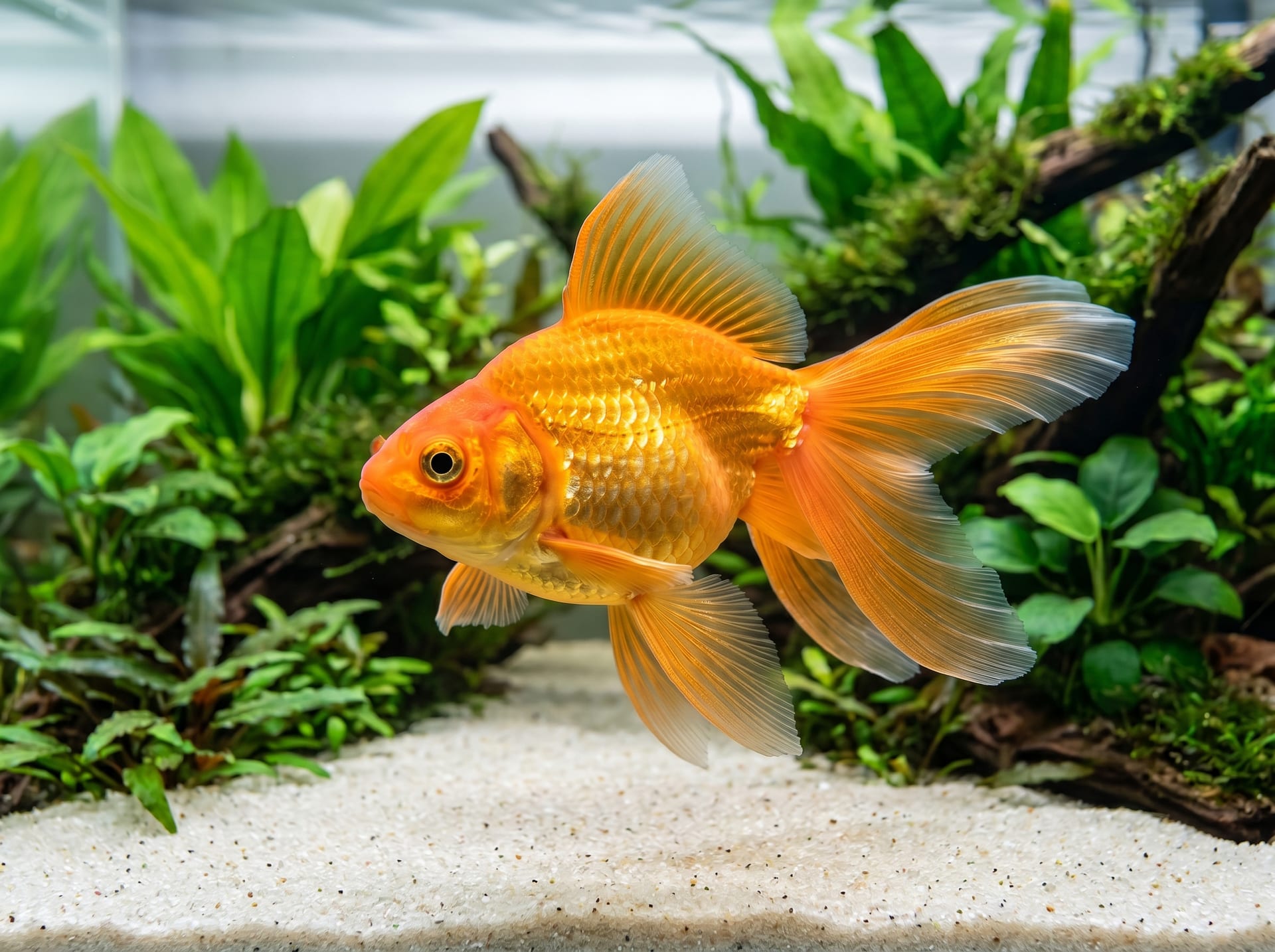
The fantail, as its English name "Fantail Goldfish" suggests, is characterized by a tail that resembles a "fan." It refers to a group of varieties with a round body shape originally developed in China and further refined in the West and Japan, with subtle differences between individual varieties.
Basic Characteristics
Body shape: A deep, oval form (round-type). Characterized by a short spine and a protruding belly
Tail: A fan-shaped tail that splits into two lobes. A completely divided "twin tail" is considered ideal
Body length: Typically 10–20 cm (adult). Varies depending on the rearing environment
Lifespan: With proper care, some individuals can live over 10–15 years
Body color: Diverse, including red, white, red-and-white (kohaku), and calico (tri-color)
Differences from Single-Tailed Varieties
Single-tailed varieties like the Wakin are fast swimmers with voracious appetites. Twin-tailed varieties like fantails are slower swimmers, and when kept together, they may lose out on food. They should be kept with tank mates of similar body type and swimming ability.
Setting Up the Right Environment
Tank Size
Fantails can be kept in relatively compact tanks, but a larger tank is preferable for water stability and fish health.
Number of Fish
Recommended Tank Size
1–2
45–60 cm (40–60 L)
3–4
60–90 cm (60–120 L)
5 or more
90 cm or larger (120 L+)
A general guideline is "at least 10 liters per fish." As goldfish grow, they produce more waste, so ample tank space helps maintain stable water quality.
Choosing a Filter
Goldfish produce a large amount of waste and pollute the water easily, so adequate filtration capacity is essential.
External filter: Ideal for 60 cm or larger tanks. Quiet with high biological filtration capacity
Top filter: Good value and easy to clean. Suitable for 60–90 cm tanks
Sponge filter (auxiliary): Best for fry or quarantine tanks for sick fish
A general guideline is to choose a filter with processing capacity 2–3 times the tank size.
Water Temperature and Quality
Fantails are relatively cold-tolerant among round-bodied goldfish and maintain activity even during cold winters.
Optimal temperature: 15–25°C (18–22°C for peak activity)
Winter: Can tolerate down to around 10°C without a heater (though sudden temperature changes are not advisable)
Ammonia and nitrite: Keep at undetectable levels (especially important during initial tank setup)
Substrate and Layout
Fantails have a habit of picking through the substrate with their mouths.
Substrate: Properly-sized gravel (2–5 mm) that isn't too fine and is unlikely to be accidentally ingested
Aquatic plants: Goldfish often eat plants, but hardy species like hornwort, watersprite, and java moss can coexist
Decorations: Sharp-edged decorations can damage the tail, so choose those with rounded edges
Cover: A tank cover is essential as goldfish sometimes jump out of the water
Feeding and Nutritional Management
Goldfish are prone to bloat disease from overfeeding. Careful portion control and regular, consistent feeding are key to maintaining health.
Types of Food
Floating pellets: Easy to spot uneaten food and manage. However, they can lead to air ingestion and increase the risk of bloat
Sinking pellets: More closely resemble natural feeding behavior and carry lower bloat risk. Water quality management is somewhat more challenging
Frozen bloodworms and brine shrimp: Rich in protein and effective for conditioning. Use as a supplement, not a staple
Feeding Frequency and Amount
2–3 times daily, only as much as they can eat in 3–5 minutes
Remove uneaten food promptly with a pipette (it causes water pollution)
Having 1–2 fasting days per week helps reduce digestive stress
Water Temperature and Appetite
Below 15°C, digestive function declines. Reduce feeding to half the normal amount in winter, and stop feeding entirely below 10°C for safety.
Common Diseases and Prevention
Bloat (Dropsy)
A common condition in round-bodied goldfish where the fish floats upside-down at the water surface.
Causes: Overfeeding, air ingestion from floating food, indigestion, or genetic factors
Treatment: Fast for 3–5 days, maintain water temperature around 25°C, switch to low-protein/low-fat food
Ich (White Spot Disease)
A parasitic infection (Ichthyophthirius multifiliis) causing white spots on the body. It commonly appears when immunity is lowered by temperature fluctuations or transport stress.
Treatment: Raise water temperature to 28–30°C to speed the parasite cycle, and use commercial ich treatment (such as Green F Gold) at recommended doses
Hole-in-the-Head and Red Spot Disease
Bacterial infection (Aeromonas) entering through wounds, causing ulcers and red spots on the body.
Treatment: Medicate using Green F Gold Liquid or Parasitic D (oxolinic acid-based)
Pine Cone Disease (Dropsy)
A serious condition where scales stand up like a pinecone. Caused by internal Aeromonas infection, it is often difficult to cure. Early detection and treatment are crucial.
Tips for Keeping Fantails—Summary
Here are key points for keeping fantails healthy for the long term.
Perform water changes 1–2 times per week, aiming for about 1/3 of the total water volume
Avoid sudden temperature changes (more than 3°C in a single day)
Keep only with tank mates of similar swimming ability and body type (avoid mixing with single-tailed varieties like Wakin)
Quarantine new fish for about 2 weeks to confirm their condition before moving to the main tank
Perform filter maintenance (sponge cleaning) 1–2 times per month, but always use dechlorinated tank water for cleaning (direct tap water will kill beneficial bacteria)
Fantails are easy to keep even for beginners and provide long-term enjoyment. On br-choku, breeders specializing in quality fantails list their fish, allowing you to directly verify health status and care environment with the breeder before purchasing. With proper management, you can enjoy the beautiful fan-shaped tail for years to come.