Care Guide for Pompon Goldfish | Nasal Sac Care, Gentle Water Flow Management, Feeding and Disease Prevention
A comprehensive guide to caring for pompon goldfish (hanafusa goldfish), in which the nasal septum develops into delicate petal-like growths. Learn practical care methods to protect their fragile nasal sacs: setting gentle water flow, selecting substrate, and proper handling techniques. Discover daily observation tips for spotting abnormalities and feeding management strategies to prevent swim bladder disease.
Key Takeaways
A comprehensive guide to caring for pompon goldfish (hanafusa goldfish), in which the nasal septum develops into delicate petal-like growths. Learn practical care methods to protect their fragile nasal sacs: setting gentle water flow, selecting substrate, and proper handling techniques. Discover daily observation tips for spotting abnormalities and feeding management strategies to prevent swim bladder disease.
Related Species
What are Pompon Goldfish?
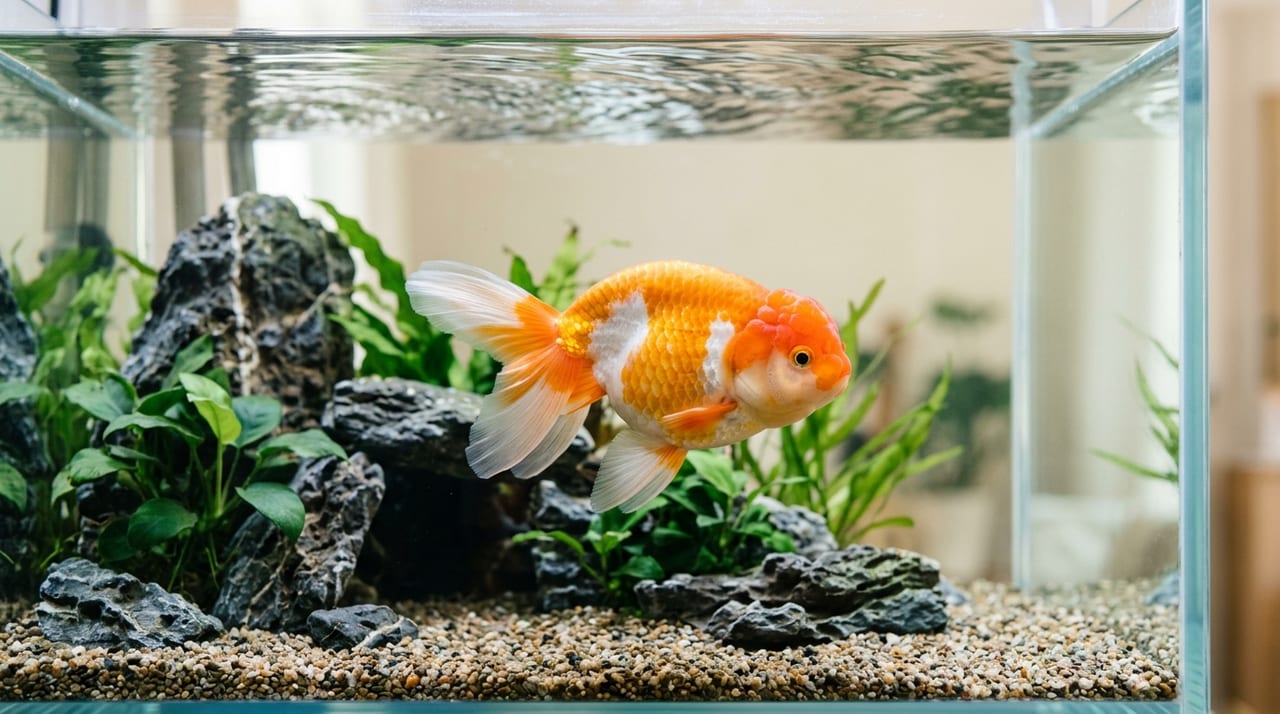
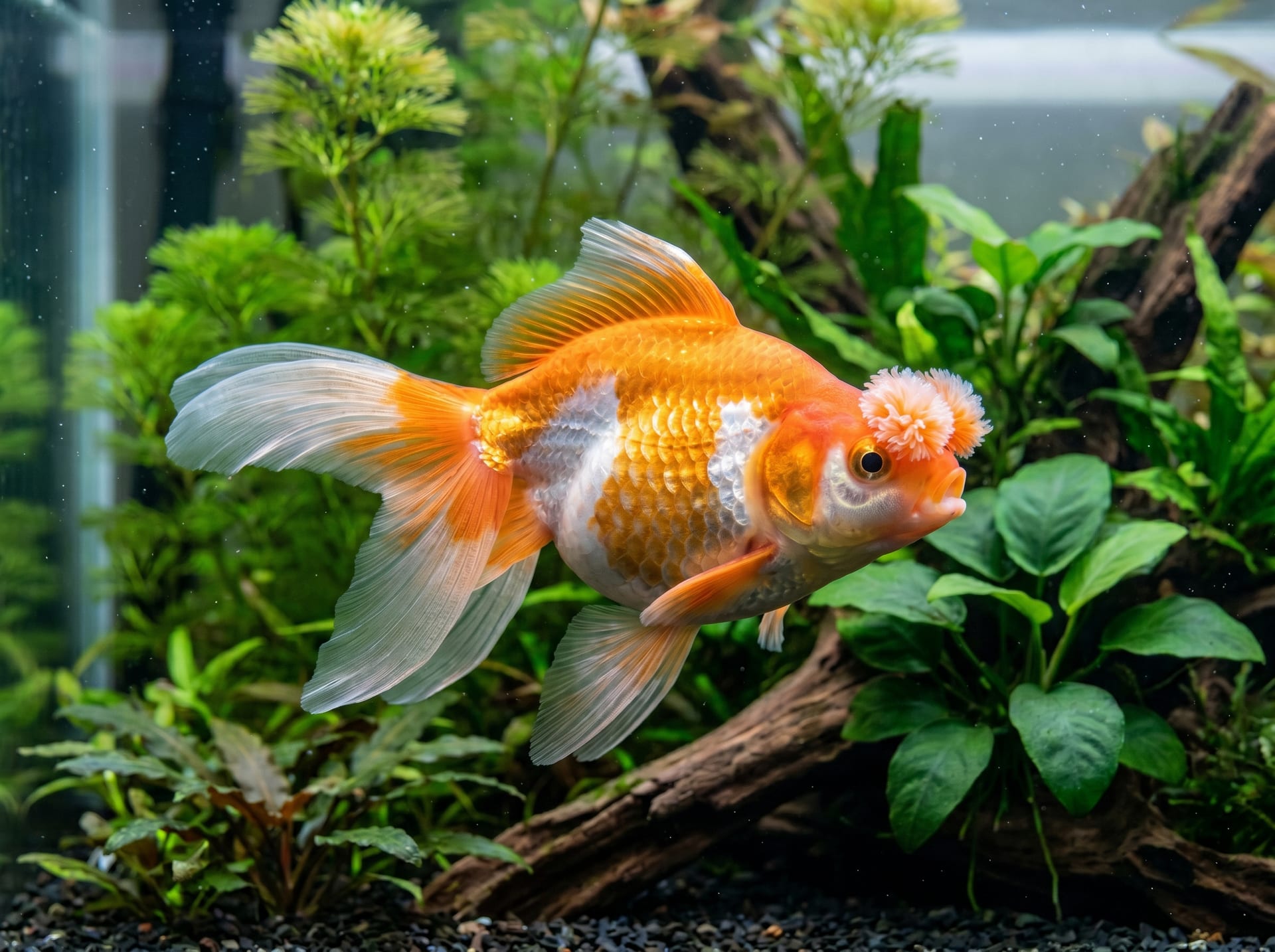
Pompon goldfish (hanafusa goldfish) are a unique variety in which the nasal septum undergoes abnormal development, forming petal-like growths called "nasal sacs." Known in China as "rongqiu goldfish" (pompon goldfish), when viewed from the front, these goldfish display distinctively large, frilly nasal sacs that spread across both sides of the head.
Key Characteristics of Pompon Goldfish
| Item | Description |
|---|---|
| Nasal Sac | The nasal septum develops into petal-like formations. Shape varies significantly between individuals |
| Body Type | Round to egg-shaped (most are hybrids with Ryukin or Oranda varieties) |
| Eyes | Can be either normal or protruding |
| Tail Type | Quadruple tail (calico tail), triple tail, butterfly tail, etc. |
| Difficulty Level | Intermediate to Advanced (nasal sac management requires special care) |
Pompon goldfish nasal sacs are extremely delicate, and injury can lead to necrosis or infection. These rewarding fish require careful tank setup and daily observation.
Setting Up the Aquarium Environment
Tank Size and Water Flow
The most critical concern for pompon goldfish is water flow strength. Strong currents not only damage the nasal sacs but also disrupt the fish's swimming balance.
Recommended Tank Size
- Single fish: 45–60 cm tank (60 liters or more)
- Multiple fish (3–5): 90–120 cm tank recommended
Choosing a Filter
| Filter Type | Rating |
|---|---|
| Hang-on Filter (weak flow setting) | Recommended. Install an outlet pipe to direct flow toward the tank wall |
| Sponge Filter | Ideal for very weak flow, but limited biological filtration capacity |
| Canister Filter | Must use a diffuser or outlet pipe to disperse flow |
| Undergravel/Airstone Filter | Easy to use in small single-fish tanks |
Strong water flow is a no-go. Direct the outlet toward the water surface or along the tank wall to reduce flow.
Substrate
Use fine sand (1–3 mm grain size) or a bare-bottom tank. Coarse gravel can catch the nasal sacs and cause injury.
Water Temperature and Chemistry
| Parameter | Recommended Range |
|---|---|
| Temperature | 59–79°F (summer: below 82°F, winter: above 50°F) |
| pH | 7.0–8.0 (slightly alkaline) |
| Hardness | 10–15°GH |
| Ammonia | 0 mg/L |
| Nitrite | 0 mg/L |
Nasal Sac Care and Observation
Normal vs. Abnormal Nasal Sacs
Healthy nasal sacs feel soft and fluffy and are typically white, cream-colored, or reddish.
Signs of Abnormality
- Darkening or ulceration of the nasal sac (early necrosis)
- Redness and swelling (possible bacterial infection)
- One-sided withering or loss of tissue
- White, cotton-like growths on the tips (fungal infection)
Tips for Preventing Nasal Sac Injury
- Keep the layout simple: Avoid sharp stones and protruding driftwood. Glass decorations with sharp edges are dangerous
- Be cautious with tankmates: Some fish may nip at the nasal sacs. Even same-species or same-sized companions require monitoring
- Proper netting technique: Use a net with a wide opening (12 cm or more) to avoid catching the nasal sacs when removing the fish
Managing Minor Damage
For minor damage such as slight nicks or mild redness, salt baths (0.3–0.5%) can promote natural healing. If necrosis is spreading, consult a fish veterinarian.
Feeding Management
Pompon goldfish have wide vision and can sense food by smell, but the nasal sacs may reduce their ability to detect odors. Sinking pellets and moistened sinking flakes are ideal, as they allow the fish to feed without exposing the nasal sacs to the air.
Recommended Foods
- Sinking goldfish pellets (main diet)
- Thawed frozen bloodworms or brine shrimp (supplemental food 2–3 times per week)
- Blanched spinach or shelled peas (aids digestion)
Floating foods are problematic because the fish must surface, exposing the nasal sacs to air and risking drying or damage. We strongly recommend using sinking foods.
Feeding Guidelines
Feed twice daily, amounts that can be consumed in 2–3 minutes. Avoid overfeeding to prevent swim bladder disease.
Preventing Swim Bladder Disease
Swim bladder disease is common in round-bodied goldfish and poses a risk to pompon goldfish as well.
Prevention Strategies
- Avoid overfeeding (especially floating foods)
- Prevent temperature fluctuations (especially below 59°F)
- Implement fasting days (about once per week)
- Avoid complete water changes; do partial changes of 1/3–1/2 regularly
Breeder-Specific Management
Selecting for Nasal Sac Quality
For pompon goldfish breeders, the most critical selection criteria are nasal sac form, size, and bilateral symmetry.
- Large nasal sacs that develop equally on both sides are highly valued
- Petal-like formations at the tips score higher in shows
- Nasal sacs grow larger over time, so staged evaluation of juveniles is essential
Breeding and Fry Management
Breeding pompon goldfish follows the same methods as other varieties. Fry do not develop nasal sacs initially; the characteristic forms gradually appear from 3 to 6 months of age.
Pompon goldfish are a uniquely rewarding breed precisely because of their distinctive appearance and the delicate care they require. Take pleasure in careful observation while maintaining vigilant attention to water flow and nasal sac care, and enjoy raising these remarkable fish.