 © Pamumitsu / CC BY-SA 3.0
Java Sparrow (Cinnamon / Fawn)
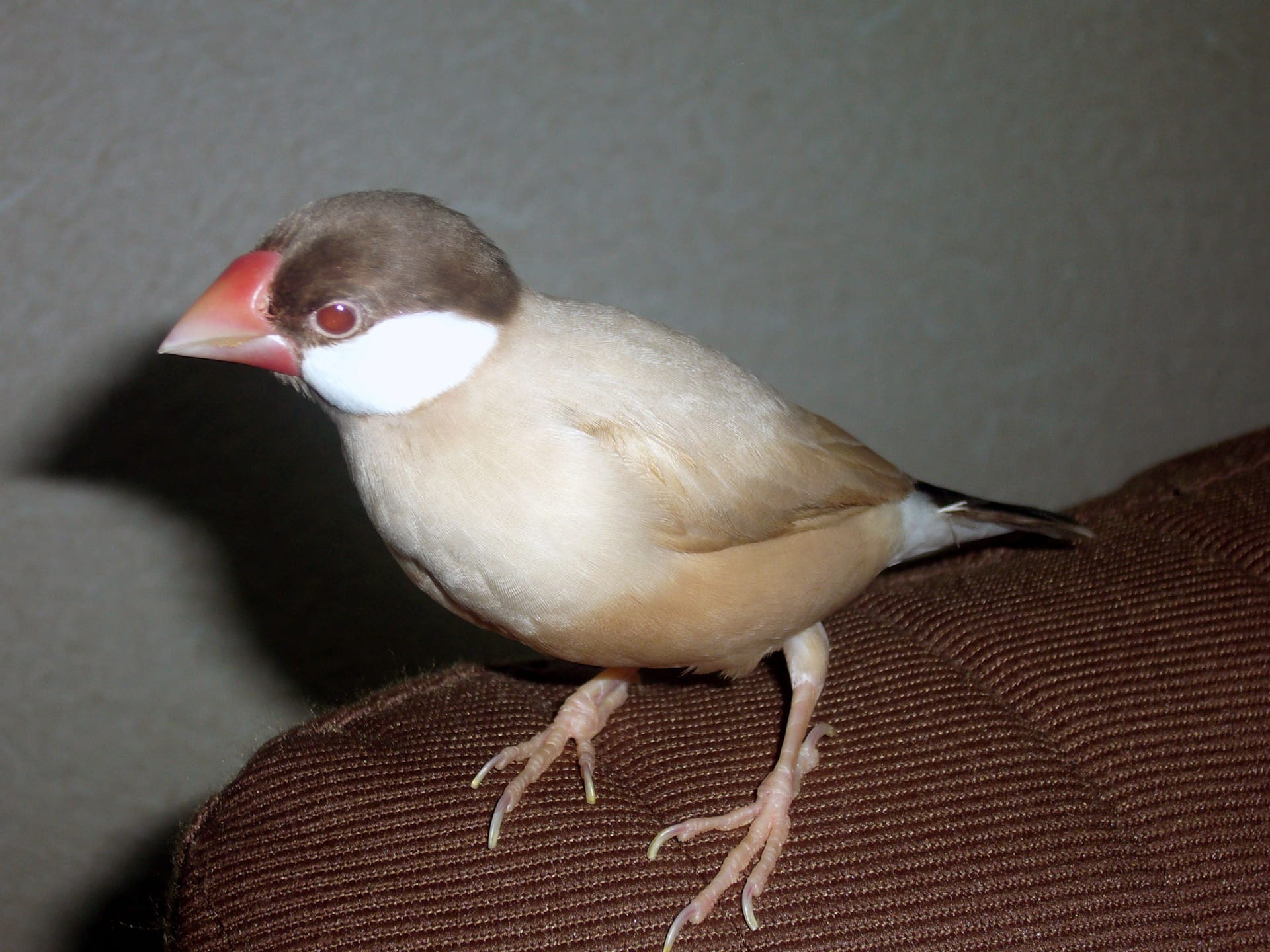
The Cinnamon Java Sparrow is a color variety of the Java Sparrow that lacks black pigment, giving it soft fawn-brown plumage across the head and back along with a subtle reddish tint to the eyes. It first appeared in Australia in the 1960s and was later fixed as a stable variety in the Netherlands during the 1970s, and it's also known simply as "fawn" in English-speaking regions. With the same plump, rounded body and stout bill typical of Java Sparrows, adults reach about 15 to 17 cm. They're generally considered beginner-friendly, and many individuals grow quite tame with regular handling, making this a rewarding bird for anyone hoping to build a close bond through daily care.
View Java Sparrow (Cinnamon / Fawn) encyclopedia →0% commission on your first sales!Register by September 30, 2026 and your first 2 sales are commission-free!
Breeder Wanted!
List on BreederDirect and sell directly to customers nationwide!
Six Transparency Commitments from BreederDirect
All Birds listings include complete Breeder transparency: hand-raised status, DNA sex determination, and health certification details.
- Hand-Raised
- DNA Sex-Determined
- Health Certified
- Origin Disclosed
- Color Variation Specified
- Age in Months Disclosed
Browse all 247 breeds
Care Level
Verified breeders wanted for Birds
Breeders are signing up now ahead of launch. Subscribe to be notified when new listings go live.
Getting alerts is free with a member account. When new listings match your saved search, we'll notify you by email and in-app.
Browse other categories
Verified breeders (preview)
Java Sparrow (Cinnamon / Fawn) key facts
- Care level
- Beginner-friendly
- Lifespan
- 7-10 years
- Size
- 15-17cm
- Diet
- Mixed millet-based seed, spray millet, greens, and a calcium grit such as oyster shell
- Cage
- Hand-raised birds live happily in a relatively small cage provided they get daily out-of-cage exercise indoors. They like to bathe, so offer a water dish and change the water daily.
- Temperament
- It tames readily and bonds strongly with its keeper. The wild bird is highly gregarious, so a solitary bird needs plenty of human contact.
- Vocalization
- The call is a short chip and the song a rapid series of them. Trill-calls are faster and louder in aggression, slower and softer in affiliative contexts.
- Notes
- As a variety without black pigment, avoid over-exposure to direct sun to keep the colour from fading. The wild species is listed in CITES Appendix II and is IUCN Endangered.
About Java Sparrow (Cinnamon / Fawn)
Cinnamon Java Sparrows lack black pigment, giving them soft fawn-brown plumage and reddish eyes. They're a beginner-friendly bird reaching about 15-17cm as adults.
7 things to know before welcoming a Java Sparrow (Cinnamon / Fawn)
1How to Spot the Coloring
Cinnamon Java Sparrows lack black pigment, so the head and back take on a soft fawn-brown shade, and the eyes carry a faint reddish tint. Placed next to a normal-colored Java Sparrow, the difference is easy to see, which is part of why this variety is popular among color enthusiasts.
2Keep the Room Warm
Java Sparrows are sensitive to cold, so extra care is needed during seasonal transitions and winter months to keep the room temperature from dropping too low. Keep the cage away from direct sunlight and drafty windows, and aim for a stable environment.
3Tends to Tame Easily
Like Java Sparrows in general, Cinnamon Java Sparrows often become quite tame when handled from a young age. If you'd like to work toward a hand-tame bird, spending a little time talking to and interacting with it each day makes a real difference.
4A Seed-Based Diet
The main diet should be a seed mix or pellets formulated for small birds, supplemented with leafy greens and calcium sources like crushed oyster shell. Refresh food and water daily so your bird always has access to something fresh.
5Watch for Changes During Molting
Molting can be physically demanding as feathers are replaced, and you may notice shifts in appetite or energy during this period. Getting into the habit of observing your bird's everyday behavior helps you catch any unusual changes early.
6Find an Avian-Capable Vet First
Small birds, including Java Sparrows, are known for hiding signs of illness. Before bringing one home, it's worth locating a veterinarian experienced with birds or exotic pets in advance, so you're prepared if a health concern comes up.
7Prepare the Space in Advance
Gather the basics — cage, perches, and food and water dishes — before your bird arrives. Once home, give it a quiet space to settle in and observe from a distance while it adjusts to its new surroundings.
Frequently asked questions about Java Sparrow (Cinnamon / Fawn)
- Q.What's the difference between Cinnamon and Normal Java Sparrows?
- A.Cinnamon Java Sparrows lack black pigment, which gives the head and back a pale brown tone and adds a reddish tint to the eyes — that's the main visual difference from the normal color form. Body size and general temperament are otherwise the same as Java Sparrows overall.
- Q.Is this bird suitable for first-time owners?
- A.Yes, Java Sparrows are generally considered beginner-friendly in terms of care difficulty. With attentive daily care and a well-managed environment, they're an approachable choice even for someone keeping a bird for the first time.
- Q.Can you tell males and females apart by appearance?
- A.Java Sparrows don't show strong visual differences between males and females, so judging sex from coloring alone is difficult. If you need to know for certain, using a dedicated sexing method is the more reliable approach.
- Q.Are they noisy birds?
- A.Java Sparrows do vocalize fairly often, though how much varies by individual. If you live in an apartment or shared building, it's worth thinking ahead about timing and how the sound might affect those around you.
- Q.Is this species subject to CITES regulations?
- A.Java Sparrow (Cinnamon / Fawn) is listed in CITES Appendix II. International trade requires a permit from the exporting country, but as far as CITES is concerned, no registration is needed to buy or sell individuals already legally in Japan.
Useful tools for Java Sparrow (Cinnamon / Fawn) care
Learn more about Java Sparrow (Cinnamon / Fawn) in the encyclopedia
View Java Sparrow (Cinnamon / Fawn) encyclopedia entry →
Care difficulty, lifespan, size and diet — all basics covered.
Java Sparrow (Cinnamon / Fawn) related articles
Complete Guide to Finch Breeding | Breeding Tips for Java Sparrows, Bicheno's Finches, and Zebra Finches
Explains breeding methods for finches (Java Sparrows, Bicheno's Finches, Zebra Finches, etc.). A detailed guide covering nest box types, egg laying management, hatching, chick rearing, and environmental setup for breeding season.
Java Sparrow Complete Care Guide | Environment Setup, Diet, Breeding, and Health Management
A beginner-friendly guide to caring for Java Sparrows (Lonchura striata domestica), small finches beloved in Japan for centuries. Covers color varieties including white, silver, and mocha; proper cage selection emphasizing width; temperature management (20-28°C) during winter months; seed-based diet featuring millet, proso millet, and foxtail millet supplemented with leafy greens and cuttlebone; the complete breeding cycle from pairing and nest box setup through egg-laying, incubation, and chick-rearing; nutrition enhancement during molting season; and early treatment of common health issues such as feather fluffing and regurgitation.
Complete Guide to Java Sparrow Care | Hand-Taming Training, Breeding Season Management, and Early Disease Detection
A comprehensive guide to Java sparrow care. From hand-taming training steps for chicks to breeding season management and early detection of common diseases—all from a breeder's perspective.
Complete Guide to Nest Box Types, Selection, and Breeding Setup | For Parakeets, Java Sparrows, and Cockatiels
A detailed guide to the types of nest boxes needed for breeding parakeets, Java sparrows, cockatiels and similar birds, how to choose them, installation methods, and breeding setup procedures. We also cover management tips before and after egg-laying and how to prepare the environment for chick rearing.
Complete Guide to Pet Bird Disease and Health Management | For Budgies, Cockatiels, Java Sparrows, and Macaws
Birds are animals that hide illness. This guide provides detailed veterinary insights into early warning signs of common diseases in budgies, cockatiels, Java sparrows, and macaws, along with daily health management and preventive strategies.
Parakeet and Java Sparrow Weight Management | Discovering Health Changes Through Daily Measurements
Comprehensive guide to the importance of weighing small birds for health management, including when and how to measure, choosing the right scale, and graphing weight changes. Also covers standard weights by species and steps to take if weight loss is detected.
More in this category
Can't find the one you're looking for?
Post your wishes for free and breeders with matching animals will contact you with introductions.