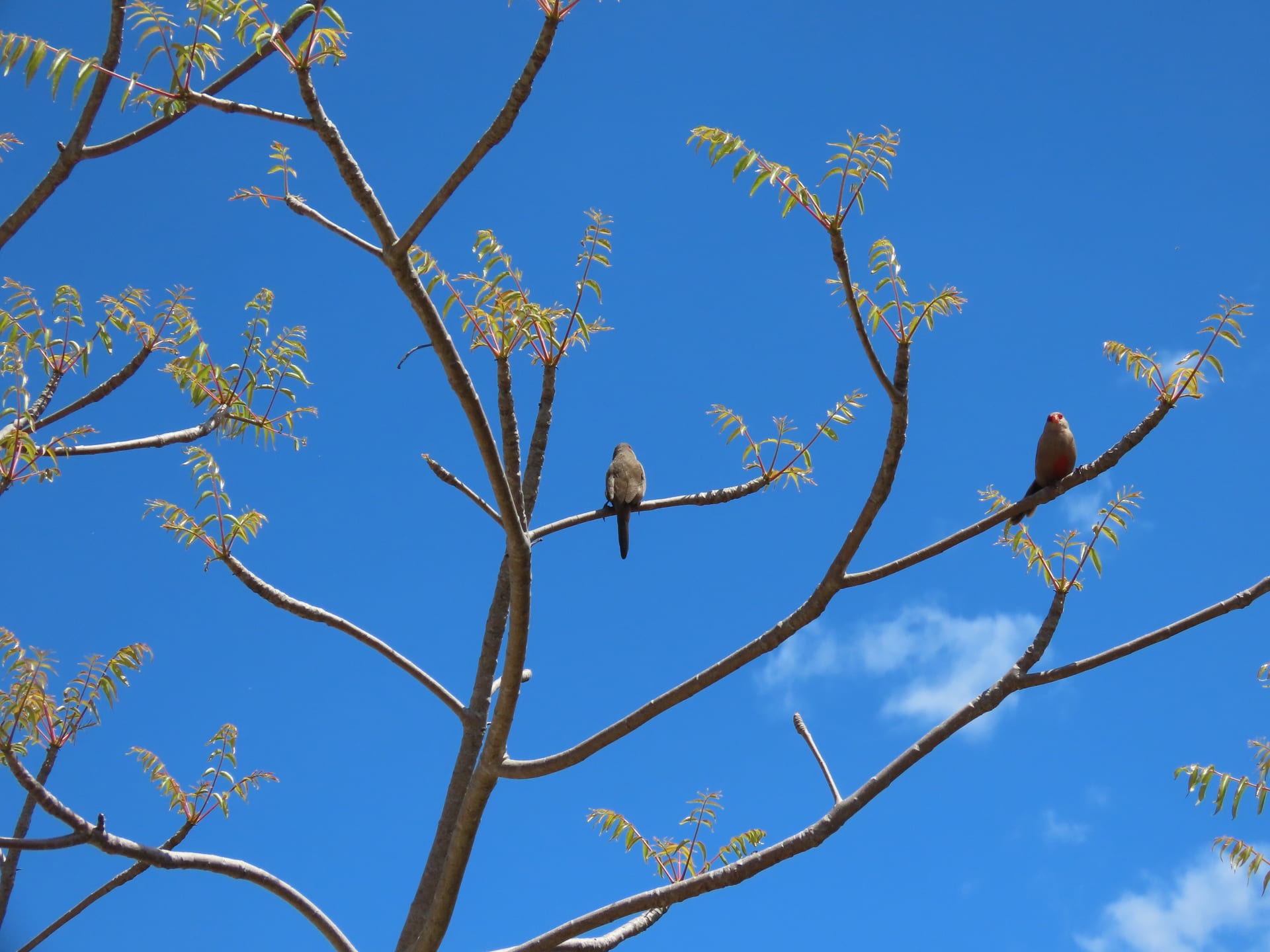
 © JonRichfield / CC BY-SA 4.0
Common Waxbill
The Common Waxbill is a small finch known for its bright red bill and red eye-stripe, set against grey-brown plumage finely barred all over. Hardy and easygoing, it's often recommended to first-time bird keepers and is considered one of the easiest African finches to keep — a reputation borne out by how readily it has established itself after being introduced to regions around the world. Sociable by nature, it thrives when kept with companions rather than alone. At just 9.5 to 13 cm long, it's a compact bird that suits keepers with limited space.
View Common Waxbill encyclopedia →0% commission on your first sales!Register by September 30, 2026 and your first 2 sales are commission-free!
Breeder Wanted!
List on BreederDirect and sell directly to customers nationwide!
Six Transparency Commitments from BreederDirect
All Birds listings include complete Breeder transparency: hand-raised status, DNA sex determination, and health certification details.
- Hand-Raised
- DNA Sex-Determined
- Health Certified
- Origin Disclosed
- Color Variation Specified
- Age in Months Disclosed
Browse all 247 breeds
Care Level
Verified breeders wanted for Birds
Breeders are signing up now ahead of launch. Subscribe to be notified when new listings go live.
Getting alerts is free with a member account. When new listings match your saved search, we'll notify you by email and in-app.
Browse other categories
Verified breeders (preview)
Common Waxbill key facts
- Care level
- Beginner-friendly
- Lifespan
- 5-8 years
- Size
- 9.5-13cm
- Diet
- Mixed seed, spray millet, greens, small livefood when rearing young
- Cage
- A wide cage or an aviary suits it. Dense grass planting or hanging grass bundles let it nest and forage naturally.
- Temperament
- Peaceable and gregarious, it mixes well with other small estrildids and settles to household activity.
- Vocalization
- Flocks exchange thin high contact calls frequently, and the song is quiet, so noise is rarely an issue.
- Notes
- Breeding takes some experience, and in an aviary a pair may raise four broods a year, so guard against over-breeding.
About Common Waxbill
A small finch with a red bill, red eye-stripe, and finely barred grey-brown plumage. Hardy and beginner-friendly at 9.5–13 cm, it does well kept in small groups.
7 things to know before welcoming a Common Waxbill
1Keep it warm
As an African species, the Common Waxbill is sensitive to cold and needs stable, warm housing through the winter. Avoid sudden temperature swings and keep conditions consistent year-round.
2Best kept in groups
This sociable finch does best in pairs or small groups rather than alone. Waxbills of the same species generally get along well even in fairly close quarters.
3Seed-based diet with extras
The staple diet is small millet-type seed, supplemented with greens and cuttlebone or mineral grit. During breeding season, adding a protein-rich supplement is a good idea.
4Loves to bathe
Common Waxbills enjoy bathing, so offer a clean bathing dish regularly. Bathing helps keep feathers in good condition and supports overall health.
5Tail feathers are delicate
The long tail feathers that give this bird its name can fray easily in cramped housing. Provide an enclosure with enough depth for the tail to move freely.
6Fairly quiet song
Its song is soft and unobtrusive, which makes it a reasonably good fit even for housing where noise is a concern. Individual birds vary, though, so it's worth getting to know before committing.
7Mix species with care
Waxbills are generally mild-tempered but can become more territorial during breeding season. When housing with other species, watch behavior closely and separate them if needed.
Frequently asked questions about Common Waxbill
- Q.Can beginners keep this bird?
- A.Yes — the Common Waxbill is hardy and considered one of the easier finches for first-time keepers. Consistent basic care and stable warm housing are the main things to keep up with.
- Q.Is it okay to keep just one bird?
- A.Because it's a sociable species, a Common Waxbill tends to settle in better with a companion or small group than alone. Where possible, consider bringing in more than one.
- Q.Is its call loud?
- A.Its song tends to be soft and unobtrusive, which makes it a reasonable choice even where noise is a concern. That said, individual birds can vary.
- Q.What should I feed it?
- A.A small-seed millet mix forms the staple diet, rounded out with greens and cuttlebone or mineral grit. During breeding season, a protein-rich supplement is a helpful addition.
- Q.Are there any legal restrictions on keeping one?
- A.The Common Waxbill is not subject to CITES.
Useful tools for Common Waxbill care
Learn more about Common Waxbill in the encyclopedia
View Common Waxbill encyclopedia entry →
Care difficulty, lifespan, size and diet — all basics covered.
Common Waxbill related articles
See more Common Waxbill articles →More in this category
Can't find the one you're looking for?
Post your wishes for free and breeders with matching animals will contact you with introductions.