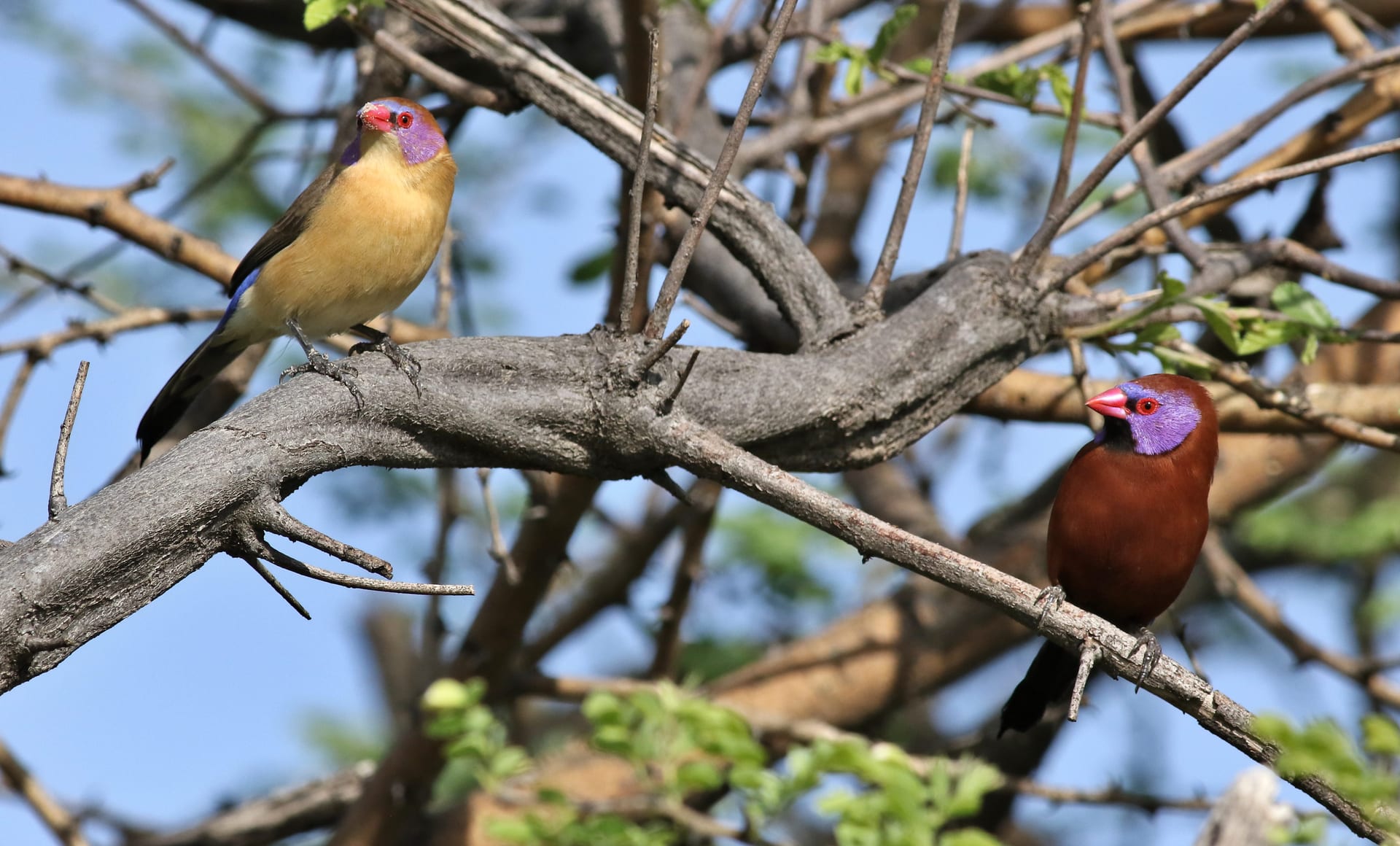
 © Derek Keats from Johannesburg, South Africa / CC BY 2.0
Violet-eared Waxbill
The Violet-eared Waxbill is a striking finch native to southern Africa, known for its rich chestnut body, violet ear patches, a blue-tinted forehead, and a vivid red bill. Among waxbills it's on the larger side, reaching about 13 to 14cm as an adult. Alert and lively by nature, this species thrives best with warmth and long daylight hours, which makes it better suited to keepers with some prior experience managing temperature and lighting. For anyone drawn to bold, elegant coloring, it's a rewarding bird to get to know.
View Violet-eared Waxbill encyclopedia →0% commission on your first sales!Register by September 30, 2026 and your first 2 sales are commission-free!
Breeder Wanted!
List on BreederDirect and sell directly to customers nationwide!
Six Transparency Commitments from BreederDirect
All Birds listings include complete Breeder transparency: hand-raised status, DNA sex determination, and health certification details.
- Hand-Raised
- DNA Sex-Determined
- Health Certified
- Origin Disclosed
- Color Variation Specified
- Age in Months Disclosed
Browse all 247 breeds
Care Level
Verified breeders wanted for Birds
Breeders are signing up now ahead of launch. Subscribe to be notified when new listings go live.
Getting alerts is free with a member account. When new listings match your saved search, we'll notify you by email and in-app.
Browse other categories
Verified breeders (preview)
Violet-eared Waxbill key facts
- Care level
- Advanced
- Lifespan
- 7-10 years
- Size
- 13-14cm
- Temperature
- Diet
- Mixed seed, spray millet, greens, small livefood
- Cage
- It needs a large indoor or garden aviary with a shelter kept above 25 degrees Celsius, plus twelve to fourteen hours of light a day in winter.
- Temperament
- Nervous and sensitive to change, it is best kept as a pair in a quiet spot rather than in a crowded mixed aviary.
- Vocalization
- The song is thin and quiet, so the voice is never a problem.
- Notes
- Its demands are high and few keepers breed it successfully, so set up heating and lighting before acquiring one.
About Violet-eared Waxbill
Violet-eared Waxbill: a southern African finch with chestnut plumage, violet ear patches, and a red bill. Adults reach 13-14cm and this species is recommended for experienced keepers due to its need for warmth and long daylight.
7 things to know before welcoming a Violet-eared Waxbill
1Needs High Heat
Violet-eared Waxbills come from the hot, dry regions of southern Africa and generally do best in warmer temperatures than a typical home offers. Reliable heating and attention to seasonal or daily temperature swings are important for keeping them comfortable.
2Long Daylight Hours Needed
In the wild these birds experience long daylight hours, so indoor keepers often need to supplement natural light with additional lighting time. Insufficient daylight can affect their condition and molting, so a planned lighting schedule matters.
3Why It's for Experienced Keepers
Because of its specific need for warmth and extended daylight, this species is considered an advanced-level bird among waxbills. It suits keepers who already have small-bird experience and can commit to managing its environment closely.
4An Eye-Catching Build
Adults reach roughly 13 to 14cm, making them one of the larger waxbills. The contrast of a chestnut body, violet ear patches, blue-tinted forehead, and red bill gives them a striking, memorable presence.
5Alert and Active Temperament
These birds are lively and quick to react, sometimes bursting into flight when startled. A spacious cage in a calm location helps them settle and feel secure.
6Seed-Based Diet, Plus Extras
Their staple diet is a small-bird seed mix, supplemented with greens and mineral sources like crushed oyster shell for balanced nutrition. During breeding periods they may seek out extra animal protein, so their diet should be adjusted as needed.
7Preparing the Environment
It's best to have heating equipment, lighting, and a thermo-hygrometer ready before bringing one home, since this species has specific environmental needs. Give them a quiet settling-in period afterward and watch closely for any early signs of stress.
Frequently asked questions about Violet-eared Waxbill
- Q.Is this bird suitable for beginners?
- A.Because it needs high heat and long daylight hours, this species is considered suited to experienced keepers. It works best for someone who already has small-bird experience and can manage temperature and lighting closely.
- Q.How big do they get?
- A.Adults reach about 13 to 14cm. That makes them one of the larger birds among the waxbill group.
- Q.Can they be kept with other birds?
- A.Because they're active and quick-moving, housing them with others calls for attention to cage size and compatibility. Individual temperament varies, so it's worth watching closely during the settling-in period.
- Q.What should I be especially careful about?
- A.Their preference for high heat and long daylight hours means seasonal temperature swings and lighting schedules need ongoing attention. Without the right environment, they can become more prone to health issues.
- Q.Is this species subject to CITES?
- A.The Violet-eared Waxbill is not subject to CITES.
Useful tools for Violet-eared Waxbill care
Learn more about Violet-eared Waxbill in the encyclopedia
View Violet-eared Waxbill encyclopedia entry →
Care difficulty, lifespan, size and diet — all basics covered.
More in this category
Can't find the one you're looking for?
Post your wishes for free and breeders with matching animals will contact you with introductions.