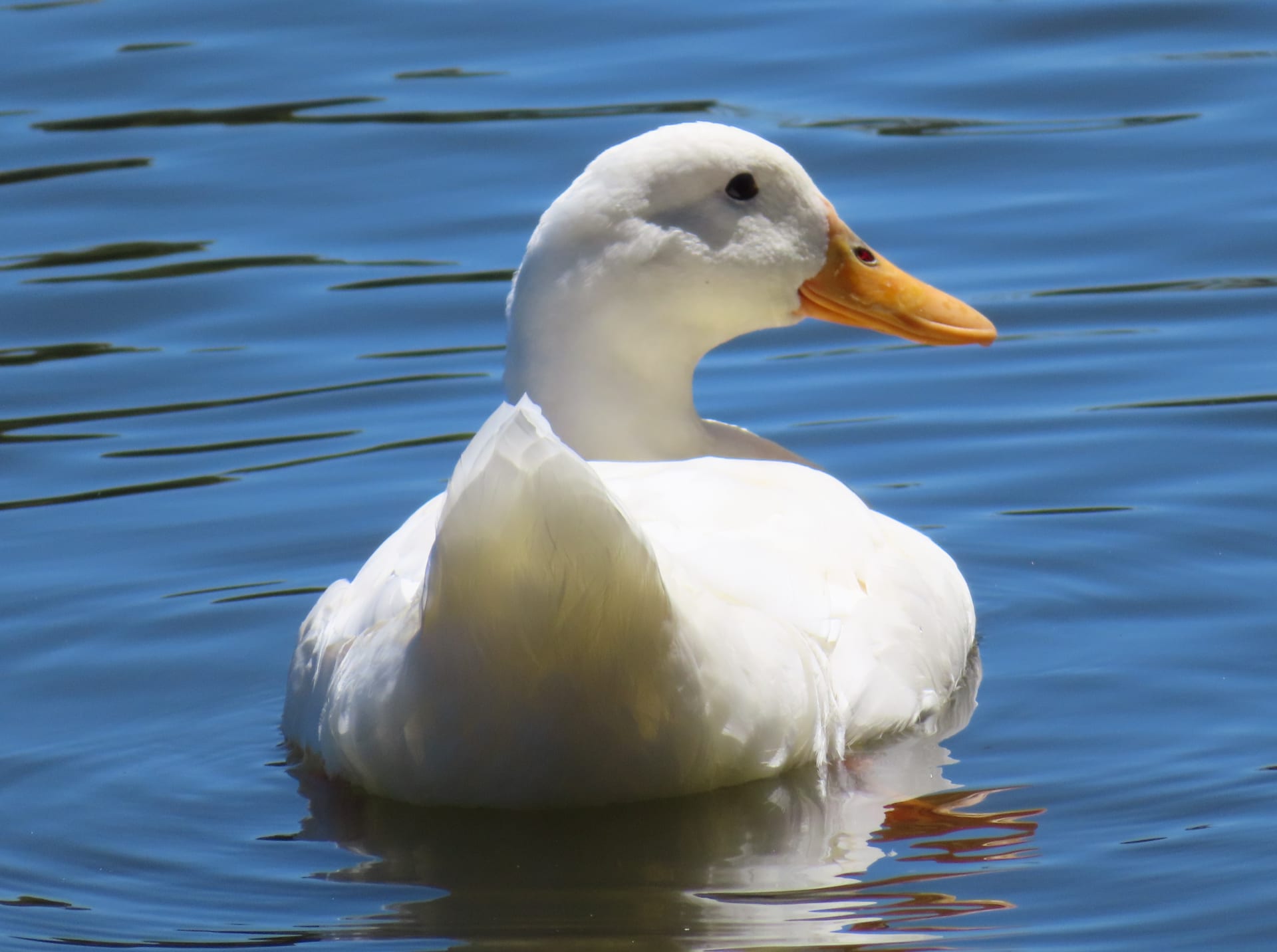
 © Pat Hansen / CC BY-SA 4.0
Domestic Duck
Domestic ducks trace back to the wild mallard, though generations of selective breeding gave them heavier, flight-incapable bodies and an endearing, waddling charm. Breeds range from the classic white Pekin to types raised for meat, eggs, or simply as ornamental pets, and most have a calm, easygoing temperament. They are hardy birds, but their size, water needs, and vocal habits mean they suit keepers with some prior animal-care experience rather than absolute beginners. Ducks also thrive in company, so keeping more than one helps them settle in and feel secure.
View Domestic Duck encyclopedia →0% commission on your first sales!Register by September 30, 2026 and your first 2 sales are commission-free!
Breeder Wanted!
List on BreederDirect and sell directly to customers nationwide!
Six Transparency Commitments from BreederDirect
All Birds listings include complete Breeder transparency: hand-raised status, DNA sex determination, and health certification details.
- Hand-Raised
- DNA Sex-Determined
- Health Certified
- Origin Disclosed
- Color Variation Specified
- Age in Months Disclosed
Browse all 247 breeds
Care Level
Verified breeders wanted for Birds
Breeders are signing up now ahead of launch. Subscribe to be notified when new listings go live.
Getting alerts is free with a member account. When new listings match your saved search, we'll notify you by email and in-app.
Browse other categories
Verified breeders (preview)
Domestic Duck key facts
- Care level
- Intermediate
- Lifespan
- 5-20 years
- Size
- 50-80cm long (most breeds weigh about 3.0-5.0kg)
- Diet
- Waterfowl feed, grain, greens and vegetables; feral birds also take grass shoots, small insects and soil animals
- Cage
- It needs open water for bathing and preening, a predator-proof house at night and dry bedding. Ducks foul water heavily, so plan for drainage and easy cleaning; perches are unnecessary since they cannot grip thin branches.
- Temperament
- Domestic ducks have lost the mallard's territoriality and are less aggressive than the wild bird. They are flock animals that settle better in company, and many become tame.
- Vocalization
- Females quack loudly and often, while drakes are hoarse and quiet. Volume varies by breed and individual, but keeping ducks in a residential area calls for care about neighbours.
- Notes
- It is the same species as the wild mallard and produces fully fertile hybrids with it, so releasing or abandoning birds risks genetic disturbance of native populations and housing must be escape-proof. Neglected water hygiene readily leads to foot problems.
About Domestic Duck
Domestic ducks descend from the mallard and include meat, egg, and ornamental breeds like the Pekin. Hardy and sociable, they need extra care for size and water access, and lay around 150–200 eggs a year.
7 things to know before welcoming a Domestic Duck
1A sturdy build
Domestic ducks typically grow to 50–80cm in length, with many breeds weighing around 3.0–5.0kg. Being flightless and heavier than their mallard ancestors, they have a sturdy, grounded presence both on land and in water. Their size means handling should always be done carefully and with proper support.
2Bathing water is essential
Ducks have a strong instinct to get into water for preening and temperature regulation, so they need access to a splashing or bathing area. Plan ahead for a space where water can be provided and drained, such as a yard or outdoor area. Without enough water access, their feather and skin condition can suffer.
3Consider their calls
Ducks can be quite vocal, and their calls carry well, which matters if you live in a densely built area. They tend to quack more loudly early in the morning, in the evening, or when excited. It's worth checking your distance from neighbors and considering sound mitigation before bringing one home.
4Calmer in company
Ducks are social birds that tend to settle more easily when kept with companions rather than alone. Most individuals are calm and can become quite tame around people, but having flock mates adds to their sense of security. It's worth thinking ahead about how many birds you'll keep and how they'll get along.
5A lifespan of 5–20 years
Ducks can live anywhere from 5 to 20 years, so bringing one home means committing to long-term care. Lifespan varies by breed and living conditions, so it's worth considering how your lifestyle might change over that time before deciding to adopt.
6Daily health checks
Ducks are known as hardy birds, but it's still important to keep an eye on daily appetite, gait, and feather condition. If you notice any changes, having access to a vet experienced with birds is a good idea.
7Choose a breed by purpose
Domestic ducks include many breeds developed for different purposes — meat, eggs, or ornamental appeal — with the white Pekin among the best known. Many breeds lay around 150–200 eggs a year, so whether you're drawn to egg production or simply appearance can guide which breed suits you. It helps to research individual breed traits before deciding.
Frequently asked questions about Domestic Duck
- Q.Can beginners keep ducks?
- A.Ducks are generally considered suitable for keepers with some experience rather than complete beginners. They're hardy, but their size, water needs, and vocal habits mean there's more to manage than with many first pet birds.
- Q.How big do ducks get?
- A.Adult ducks typically reach 50–80cm in length, and many breeds weigh around 3.0–5.0kg. They're notably larger and sturdier-bodied than their mallard ancestors.
- Q.How long do ducks live?
- A.Lifespan ranges from about 5 to 20 years, depending on the breed and how they're cared for. It's important to plan for long-term care before bringing one home.
- Q.Can ducks be kept indoors?
- A.Ducks do best with access to outdoor space where they can bathe in water, such as a yard or open area. Keeping them purely indoors is difficult, since they need a setup that includes water access and drainage.
- Q.Do ducks lay eggs often?
- A.It depends on the breed, but many ducks lay around 150–200 eggs a year, and some breeds are specifically kept for egg production. Actual numbers can vary by individual and environment, so treat this as a general guide.
Useful tools for Domestic Duck care
Learn more about Domestic Duck in the encyclopedia
View Domestic Duck encyclopedia entry →
Care difficulty, lifespan, size and diet — all basics covered.
More in this category
Can't find the one you're looking for?
Post your wishes for free and breeders with matching animals will contact you with introductions.