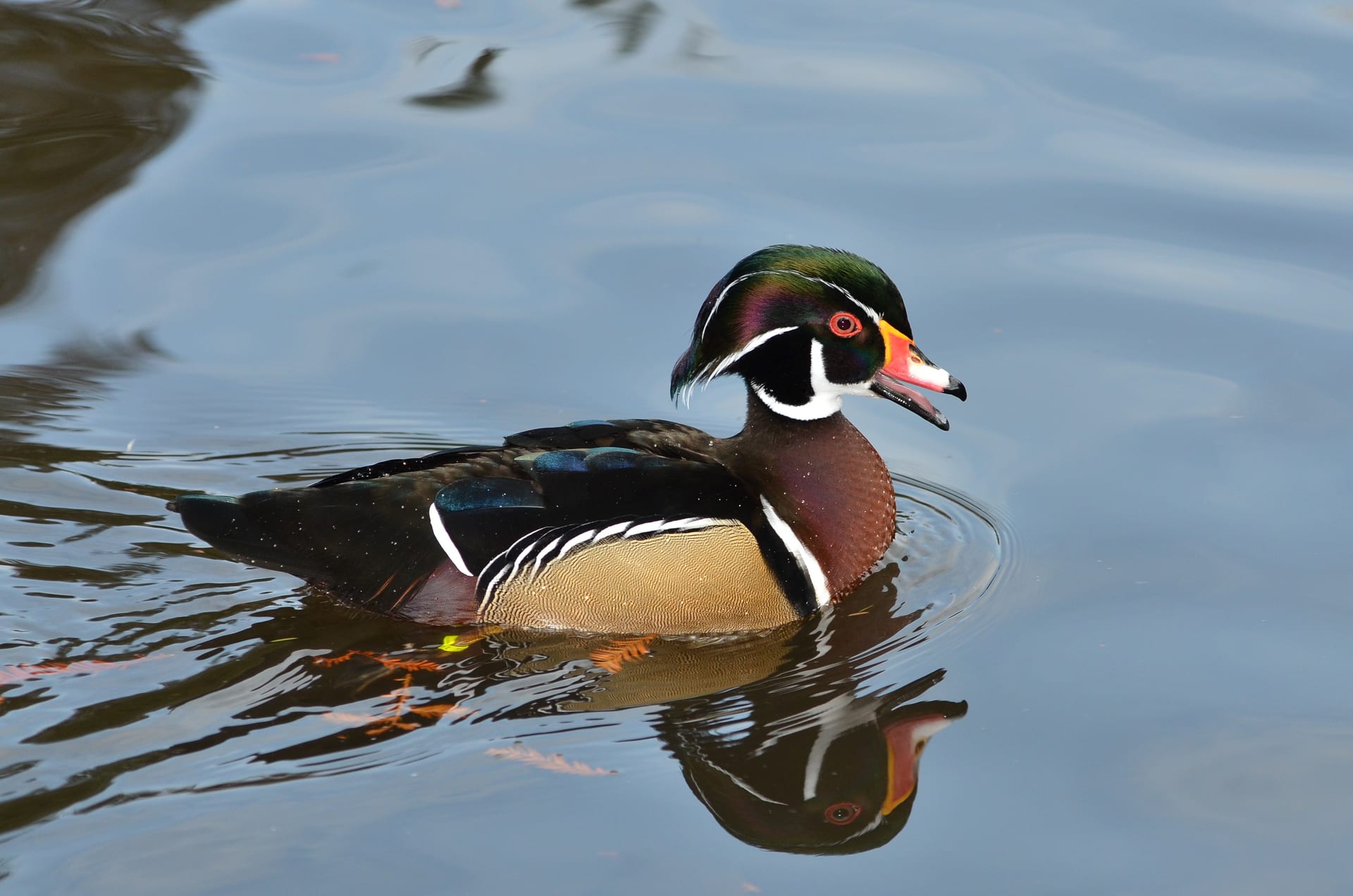
 © Olaf Oliviero Riemer / CC BY-SA 3.0
Wood Duck
The Wood Duck is a tree-nesting duck native to North America, known for its glossy deep-green head with a drooping crest, striking red eyes, and a red bill. It belongs to the same genus as the Mandarin duck and is often described as having some of the most vividly colored plumage among North American waterfowl. In the wild, it nests in tree cavities near water and readily takes to nest boxes in captivity too. Reaching 47-54 cm in length with a wingspan of 66-73 cm, it's a substantial and eye-catching bird. While its beauty captivates many enthusiasts, keeping one calls for real knowledge and experience, which is why it's considered a species for advanced keepers.
View Wood Duck encyclopedia →0% commission on your first sales!Register by September 30, 2026 and your first 2 sales are commission-free!
Breeder Wanted!
List on BreederDirect and sell directly to customers nationwide!
Six Transparency Commitments from BreederDirect
All Birds listings include complete Breeder transparency: hand-raised status, DNA sex determination, and health certification details.
- Hand-Raised
- DNA Sex-Determined
- Health Certified
- Origin Disclosed
- Color Variation Specified
- Age in Months Disclosed
Browse all 247 breeds
Care Level
Verified breeders wanted for Birds
Breeders are signing up now ahead of launch. Subscribe to be notified when new listings go live.
Getting alerts is free with a member account. When new listings match your saved search, we'll notify you by email and in-app.
Browse other categories
Verified breeders (preview)
Wood Duck key facts
- Care level
- Advanced
- Lifespan
- 10-15 years
- Size
- 47-54cm long (454-862g, wingspan 66-73cm)
- Diet
- Waterfowl feed, grain and greens; in the wild mainly aquatic plants and seeds
- Cage
- As a perching duck it needs high perches and shade as well as water, and its flying ability makes a roofed aviary essential. It takes readily to nest boxes, so mount one high for breeding.
- Temperament
- Shy and fond of cover, it rarely becomes tame; keep pairs or small groups for observation. Nest boxes placed too close together trigger dump nesting, so space them out.
- Vocalization
- The female gives a shrill call when flushed and the drake a thin whistle. There is no sustained loud calling, so noise is a minor issue.
- Notes
- It can hybridise with the mandarin duck, so watch combinations in mixed collections. It is not native to Japan, so prevent escapes that could establish feral birds.
About Wood Duck
Meet the Wood Duck, a North American tree-nesting duck with a glossy green crested head and striking red eyes and bill. Here's what to know about its traits and care before bringing one home.
7 things to know before welcoming a Wood Duck
1Advanced-level care
Wood Ducks are considered an advanced-level species to keep. Managing their aquatic habitat along with temperature and humidity requires specialized knowledge, so prior waterfowl-keeping experience is recommended.
2Water and perches
As an arboreal duck species, Wood Ducks benefit from having both swimmable water and branch-like perches or elevated spots to express their natural behaviors. Since they can fly, an enclosure with sufficient height is also important.
3Cavity-nesting habit
In the wild, Wood Ducks nest in tree cavities near water, and they readily use nest boxes in captivity as well. If breeding is a consideration, prepare a nest box of appropriate size placed in a suitable location.
4Male vs. female plumage
Males have a glossy deep-green head with a drooping crest, red eyes, and a red bill, giving them coloring often described as among the most striking of North American waterfowl. Females have more subdued brownish plumage, quite different in impression from the males.
5Wary, sound-sensitive nature
Reflecting their wild origins, Wood Ducks tend to be wary and can be sensitive to sudden noises or frequent comings and goings. Providing a calm, quiet environment helps them settle in.
6Space for their size
Adults reach a total length of about 47-54 cm, with a wingspan of roughly 66-73 cm when fully spread. Be sure to confirm you have enclosure space suited to their size before bringing one home.
7Diet and health care
Wood Ducks are omnivorous, feeding on plant seeds and small aquatic creatures. Base their diet on a nutritionally balanced formulated feed, and keep an eye on their daily condition for any changes.
Frequently asked questions about Wood Duck
- Q.Can beginners keep a Wood Duck?
- A.Wood Ducks are considered an advanced-level species. Because managing their aquatic environment requires specialized knowledge, we recommend gaining waterfowl-keeping experience before bringing one home.
- Q.How large do they get?
- A.Adults reach a total length of about 47-54 cm and weigh 454-862 g, with a wingspan of roughly 66-73 cm. They're larger-bodied than they may appear, so confirm enclosure space in advance.
- Q.Do I need to provide a nest box?
- A.In the wild, Wood Ducks nest in tree cavities near water and readily use nest boxes. Even without breeding plans, they may still enjoy using one as a perch-like retreat.
- Q.Is this a different species from the Mandarin duck?
- A.Yes, it's a different species. The Wood Duck belongs to the same genus as the Mandarin duck and shares similar traits, such as the male's vividly colored plumage, despite being native to North America.
- Q.Is the Wood Duck subject to CITES?
- A.The Wood Duck is not subject to CITES. If you'd like more detail, please also check the individual listing page.
Useful tools for Wood Duck care
Learn more about Wood Duck in the encyclopedia
View Wood Duck encyclopedia entry →
Care difficulty, lifespan, size and diet — all basics covered.
More in this category
Can't find the one you're looking for?
Post your wishes for free and breeders with matching animals will contact you with introductions.