Source: Wikimedia Commons
Wood Duck
AdvancedAix sponsa
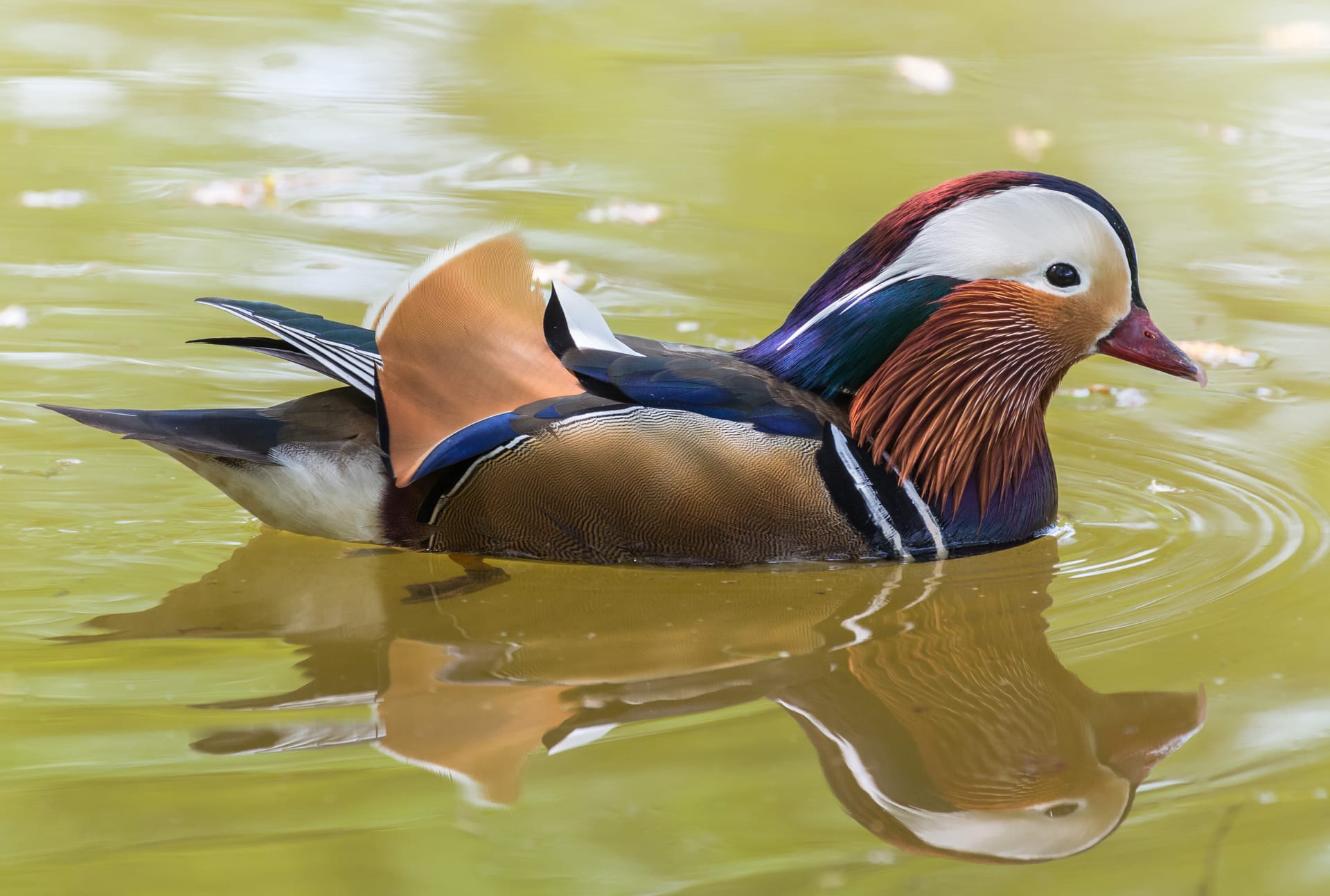
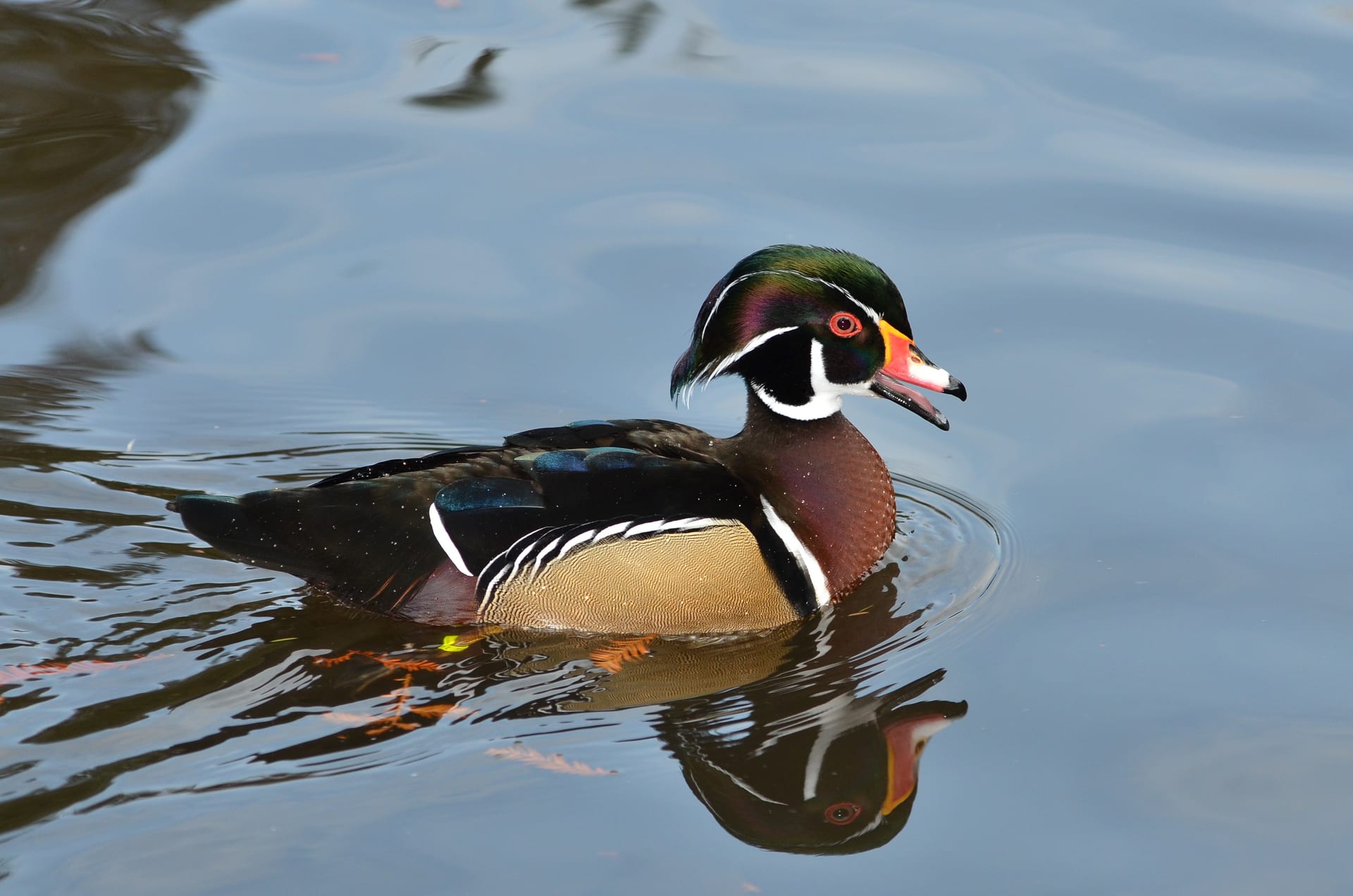
A North American perching duck with a glossy dark green head, drooping crest, red eye and red bill. In the same genus as the mandarin duck, the drake is reckoned among the most colourful of North American waterfowl. It nests in tree holes by water and readily uses nest boxes.
Difficulty
Advanced
Temperature
15〜30℃
Lifespan
10-15 years
Size
47-54cm long (454-862g, wingspan 66-73cm)
Humidity
40〜60%
Diet
Waterfowl feed, grain and greens; in the wild mainly aquatic plants and seeds
About
The wood duck (Aix sponsa) is a monotypic perching duck of North America. The drake has a glossy dark green head with a drooping crest, white stripes running from the throat past the eye, a red eye-ring, a red bill edged in yellow, a brown breast, a white bar dividing breast from wing, and a blue-green back. The female is blue-grey from head to back with mottled grey-brown and white flanks and a white eye-ring drawn back into a line. Linnaeus described it as Anas sponsa in 1758, the epithet meaning bride. Outside the breeding season it uses open wetland and lakes, moving to wooded rivers and lakes to breed. It nests in tree holes near water and readily takes nest boxes; the female alone incubates a clutch of 9-14 eggs for about a month, and the ducklings jump to the ground soon after hatching and walk to water. She raises them alone, and they fledge at around forty days.
Source: Wikipedia (CC BY-SA 4.0)
Lifespan of the Wood Duck
The Wood Duck lives 10-15 years.
Size of the Wood Duck
The Wood Duck grows to 47-54cm long (454-862g, wingspan 66-73cm).
It is 47-54 cm long, weighs 454-862 g and has a wingspan of 66-73 cm, about three-quarters the length of a mallard.
Basic Info
Origin
North America from southern Canada to Mexico, in eastern and western populations divided by the Rocky Mountains
Lifespan
10-15 years
Size
47-54cm long (454-862g, wingspan 66-73cm)
Care Specifications
PeacefulPair
Sources: Wikipedia - Wood duck / Wikipedia - Wood duck, Japanese edition (morphology, breeding)
References & Sources
Edited & verified by: BreederDirect editorial team
The taxonomic, regulatory, and husbandry data on this page are compiled and verified against the authoritative primary sources below.
Taxonomy & Authority
Accepted name: Aix sponsa (Linnaeus, 1758)
Synonyms: Anas sponsa, Lampronessa sponsa
Authority databases: GBIF
Nomenclature follows global taxonomic authority databases.
Regulations & Conservation Status
Not CITES-listedIUCN LC · Least Concern
Aix sponsa. Not listed in the CITES Appendices and not among Japan's designated dangerous animals.
Sources: CITES Appendices (species not listed) / IUCN Red List / Cabinet Order under the Act on Welfare and Management of Animals, appended table (designated dangerous animals)
Regulations may change. Always verify the latest information with the relevant authorities.
Wood Duck Listings
Loading latest listingsFind listings for this species