Source: Wikimedia Commons
Mandarin Duck
AdvancedAix galericulata
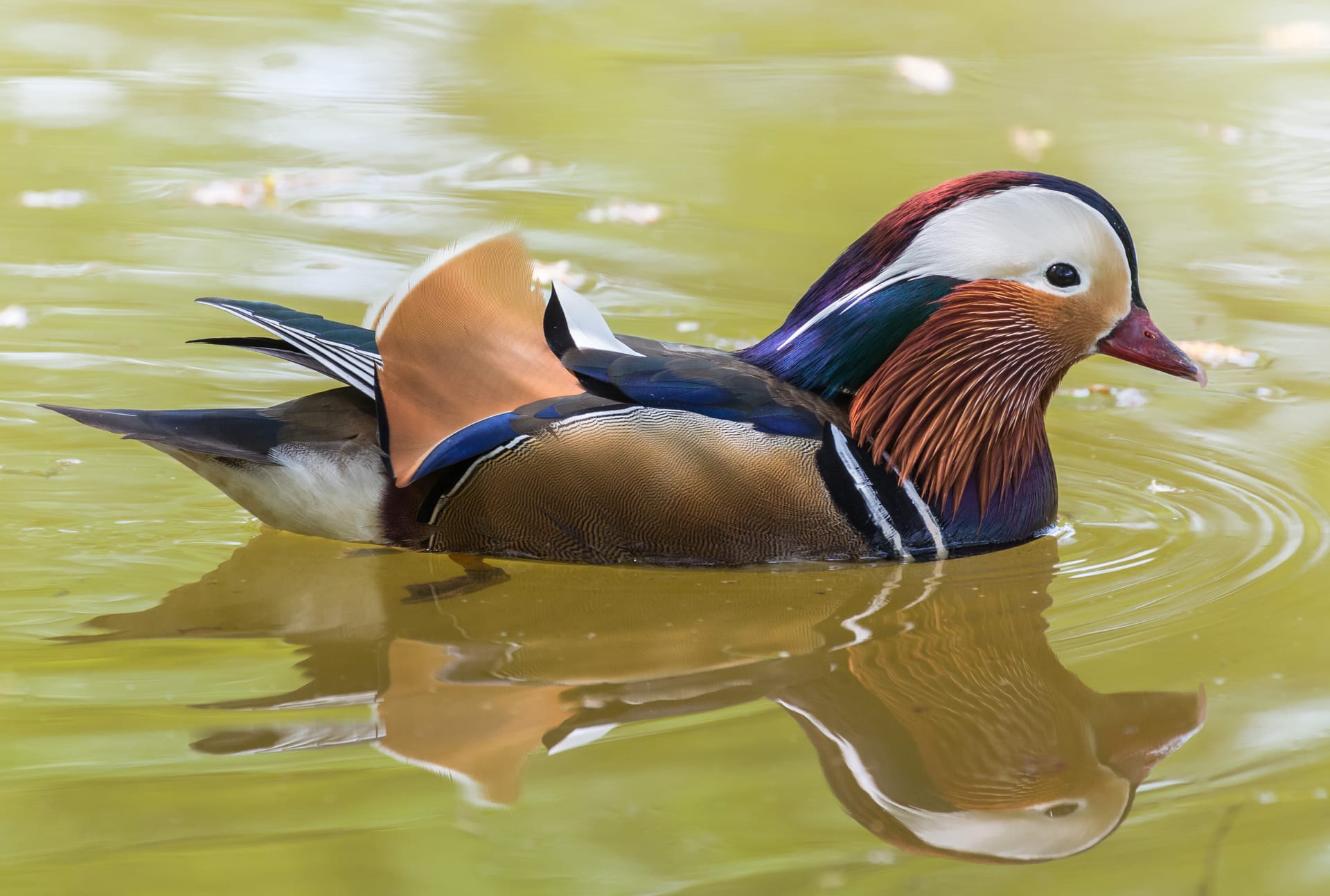
An East Asian perching duck whose breeding male carries fan-shaped orange sail feathers on the back. In Japan only captive-bred birds are traded; taking or transferring wild birds is not permitted under the wildlife protection law.
Difficulty
Advanced
Temperature
15〜30℃
Lifespan
10-15 years
Size
Males about 48cm and 0.6kg, females about 41cm and 0.5kg (wingspan 68-74cm)
Humidity
40〜60%
Diet
Waterfowl feed, grain and greens; in the wild aquatic plants, fruit, seeds, insects and land snails
About
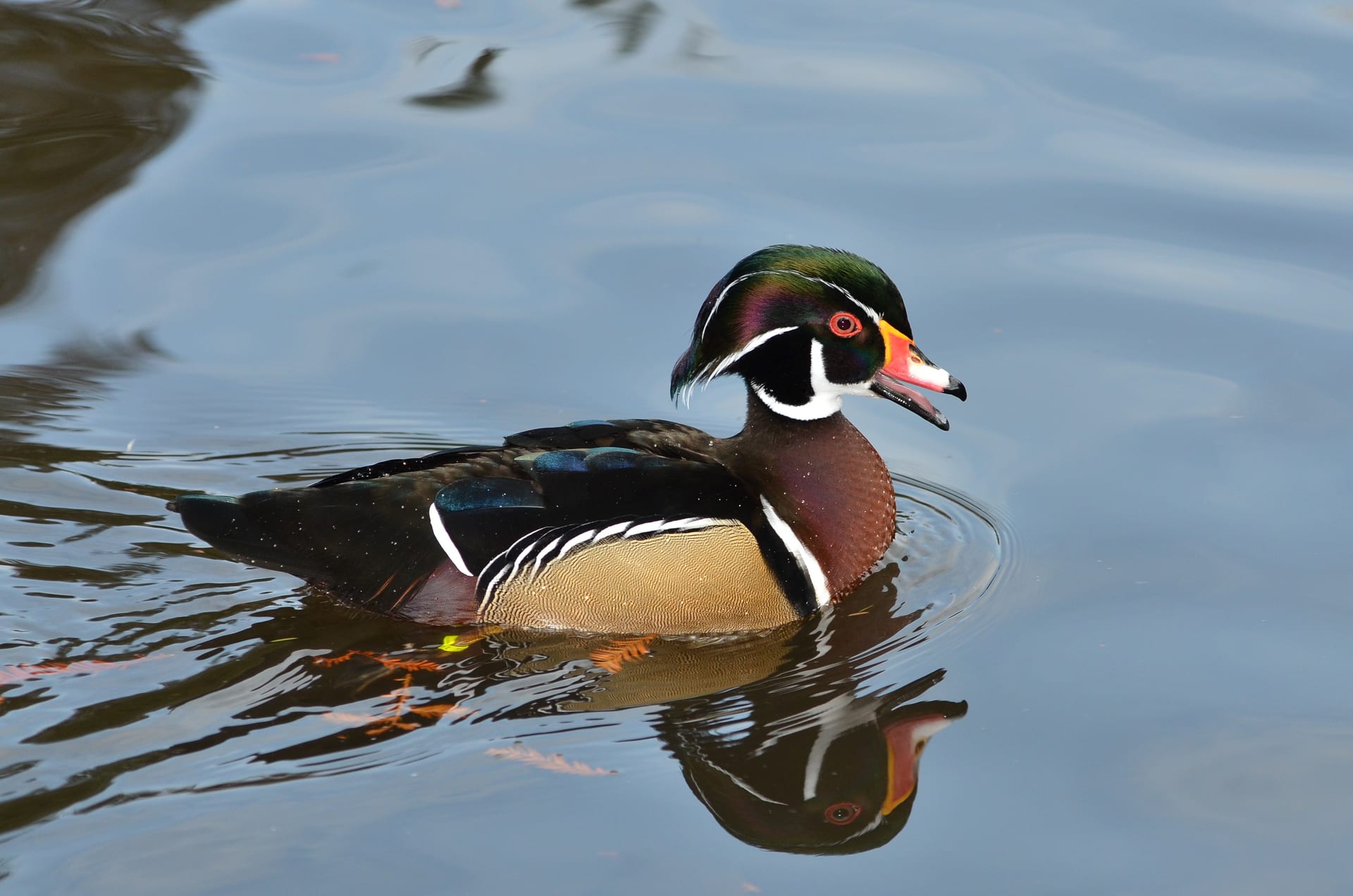
The mandarin duck (Aix galericulata) is a perching duck of East and Northeast Asia. The sexes differ strongly: the breeding male has an elongated crest and ruff, a white and pale yellow face, a purple breast with two white neck stripes, a red bill, and the orange sail feathers - modified innermost tertials shaped like ginkgo leaves - that define the bird. Females and eclipse males are grey-brown with a white stripe running back from the eye. With the North American wood duck it forms the genus Aix. It favours shaded water along streams and lakes, seldom coming out onto open water, and will perch in trees. Breeding runs from April to July in a tree hole more than ten metres above the ground, where the female alone incubates 9-12 eggs for 28-30 days; the ducklings jump to the ground from the nest hole. Engelbert Kaempfer recorded the species as kinmodsui in his History of Japan of 1727.
Source: Wikipedia (CC BY-SA 4.0)
Lifespan of the Mandarin Duck
The Mandarin Duck lives 10-15 years.
Size of the Mandarin Duck
The Mandarin Duck grows to Males about 48cm and 0.6kg, females about 41cm and 0.5kg (wingspan 68-74cm).
Males are about 48 cm long and weigh 0.6 kg, females about 41 cm and 0.5 kg, with a wingspan of 68-74 cm.
Basic Info
Origin
East and Northeast Asia (Japan, China, the Korean Peninsula and the Russian Far East), with introduced populations in the British Isles and western Europe
Lifespan
10-15 years
Care Specifications
References & Sources
Edited & verified by: BreederDirect editorial team
The taxonomic, regulatory, and husbandry data on this page are compiled and verified against the authoritative primary sources below.
Primary sources
- Wikipedia
- CITES Appendices (species not listed)
- IUCN Red List
- Cabinet Order under the Act on Welfare and Management of Animals, appended table (designated dangerous animals)
- Act on the Protection and Management of Wildlife, and the Optimization of Hunting (Ministry of the Environment, Japan)
- Wikipedia - Mandarin duck, Japanese edition (morphology, ecology, breeding)
- GBIF
Taxonomy & Authority
Accepted name: Aix galericulata (Linnaeus, 1758)
Synonyms: Anas galericulata
Authority databases: GBIF
Nomenclature follows global taxonomic authority databases.
Regulations & Conservation Status
Not CITES-listedIUCN LC · Least Concern
Domestic law: As a bird native to Japan, taking, keeping or transferring wild individuals is in principle not permitted under the Act on the Protection and Management of Wildlife, and the Optimization of Hunting. Only captive-bred birds, domestic or imported, are traded.
Aix galericulata. Not listed in the CITES Appendices and not among Japan's designated dangerous animals, but as a bird native to Japan it falls under the Act on the Protection and Management of Wildlife, and the Optimization of Hunting.
Sources: CITES Appendices (species not listed) / IUCN Red List / Cabinet Order under the Act on Welfare and Management of Animals, appended table (designated dangerous animals) / Act on the Protection and Management of Wildlife, and the Optimization of Hunting (Ministry of the Environment, Japan)
Regulations may change. Always verify the latest information with the relevant authorities.
Mandarin Duck Listings
Loading latest listingsFind listings for this species