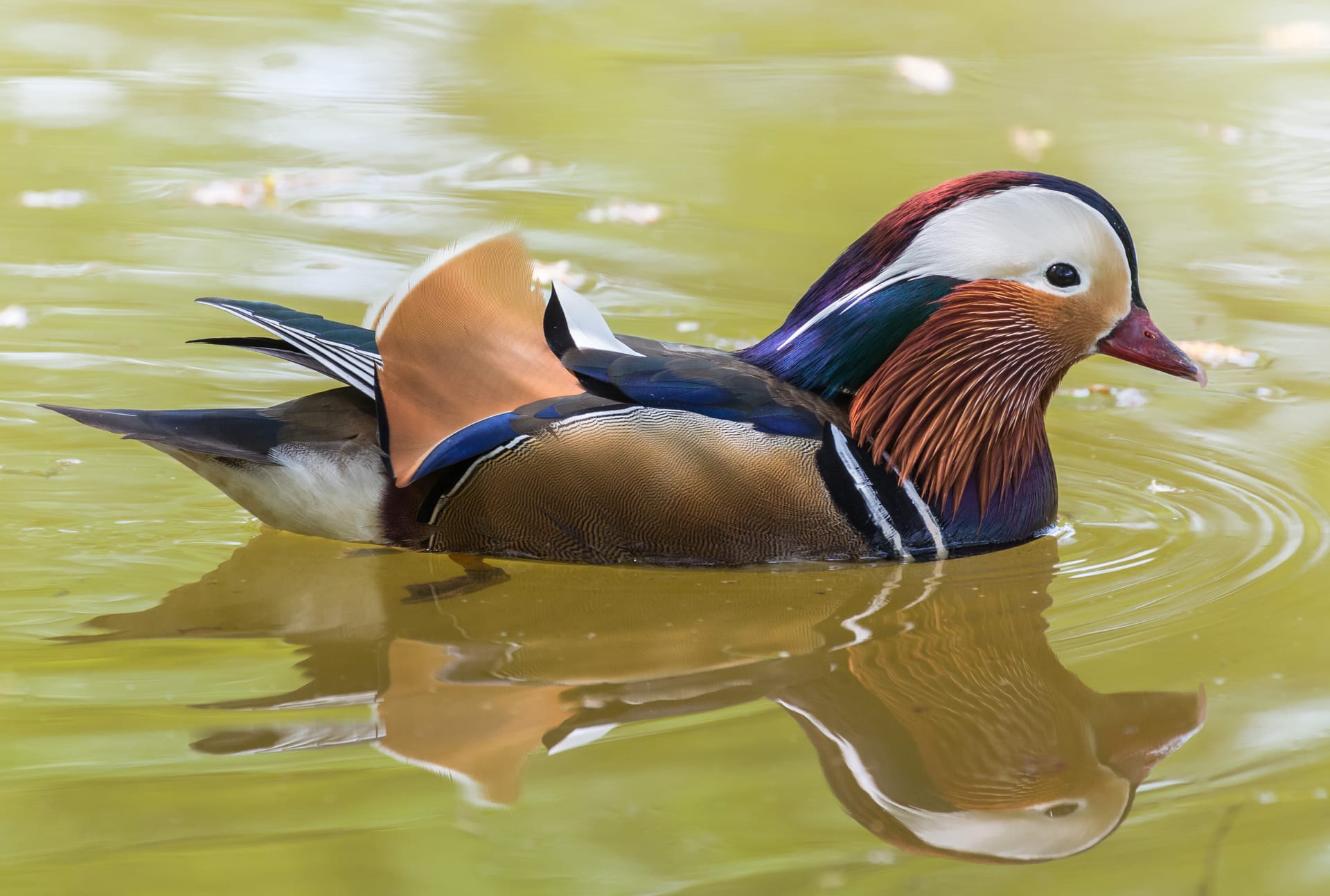
 © Diliff / CC BY 3.0
Mandarin Duck
The Mandarin Duck is a duck native to East Asia, known for the male's striking ginkgo-leaf-shaped ornamental feathers in vivid orange, worn only during the breeding season. Outside that season, males take on plainer plumage much like females, giving the bird a different look through the year. Every Mandarin Duck available in Japan is captive-bred, and keeping one calls for specialized care, from a water feature to outdoor housing, making it a bird suited to experienced keepers. Their close, devoted pairing has long made them a symbol of marital harmony, appealing to those who want to build a real bond with their birds.
View Mandarin Duck encyclopedia →0% commission on your first sales!Register by September 30, 2026 and your first 2 sales are commission-free!
Breeder Wanted!
List on BreederDirect and sell directly to customers nationwide!
Six Transparency Commitments from BreederDirect
All Birds listings include complete Breeder transparency: hand-raised status, DNA sex determination, and health certification details.
- Hand-Raised
- DNA Sex-Determined
- Health Certified
- Origin Disclosed
- Color Variation Specified
- Age in Months Disclosed
Browse all 247 breeds
Care Level
Verified breeders wanted for Birds
Breeders are signing up now ahead of launch. Subscribe to be notified when new listings go live.
Getting alerts is free with a member account. When new listings match your saved search, we'll notify you by email and in-app.
Browse other categories
Verified breeders (preview)
Mandarin Duck key facts
- Care level
- Advanced
- Lifespan
- 10-15 years
- Size
- Males about 48cm and 0.6kg, females about 41cm and 0.5kg (wingspan 68-74cm)
- Diet
- Waterfowl feed, grain and greens; in the wild aquatic plants, fruit, seeds, insects and land snails
- Cage
- Being strongly arboreal it needs high perches and shade as well as water, and its flying ability makes a roofed aviary essential. For breeding, mount a nest box high up.
- Temperament
- It dislikes open water and keeps to cover. Shy and slow to tame, it is kept mainly for observation, in pairs or small groups.
- Vocalization
- Males give a short clear whistle and females a low rasping call. There is no loud sustained quacking, so noise is a minor issue.
- Notes
- The species occurs wild in Japan, where taking, keeping or transferring wild birds is not permitted under the wildlife protection law; only captive-bred birds, domestic or imported, are traded, so check provenance when acquiring one.
About Mandarin Duck
The Mandarin Duck is an East Asian waterfowl whose males display vivid orange, ginkgo-shaped ornamental plumage during breeding season. Only captive-bred birds are available, and they require advanced, specialized care.
7 things to know before welcoming a Mandarin Duck
1A bathing area is essential
As a waterfowl species, Mandarin Ducks need access to water for preening and general health. Set up a shallow outdoor pool or pond in advance and be ready to keep it clean.
2Ornamental feathers are seasonal
Only during the breeding season do males display their striking ginkgo-leaf-shaped orange ornamental feathers. Outside that season, males take on plainer plumage similar to females, so their appearance changes through the year.
3Suited to experienced keepers
Mandarin Ducks are classified as suitable for experienced keepers. Managing their water setup and outdoor housing requires specialized knowledge, so they are best suited to keepers with prior experience.
4Outdoor housing and predator-proofing
Mandarin Ducks are generally kept outdoors. Before bringing one home, prepare a secure enclosure with fencing or netting to protect them from predators such as cats or weasels.
5Pairs suit them well
Known for their close bonding behavior, Mandarin Ducks tend to do better kept in pairs or small groups rather than alone. Consider compatibility and available space when planning to bring one home.
6Water quality and feeding
Bathing water can quickly get dirty from feathers and food debris, so regular water changes and cleaning are a routine part of care. Base their diet on waterfowl feed and pay attention to nutritional balance.
7Only captive-bred birds circulate
All Mandarin Ducks available domestically are captive-bred; capturing or acquiring wild individuals is not permitted. Be sure to choose a bird with a clear, traceable origin.
Frequently asked questions about Mandarin Duck
- Q.Can beginners keep a Mandarin Duck?
- A.Mandarin Ducks are considered suitable for experienced keepers. Managing their water area and setting up outdoor housing calls for specialized knowledge, so it's best to gain some keeping experience first.
- Q.Can they be kept indoors?
- A.Because they need both a place to bathe and outdoor space, Mandarin Ducks are not well suited to typical indoor keeping. Setting up a dedicated outdoor enclosure is the standard approach.
- Q.Do males keep their colorful plumage year-round?
- A.No, the vivid orange ornamental feathers appear only on males during the breeding season. Outside that period, males take on plainer plumage similar to females.
- Q.Are they noisy?
- A.Vocalization varies by individual and environment, but it's worth considering the impact on your surroundings before keeping one. Since they're kept outdoors, think carefully about proximity to neighbors and enclosure placement.
- Q.Can I keep a wild-caught Mandarin Duck?
- A.No, that's not possible. All Mandarin Ducks distributed domestically are captive-bred, and capturing or transferring wild individuals is not permitted.
Useful tools for Mandarin Duck care
Learn more about Mandarin Duck in the encyclopedia
View Mandarin Duck encyclopedia entry →
Care difficulty, lifespan, size and diet — all basics covered.
More in this category
Can't find the one you're looking for?
Post your wishes for free and breeders with matching animals will contact you with introductions.