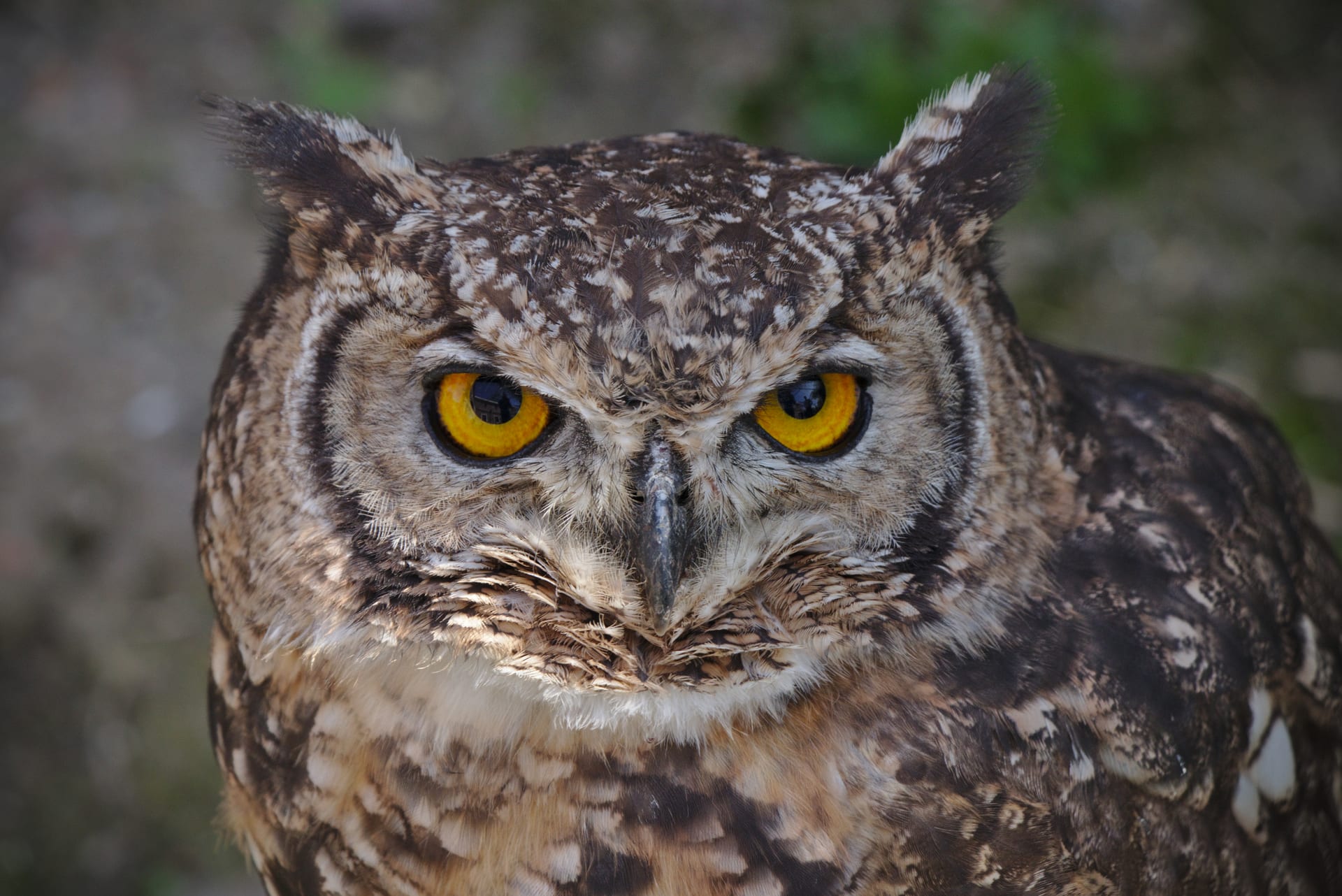
 © M0tty / CC BY-SA 4.0
Spotted Eagle-Owl
The Spotted Eagle-Owl is one of the smaller members of the eagle-owl group, though it still counts as a mid-sized owl. It's the most familiar owl across southern Africa, common enough to turn up around towns and city edges. Its pale, whitish-buff facial disc, bright yellow eyes, and prominent ear tufts give it a striking, alert expression that balances fierceness with a certain charm. Compared with its larger relatives, it relies more heavily on insects as prey and tends to move with quicker agility. Quiet and secretive by day, it can also be sharply defensive, making it a bird best suited to keepers experienced in raptor handling.
View Spotted Eagle-Owl encyclopedia →0% commission on your first sales!Register by September 30, 2026 and your first 2 sales are commission-free!
Breeder Wanted!
List on BreederDirect and sell directly to customers nationwide!
Six Transparency Commitments from BreederDirect
All Birds listings include complete Breeder transparency: hand-raised status, DNA sex determination, and health certification details.
- Hand-Raised
- DNA Sex-Determined
- Health Certified
- Origin Disclosed
- Color Variation Specified
- Age in Months Disclosed
Browse all 247 breeds
Care Level
Verified breeders wanted for Birds
Breeders are signing up now ahead of launch. Subscribe to be notified when new listings go live.
Getting alerts is free with a member account. When new listings match your saved search, we'll notify you by email and in-app.
Browse other categories
Verified breeders (preview)
Spotted Eagle-Owl key facts
- Care level
- Advanced
- Lifespan
- 12-18 years
- Size
- About 45cm (wingspan 100-140cm, 454-907g)
- Diet
- Frozen mice, rats, quail and day-old chicks; in the wild insects, small mammals, birds and reptiles
- Cage
- Small for an eagle-owl but with a wingspan reaching 140 cm, it still needs an aviary large enough to spare the feathers, with cover for the day and perches at varied heights.
- Temperament
- An adaptable bird that settles near houses, it is less aggressive than the large eagle-owls, though nest defence in the breeding season is still fierce.
- Vocalization
- It hoots in two low notes, pairs calling to each other. The volume is less than that of the large eagle-owls, but it calls repeatedly at night.
- Notes
- Listed on CITES Appendix II, so import requires an export permit. Because it is sometimes confused with the greyish eagle-owl, check the labelling and provenance when buying.
About Spotted Eagle-Owl
The Spotted Eagle-Owl is a mid-sized African owl known for its yellow eyes and ear tufts. Common across southern Africa, it feeds heavily on insects and calls for experienced keeper skills.
7 things to know before welcoming a Spotted Eagle-Owl
1Needs Real Flight Space
Wingspan reaches 100-140 cm in adults, so housing needs to be large enough for wing-stretching and short flights. Cramped enclosures can cause stress and feather damage.
2Diet Should Include Insects
This species preys on insects more heavily than its larger eagle-owl relatives, so a varied diet that includes insect prey is important. An unbalanced diet can lead to nutritional issues.
3Best Suited to Experienced Keepers
Care difficulty is rated as advanced, requiring familiarity with a raptor's strong grip, sharp beak, and wary temperament. This isn't a good first bird for someone new to raptor care.
4Active at Night, Not Day
It rests quietly in cover during daylight hours and becomes active after dusk. Feeding and observation schedules should work around this nocturnal rhythm.
5Territorial Calls to Expect
In the wild this owl calls to assert territory, and similar vocal behavior can appear in captivity. It's worth considering how that might affect neighbors before bringing one home.
6Trust Takes Time to Build
Unlike a dog or cat, this owl won't naturally bond with people - earning its trust takes patient, consistent handling over time. Personality also varies noticeably between individuals.
7Prepare the Space in Advance
Perches, hiding spots, and stable temperature and humidity should all be set up before the owl arrives. Planning ahead also helps reduce the stress of transport and settling into a new environment.
Frequently asked questions about Spotted Eagle-Owl
- Q.Is this owl suitable for a first-time owner?
- A.The Spotted Eagle-Owl is rated as an advanced-level species, so it isn't recommended for someone without raptor-handling experience. Consulting an experienced keeper or specialist first is a good idea.
- Q.How big does it get?
- A.Adults reach about 45 cm in body length, with a wingspan of roughly 100-140 cm. Body weight typically falls between 454 and 907 grams.
- Q.How is it different from other eagle-owls?
- A.It's one of the smaller species in the eagle-owl group and relies more on insects for food than its larger relatives. Its pale facial disc, yellow eyes, and prominent ear tufts also help distinguish it.
- Q.Is this species listed under CITES?
- A.Spotted Eagle-Owl is listed in CITES Appendix II. International trade requires a permit from the exporting country, but as far as CITES is concerned, no registration is needed to buy or sell individuals already legally in Japan.
- Q.Since it's nocturnal, is it noisy at night?
- A.It calls to assert territory, so depending on timing and surroundings this may be worth considering for neighbors. Understanding its vocal habits beforehand can help you prepare.
Useful tools for Spotted Eagle-Owl care
Learn more about Spotted Eagle-Owl in the encyclopedia
View Spotted Eagle-Owl encyclopedia entry →
Care difficulty, lifespan, size and diet — all basics covered.
More in this category
Can't find the one you're looking for?
Post your wishes for free and breeders with matching animals will contact you with introductions.