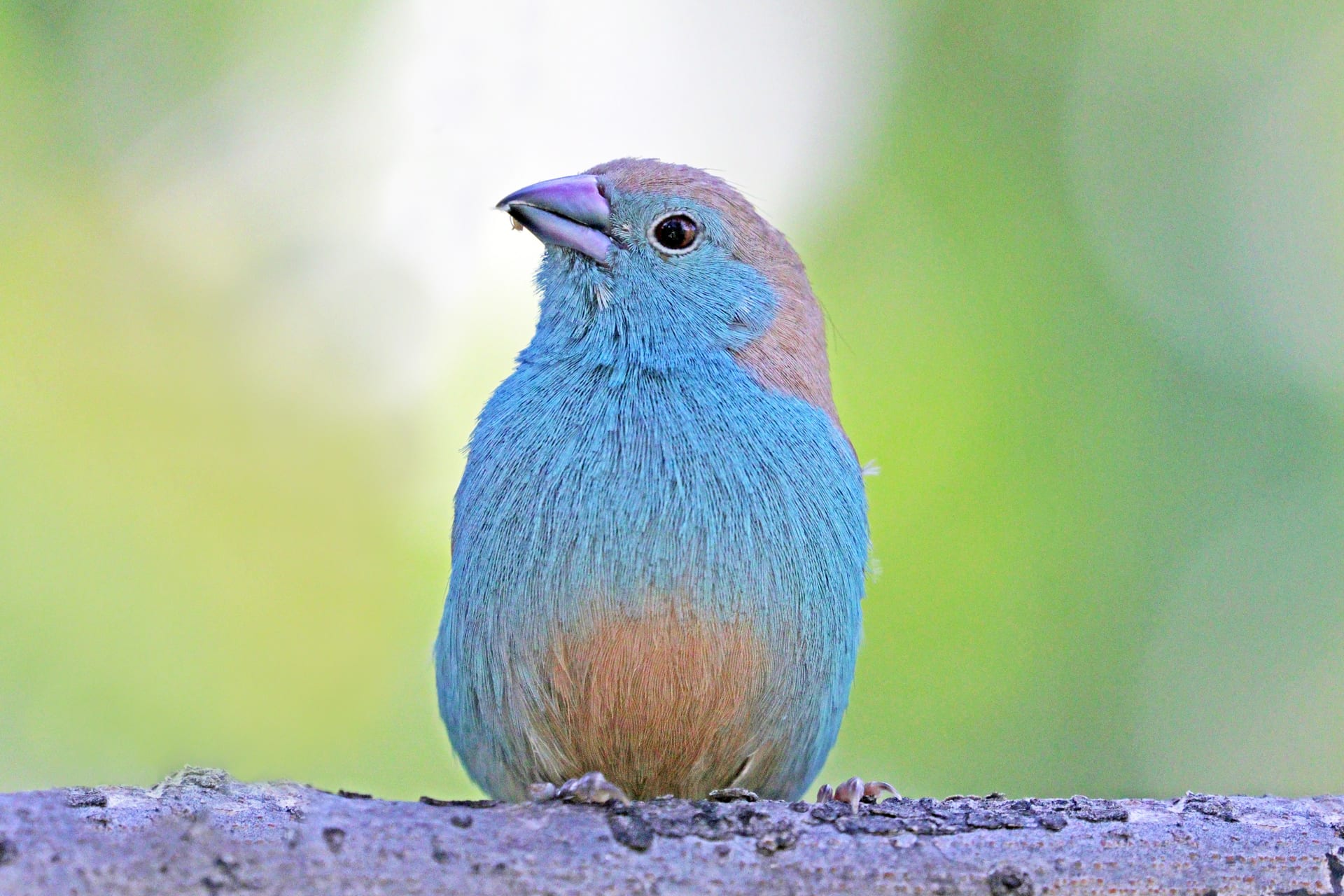
 © Charles J. Sharp / CC BY-SA 4.0
Blue-breasted Cordon-bleu
The Blue-breasted Cordon-bleu is a small finch native to southern Africa, belonging to the waxbill family. It closely resembles the Red-cheeked Cordon-bleu, but lacks the red cheek patch — instead, its face, chest, flanks, and rump are covered in a uniform pale blue. Males show a more vivid blue overall, while females have a narrower blue area, a paler tone, and a gentle, calm temperament. At around 12 to 13 cm in length, it's a compact bird considered suitable for beginners, making it an approachable choice for anyone new to keeping finches.
View Blue-breasted Cordon-bleu encyclopedia →0% commission on your first sales!Register by September 30, 2026 and your first 2 sales are commission-free!
Breeder Wanted!
List on BreederDirect and sell directly to customers nationwide!
Six Transparency Commitments from BreederDirect
All Birds listings include complete Breeder transparency: hand-raised status, DNA sex determination, and health certification details.
- Hand-Raised
- DNA Sex-Determined
- Health Certified
- Origin Disclosed
- Color Variation Specified
- Age in Months Disclosed
Browse all 247 breeds
Care Level
Verified breeders wanted for Birds
Breeders are signing up now ahead of launch. Subscribe to be notified when new listings go live.
Getting alerts is free with a member account. When new listings match your saved search, we'll notify you by email and in-app.
Browse other categories
Verified breeders (preview)
Blue-breasted Cordon-bleu key facts
- Care level
- Beginner-friendly
- Lifespan
- 5-7 years
- Size
- 12-13cm
- Diet
- Mixed seed, spray millet, greens, small livefood
- Cage
- It works through the lower branches of bushes, so a wide cage or aviary with plenty of branches suits it.
- Temperament
- Peaceable and strongly gregarious, it mixes well with other small finches, though it defends the area around its nest when breeding.
- Vocalization
- It repeats a soft seee-seee contact call and the volume is low.
- Notes
- Both sexes build the nest, so supply plenty of grass stems and feathers. It is sensitive to cold and damp.
About Blue-breasted Cordon-bleu
A small finch from southern Africa related to the Cordon-bleu, distinguished by its lack of a red cheek patch and pale blue face, chest, flanks, and rump. Gentle and beginner-friendly.
7 things to know before welcoming a Blue-breasted Cordon-bleu
1Best kept in pairs or groups
As a member of the waxbill family, Blue-breasted Cordon-bleus are highly social and generally do better kept in pairs or small groups than alone. Extended solitary housing can lead to stress, so it's worth planning how many birds you'll keep before bringing one home.
2Cold protection is essential
Originating from southern Africa, this species isn't well suited to cold temperatures. In winter, use a heat source to keep the room warm and place the cage away from drafts.
3Diet and calcium needs
The main diet is a finch seed mix, supplemented with leafy greens such as komatsuna. Offer crushed oyster shell or cuttlebone for calcium, and change the water daily.
4Soft, quiet calls
Their calls are soft and unobtrusive, nothing like the loud vocalizations of parrots. This makes them relatively easy to keep even in an apartment.
5Easy to sex by color
Males show vivid, clearly defined pale blue across the face, chest, flanks, and rump, while females have a narrower blue area and an overall paler tone. This makes the sexes relatively easy to tell apart.
6Enjoys bathing
These birds enjoy bathing, so provide a shallow bath dish in the cage regularly. Bathing supports preening and helps keep the feathers in good condition.
7Not typically hand-tame
Waxbills generally don't tame to human handling the way parrots do, so they aren't birds you'll train to perch on your hand. It's best to approach them as birds to observe and enjoy rather than to handle.
Frequently asked questions about Blue-breasted Cordon-bleu
- Q.How is it different from the Red-cheeked Cordon-bleu?
- A.The key difference is the red cheek patch: the Red-cheeked Cordon-bleu has one, while the Blue-breasted Cordon-bleu doesn't, showing pale blue continuously from the face through the chest, flanks, and rump instead.
- Q.Is this species suitable for first-time bird keepers?
- A.Yes, it's generally considered a beginner-friendly species, even for those with no prior finch-keeping experience. That said, it's still worth learning the basics of care and preparation before bringing one home.
- Q.Is it noisy?
- A.No, its calls are soft and quiet. It doesn't produce the loud vocalizations typical of parrots, making it relatively suitable even for apartment living.
- Q.How can I tell males and females apart?
- A.Males display vivid, widespread pale blue across the face, chest, flanks, and rump, while females have a narrower blue area and a paler overall coloring.
- Q.Is it okay to keep just one bird?
- A.Keeping a single bird is possible, but since this is a highly social species, pairs or small groups tend to suit it better. If you do keep just one, plan on giving it regular daily interaction.
Useful tools for Blue-breasted Cordon-bleu care
Learn more about Blue-breasted Cordon-bleu in the encyclopedia
View Blue-breasted Cordon-bleu encyclopedia entry →
Care difficulty, lifespan, size and diet — all basics covered.
More in this category
Can't find the one you're looking for?
Post your wishes for free and breeders with matching animals will contact you with introductions.