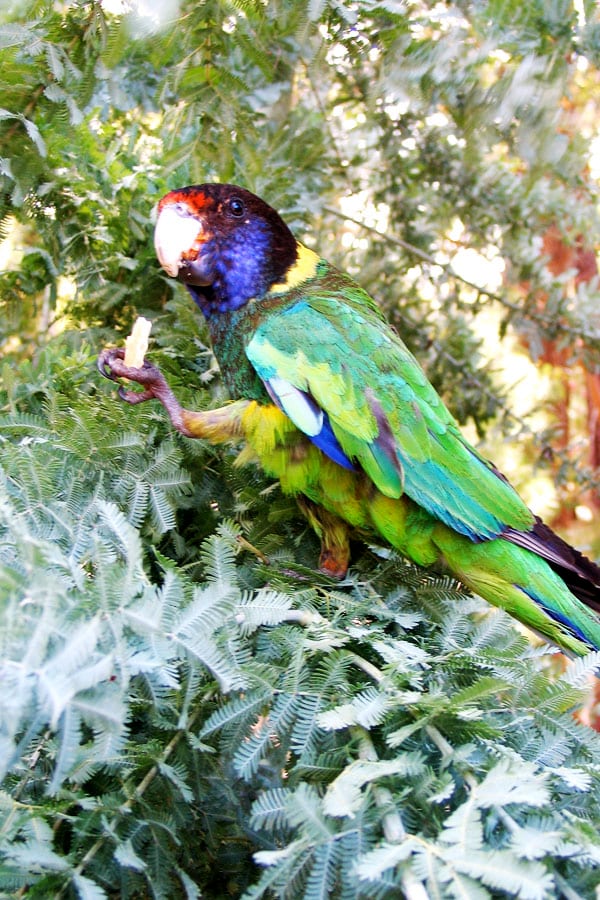
 © Fernando de Sousa / CC BY-SA 2.0
Australian Ringneck
The Australian Ringneck is a mid-sized parrot native to Australia, named for the bright yellow band that circles the back of its neck. At 33 to 42 cm in length, it has real presence, and its four subspecies look strikingly different from one another — from the black-headed Port Lincoln form to the all-green Mallee form. Curious and energetic, Ringnecks also have an exceptionally strong bite, so a sturdy, well-built cage is essential. With its bold personality and the visual variety across subspecies, this is a bird that rewards an owner ready for a long-term, hands-on relationship.
View Australian Ringneck encyclopedia →0% commission on your first sales!Register by September 30, 2026 and your first 2 sales are commission-free!
Breeder Wanted!
List on BreederDirect and sell directly to customers nationwide!
Six Transparency Commitments from BreederDirect
All Birds listings include complete Breeder transparency: hand-raised status, DNA sex determination, and health certification details.
- Hand-Raised
- DNA Sex-Determined
- Health Certified
- Origin Disclosed
- Color Variation Specified
- Age in Months Disclosed
Browse all 247 breeds
Care Level
Verified breeders wanted for Birds
Breeders are signing up now ahead of launch. Subscribe to be notified when new listings go live.
Getting alerts is free with a member account. When new listings match your saved search, we'll notify you by email and in-app.
Browse other categories
Verified breeders (preview)
Australian Ringneck key facts
- Care level
- Intermediate
- Lifespan
- About 18 years
- Size
- 33-42cm (123-143g in zonarius, 142-206g in semitorquatus)
- Diet
- Mixed seed, greens, fruit and vegetables, pellets, and unsprayed buds and blossom
- Cage
- A walk-in flight 4.5 m long is recommended, with a vertical box or log 61-71 cm high and 20 x 20 cm in section, and metal construction that survives chewing.
- Temperament
- An avid chewer: keep up a steady supply of unsprayed fir, willow, elder and pine branches, wood blocks and vegetable-tanned leather toys.
- Vocalization
- Voices differ by subspecies: the Port Lincoln form is guttural and lower pitched, the southwestern twenty-eight gives three-syllable notes with a higher middle note, and the Mallee ringneck has a harsh metallic alarm call and a ringing, high-pitched repeated call.
- Notes
- Listed on CITES Appendix II, so import requires an export permit. Size and weight vary widely between subspecies, so identify the subspecies when acquiring a bird.
About Australian Ringneck
The Australian Ringneck is a mid-sized parrot from Australia, 33-42 cm long with a yellow neck band, an 18-year lifespan, and a strong bite that makes it a better fit for intermediate keepers.
7 things to know before welcoming a Australian Ringneck
1A Cage Built to Last
Australian Ringnecks have an exceptionally strong bite and can easily damage flimsy cages or wooden perches. Choose a sturdy metal cage and provide tough chew toys they can safely destroy instead.
2Looks Vary by Subspecies
Australian Ringnecks have four subspecies, and their appearance differs strikingly — the Port Lincoln form has a black head, while the Mallee form is entirely green. Check which subspecies you're getting so there's no surprise later.
3An 18-Year Commitment
With a lifespan of around 18 years, bringing home an Australian Ringneck means planning for nearly two decades of care. Think through future lifestyle changes before deciding you can commit long-term.
4Active and Space-Hungry
At 33 to 42 cm, this is a larger, energetic parrot that likes to move. Beyond cage time, it does best with regular, supervised out-of-cage flight time in a bird-safe room.
5An Independent Personality
Curious and affectionate once bonded, Ringnecks can also be wary and strong-willed, taking time to warm up to people. Building trust works best at the bird's own pace, without rushing.
6Feeding for Its Size
Body weight ranges from about 123-143 g to 142-206 g depending on subspecies, so portions should match the individual bird's size. Balance pellets, vegetables, and seeds to avoid nutritional gaps.
7Getting Set Up in Advance
Have a sturdy cage, perches, and chew-proof toys ready before your bird arrives, since its beak strength demands durable equipment. It's also worth considering noise levels against your living situation beforehand.
Frequently asked questions about Australian Ringneck
- Q.Is this parrot suitable for beginners?
- A.The Australian Ringneck is considered a bird better suited to intermediate keepers. Its strong bite and independent, strong-willed personality are easier to manage with some prior parrot-keeping experience.
- Q.How big does an Australian Ringneck get?
- A.Adults typically reach 33 to 42 cm in length. Body weight varies by subspecies, running about 123-143 g for the zonarius subspecies and 142-206 g for semitorquatus.
- Q.Why do individuals look so different?
- A.Australian Ringnecks have four subspecies, and their appearance varies widely between them — the Port Lincoln form has a black head, while the Mallee form is entirely green. Which subspecies you get shapes the bird's overall look.
- Q.How long of a commitment is keeping one?
- A.Australian Ringnecks have a lifespan of around 18 years. That means being ready to provide responsible care from a young bird all the way into its senior years.
- Q.Is this species covered by CITES?
- A.Australian Ringneck is listed in CITES Appendix II. International trade requires a permit from the exporting country, but as far as CITES is concerned, no registration is needed to buy or sell individuals already legally in Japan.
Useful tools for Australian Ringneck care
Learn more about Australian Ringneck in the encyclopedia
View Australian Ringneck encyclopedia entry →
Care difficulty, lifespan, size and diet — all basics covered.
More in this category
Can't find the one you're looking for?
Post your wishes for free and breeders with matching animals will contact you with introductions.