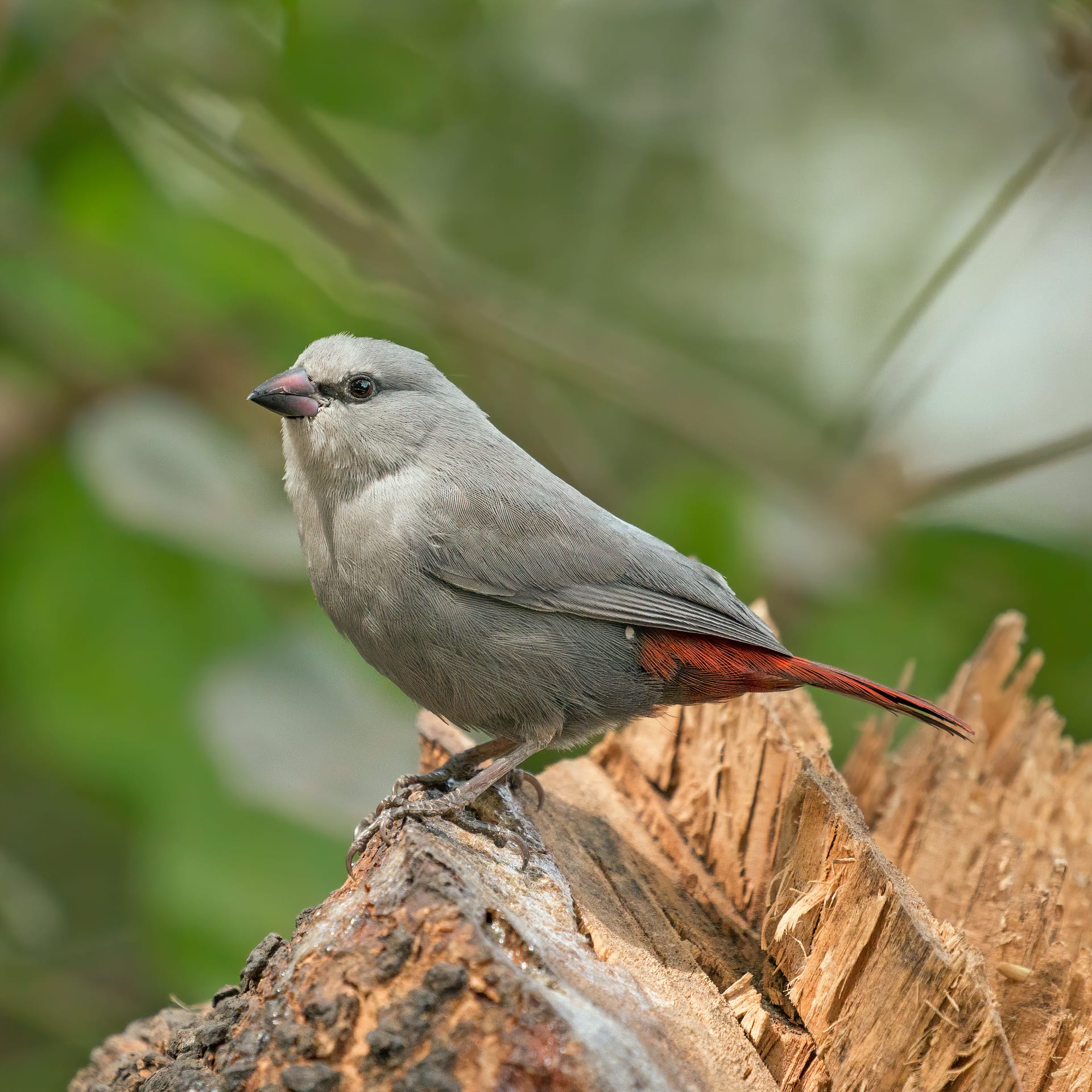
 © Charles J. Sharp / CC BY-SA 4.0
Lavender Waxbill
The Lavender Waxbill is a West African estrildid finch with soft, pale blue-gray plumage, a black belly, and a striking red rump and tail. Rows of small white spots line its dark gray flanks, and adults reach about 10cm in length. Highly active by nature, it needs generous flying space rather than a small cage to move freely. Its striking colors and lively movement make it a captivating bird to watch, though it is generally best suited to keepers with some prior bird-keeping experience.
View Lavender Waxbill encyclopedia →0% commission on your first sales!Register by September 30, 2026 and your first 2 sales are commission-free!
Breeder Wanted!
List on BreederDirect and sell directly to customers nationwide!
BreederDirect's 6 Transparency Commitments
All Birds listings include complete Breeder transparency: hand-raised status, DNA sex determination, and health certification details.
- Hand-Raised
- DNA Sex-Determined
- Health Certified
- Origin Disclosed
- Color Variation Specified
- Age in Months Disclosed
Browse all 286 breeds
Care Level
Verified breeders wanted for Birds
Breeders are signing up now ahead of launch. Subscribe to be notified when new listings go live.
Getting alerts is free with a member account. When new listings match your saved search, we'll notify you by email and in-app.
Browse other categories
Verified breeders (preview)
Lavender Waxbill key facts
- Care level
- Intermediate
- Lifespan
- 5-8 years
- Size
- About 10cm
- Diet
- Mixed seed, spray millet, greens, small livefood
- Cage
- Very active and strong flying, it does better in a spacious aviary than a cage, with planting and several perches.
- Temperament
- Peaceable but restless. Since it recognises its aviary mates individually, avoid changing the group often.
- Vocalization
- Its calls are thin and quiet and never become a problem.
- Notes
- A bird of dry shrubland, it dislikes cold and damp; heat the room in winter and keep the cage out of draughts.
About Lavender Waxbill
Lavender Waxbill: a West African finch with pale blue-gray plumage and a red rump and tail. About 10cm long, highly active, and best suited to keepers with some experience.
7 things to know before welcoming a Lavender Waxbill
1Needs Ample Flight Space
The Lavender Waxbill is highly active and tends to lack exercise if kept only in a small cage. Provide as large a cage as possible, or a safe space where it can fly freely outside the cage.
2Sociable Flock Behavior
Estrildid finches like this species often do well in the company of others rather than alone. When housing multiple birds together, consider compatibility and make sure the cage offers enough space for everyone.
3Match Perches to Its Size
Adults reach about 10cm, so perches and nest box openings should be sized appropriately for such a small bird. Equipment that's too large can make the bird feel unsettled.
4Keep It Warm (West African Origin)
Since this species originates from West Africa, warmth is essential during Japan's colder months. Avoid sudden temperature changes and adjust the environment around the cage with the seasons.
5Balanced Diet Matters
A mixed seed blend should form the base of its diet, supplemented with greens and mineral grit for balanced nutrition. An unbalanced diet can affect feather condition and overall health, so watch how much it eats each day.
6Watch for Molting Changes
During molting, you may notice changes in feather condition, appetite, or activity level. Knowing its normal behavior makes it easier to spot health changes early.
7Prepare the Setup in Advance
Given how active this bird is, decide on cage size, layout, and placement before bringing one home. Also check the cage door and any gaps beforehand to prevent escapes.
Frequently asked questions about Lavender Waxbill
- Q.How long do Lavender Waxbills typically live?
- A.Lifespan varies depending on the individual bird and its care environment, so it's hard to give a single figure. A balanced diet and proper temperature management are key parts of helping it stay healthy over the long term.
- Q.Is this bird suitable for beginners?
- A.The Lavender Waxbill is generally considered suited to intermediate keepers. Its active nature and need for flight space make it a better fit for those already experienced with small birds.
- Q.Can it be kept together with other birds?
- A.Estrildid finches like this one are sometimes comfortable living alongside others, but compatibility varies by individual. When housing birds together, provide enough cage space and monitor how they interact.
- Q.How large a cage does it need?
- A.Because the Lavender Waxbill is extremely active, it needs space well beyond its own body size of about 10cm. Provide as roomy a cage as possible, or a safe space for supervised flying time outside it.
- Q.Are there any legal regulations to be aware of?
- A.The Lavender Waxbill is not subject to CITES.
Useful tools for Lavender Waxbill care
Learn more about Lavender Waxbill in the encyclopedia
View Lavender Waxbill encyclopedia entry →
Care difficulty, lifespan, size and diet — all basics covered.
More in this category
Can't find the one you're looking for?
Post your wishes for free and breeders with matching animals will contact you with introductions.