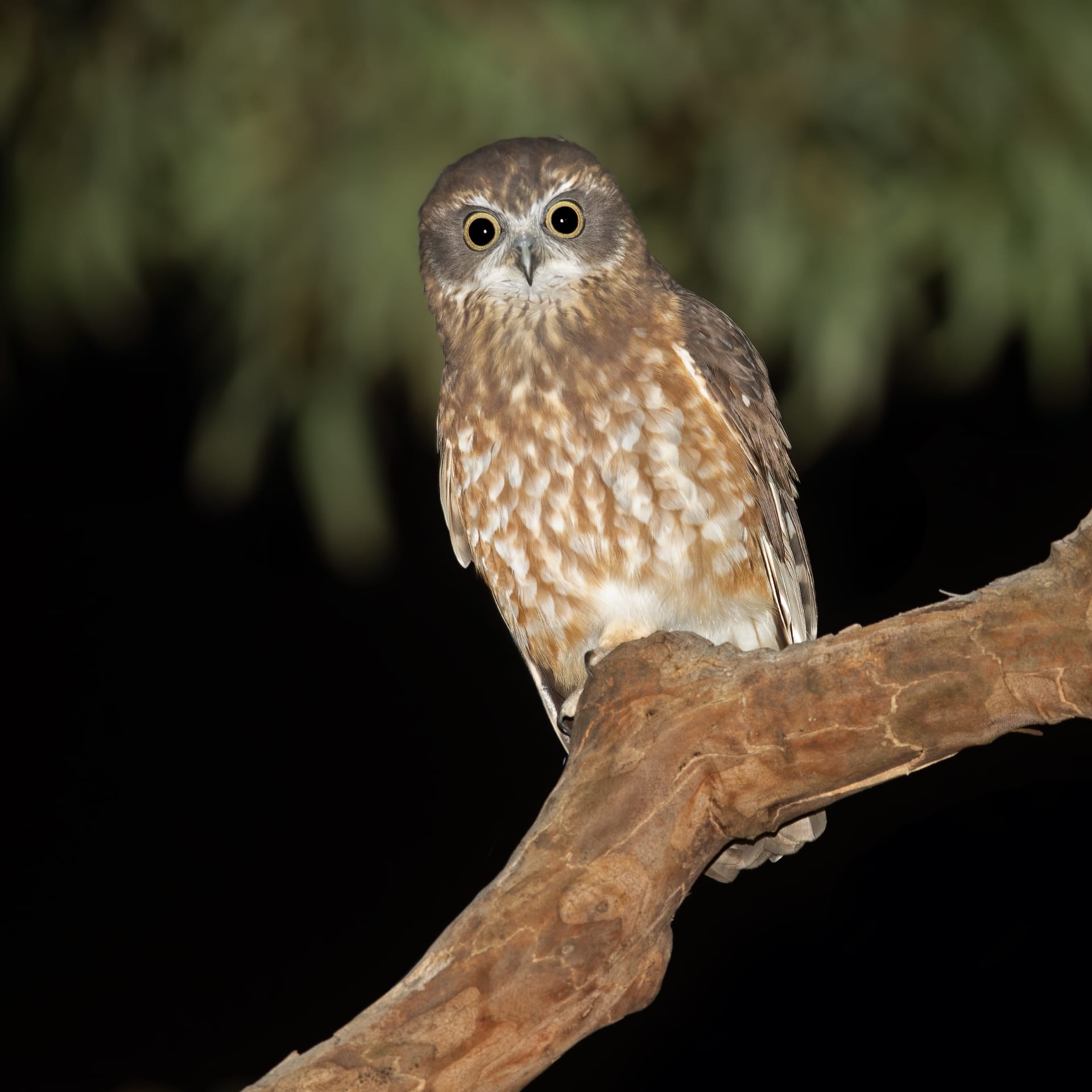
 © JJ Harrison (https://www.jjharrison.com.au/) / CC BY-SA 4.0
Australian Boobook
The Australian Boobook — sold in Japan under the name "New Zealand Boobook" — is instantly recognizable by its dark brown plumage flecked with white spots and its grey-green to yellow-green eyes. Despite the local trade name, its scientific name, Ninox boobook, identifies it as one of the smallest owl species native to mainland Australia. Reaching a total length of about 27 to 36 cm, it's a compact bird with a quiet, distinctly wild presence. As a nocturnal, largely solitary species, it calls for a keeper with some intermediate-level experience handling owls or other raptors.
View Australian Boobook encyclopedia →0% commission on your first sales!Register by September 30, 2026 and your first 2 sales are commission-free!
Breeder Wanted!
List on BreederDirect and sell directly to customers nationwide!
Six Transparency Commitments from BreederDirect
All Birds listings include complete Breeder transparency: hand-raised status, DNA sex determination, and health certification details.
- Hand-Raised
- DNA Sex-Determined
- Health Certified
- Origin Disclosed
- Color Variation Specified
- Age in Months Disclosed
Browse all 286 breeds
Care Level
Verified breeders wanted for Birds
Breeders are signing up now ahead of launch. Subscribe to be notified when new listings go live.
Getting alerts is free with a member account. When new listings match your saved search, we'll notify you by email and in-app.
Browse other categories
Verified breeders (preview)
Australian Boobook key facts
- Care level
- Intermediate
- Lifespan
- Little data
- Size
- 27-36 cm
- Diet
- Carnivorous: insects and small prey such as mice and chicks
- Temperament
- Mainly nocturnal but also active at dawn and dusk, roosting in secluded foliage by day.
- Cage
- It pounces from perches, so provide a room or aviary large enough to fly, with foliage or a box for daytime cover.
- Vocalization
- It calls a two-note 'boo-book', mostly at night.
- Feeding
- It eats insects and small vertebrates; combine insects with whole small prey and weigh the bird to set rations.
- Notes
- Sold as the New Zealand boobook, it is a different species from the morepork (N. novaeseelandiae) that name properly refers to, so check for Ninox boobook. Only foreign captive-bred birds are traded; wild birds in Japan, including native owls, may not in principle be caught or kept under the wildlife law.
About Australian Boobook
The Australian Boobook, sold in Japan as the "New Zealand Boobook," is one of mainland Australia's smallest owls, with dark brown, white-spotted plumage. At 27–36 cm and rated intermediate difficulty, it needs an environment suited to its nocturnal, solitary nature.
7 things to know before welcoming a Australian Boobook
1Trade Name vs. Scientific Name
In Japan this owl is sold under the name "New Zealand Boobook," but its scientific name, Ninox boobook, actually refers to the Australian Boobook. It's worth knowing this naming quirk before you start researching the species.
2Distinctive Markings
Dark brown plumage dotted with white spots and grey-green to yellow-green eyes give this owl its unmistakable look. It's considered one of the smallest owl species native to mainland Australia.
3Adult Size to Expect
Adults typically reach a total length of about 27 to 36 cm. Plan your enclosure and perching space around this size from the start, with room to spare.
4Mainly Nocturnal
This owl is mainly nocturnal but is also active at dawn and dusk. It rests in inconspicuous spots in foliage by day, so provide dim, sheltered cover or a nest box for daytime rest and enough flying space for night-time activity.
5Solitary and Wary by Nature
These owls tend to prefer living alone and can be cautious around anyone unfamiliar. Give a new bird time to adjust at its own pace rather than pushing for close contact right away.
6Best Suited to Experienced Keepers
Reference data places this species at an intermediate difficulty level, suited to keepers with some background in owl or raptor care. If this is your first owl, it's worth learning from experienced keepers or reliable resources beforehand.
7Limited Lifespan Data
Reliable data on this species' lifespan is currently limited. It's worth discussing with your family whether you can commit to its care over the long term before bringing one home.
Frequently asked questions about Australian Boobook
- Q.Can beginners keep this owl?
- A.Reference data classifies this species as suited to intermediate-level keepers. If you're new to owls or raptors, it's best to research thoroughly and build some background knowledge before bringing one home.
- Q.How big does it grow?
- A.Adults reach a total length of roughly 27 to 36 cm. That makes it one of the smaller owl species you're likely to encounter.
- Q.Why does the name include "New Zealand"?
- A.That's simply the trade name used in Japan — the scientific name, Ninox boobook, actually refers to the Australian Boobook. It's a naming quirk worth knowing when you look up further information.
- Q.How long does it live?
- A.Reliable published data on this species' lifespan is currently limited, so no established figure is available. It's best to plan for long-term care when deciding whether to bring one home.
- Q.Is there anything to know about legal status?
- A.This species is listed under CITES Appendix II. It's a good idea to check current official sources for the latest details before proceeding.
Useful tools for Australian Boobook care
Learn more about Australian Boobook in the encyclopedia
View Australian Boobook encyclopedia entry →
Care difficulty, lifespan, size and diet — all basics covered.
More in this category
Can't find the one you're looking for?
Post your wishes for free and breeders with matching animals will contact you with introductions.