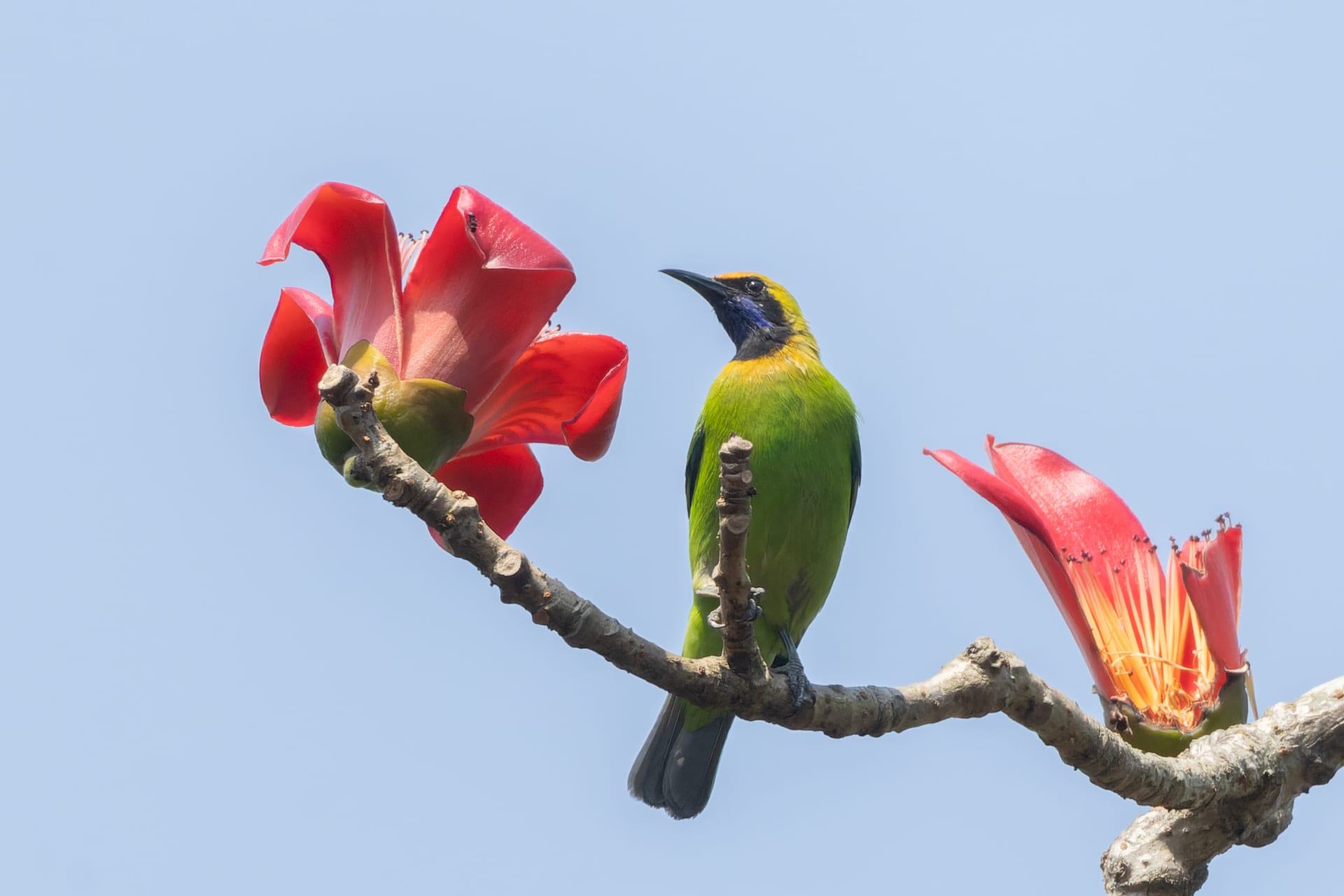
 © Tisha Mukherjee / CC BY-SA 4.0
Golden-fronted Leafbird
The Golden-fronted Leafbird is native to forests across South and Southeast Asia. Its vivid green plumage blends into foliage, while a black face and throat rimmed in yellow, an orange-tinted golden forehead, and a blue cheek stripe give it a strikingly colorful look among leafbirds. Reaching about 20cm in length, it's also known as a skilled mimic of other birds' songs and feeds on nectar, fruit, and insects. Its beauty and vocal versatility make it appealing, but keeping one well calls for the knowledge and experience of an advanced keeper.
View Golden-fronted Leafbird encyclopedia →Breeder Wanted!
List on BreederDirect and sell directly to customers nationwide!
BreederDirect's 6 Transparency Commitments
All Birds listings include complete Breeder transparency: hand-raised status, DNA sex determination, and health certification details.
- Hand-Raised
- DNA Sex-Determined
- Health Certified
- Origin Disclosed
- Color Variation Specified
- Age in Months Disclosed
Browse all 286 breeds
Care Level
Verified breeders wanted for Birds
Breeders are signing up now ahead of launch. Subscribe to be notified when new listings go live.
Getting alerts is free with a member account. When new listings match your saved search, we'll notify you by email and in-app.
Browse other categories
Verified breeders (preview)
Golden-fronted Leafbird key facts
- Care level
- Advanced
- Size
- About 20 cm
- Diet
- Softbill pellets or mash, fruit, nectar and insects such as mealworms
- Temperament
- Agile and active, it clambers through branches and hangs upside down to feed, living in pairs or small groups.
- Cage
- Use a roomy cage or aviary with many thin branches, easy to clean because the fruit diet is messy.
- Vocalization
- It sings in high, liquid whistles and mimics other birds, at moderate volume.
- Feeding
- Wild birds eat insects, spiders, nectar and berries; feed softbill food with fruit, insects and some nectar.
- Notes
- Its care is completely different from seed-eating finches; fruit and nectar spoil quickly and must be changed daily.
About Golden-fronted Leafbird
Golden-fronted Leafbird: native to South and Southeast Asia, with green plumage, a black face and throat, golden forehead, and blue cheek stripe. About 20cm long and a skilled mimic, suited to experienced keepers.
7 things to know before welcoming a Golden-fronted Leafbird
1For Experienced Keepers
The Golden-fronted Leafbird is considered a challenging species best suited to experienced keepers. It suits people with prior bird-keeping experience who can devote time to daily observation and environmental management.
2A Skilled Vocal Mimic
This bird skillfully mimics the calls of other birds, such as tailorbirds and drongos, and has a wide vocal repertoire. Its song is a high, clear, whistle-like voice.
3Green, Black, Gold and Blue
Its green plumage blends into foliage, paired with a black face and throat rimmed in yellow, an orange-tinted golden forehead, and a blue cheek stripe. Seen among greenery, it evokes its natural forest habitat.
4Nectar, Fruit and Insects
This omnivorous bird feeds on nectar, ripe fruit, and insects. A feeding plan that combines multiple food types is essential to maintain a balanced diet.
5About 20cm in Length
Adults reach about 20cm in length. This is an agile bird that moves lightly among branches, even hanging upside down, so housing space should account for its activity level and help minimize stress.
6Lifespan Data Is Limited
Little documented data exists on the Golden-fronted Leafbird's lifespan, so no established benchmark figure is available. Since care should be planned for the long term, keep a close eye on its health day to day.
7Research Before You Bring One Home
Because this is a bird best suited to experienced keepers, it's important to gather thorough information on its diet and living requirements before bringing one home. Where possible, consult experienced keepers or breeders to resolve any questions beforehand.
Frequently asked questions about Golden-fronted Leafbird
- Q.Can beginners keep this bird?
- A.The Golden-fronted Leafbird is considered a species for experienced keepers. It suits those with prior bird-keeping experience who can commit time to daily care.
- Q.What are its calls like?
- A.It sings in a high, clear, whistle-like voice and is known as a skilled mimic of other birds' songs. Its volume is moderate, and its calls are highly varied.
- Q.What should it be fed?
- A.It's an omnivore that eats nectar, fruit, and insects. Maintaining nutritional balance requires combining several types of food.
- Q.How long does it live?
- A.There's limited documented data on this species' lifespan, so no clear benchmark has been established. It's best to plan for long-term care and monitor its health closely.
- Q.Are there any legal restrictions?
- A.The Golden-fronted Leafbird is not subject to CITES. Chloropsis aurifrons. This leafbird is not listed in the CITES Appendices. It does not occur naturally in Japan; imports are subject to animal import notification under the Infectious Diseases Control Law, but no notification is needed to keep or transfer it within Japan. The IUCN assesses it as Least Concern.
Useful tools for Golden-fronted Leafbird care
Learn more about Golden-fronted Leafbird in the encyclopedia
View Golden-fronted Leafbird encyclopedia entry →
Care difficulty, lifespan, size and diet — all basics covered.
More in this category
Can't find the one you're looking for?
Post your wishes for free and breeders with matching animals will contact you with introductions.