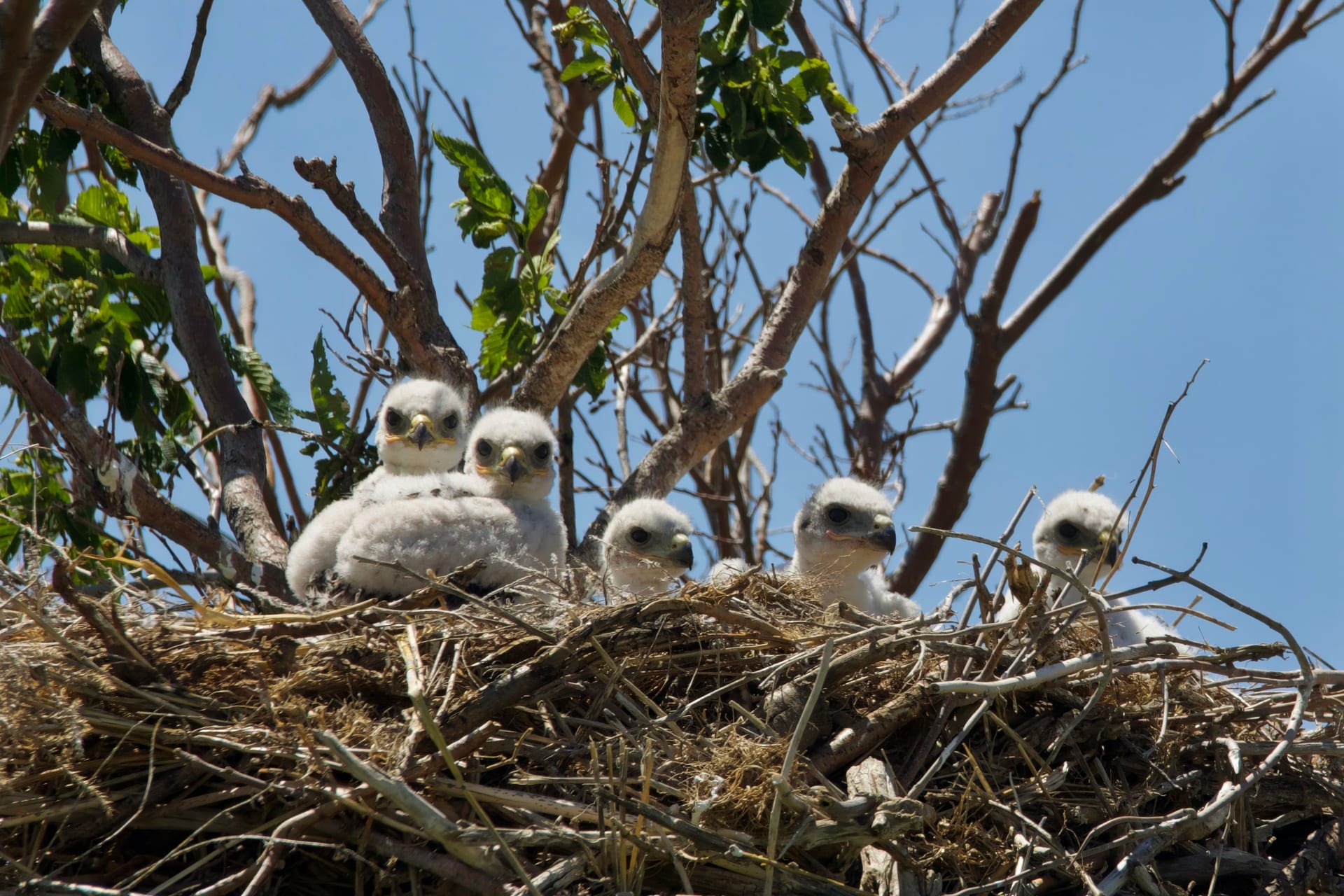
 © John Krampl / CC BY 4.0
Ferruginous Hawk
The Ferruginous Hawk is the largest buteo native to North America, so substantial in build that it's sometimes mistaken for an eagle. In its light morph, the back takes on a rich, rust-red hue while the head and underparts stay pale, creating a striking contrast. Its legs are feathered nearly to the talons, an adaptation suited to open, often harsh terrain. The species has long been prized in falconry for its intelligence and hunting prowess. Reaching 51 to 71 cm in total length, this powerful raptor demands real hands-on experience, making it a bird best suited to advanced keepers rather than newcomers.
View Ferruginous Hawk encyclopedia →0% commission on your first sales!Register by September 30, 2026 and your first 2 sales are commission-free!
Breeder Wanted!
List on BreederDirect and sell directly to customers nationwide!
Six Transparency Commitments from BreederDirect
All Birds listings include complete Breeder transparency: hand-raised status, DNA sex determination, and health certification details.
- Hand-Raised
- DNA Sex-Determined
- Health Certified
- Origin Disclosed
- Color Variation Specified
- Age in Months Disclosed
Browse all 286 breeds
Care Level
Verified breeders wanted for Birds
Breeders are signing up now ahead of launch. Subscribe to be notified when new listings go live.
Getting alerts is free with a member account. When new listings match your saved search, we'll notify you by email and in-app.
Browse other categories
Verified breeders (preview)
Ferruginous Hawk key facts
- Care level
- Advanced
- Lifespan
- Wild record 23.7 years
- Size
- 51-71 cm
- Diet
- Carnivorous: whole prey such as rabbits, rats, mice and quail
- Temperament
- Large, powerful and aggressive; highly regarded in falconry but not recommended for beginners.
- Housing
- With a wingspan near 1.5 m, it needs a large mews where the wings clear the walls, and a sturdy block perch.
- Vocalization
- Little is documented about its voice; with a bird this large, housing and handling suited to its size and strength are the main challenges.
- Feeding
- Wild birds take mainly rabbits and ground squirrels; feed whole prey and weigh the bird daily to set rations.
- Health & notes
- Its talons and grip are powerful, so a heavy falconry glove is essential. The similarly named rough-legged buzzard is a different wild species visiting Japan, and catching or keeping it is in principle banned.
About Ferruginous Hawk
The Ferruginous Hawk, North America's largest buteo, is prized in falconry for its rust-red back and pale underparts. Reaching 51-71cm in length, it is best suited to advanced keepers.
7 things to know before welcoming a Ferruginous Hawk
1For Experienced Keepers Only
Ferruginous Hawks are considered an advanced-level bird to keep. Their feeding, exercise, and training needs call for real hands-on raptor experience. First-time bird owners should think twice before taking one on.
2Needs Ample Space
As one of the largest buteos in North America, this hawk reaches 51 to 71 cm in length. It needs an enclosure spacious enough to stretch and move its wings freely. A cramped space can quickly become a source of stress.
3Striking Light-morph Plumage
Light-morph birds show a rust-red back paired with pale head and underparts. Shading varies from bird to bird, so no two look quite alike. The plumage's appearance also shifts noticeably as the hawk matures.
4Feathered Legs
One distinctive trait is legs feathered almost all the way to the talons. It's a handy way to distinguish this species from other raptors. The feathering reflects an adaptation to cold, dry open habitats.
5A History in Falconry
This hawk has long been valued in falconry circles. It combines intelligence with strong physical ability, responding well to consistent training. Working with it day to day is one of the real rewards of keeping this species.
6Always Use a Falconer's Glove
Its talons and grip are powerful, so a heavy falconer's glove is essential when handling it. Large, strong and hot-tempered, it is a bird for experienced falconers.
7A CITES-listed Species
The Ferruginous Hawk is listed under CITES Appendix II. When acquiring one, it's worth consulting closely with an experienced breeder and confirming the bird's health beforehand.
Frequently asked questions about Ferruginous Hawk
- Q.Is this hawk suitable for first-time owners?
- A.Ferruginous Hawks are considered a bird for advanced keepers. Their feeding and training needs require prior raptor-handling experience, so they aren't recommended for someone keeping a bird for the first time.
- Q.How large do Ferruginous Hawks grow?
- A.Adults reach a total length of 51 to 71 cm. As one of the largest buteos in North America, its size is sometimes enough to be mistaken for an eagle.
- Q.What does a Ferruginous Hawk look like?
- A.Light-morph birds have a rust-red back with pale head and underparts. Their legs are also feathered nearly to the talons, a distinctive trait.
- Q.Is there an international trade classification for this species?
- A.The Ferruginous Hawk is listed under CITES Appendix II. Specific conditions can vary, so it's best to confirm details directly with the seller.
Useful tools for Ferruginous Hawk care
Learn more about Ferruginous Hawk in the encyclopedia
View Ferruginous Hawk encyclopedia entry →
Care difficulty, lifespan, size and diet — all basics covered.
More in this category
Can't find the one you're looking for?
Post your wishes for free and breeders with matching animals will contact you with introductions.