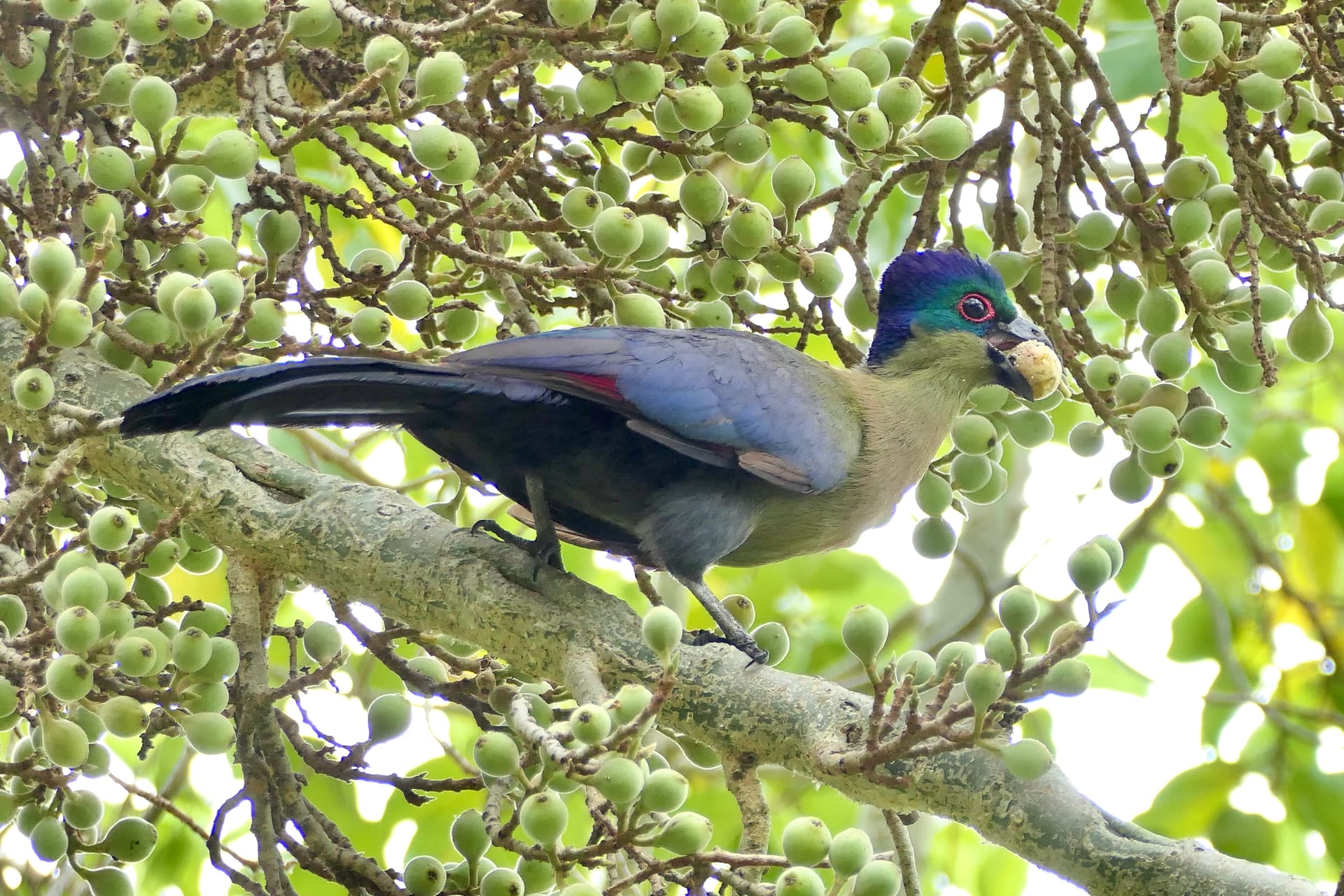
 © Bernard DUPONT / CC BY-SA 2.0
Purple-crested Turaco
The Purple-crested Turaco is a striking member of the turaco family native to southeastern Africa, recognized by its green head, purple crest, and vivid red rings around each eye. When it takes flight, its wings reveal brilliant crimson flight feathers that had been hidden at rest, a dramatic flash of color. The species holds special status as the national bird of Eswatini, where its red feathers have traditionally been used in royal ceremonial regalia. Reaching about 40cm in total length, it is an arboreal, fruit-eating bird. It is very wary by nature, little is documented about its calls, and because of its specific care needs it is generally considered a bird best suited to experienced keepers.
View Purple-crested Turaco encyclopedia →0% commission on your first sales!Register by September 30, 2026 and your first 2 sales are commission-free!
Breeder Wanted!
List on BreederDirect and sell directly to customers nationwide!
Six Transparency Commitments from BreederDirect
All Birds listings include complete Breeder transparency: hand-raised status, DNA sex determination, and health certification details.
- Hand-Raised
- DNA Sex-Determined
- Health Certified
- Origin Disclosed
- Color Variation Specified
- Age in Months Disclosed
Browse all 286 breeds
Care Level
Verified breeders wanted for Birds
Breeders are signing up now ahead of launch. Subscribe to be notified when new listings go live.
Getting alerts is free with a member account. When new listings match your saved search, we'll notify you by email and in-app.
Browse other categories
Verified breeders (preview)
Purple-crested Turaco key facts
- Care level
- Advanced
- Lifespan
- Little data
- Size
- About 40 cm
- Diet
- Mainly fruit, with vegetables and softbill pellets
- Housing
- It runs and bounds along branches, so provide a tall, large aviary with plenty of branches and some dense cover.
- Temperament
- Very shy, living in pairs or small groups, and it tends to hide unless the setting is calm.
- Vocalization
- Little is documented about its voice; being shy, it should be kept away from noisy places.
- Feeding
- It mainly eats whole fruit; feed chopped fruit and vegetables with softbill pellets.
- Notes
- It is labelled under both Tauraco and Gallirex; tell it from other turacos by the purple crest and lack of a white eye patch.
About Purple-crested Turaco
The Purple-crested Turaco is an African turaco known for its green head, purple crest, and red eye rings, with striking crimson flight feathers visible in flight. Reaching about 40cm, it is a bird best suited to experienced keepers.
7 things to know before welcoming a Purple-crested Turaco
1Room to Fly
As an arboreal bird reaching about 40cm in length, it needs more than a small cage to move comfortably. Indoors, a tall aviary room or a large flight cage that allows real wingbeats is recommended.
2A Fruit-Based Diet
In the wild, this turaco feeds mainly on ripe fruit, and captive diets are generally built around fruit as well. Turacos are often said to need care around excess iron intake, so some keepers use dedicated formulated diets to help manage this.
3A Calm, Quiet Setting
This is a very wary bird that tends to hide unless it feels secure. Little is documented about its calls, so keep it away from noisy areas and provide a quiet setting with dense cover where it can take refuge.
4Sensitive to Cold
Native to the warm regions of southeastern Africa, this species is not well suited to cold. In winter, maintain a warm, stable indoor temperature and avoid sudden temperature swings.
5Keep as a Pair or Small Group
This species lives in pairs or small groups. It runs along branches and leaps from one to the next, so provide a tall, spacious aviary with plenty of branches where it can settle comfortably.
6Limited Lifespan Data
There is limited documented data on the Purple-crested Turaco's lifespan in captivity, so no precise figure can be given. It is best to plan for a potentially long-term commitment and to keep monitoring its health closely after bringing it home.
7Best for Experienced Keepers
Because of its specific dietary needs, space requirements, and temperature sensitivity, this species is generally considered suitable for keepers with prior bird-keeping experience. Before bringing one home, it is a good idea to ask the breeder about daily care routines and key points to watch for.
Frequently asked questions about Purple-crested Turaco
- Q.Is the Purple-crested Turaco listed under CITES?
- A.Yes, the Purple-crested Turaco is listed in CITES Appendix II. Appendix II designates species for which international trade is subject to certain controls.
- Q.Can beginners keep this species?
- A.The Purple-crested Turaco is generally considered a species for experienced keepers. Because it needs ample flight space and specific dietary care, it is best to gain some bird-keeping experience before bringing one home.
- Q.How large does it grow as an adult?
- A.Adults reach a total length of about 40cm. As an arboreal species, it needs enough space to spread its wings and fly, matched to its size.
- Q.What is its lifespan?
- A.There is not enough documented data on the Purple-crested Turaco's captive lifespan to state a precise figure. It is advisable to plan for a potentially long-term commitment when considering this bird.
- Q.What is its personality like?
- A.It is a very wary bird that tends to hide unless it feels secure. Little is documented about its calls or how tame it becomes, so the key is to keep it as a pair or small group in a quiet setting with places to hide.
Useful tools for Purple-crested Turaco care
Learn more about Purple-crested Turaco in the encyclopedia
View Purple-crested Turaco encyclopedia entry →
Care difficulty, lifespan, size and diet — all basics covered.
More in this category
Can't find the one you're looking for?
Post your wishes for free and breeders with matching animals will contact you with introductions.