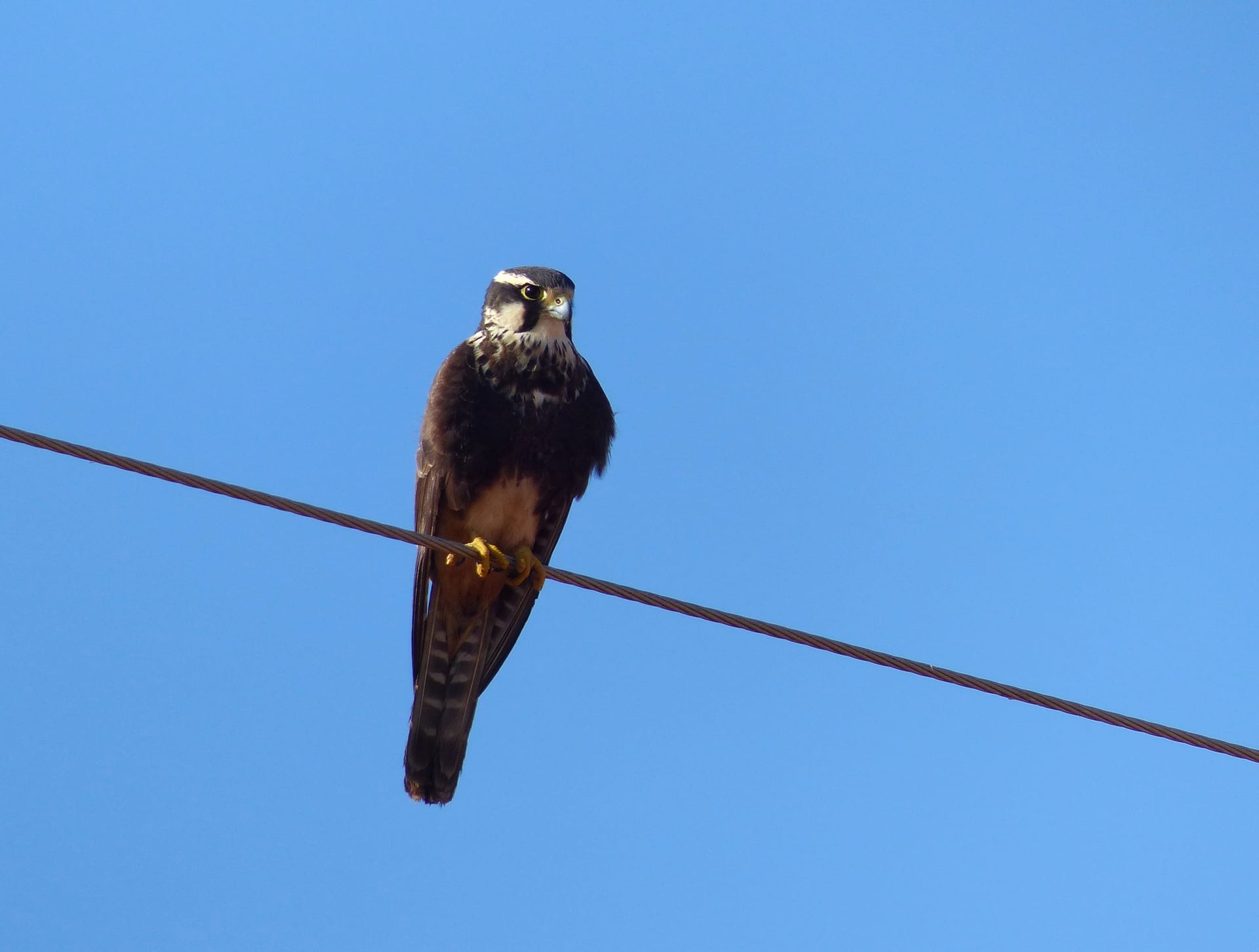
 © Bernard DUPONT from FRANCE / CC BY-SA 2.0
Aplomado Falcon
The Aplomado Falcon is a slender, long-winged falcon native to Central and South America, easily recognized by its blue-gray back, white throat and brow stripe, black chest band, and cinnamon belly. Its sleek silhouette in flight is part of its appeal. The name comes from the Spanish word for "lead-colored," referring to its blue-gray back. A swift hunter that feeds mainly on small birds, it combines keen senses with agile, precise movement. It reaches about 30 to 40 cm in total length. Its proud, high-strung temperament calls for experienced handling, making it a bird best suited to advanced keepers.
View Aplomado Falcon encyclopedia →0% commission on your first sales!Register by September 30, 2026 and your first 2 sales are commission-free!
Breeder Wanted!
List on BreederDirect and sell directly to customers nationwide!
Six Transparency Commitments from BreederDirect
All Birds listings include complete Breeder transparency: hand-raised status, DNA sex determination, and health certification details.
- Hand-Raised
- DNA Sex-Determined
- Health Certified
- Origin Disclosed
- Color Variation Specified
- Age in Months Disclosed
Browse all 286 breeds
Care Level
Verified breeders wanted for Birds
Breeders are signing up now ahead of launch. Subscribe to be notified when new listings go live.
Getting alerts is free with a member account. When new listings match your saved search, we'll notify you by email and in-app.
Browse other categories
Verified breeders (preview)
Aplomado Falcon key facts
- Care level
- Advanced
- Lifespan
- Recorded maximum 12 years
- Size
- 30-40 cm
- Diet
- Carnivorous: whole small prey such as quail, chicks and mice, plus insects
- Temperament
- An agile hunter of small birds; training it takes falconry skill and daily handling.
- Housing
- Provide raptor blocks or perches and a mews large enough to fly, with room to protect its long, slender wings.
- Vocalization
- Little is documented about its voice; daily weight management and handling skill are the main challenges in keeping it.
- Feeding
- Small birds are its main prey; feed whole quail or chicks, bones and feathers included, for balanced nutrition.
- Notes
- A foreign species distinct from the native peregrine; traded birds are captive bred, and catching or keeping native wild birds is in principle banned by the wildlife law.
About Aplomado Falcon
A slender, long-winged falcon from Central and South America with a blue-gray back, black chest band, and cinnamon belly. Reaching 30-40 cm, it's an advanced-level bird of prey that requires experienced care.
7 things to know before welcoming a Aplomado Falcon
1An Advanced-Level Raptor
The Aplomado Falcon is an advanced-level raptor that requires substantial knowledge and hands-on experience to keep well. First-time raptor keepers should avoid taking this on alone and seek guidance from an experienced falconer.
2Needs Ample Flight Space
With its long wings and tail built for agile flight, this falcon needs regular opportunities to stretch its wings and fly. Keeping it tethered in a cramped space for long periods should be avoided.
3Proud, High-Strung Temperament
This is an alert, high-strung bird that takes time and patience to settle. It can be sensitive to sudden noises or changes in its surroundings, so a calm, stable environment matters.
4Strong Instinct to Hunt Birds
Its instinct to hunt small birds runs strong. It should never be allowed to roam freely alongside other small birds or pets.
5Monitor Feet, Beak, and Feathers
A raptor's talons, beak, and feather condition are good indicators of overall health. Regular observation, plus check-ins with an experienced avian vet when needed, should become routine.
6Weight-Based Feeding
Feeding raptors typically means weighing food to match condition and activity level. Tracking daily weight and appetite helps keep tabs on the bird's condition.
7Listed Under CITES Appendix II
The Aplomado Falcon is listed under CITES Appendix II. This is worth keeping in mind when considering bringing one home.
Frequently asked questions about Aplomado Falcon
- Q.Is the Aplomado Falcon suitable for beginners?
- A.It's considered an advanced-level raptor and isn't recommended for first-time bird keepers. Anyone considering one should seek support from an experienced falconer.
- Q.How big does it get?
- A.Adults typically reach a total length of about 30 to 40 cm. It has a slender build with notably long wings and tail.
- Q.What does it eat?
- A.In the wild, it's a carnivorous raptor that mainly hunts small birds. In captivity, feeding is typically weight-based and adjusted to the bird's condition and activity level.
- Q.Are there any legal considerations?
- A.The Aplomado Falcon is listed under CITES Appendix II. It's worth checking this before deciding to bring one home.
Useful tools for Aplomado Falcon care
Learn more about Aplomado Falcon in the encyclopedia
View Aplomado Falcon encyclopedia entry →
Care difficulty, lifespan, size and diet — all basics covered.
More in this category
Can't find the one you're looking for?
Post your wishes for free and breeders with matching animals will contact you with introductions.