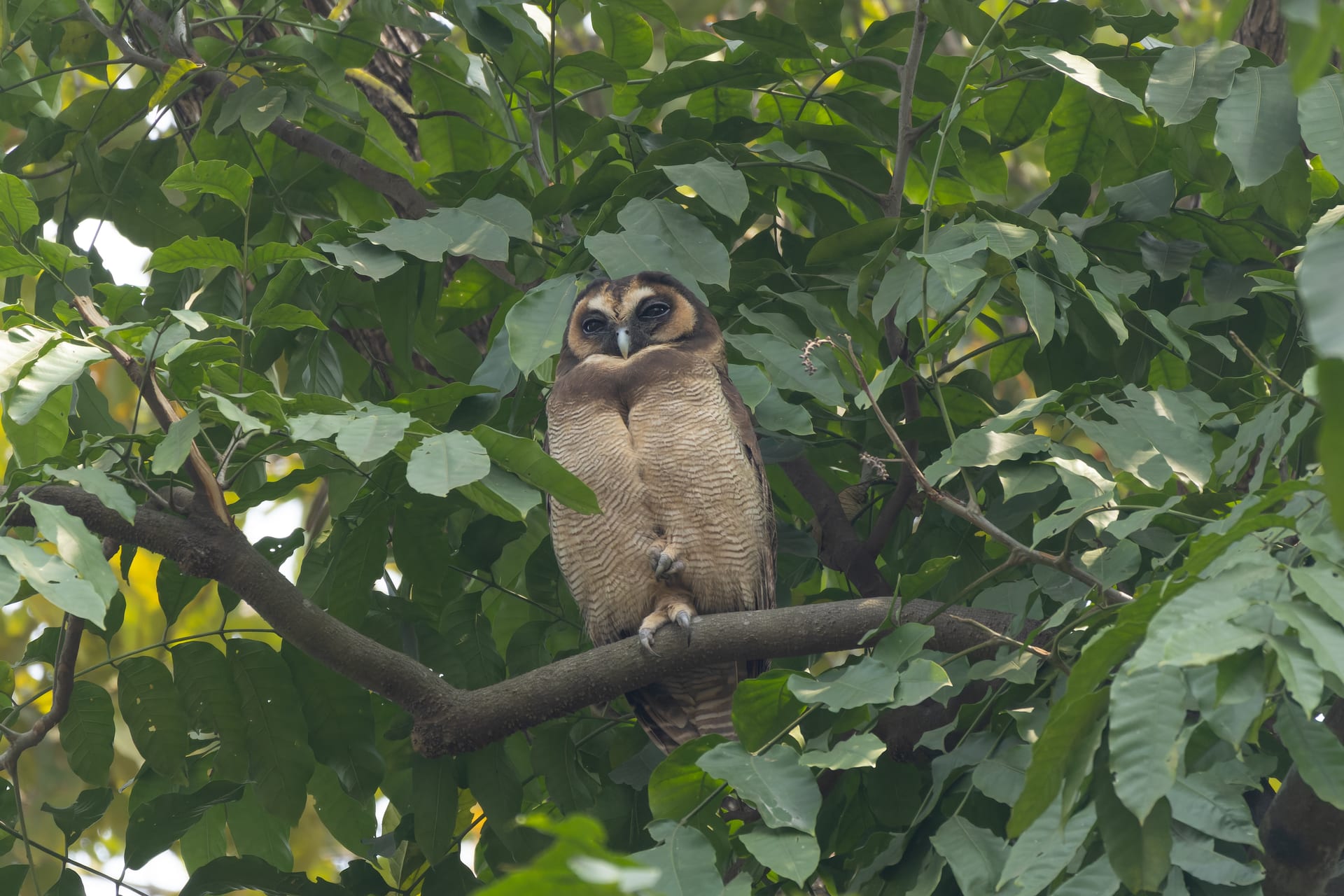
 © Tisha Mukherjee / CC BY-SA 4.0
Brown Wood Owl
The Brown Wood Owl is a large member of the wood owl group native to South and East Asia. Its uniform dark brown back contrasts with a buff underside marked by brown streaks, while a brown facial disc rimmed in white frames a pair of deep, dark brown eyes for an unmistakably soulful expression. Lacking ear tufts, its rounded head and pale throat collar give it a calm, dignified look quite distinct from many other owls. Reaching 45 to 57 cm in total length, it has a substantial presence balanced by a quiet stillness. As a species considered suitable only for experienced keepers, anyone thinking of bringing one home should research thoroughly and prepare a suitable environment well in advance.
View Brown Wood Owl encyclopedia →Breeder Wanted!
List on BreederDirect and sell directly to customers nationwide!
BreederDirect's 6 Transparency Commitments
All Birds listings include complete Breeder transparency: hand-raised status, DNA sex determination, and health certification details.
- Hand-Raised
- DNA Sex-Determined
- Health Certified
- Origin Disclosed
- Color Variation Specified
- Age in Months Disclosed
Browse all 286 breeds
Care Level
Verified breeders wanted for Birds
Breeders are signing up now ahead of launch. Subscribe to be notified when new listings go live.
Getting alerts is free with a member account. When new listings match your saved search, we'll notify you by email and in-app.
Browse other categories
Verified breeders (preview)
Brown Wood Owl key facts
- Care level
- Advanced
- Lifespan
- Little data
- Size
- 45-57 cm
- Diet
- Carnivorous: whole prey such as mice, rats, chicks and quail
- Temperament
- Strictly nocturnal, a bird of dense forest that rests motionless in trees by day.
- Cage
- At around 50 cm it needs an aviary large enough to fly, stout perches and a dark daytime retreat.
- Vocalization
- It gives deep hoots and loud screams and barks when alarmed; night calls are loud.
- Feeding
- It eats mainly small mammals, birds and reptiles; feed whole prey and weigh the bird to set rations.
- Notes
- Despite the similar name it is not the native Ural owl (Strix uralensis); native owls may not in principle be caught or kept under the wildlife law, and only foreign captive-bred birds are traded.
About Brown Wood Owl
The Brown Wood Owl is a large owl native to South and East Asia, with a dark brown back, buff underside, and white-rimmed facial disc. Reaching 45–57cm, it's a CITES Appendix II species suited to experienced keepers only.
7 things to know before welcoming a Brown Wood Owl
1For Experienced Keepers
The Brown Wood Owl is considered a challenging species best suited to keepers with prior raptor or owl experience. It is not recommended as a first bird of prey. Thorough preparation and knowledge are essential before bringing one home.
2Needs Spacious Housing
Reaching 45–57cm in length, this large owl needs a spacious enclosure that allows room to stretch its wings and move freely. Perches should be sized and positioned to suit its build.
3Nocturnal by Nature
Like other wood owls, it is nocturnal, resting quietly by day and becoming active at night. Feeding schedules and a calm environment should be arranged around this rhythm.
4Calm, Composed Temperament
With a rounded, ear-tuft-free head, the Brown Wood Owl generally has a composed temperament. Individual personalities vary, and some birds may remain sensitive to noise or unfamiliar visitors until settled.
5Expressive Facial Disc
The brown facial disc rimmed in white and its deep dark eyes give the owl a distinctive, expressive look. The disc also helps funnel sound, so the bird tends to react visibly to sounds in its surroundings.
6Consistent Meat-Based Diet
As a carnivorous raptor, it requires a consistent, nutritionally balanced diet of appropriate prey items. Secure a reliable source and feeding routine before bringing one home.
7Listed Under CITES Appendix II
The Brown Wood Owl is listed under CITES Appendix II. International trade such as import or export requires an export permit from the exporting country, but no registration card under Japan's Act on Conservation of Endangered Species of Wild Fauna and Flora is needed for transfers within Japan. Importing from overseas requires an animal import notification under the Infectious Diseases Control Act.
Frequently asked questions about Brown Wood Owl
- Q.Is the Brown Wood Owl suitable for beginners?
- A.The Brown Wood Owl is considered a difficult species best suited to experienced keepers. If you have no prior experience with owls or raptors, it's best to build up thorough knowledge and preparation before bringing one home.
- Q.How large does it grow?
- A.Adults typically reach 45 to 57 cm in total length. As a large owl, it needs housing sized appropriately for its build.
- Q.What is its lifespan?
- A.Reliable data on the Brown Wood Owl's lifespan in captivity is limited, so no clear figure is currently available. It's best to plan for a long-term commitment rather than relying on a specific number.
- Q.What is its temperament like?
- A.With its rounded, ear-tuft-free head, the Brown Wood Owl is generally considered calm and composed. Individual temperament varies, though, and some birds may be sensitive to changes in their environment until settled.
- Q.Are there any considerations for transfer or trade?
- A.As a CITES Appendix II species, import and export require an export permit from the exporting country, but no registration card under the Act on Conservation of Endangered Species of Wild Fauna and Flora is needed for transfers within Japan. It is a different species from Japan's native Ural owl (Strix uralensis), which generally cannot be captured or kept under the Act on the Protection and Management of Wildlife, and the Optimization of Hunting. Only captive-bred birds of foreign origin are sold, so confirm the scientific name before buying.
Useful tools for Brown Wood Owl care
Learn more about Brown Wood Owl in the encyclopedia
View Brown Wood Owl encyclopedia entry →
Care difficulty, lifespan, size and diet — all basics covered.
More in this category
Can't find the one you're looking for?
Post your wishes for free and breeders with matching animals will contact you with introductions.