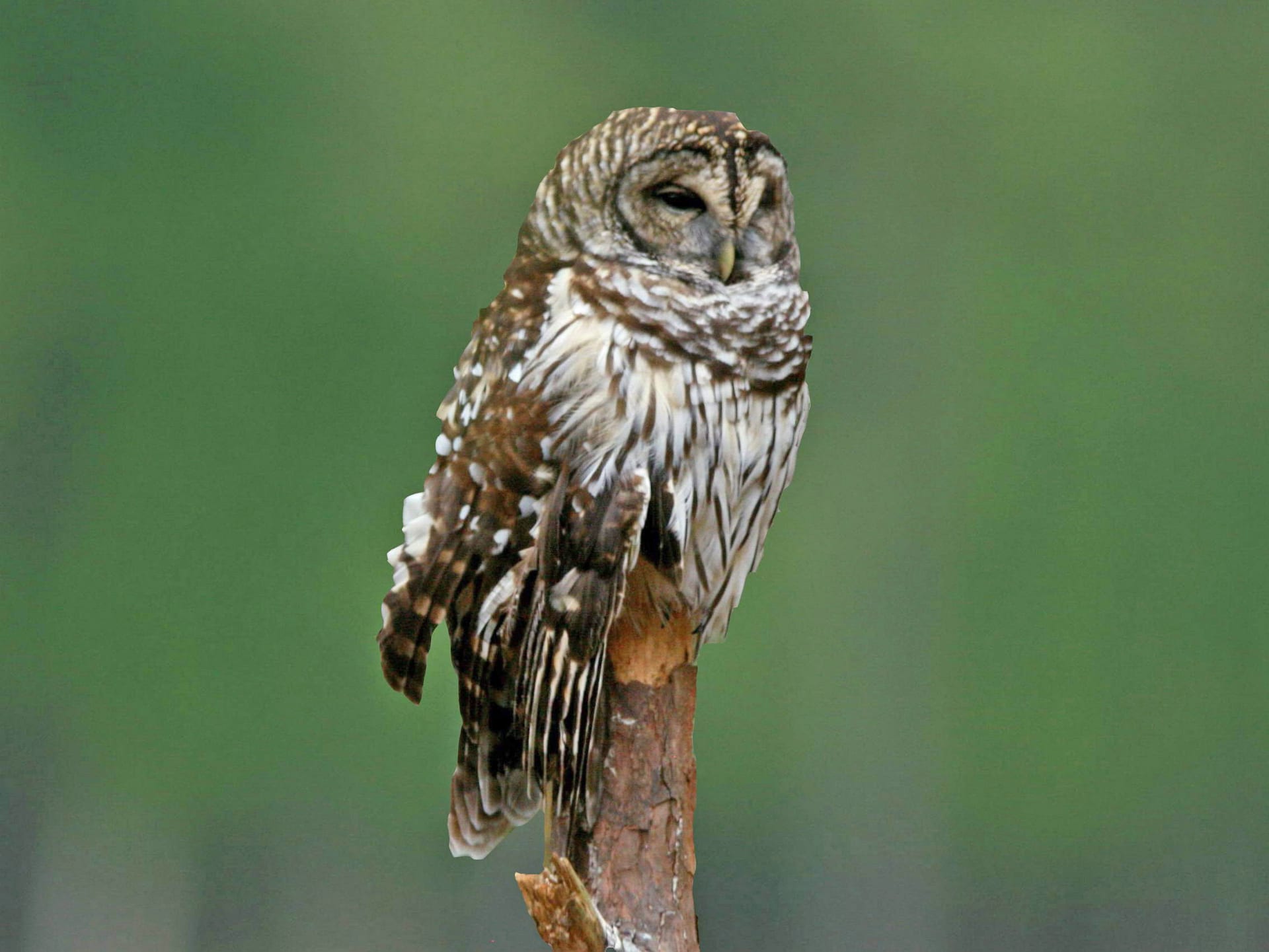
 © Dick Daniels / CC BY-SA 3.0
Barred Owl
The Barred Owl is a large owl native to North America, its brown-to-gray plumage marked with distinctive vertical streaks on the underside. Lacking ear tufts, its rounded face and striking black eyes give it a look unlike many other owl species. It's best known for its unmistakable eight-note call, often described as sounding like "who cooks for you," which echoes through the night. Calm and composed by nature, it still retains the sharp instincts and quick reflexes typical of birds of prey, and it isn't the kind of animal that seeks out cuddles the way a cat or dog might. Because keeping one well means providing ample flight space and a fully carnivorous diet, this species calls for real experience — it's considered a bird for advanced keepers only.
View Barred Owl encyclopedia →0% commission on your first sales!Register by September 30, 2026 and your first 2 sales are commission-free!
Breeder Wanted!
List on BreederDirect and sell directly to customers nationwide!
Six Transparency Commitments from BreederDirect
All Birds listings include complete Breeder transparency: hand-raised status, DNA sex determination, and health certification details.
- Hand-Raised
- DNA Sex-Determined
- Health Certified
- Origin Disclosed
- Color Variation Specified
- Age in Months Disclosed
Browse all 247 breeds
Care Level
Verified breeders wanted for Birds
Breeders are signing up now ahead of launch. Subscribe to be notified when new listings go live.
Getting alerts is free with a member account. When new listings match your saved search, we'll notify you by email and in-app.
Browse other categories
Verified breeders (preview)
Barred Owl key facts
- Care level
- Advanced
- Lifespan
- 10-20 years
- Size
- 50-60cm (Florida birds: males 681-800g, females 850-875g)
- Diet
- Frozen mice, rats, day-old chicks and quail; in the wild mainly small mammals, plus birds, reptiles, amphibians and invertebrates
- Cage
- A large cavity nester, it needs a spacious aviary with a nest box to retreat into and perches at several heights. As a bird of mature forest it wants shade and quiet space.
- Temperament
- A solitary hunter with no group sociability. Nest defence when breeding is fierce, and attacks on people approaching nests are recorded in North America.
- Vocalization
- It gives a distinctive eight-note hoot, rendered in English as who cooks for you, who cooks for you all. The call is loud and carries, so keeping one near neighbours calls for care.
- Notes
- Listed on CITES Appendix II, so import requires an export permit. In western North America the species is regarded as an invasive threat to native owls, so escape prevention matters.
About Barred Owl
Learn about the Barred Owl, a large North American owl known for its distinctive eight-note call and black eyes. Explore its temperament, care difficulty, and what to know before bringing one home.
7 things to know before welcoming a Barred Owl
1Advanced-Level Care Required
The Barred Owl is classified as suitable only for advanced keepers with prior raptor experience. Handling and environmental management call for specialized knowledge, making this a poor choice for anyone new to keeping owls or birds of prey.
2A Large Flight Space Is Essential
Adults grow to around 50–60 cm, so they need an enclosure or flight space large enough to fully spread their wings and fly. A cramped setup can lead to muscle weakness and stress.
3A Distinctive Eight-Note Call
Barred Owls are known for an eight-note call often described as sounding like "who cooks for you," which they tend to voice at night. Because the call carries well, it's worth considering your surroundings before keeping one.
4A Fully Carnivorous Diet
As a bird of prey, its diet centers on whole prey items like mice rather than pellets or seeds. Feeding and storing whole prey takes some getting used to.
5Not a Cuddly Companion
Unlike dogs, cats, or some companion birds, Barred Owls aren't the type to bond closely or seek affection. They tend to be quiet and watchful, so it's best not to expect hand-taming or close physical contact.
6Ear-Tuft-Free Face With Black Eyes
One identifying feature is the absence of ear tufts, combined with a round face and black eyes — a helpful point to check when looking at an individual bird.
7Line Up a Specialist Vet First
Before bringing one home, it's important to find a veterinarian experienced with birds of prey. Make sure you have support in place for day-to-day care, including feeding and molting-season needs.
Frequently asked questions about Barred Owl
- Q.Can a first-time owner keep a Barred Owl?
- A.The Barred Owl is considered suitable for advanced keepers. It isn't recommended as a first bird for someone without prior experience keeping birds of prey.
- Q.How loud is its call?
- A.It's known for an eight-note call often described as "who cooks for you," which tends to carry well at night. This is worth factoring into your choice of environment.
- Q.What does it eat?
- A.As a raptor, its diet is based on whole prey such as mice rather than pellets or seeds. It's important to understand proper feeding methods beforehand.
- Q.Can I hold and pet it like a typical pet?
- A.It isn't the type to bond and seek affection the way a dog or cat might, and tends to be quiet and watchful. It's best not to expect close physical contact.
- Q.How big does it grow?
- A.Adults reach around 50–60 cm, making it a large owl. Individuals from Florida have been recorded at roughly 681–800 g for males and 850–875 g for females.
Useful tools for Barred Owl care
Learn more about Barred Owl in the encyclopedia
View Barred Owl encyclopedia entry →
Care difficulty, lifespan, size and diet — all basics covered.
More in this category
Can't find the one you're looking for?
Post your wishes for free and breeders with matching animals will contact you with introductions.