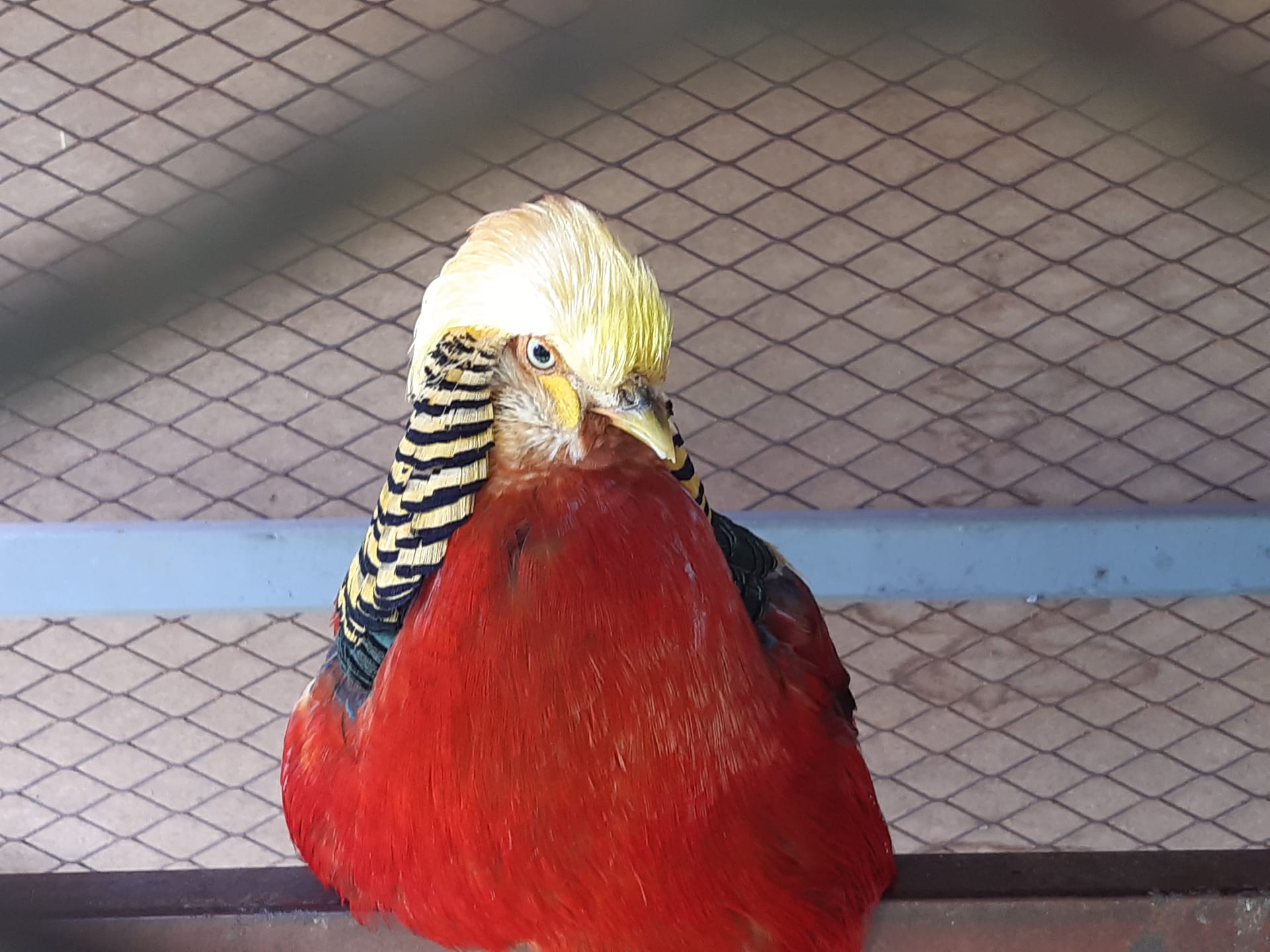
 © Drcbrothephotographer / CC0
Golden Pheasant
The Golden Pheasant is one of the most eye-catching ornamental pheasants, known for the male's brilliant golden crest and fiery red body. Adult males measure 90-100 cm, with a long, elegant tail making up roughly two-thirds of that length. During courtship, males fan out a black-and-orange striped cape to frame their face in a striking display. Females, by contrast, wear plain brown feathers that provide camouflage in the wild. This dramatic contrast between the sexes is part of what makes the species so appealing to keep. As an intermediate-level bird, Golden Pheasants reward keepers who can provide a spacious aviary and a bit of prior experience with pheasants.
View Golden Pheasant encyclopedia →0% commission on your first sales!Register by September 30, 2026 and your first 2 sales are commission-free!
Breeder Wanted!
List on BreederDirect and sell directly to customers nationwide!
Six Transparency Commitments from BreederDirect
All Birds listings include complete Breeder transparency: hand-raised status, DNA sex determination, and health certification details.
- Hand-Raised
- DNA Sex-Determined
- Health Certified
- Origin Disclosed
- Color Variation Specified
- Age in Months Disclosed
Browse all 247 breeds
Care Level
Verified breeders wanted for Birds
Breeders are signing up now ahead of launch. Subscribe to be notified when new listings go live.
Getting alerts is free with a member account. When new listings match your saved search, we'll notify you by email and in-app.
Browse other categories
Verified breeders (preview)
Golden Pheasant key facts
- Care level
- Intermediate
- Lifespan
- 7-12 years
- Size
- 90-100cm (male) / 50-60cm (female)
- Diet
- Pheasant feed, grain, greens, fruit and insects
- Cage
- A ground bird with a long tail, it needs an aviary generous in both floor area and height, with space behind the perches so the tail is not damaged.
- Temperament
- Wary and good at hiding. In the breeding season the cock warns off rivals with a metallic call, so do not house two males together.
- Vocalization
- In the breeding season the cock gives a metallic call that both warns off rivals and summons hens; otherwise it is not a conspicuously noisy bird.
- Notes
- It favours dense cover such as bamboo grass and rhododendron thickets, so provide planting or screens in the aviary where it can hide.
About Golden Pheasant
Golden Pheasants dazzle with golden crests and scarlet plumage. Learn about their care, temperament, and what to know before bringing one home.
7 things to know before welcoming a Golden Pheasant
1Enclosed, Covered Space
Golden Pheasants tend to burst upward in flight when startled, and can injure their heads on an open-top enclosure. Along with plenty of floor space, a softly netted or covered aviary roof helps prevent injury.
2Striking Sexual Dimorphism
Males show off a golden crest and vivid red body, while females are plain brown all over. Young birds resemble females regardless of sex, so the dramatic difference only becomes clear once they reach adulthood.
3An Omnivorous Diet
A balanced diet centers on grains and greens, supplemented with occasional insects. A game-bird pellet feed paired with seasonal leafy vegetables works well as a base.
4Cold-Hardy, Not Damp-Tolerant
Originating from mountainous terrain, Golden Pheasants tolerate cold reasonably well but dislike prolonged rain or high humidity. Make sure their enclosure includes a sheltered, roofed area.
5Watch Male Compatibility
Males can become aggressive toward other males, especially during the breeding season. When keeping more than one, plan for pairs or ample separated space and monitor their interactions closely.
6Ground-Level Security
Because they spend much of their time near the ground, predator-proof fencing and netting are essential. Give thought to a safe, secure roosting area for nighttime as well.
7Best Enjoyed From a Distance
Golden Pheasants aren't a hands-on, cuddly bird — they're best appreciated by quietly observing their beauty. Keeping interactions minimal and the environment calm helps reduce stress.
Frequently asked questions about Golden Pheasant
- Q.Are Golden Pheasants suitable for beginners?
- A.They're generally considered an intermediate-level bird, so prior experience with pheasants is helpful. You'll also need to prepare a spacious, dedicated aviary before bringing one home.
- Q.Can you tell males and females apart by sight?
- A.Yes, once they reach adulthood — males have a vivid golden crest and red body, while females are plain brown all over. Young birds of both sexes look similar until they mature.
- Q.How big do Golden Pheasants grow?
- A.Adult males reach about 90-100 cm in total length, while females reach around 50-60 cm. Males owe much of their length to a long, elegant tail.
- Q.Can multiple Golden Pheasants be kept together?
- A.Males can become aggressive toward each other, especially during the breeding season, so housing multiple males together needs care. Keeping pairs or small groups with enough space is the common approach.
- Q.Are there any legal restrictions on keeping one?
- A.Golden Pheasants are not subject to CITES.
Useful tools for Golden Pheasant care
Learn more about Golden Pheasant in the encyclopedia
View Golden Pheasant encyclopedia entry →
Care difficulty, lifespan, size and diet — all basics covered.
More in this category
Can't find the one you're looking for?
Post your wishes for free and breeders with matching animals will contact you with introductions.