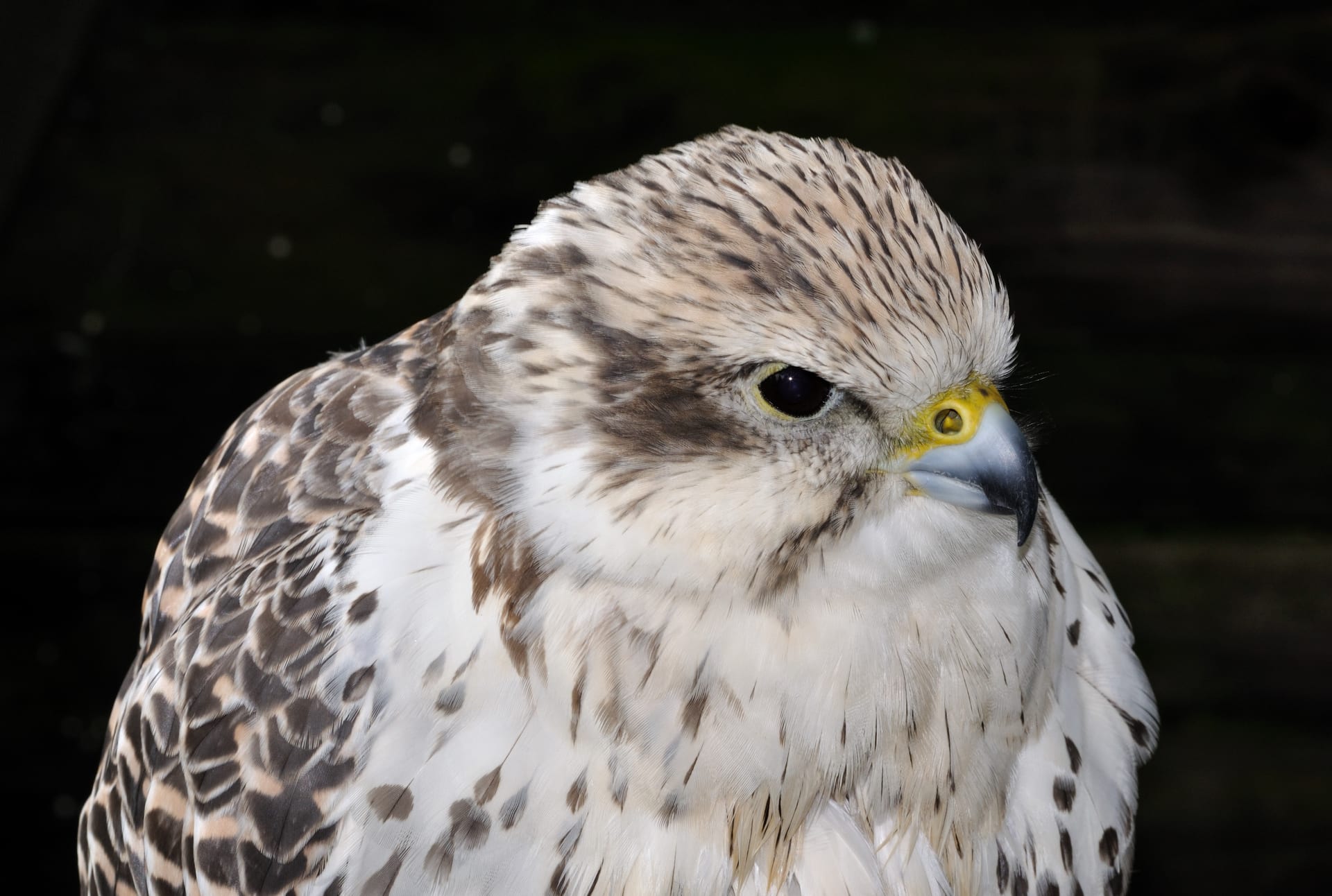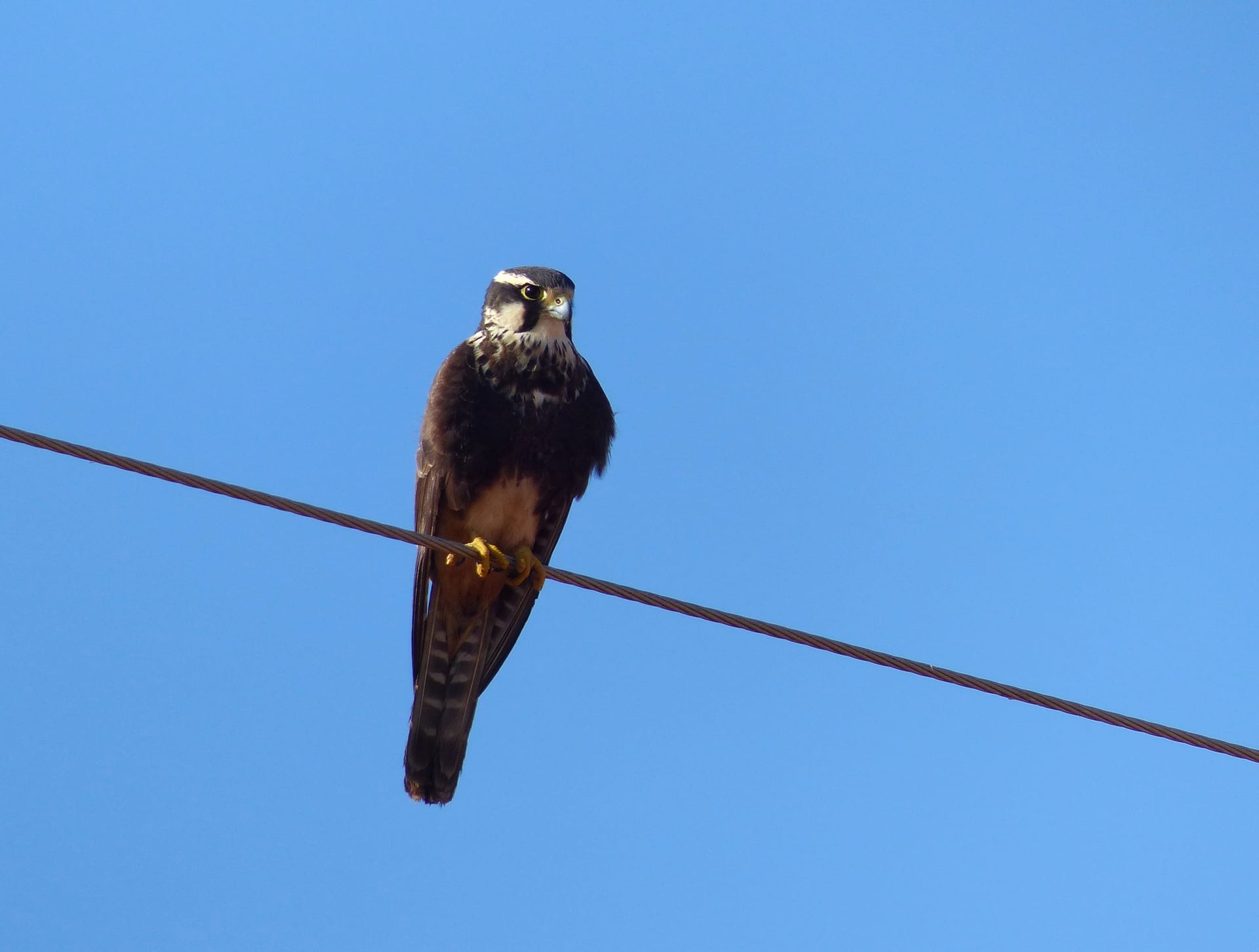
Source: Wikimedia Commons
Aplomado Falcon
AdvancedFalco femoralis
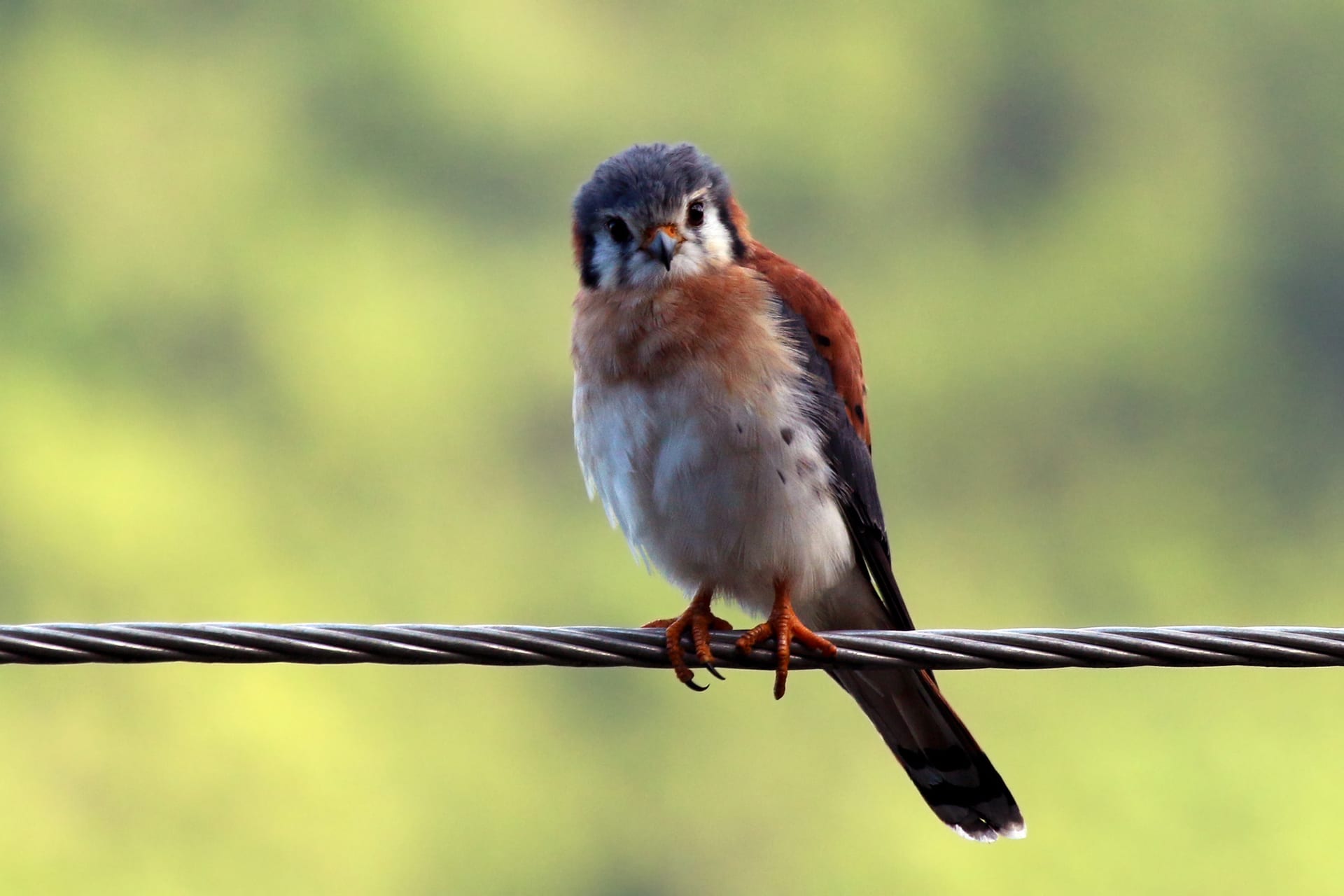
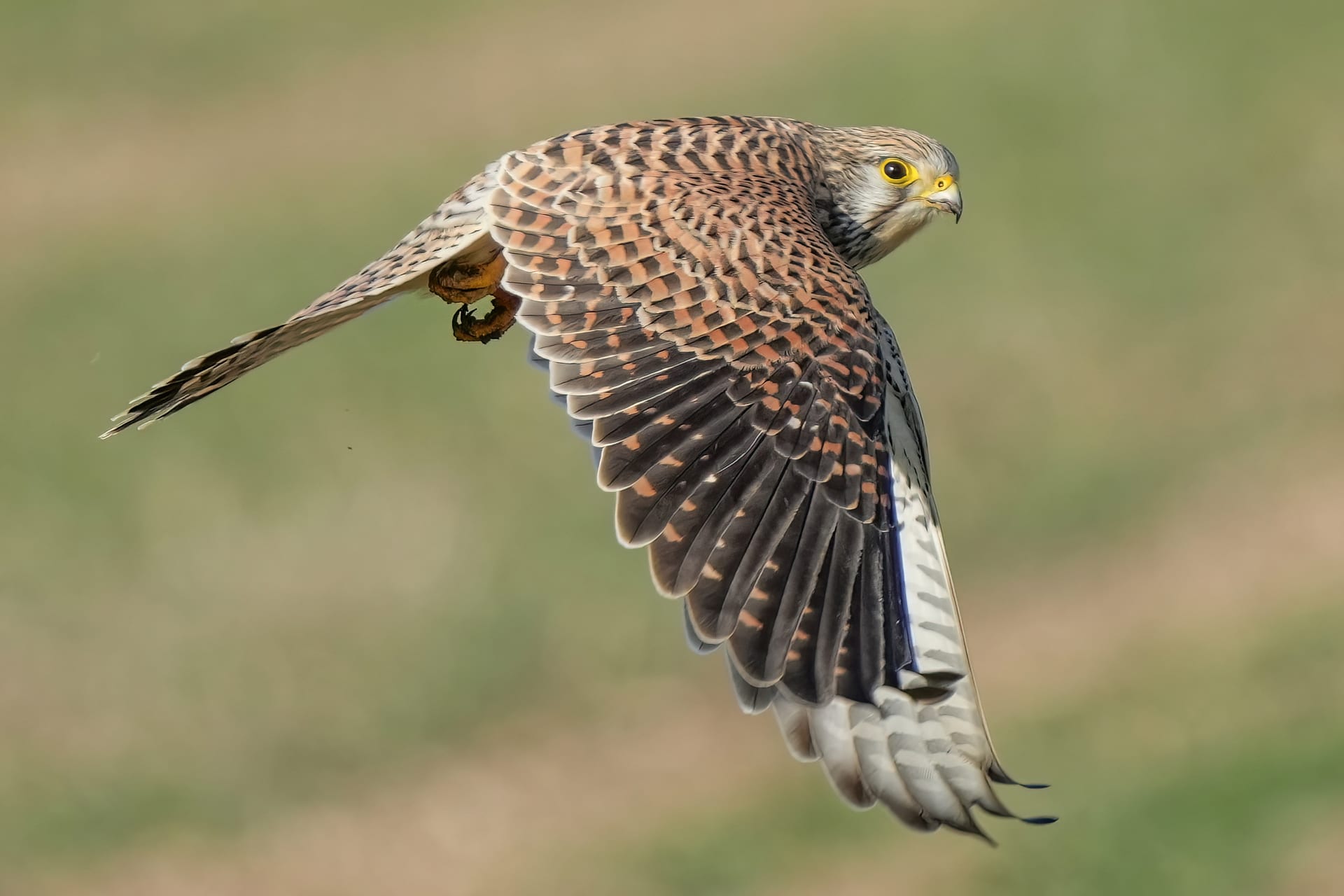
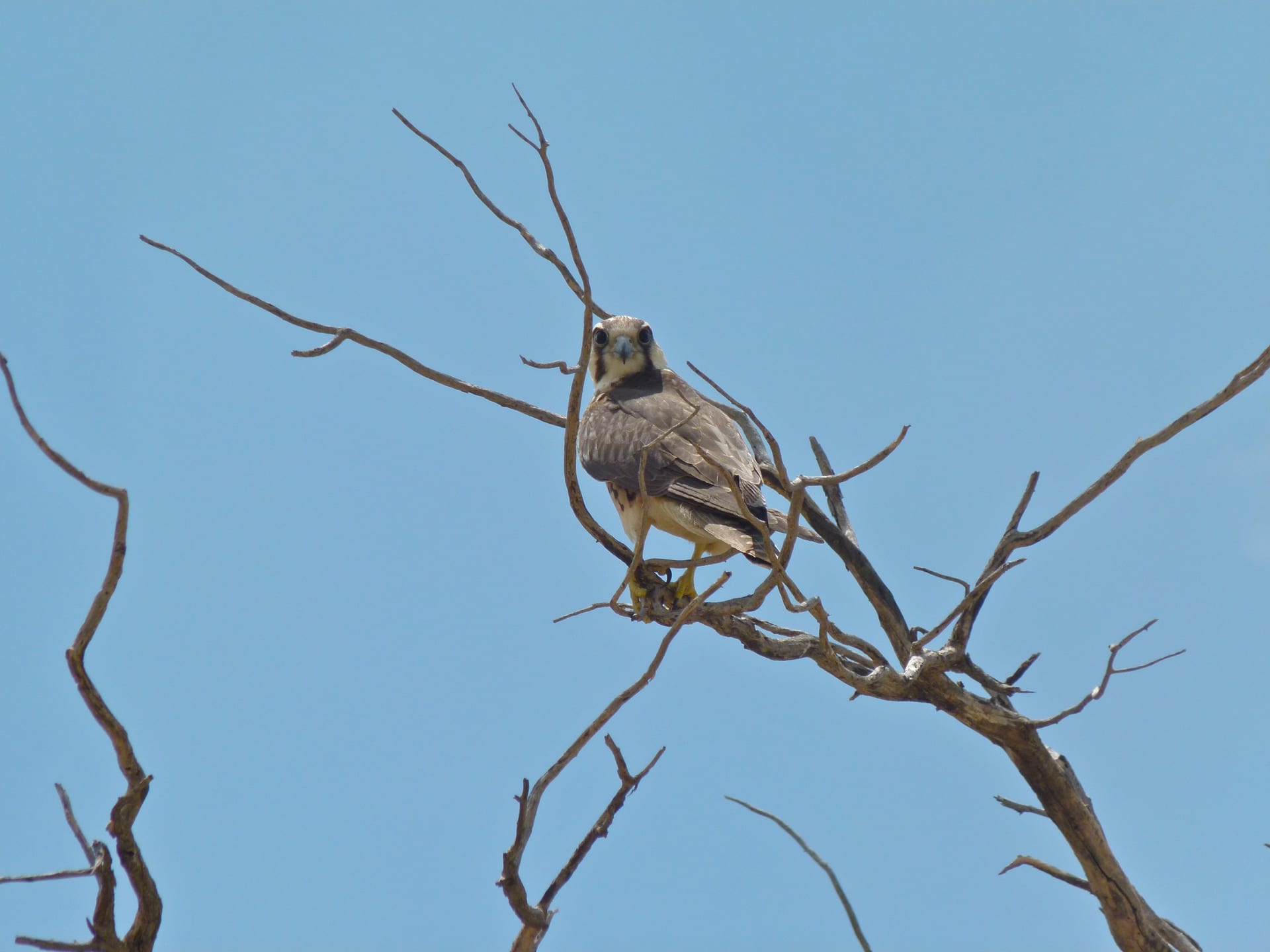
A slender, long-winged, long-tailed falcon of the Americas with blue-grey upperparts, a white throat and brow, a black belly band and cinnamon underparts. It hunts mainly small birds, and its name is Spanish for 'lead-coloured'.
Difficulty
Advanced
Temperature
15〜30℃
Lifespan
Recorded maximum 12 years
Size
30-40 cm
Humidity
40〜60%
Diet
Carnivorous: whole small prey such as quail, chicks and mice, plus insects
About
The aplomado falcon (Falco femoralis) is a medium-sized falcon of open grassland and savanna from Mexico to the southern tip of South America. Aplomado is Spanish for 'lead-coloured', after the blue-grey upperparts. Slender, long-winged and long-tailed, adults are dark blue-grey above and on much of the head, with the typical falcon moustache contrasting with a white throat and eyestripe. Black patches on each side of the lower breast meet in the middle, and the belly and thighs below are pale cinnamon. The tail is black with narrow white bars. Females are larger than males. It may be confused with the bat and orange-breasted falcons, which have similar patterns below but are stockier with all-black heads. Small birds make up most of its prey, along with large insects and small vertebrates, and at dusk it catches and eats insects on the wing. It disappeared from the south-western United States and is being reintroduced there. Keeping it suits falconers and experienced raptor keepers, and captive-bred birds are sold in Japan by raptor specialists.
Source: Wikipedia (CC BY-SA 4.0)
Lifespan of the Aplomado Falcon
The Aplomado Falcon lives Recorded maximum 12 years.
Size of the Aplomado Falcon
The Aplomado Falcon grows to 30-40 cm.
It is 30-40 cm long with an average wingspan of about 90 cm, the size of a small peregrine but only half the weight: 208-305 g in males and 270-460 g in females.
Basic Info
Origin
Open grassland and savanna from Mexico to southern South America
Lifespan
Recorded maximum 12 years
References & Sources
Edited & verified by: BreederDirect editorial team
The taxonomic, regulatory, and husbandry data on this page are compiled and verified against the authoritative primary sources below.
Taxonomy & Authority
Regulations & Conservation Status
CITES Appendix IIIUCN LC · Least Concern
Falco femoralis. Birds of prey and owls are listed in CITES Appendix II apart from a few species, and this species is in Appendix II. International trade needs an export permit, but no registration under Japan's species conservation law is needed to transfer birds within Japan. Imports into Japan are subject to animal import notification under the Infectious Diseases Control Law. It is a foreign species not native to Japan, and birds in trade are captive bred. The native peregrine falcon (Falco peregrinus) is a different species, and wild birds may not in principle be caught or kept under the Act on the Protection and Management of Wildlife, and the Optimization of Hunting. The IUCN assesses it as Least Concern.
Sources: Species+ (Falco femoralis) / IUCN Red List / Act on the Protection and Management of Wildlife, and the Optimization of Hunting (Article 8)
Regulations may change. Always verify the latest information with the relevant authorities.
Aplomado Falcon Listings
Loading latest listingsFind listings for this species