Source: Wikimedia Commons
African Wood Owl
AdvancedStrix woodfordii
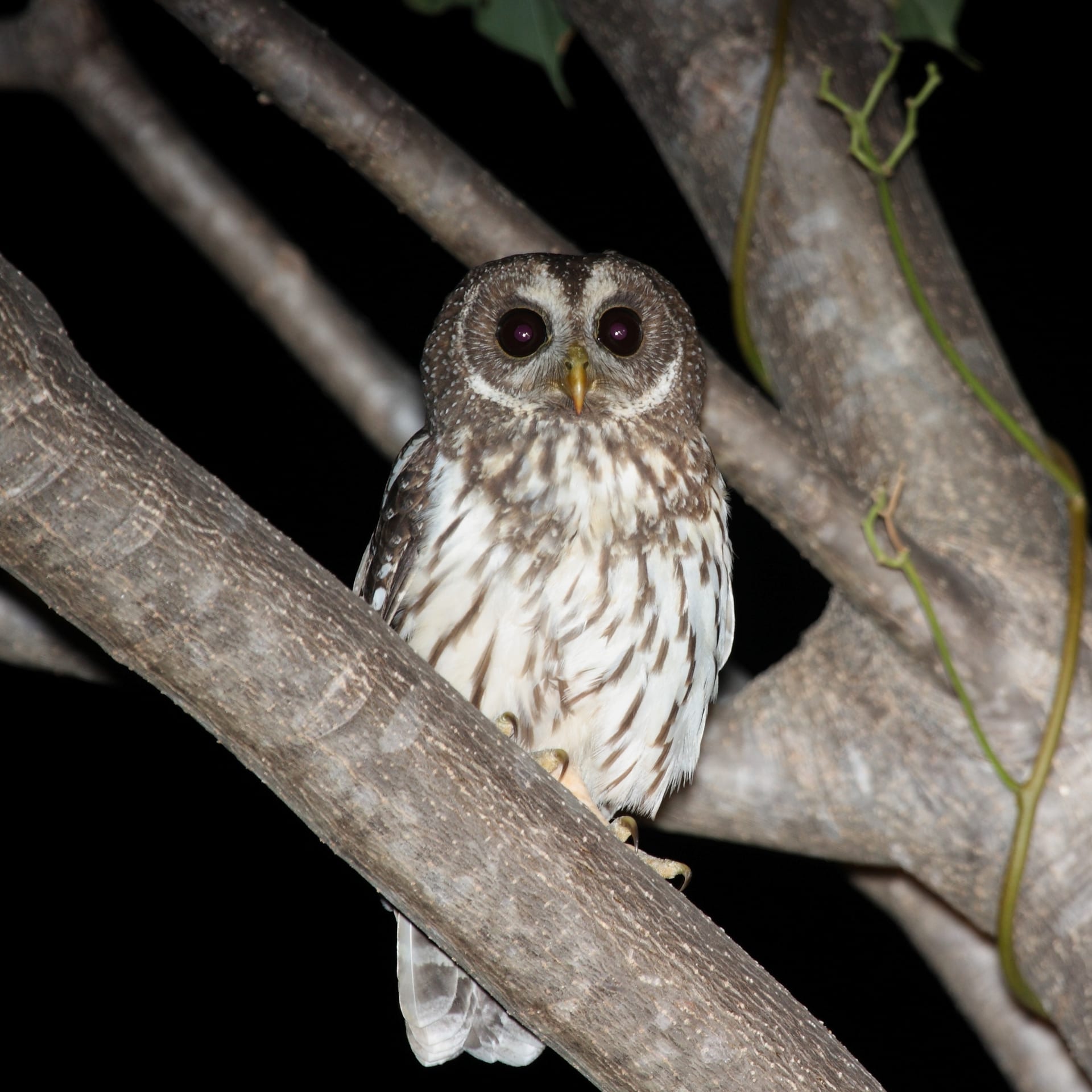
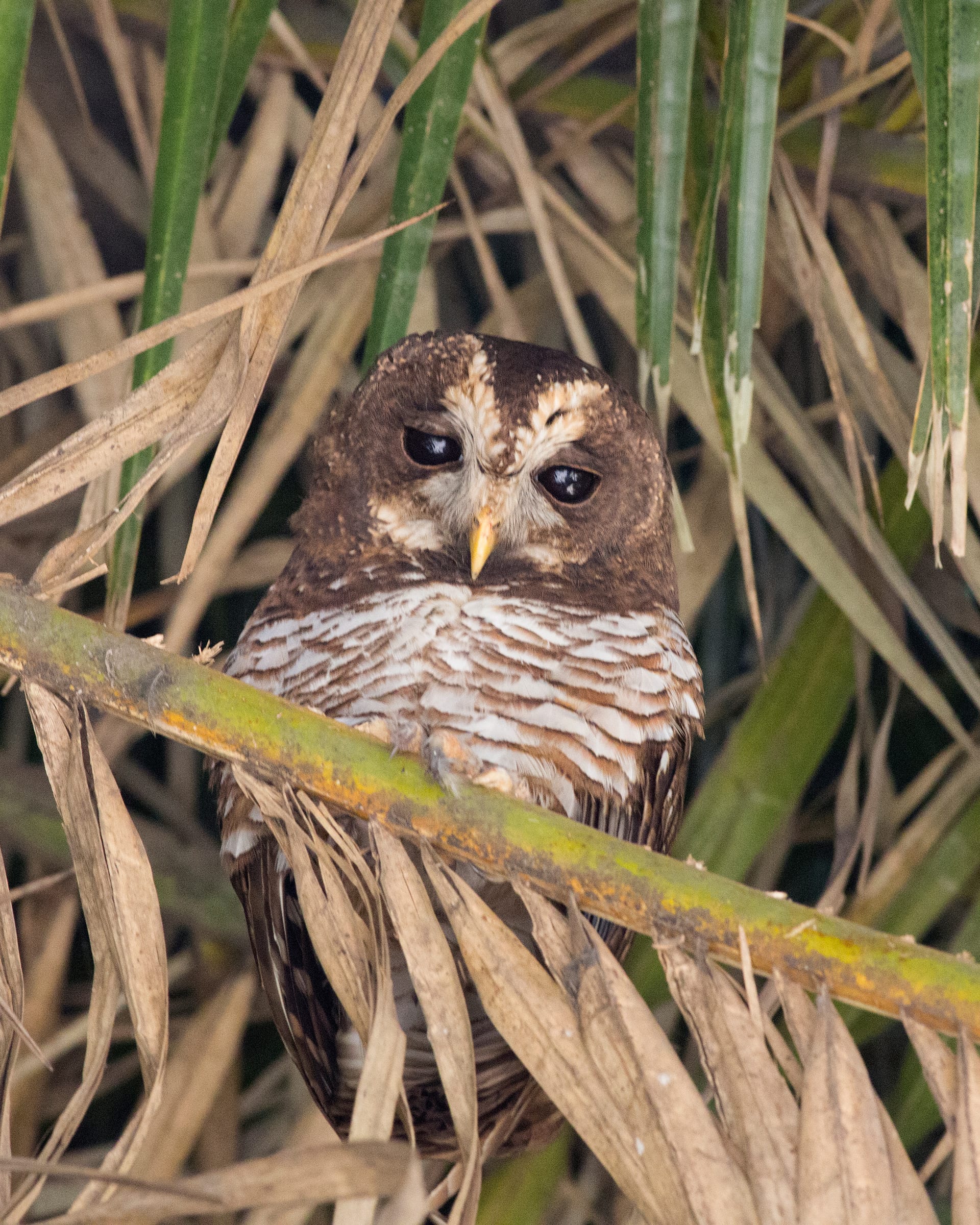
A medium-sized African owl with a rounded head, large dark eyes framed by white brows and a yellow bill. Rich brown with white spots and bars, it is arguably the commonest forest owl in Africa.
Difficulty
Advanced
Temperature
15〜30℃
Lifespan
Little data
Size
30.5-35 cm
Humidity
40〜60%
Diet
Carnivorous: mainly insects, plus whole prey such as mice, chicks and quail
About
The African wood owl (Strix woodfordii) is a medium-sized typical owl of the genus Strix, widespread in sub-Saharan Africa and arguably the continent's commonest forest owl. It ranges from Senegal along the Gulf of Guinea into the Congo Basin and Angola, and in the east from Ethiopia through Kenya and Tanzania to Zambia and Mozambique, south to around Cape Town. It has the rounded head typical of Strix, large dark eyes framed by white eyebrows and a prominent yellow bill; the head is dark brown with white spots, the body rich brown, and the whitish belly barred with brown. Colouring varies considerably across its range, and juveniles are paler rufous. It lives in indigenous forest and woodland, riverine and coastal forest and well-wooded suburbs, roosting by day singly or in pairs in dense cover high in trees. Strictly nocturnal, it swoops from a perch to take mostly insects, along with reptiles, small mammals and birds. Its signature is a duet in which the male's rapid clear hoots are answered by the female's higher, slower hoots; calling begins after dusk and carries over 500 m. It lays 1 to 3 eggs in a tree hollow from July to October. In Japan captive-bred birds are sold by raptor and owl specialists.
Source: Wikipedia (CC BY-SA 4.0)
Size of the African Wood Owl
The African Wood Owl grows to 30.5-35 cm.
It is 30.5-35 cm long and weighs 240-350 g.
Basic Info
Origin
Forest, woodland, riverine and coastal forest and wooded suburbs of sub-Saharan Africa
Lifespan
Little data
Size
30.5-35 cm
References & Sources
Edited & verified by: BreederDirect editorial team
The taxonomic, regulatory, and husbandry data on this page are compiled and verified against the authoritative primary sources below.
Taxonomy & Authority
Regulations & Conservation Status
CITES Appendix IIIUCN LC · Least Concern
Strix woodfordii. Birds of prey and owls are listed in CITES Appendix II apart from a few species, and this species is in Appendix II. International trade needs an export permit, but no registration under Japan's species conservation law is needed to transfer birds within Japan. Imports into Japan are subject to animal import notification under the Infectious Diseases Control Law. Only foreign captive-bred birds are traded. Wild birds in Japan, including native owls, may not in principle be caught or kept under the Act on the Protection and Management of Wildlife, and the Optimization of Hunting. The IUCN assesses it as Least Concern.
Sources: Species+ (Strix woodfordii) / IUCN Red List / Act on the Protection and Management of Wildlife, and the Optimization of Hunting (Article 8)
Regulations may change. Always verify the latest information with the relevant authorities.
African Wood Owl Listings
Loading latest listingsFind listings for this species