Source: Wikimedia Commons
Mottled Owl
AdvancedStrix virgata
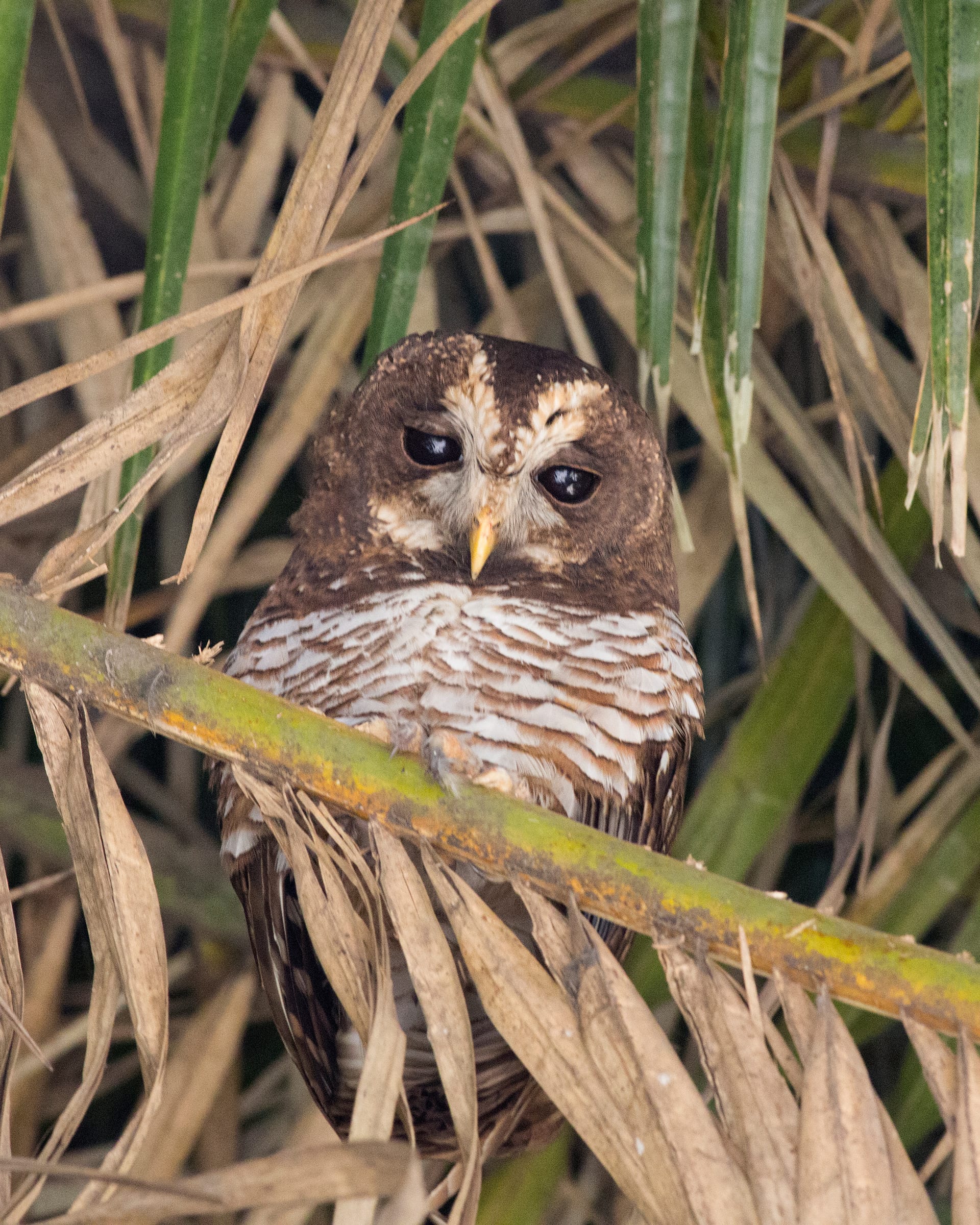
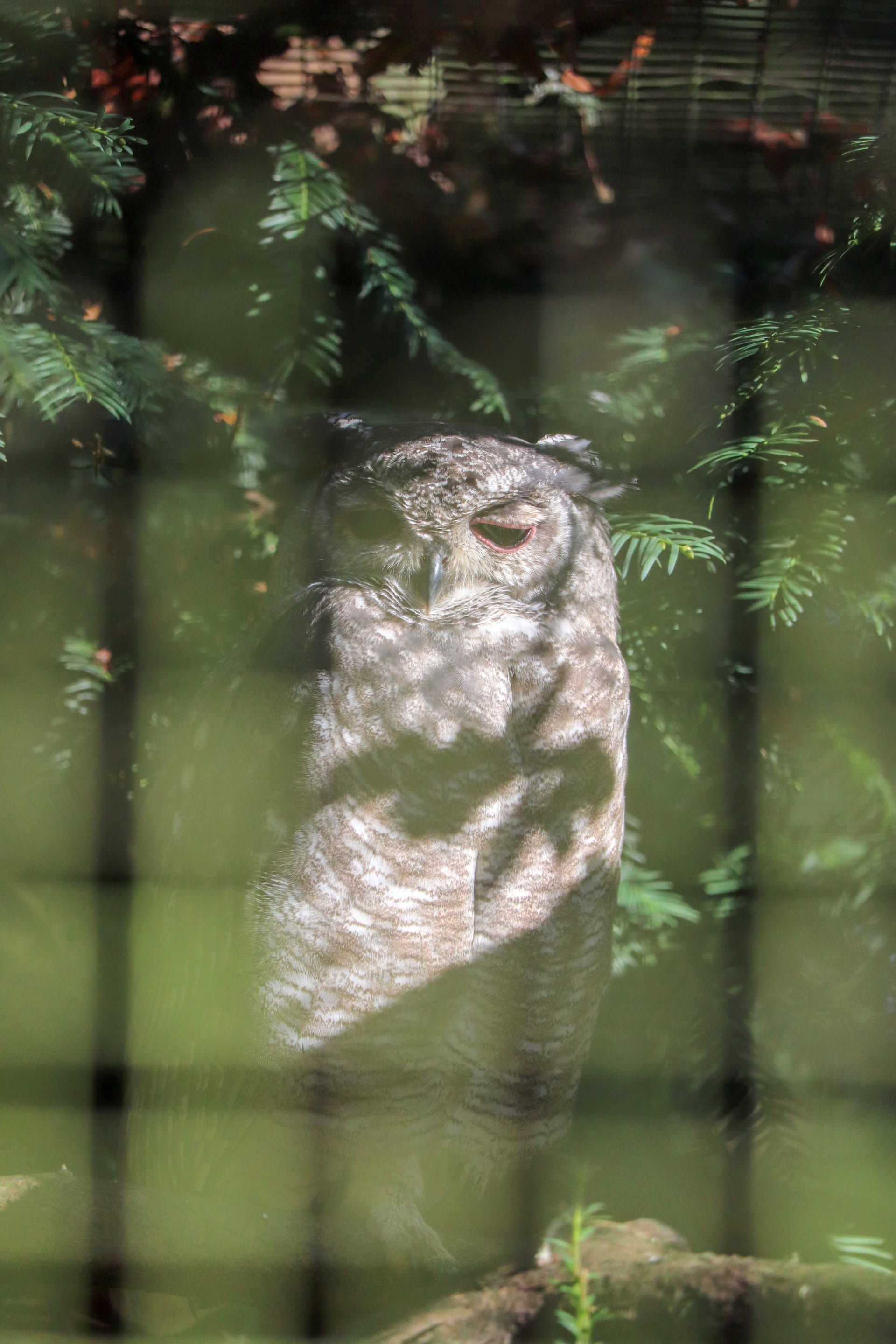
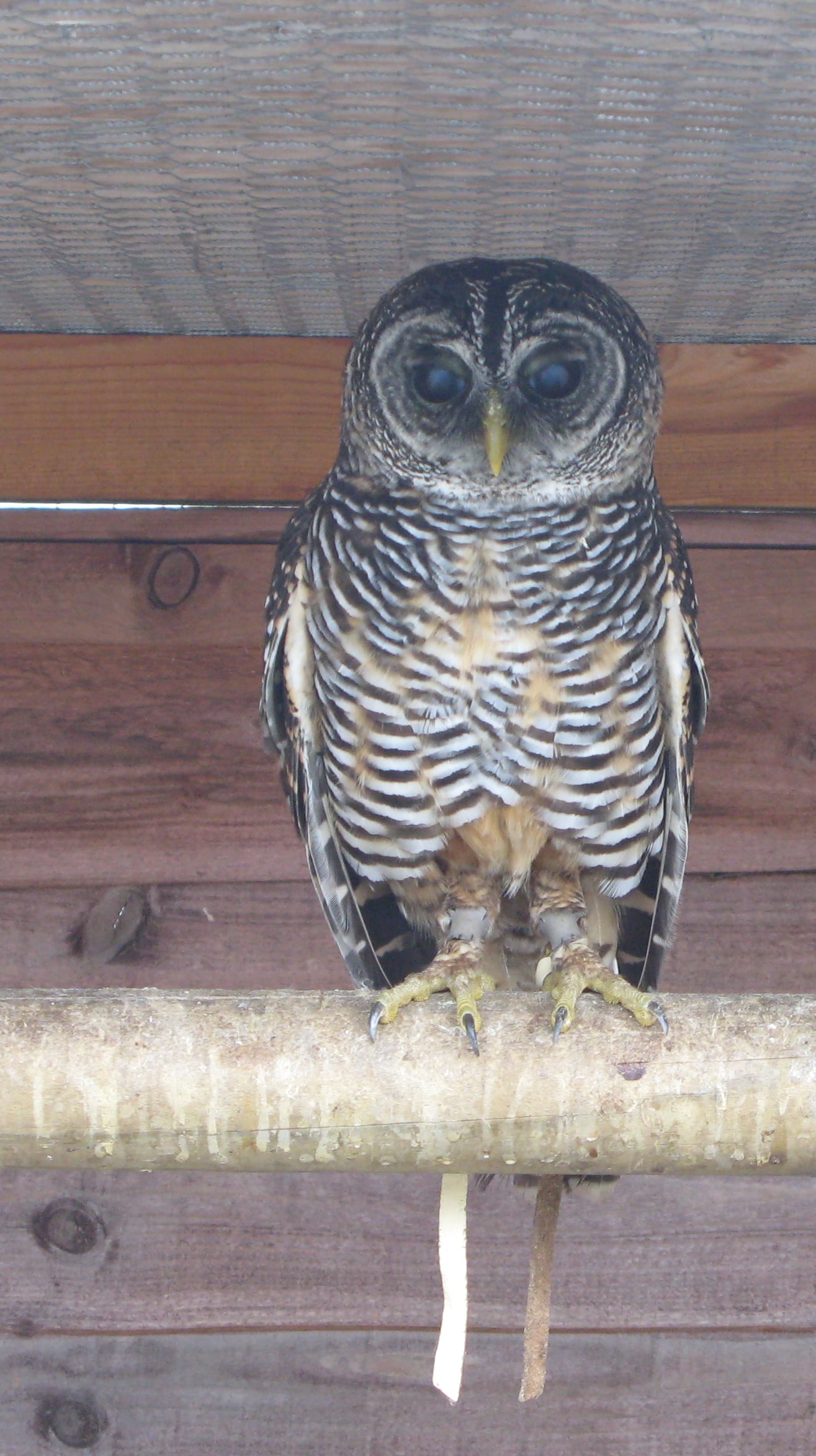
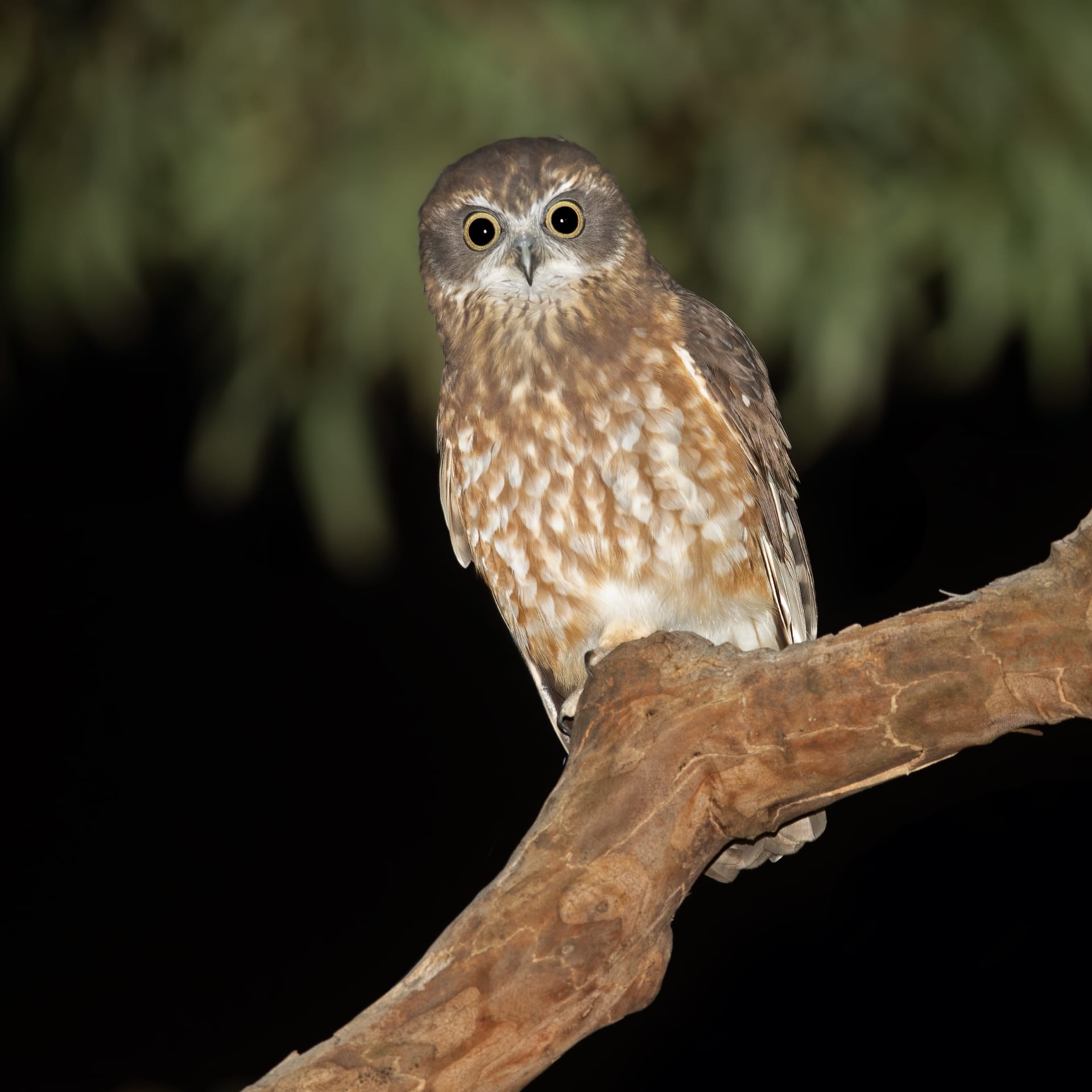
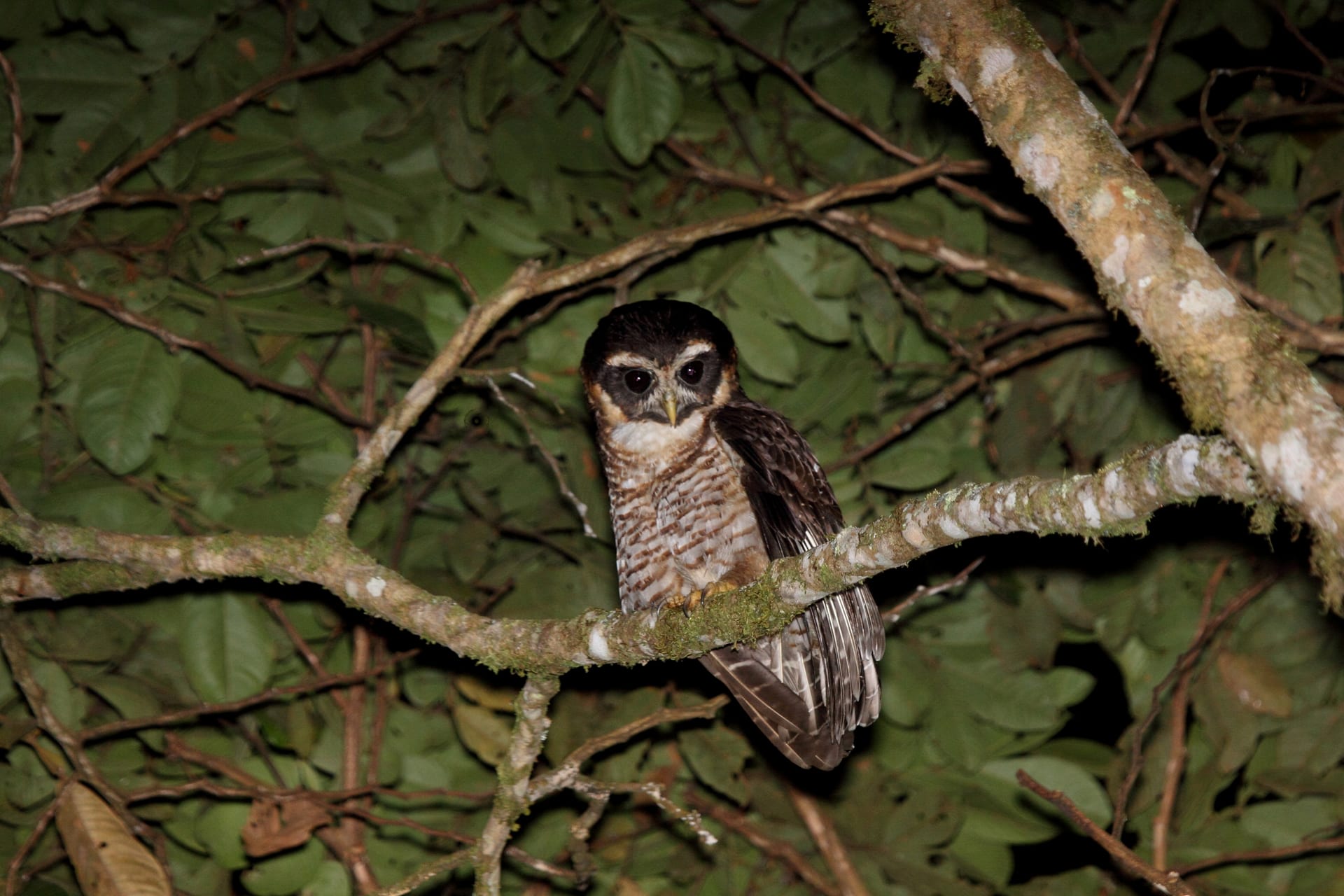
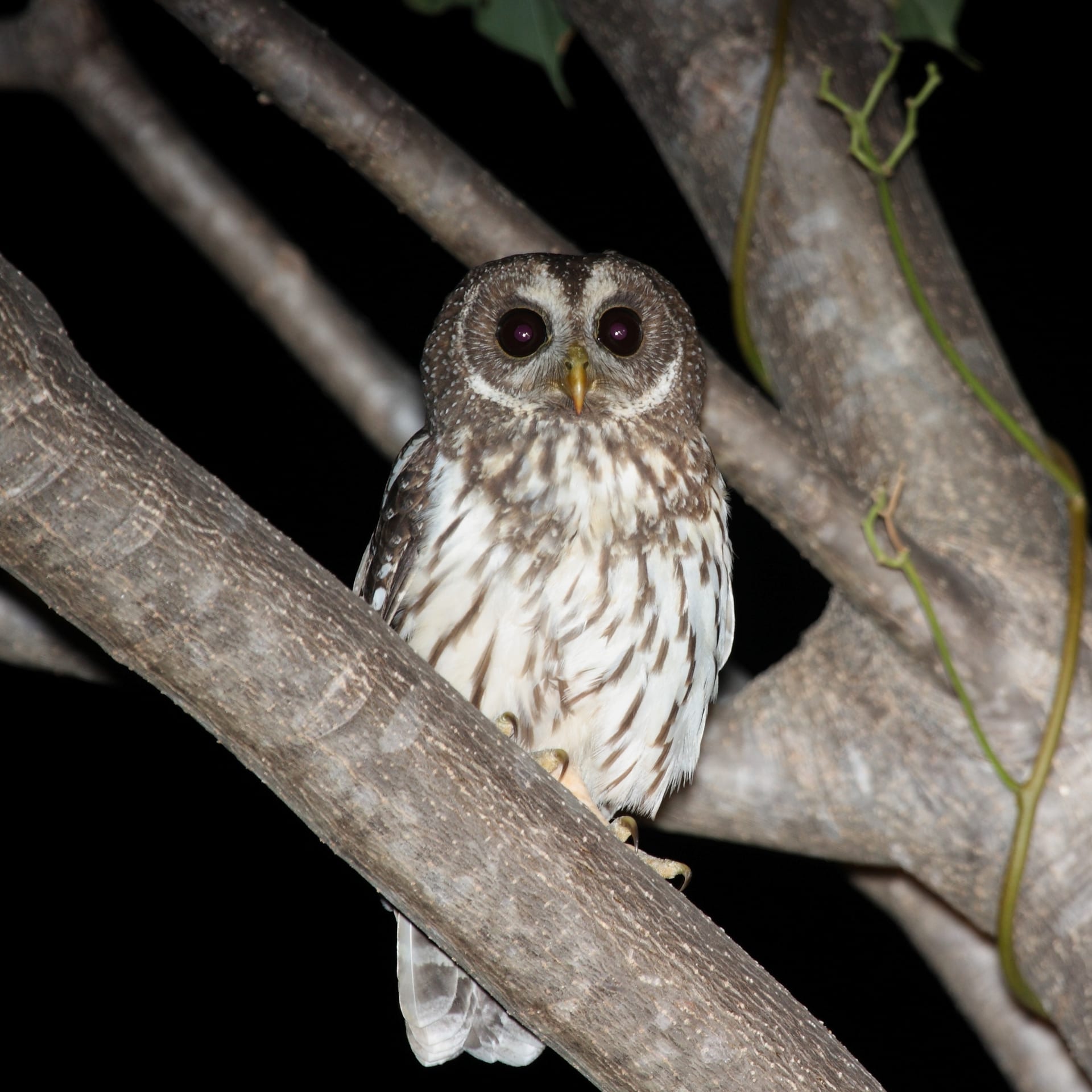
A medium-sized owl of Central and South America with mottled brown upperparts, whitish underparts with vertical streaks, a round head without ear tufts and large dark eyes. Females are much larger than males, the greatest size difference of any owl.
Difficulty
Advanced
Temperature
15〜30℃
Lifespan
Little data
Size
28-35.5 cm
Humidity
40〜60%
Diet
Carnivorous: whole small prey such as mice and chicks, plus insects
About
The mottled owl (Strix virgata) is a medium-sized owl of Central and South America from Mexico to Brazil and Argentina. Described by Cassin in 1849, it was moved from Ciccaba to Strix in 1999, though some authorities still keep it in Ciccaba, and CITES lists it as Ciccaba virgata. It is 28-35.5 cm long. Females are much larger than males, the greatest sexual size difference of any owl. The crown, nape and back are mottled in shades of dark brown, the facial disc pale brown, and the throat to belly off-white with distinct vertical brown streaks. The large eyes are brown and the bill greyish-yellow or greyish-blue. It lacks ear tufts and has a round head. A darker form has a buff breast and belly. It lives up to about 2,500 m in rainforest, woodland edge, dry thorn forest, pine-oak woodland, plantations and open country with scattered trees, often near houses. Nocturnal, it rests in dense vegetation by day and at night watches from a branch at a forest edge, swooping silently onto small moving prey. It takes small mammals, birds, reptiles, amphibians and large insects, and also catches bats. Besides a territorial hoot it gives various whistles, screeches and hisses. In Japan it is sold by raptor and owl specialists, including domestically bred birds.
Source: Wikipedia (CC BY-SA 4.0)
Size of the Mottled Owl
The Mottled Owl grows to 28-35.5 cm.
Basic Info
Origin
Forest, forest edge, plantations and open country with trees from Mexico through Central and South America to Brazil and Argentina
Lifespan
Little data
Size
28-35.5 cm
Temperature
References & Sources
Edited & verified by: BreederDirect editorial team
The taxonomic, regulatory, and husbandry data on this page are compiled and verified against the authoritative primary sources below.
Taxonomy & Authority
Regulations & Conservation Status
CITES Appendix IIIUCN LC · Least Concern
Strix virgata(CITES では Ciccaba virgata の名で掲載). Owls are listed in CITES Appendix II apart from a few species, and this species is in Appendix II. International trade needs an export permit, but no registration under Japan's species conservation law is needed to transfer birds within Japan. Imports are subject to animal import notification under the Infectious Diseases Control Law. Birds in trade are foreign captive-bred birds; wild birds in Japan, including native owls, may not in principle be caught or kept under the Wildlife Protection and Hunting Management Law. The IUCN assesses it as Least Concern.
Sources: Species+ (Ciccaba virgata) / IUCN Red List / Wildlife Protection and Hunting Management Law (Article 8)
Regulations may change. Always verify the latest information with the relevant authorities.
Mottled Owl Listings
Loading latest listingsFind listings for this species