Source: Wikimedia Commons
Band-bellied Owl
AdvancedPulsatrix melanota
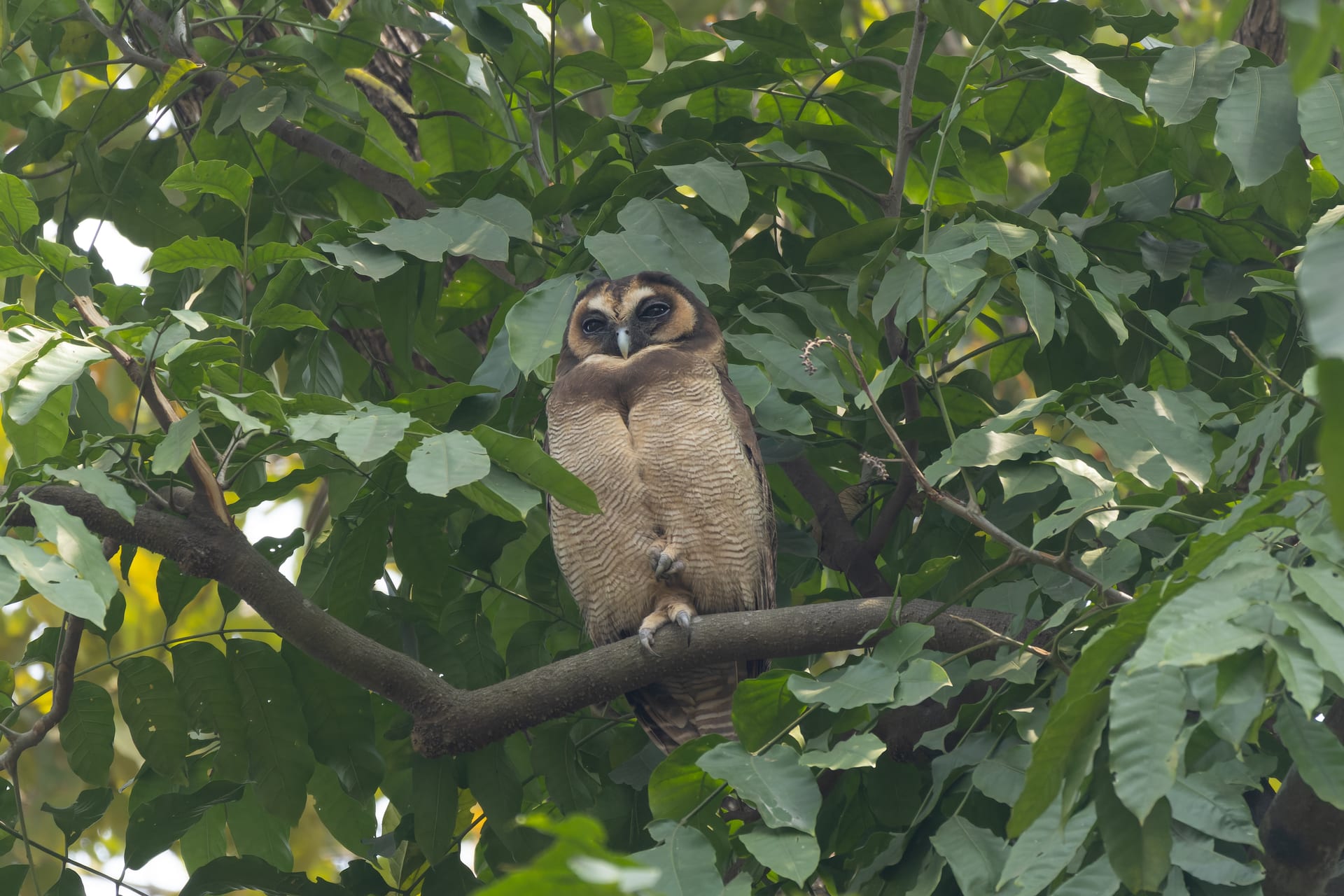
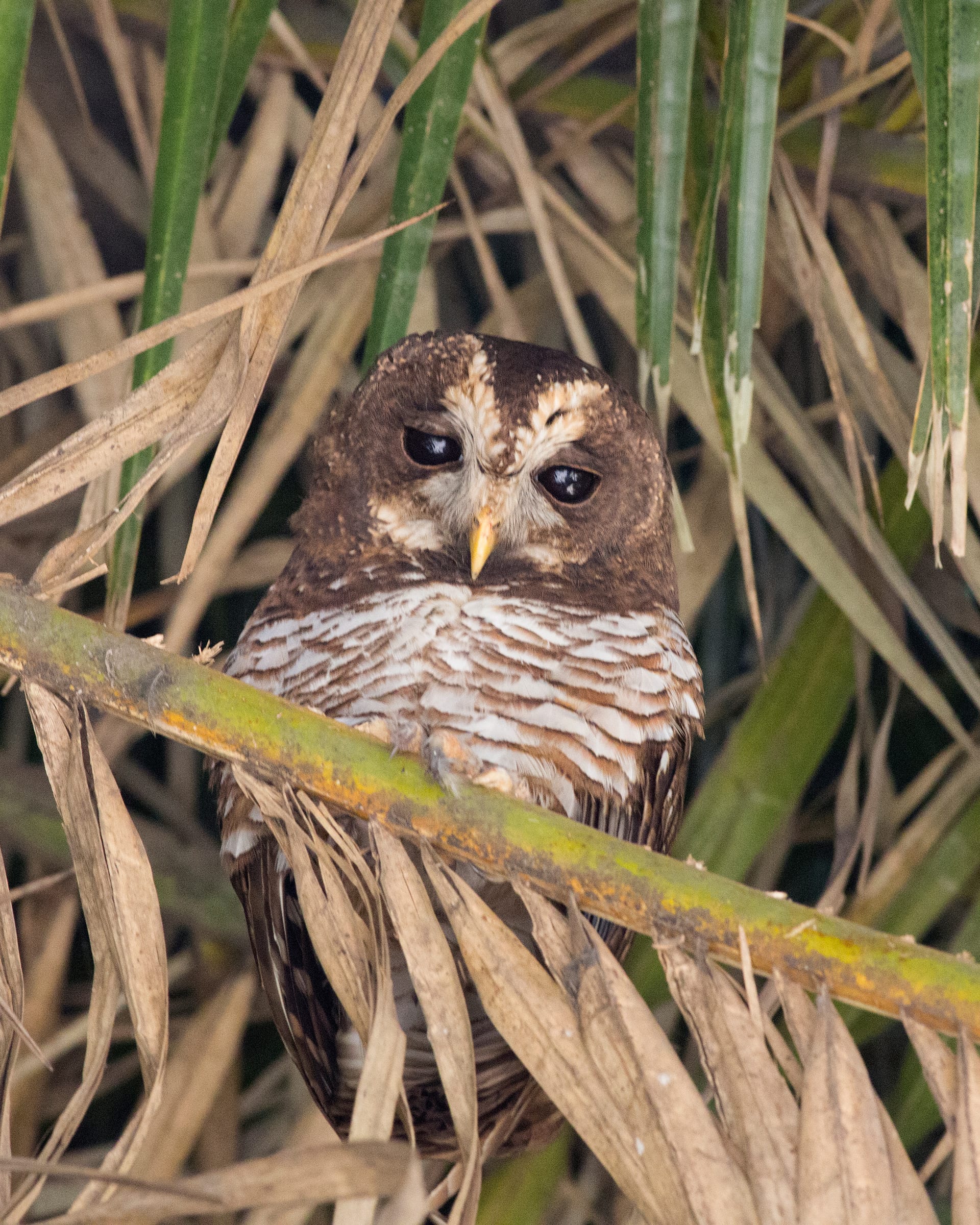
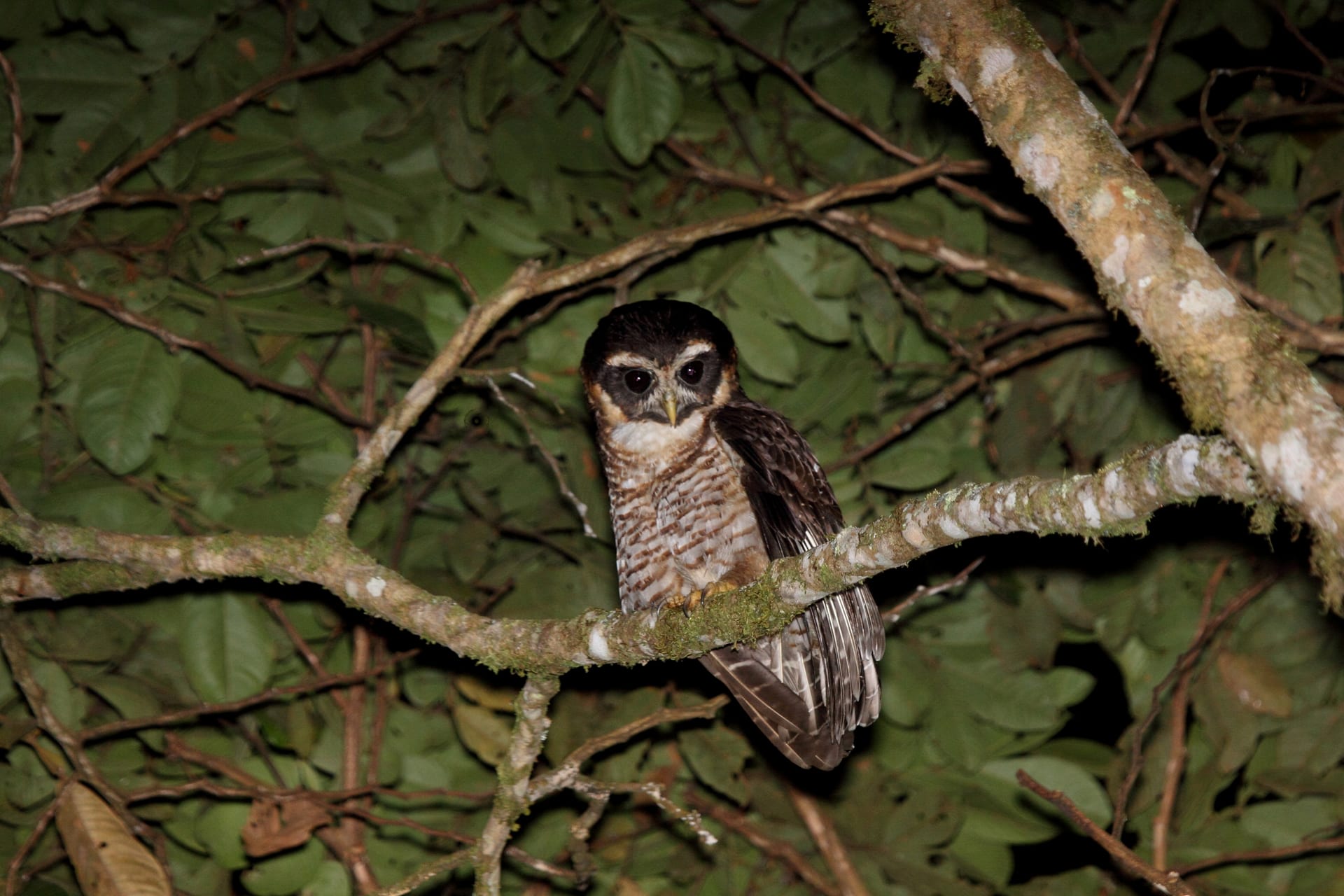
A spectacled owl of the eastern Andean slopes with a dark brown facial disc, white brows and dark reddish-brown eyes, chocolate-brown upperparts and whitish underparts barred reddish-brown, with a reddish-brown upper breast band.
Difficulty
Advanced
Temperature
15〜30℃
Size
44-48 cm
Humidity
40〜60%
Diet
Carnivorous: whole small prey such as mice and chicks, plus large insects
About
The band-bellied owl (Pulsatrix melanota) inhabits the eastern slope of the Andes from central Colombia through Ecuador and Peru to west-central Bolivia. It has two subspecies and may form a superspecies with the tawny-browed owl (P. koeniswaldiana), though the two differ in morphology and voice. It has a dark brown facial disc with white brows and dark reddish-brown eyes, and dark chocolate-brown upperparts with scattered buffy-white spots. The tail is dark brown with thin white bars. The upper breast is reddish-brown barred with buff, and the rest of the underparts white to cream with reddish-brown bars. It shares its genus with the spectacled owl (P. perspicillata) and is told from it by the barred underparts and reddish-brown breast band. It lives mainly inside humid montane and foothill rainforest at about 650-2,200 m, also at forest edges and clearings with scattered trees. Nocturnal, its diet is poorly studied but includes large insects. It is said to give a short, deep trill followed by rapid popping notes, and deep muffled hoots have been recorded; the sexes duet. Its ecology is poorly known. In Japan it arrives irregularly, and chicks are occasionally offered.
Source: Wikipedia (CC BY-SA 4.0)
Size of the Band-bellied Owl
The Band-bellied Owl grows to 44-48 cm.
It is a fairly large owl of 44-48 cm; thirteen birds weighed 590-1,250 g, averaging 873 g.
Basic Info
Origin
Humid montane and foothill forest on the eastern Andean slope from central Colombia to west-central Bolivia, about 650-2,200 m
Size
44-48 cm
Temperature
15〜30℃
References & Sources
Edited & verified by: BreederDirect editorial team
The taxonomic, regulatory, and husbandry data on this page are compiled and verified against the authoritative primary sources below.
Taxonomy & Authority
Regulations & Conservation Status
CITES Appendix IIIUCN LC · Least Concern
Pulsatrix melanota. Owls are listed in CITES Appendix II apart from a few species, and this species is in Appendix II. International trade needs an export permit, but no registration under Japan's species conservation law is needed to transfer birds within Japan. Imports are subject to animal import notification under the Infectious Diseases Control Law. Birds in trade are foreign captive-bred birds; wild birds in Japan, including native owls, may not in principle be caught or kept under the Act on the Protection and Management of Wildlife, and the Optimization of Hunting. The IUCN assesses it as Least Concern.
Sources: Species+ (Pulsatrix melanota) / IUCN Red List / Act on the Protection and Management of Wildlife, and the Optimization of Hunting (Article 8)
Regulations may change. Always verify the latest information with the relevant authorities.
Band-bellied Owl Listings
Loading latest listingsFind listings for this species