Source: Wikimedia Commons
Cape Eagle-Owl
AdvancedBubo capensis
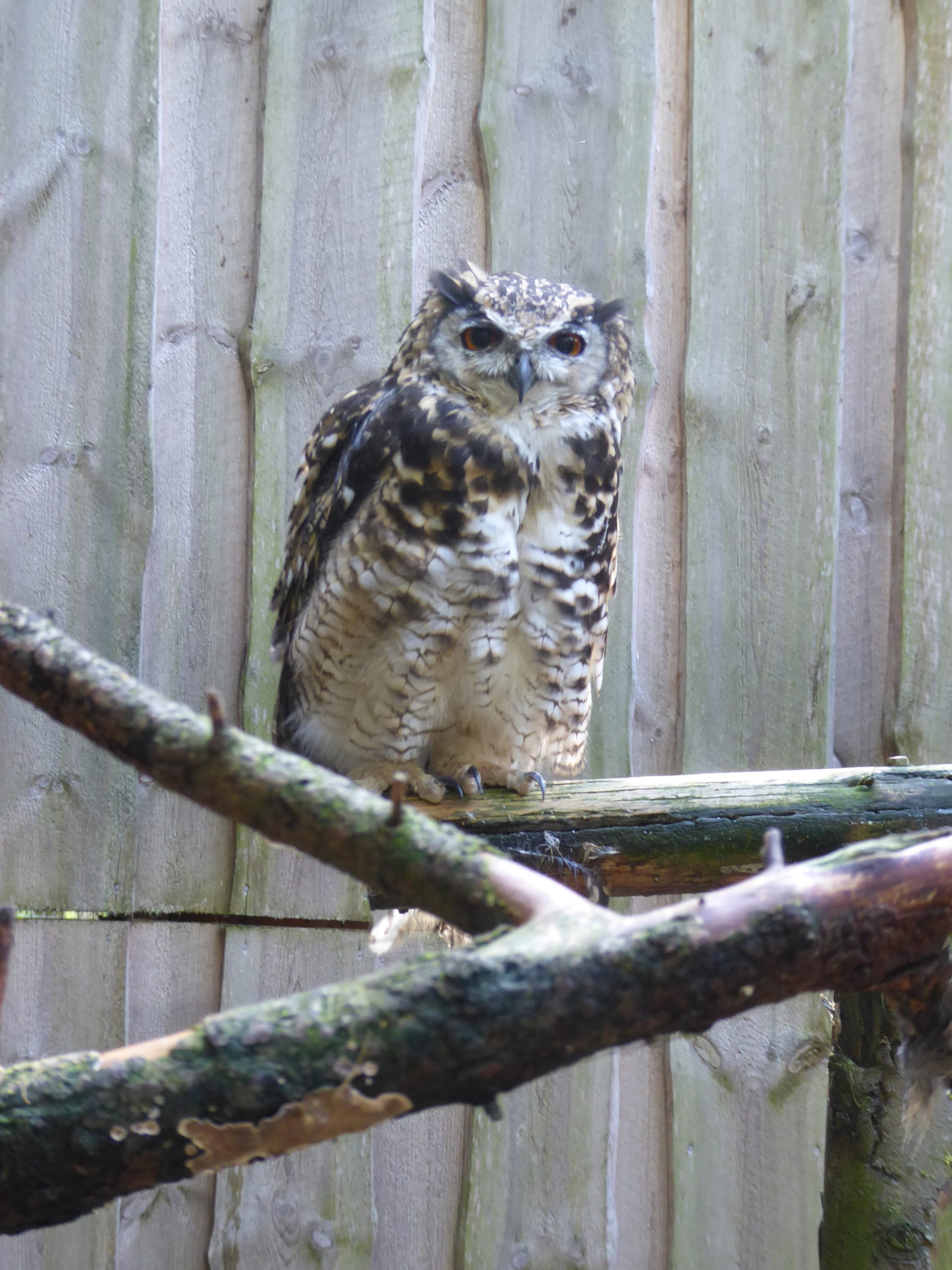
A large eagle-owl of southern and eastern Africa with prominent ear tufts and yellow to orange eyes. Dark brown above with a breast blotched in white, black and tawny, it roosts on rock ledges and in caves and takes prey as heavy as hyraxes.
Difficulty
Advanced
Temperature
15〜30℃ (typical for Bird)
Size
46-61 cm
Humidity
40〜60%
Diet
Carnivorous: whole prey such as rats, rabbits and quail
About
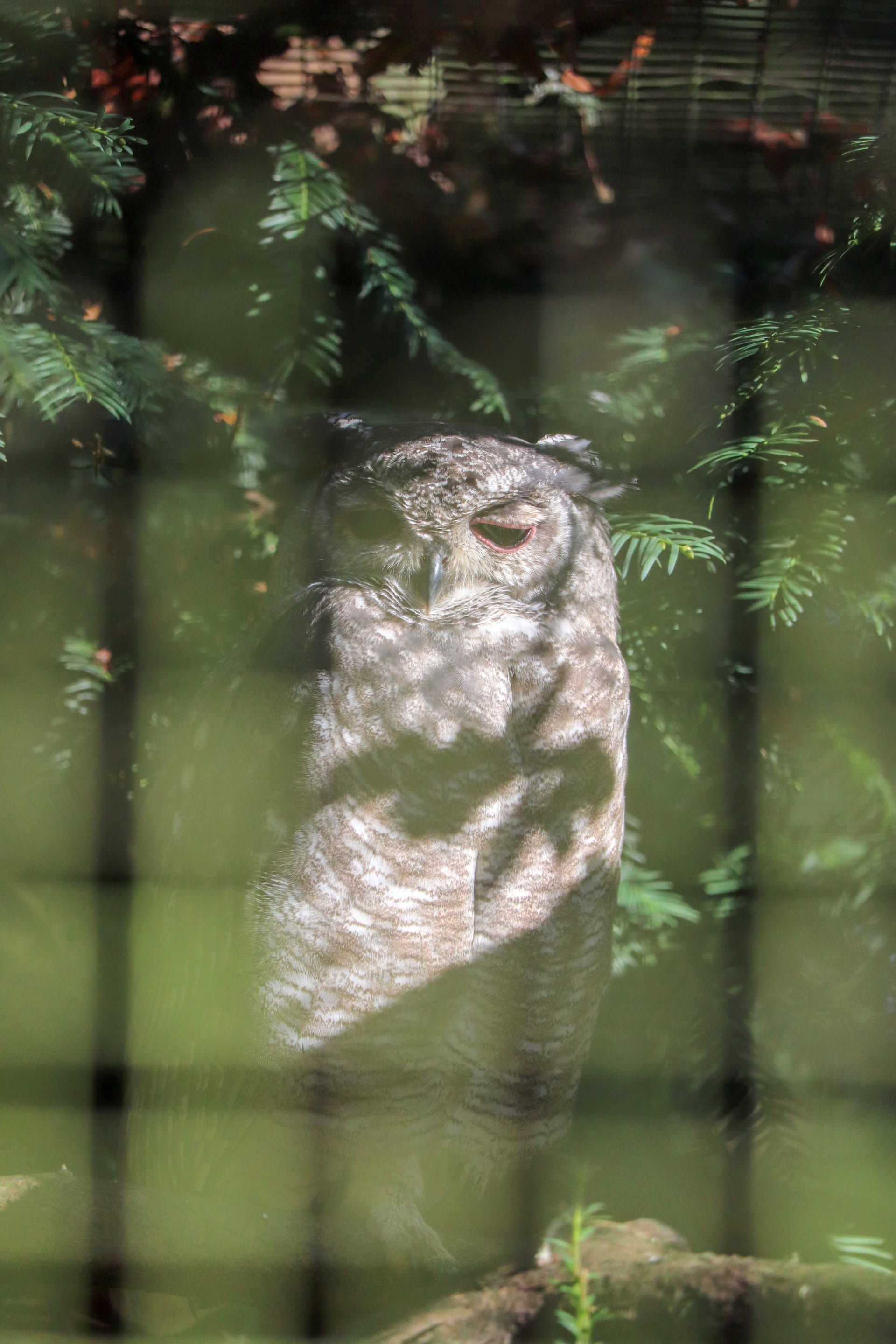
The Cape eagle-owl (Bubo capensis) is a large eagle-owl of the southernmost parts of southern Africa and parts of East Africa. It is dark brown above with prominent ear tufts and yellow or yellowish-orange eyes. The sides of the breast are blotched brown, and the paler chest is overlaid with white, black and tawny markings. The facial disc is fulvous-brown with a distinct black or dark brown frame that broadens towards the neck, and the tarsi and toes are densely feathered. There are three subspecies; the Ethiopian highland form is called the Abyssinian eagle-owl in English, and the largest, mackinderi, is sometimes treated as a separate species. It prefers mountains and rocky hills up to 2,500 m and may enter towns to hunt pigeons. Nocturnal, it roosts by day among rocks, on ledges and in crevices and caves. Mammals are its main prey, from shrews and small rodents to hyraxes heavier than itself, and it also takes birds such as francolins. The male's song is a powerful hoot followed by a faint note, and pairs sometimes duet. It is a different species from the spotted eagle-owl (B. africanus). In Japan it is sold by raptor and owl specialists.
Source: Wikipedia (CC BY-SA 4.0)
Size of the Cape Eagle-Owl
The Cape Eagle-Owl grows to 46-61 cm.
It is 46-61 cm long; males weigh 905-1,387 g and the larger females 1,240-1,800 g.
Basic Info
Origin
Mountains and rocky hills of southernmost Africa and parts of East Africa
Size
46-61 cm
Temperature
15〜30℃ (typical for Bird)
Humidity
References & Sources
Edited & verified by: BreederDirect editorial team
The taxonomic, regulatory, and husbandry data on this page are compiled and verified against the authoritative primary sources below.
Taxonomy & Authority
Regulations & Conservation Status
CITES Appendix IIIUCN LC · Least Concern
Bubo capensis. Owls are listed in CITES Appendix II apart from a few species, and this species is in Appendix II. International trade needs an export permit, but no registration under Japan's species conservation law is needed to transfer birds within Japan. Imports are subject to animal import notification under the Infectious Diseases Control Law. Birds in trade are foreign captive-bred birds; wild birds in Japan, including native owls, may not in principle be caught or kept under the Act on the Protection and Management of Wildlife, and the Optimization of Hunting. The IUCN assesses it as Least Concern.
Sources: Species+ (Bubo capensis) / IUCN Red List / Act on the Protection and Management of Wildlife, and the Optimization of Hunting (Article 8)
Regulations may change. Always verify the latest information with the relevant authorities.
Cape Eagle-Owl Listings
Loading latest listingsFind listings for this species