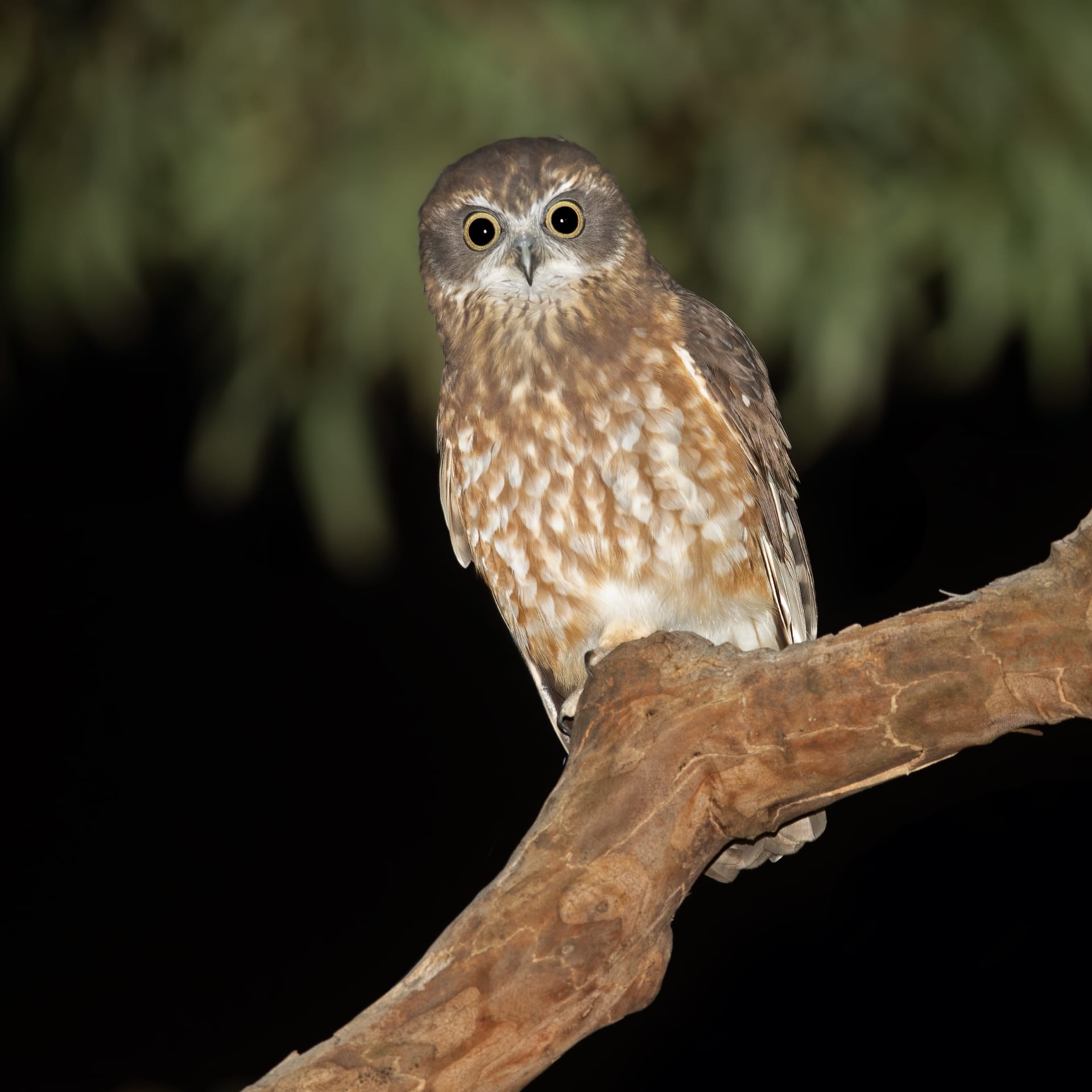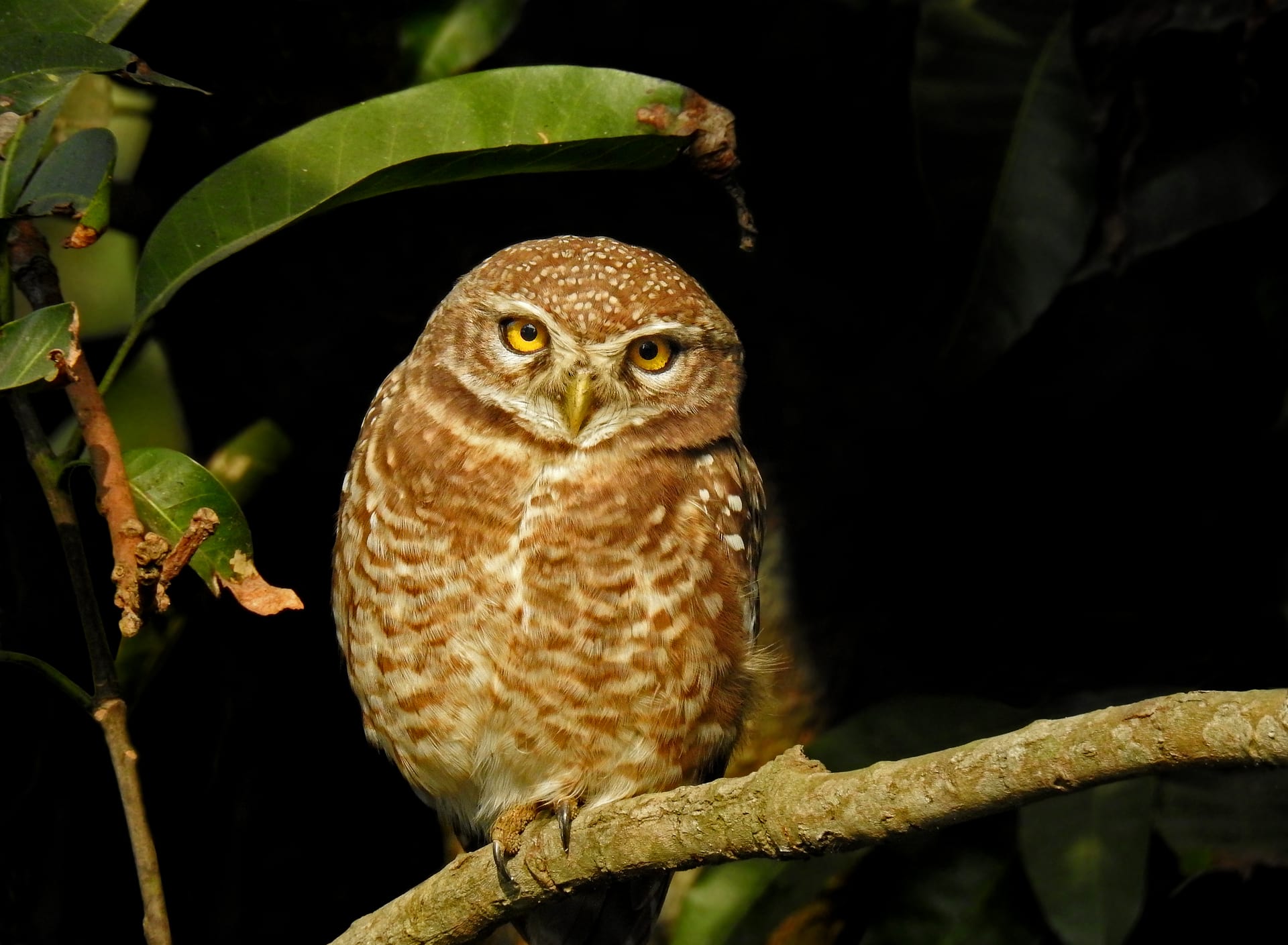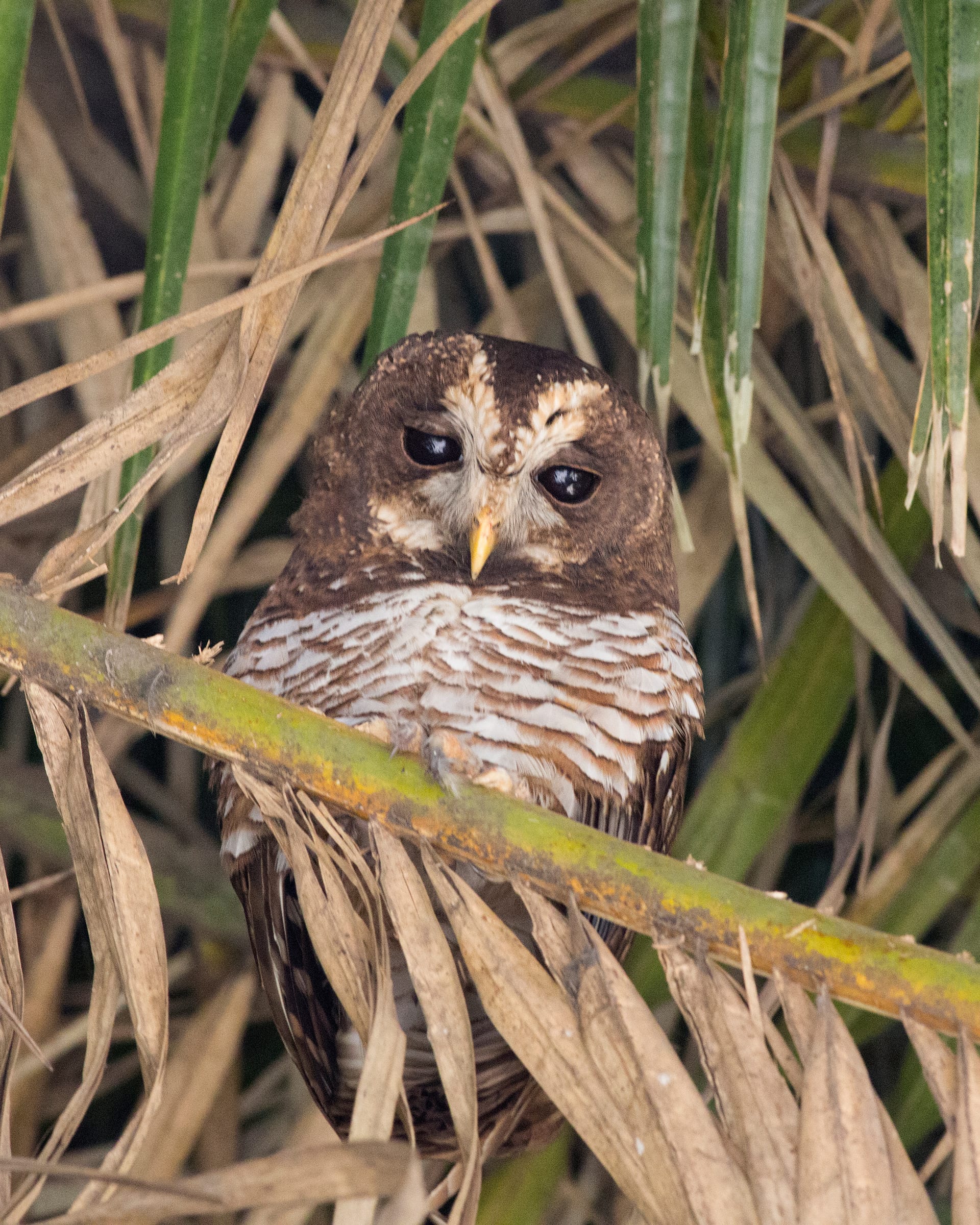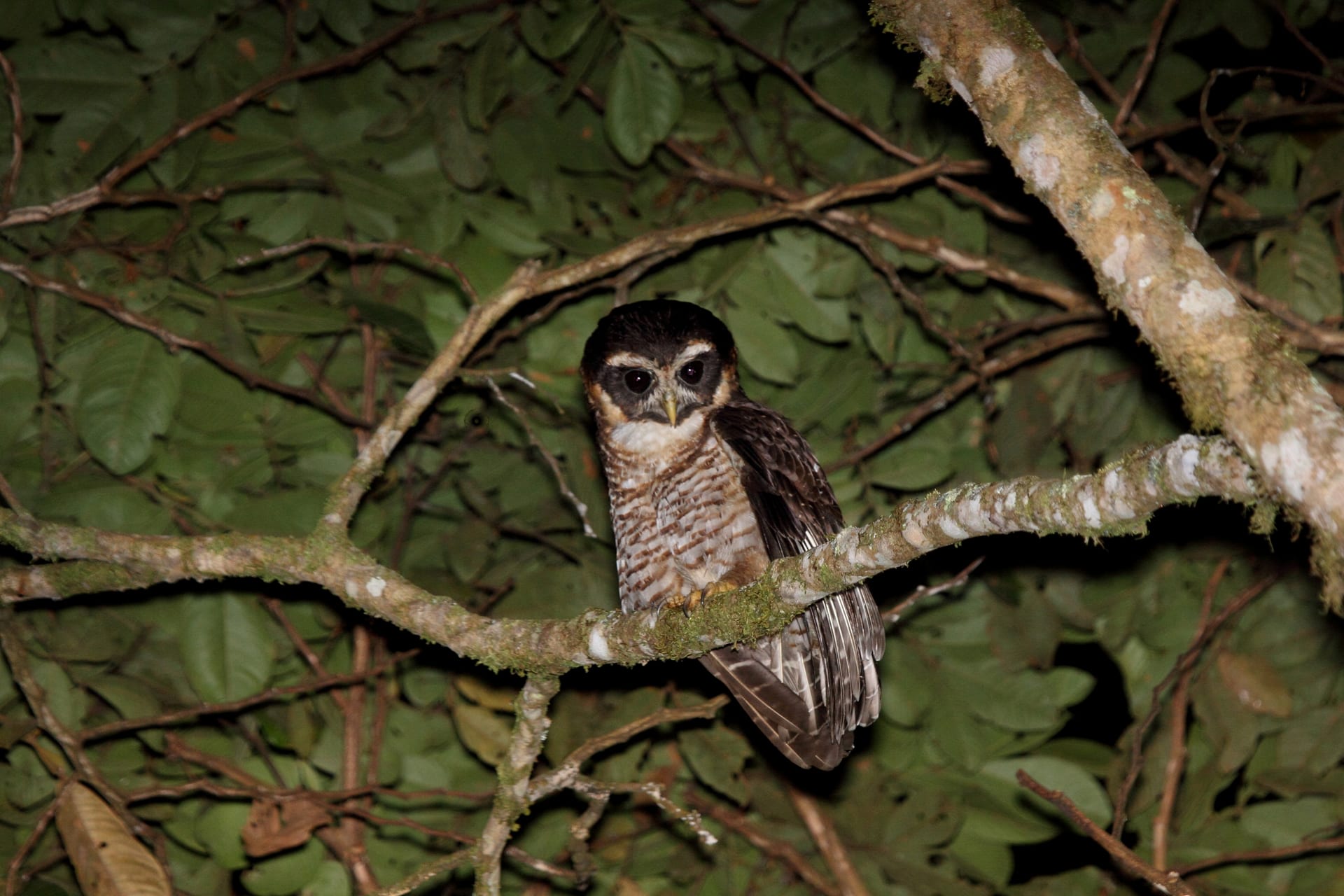
Source: Wikimedia Commons
Philippine Scops Owl
AdvancedOtus megalotis
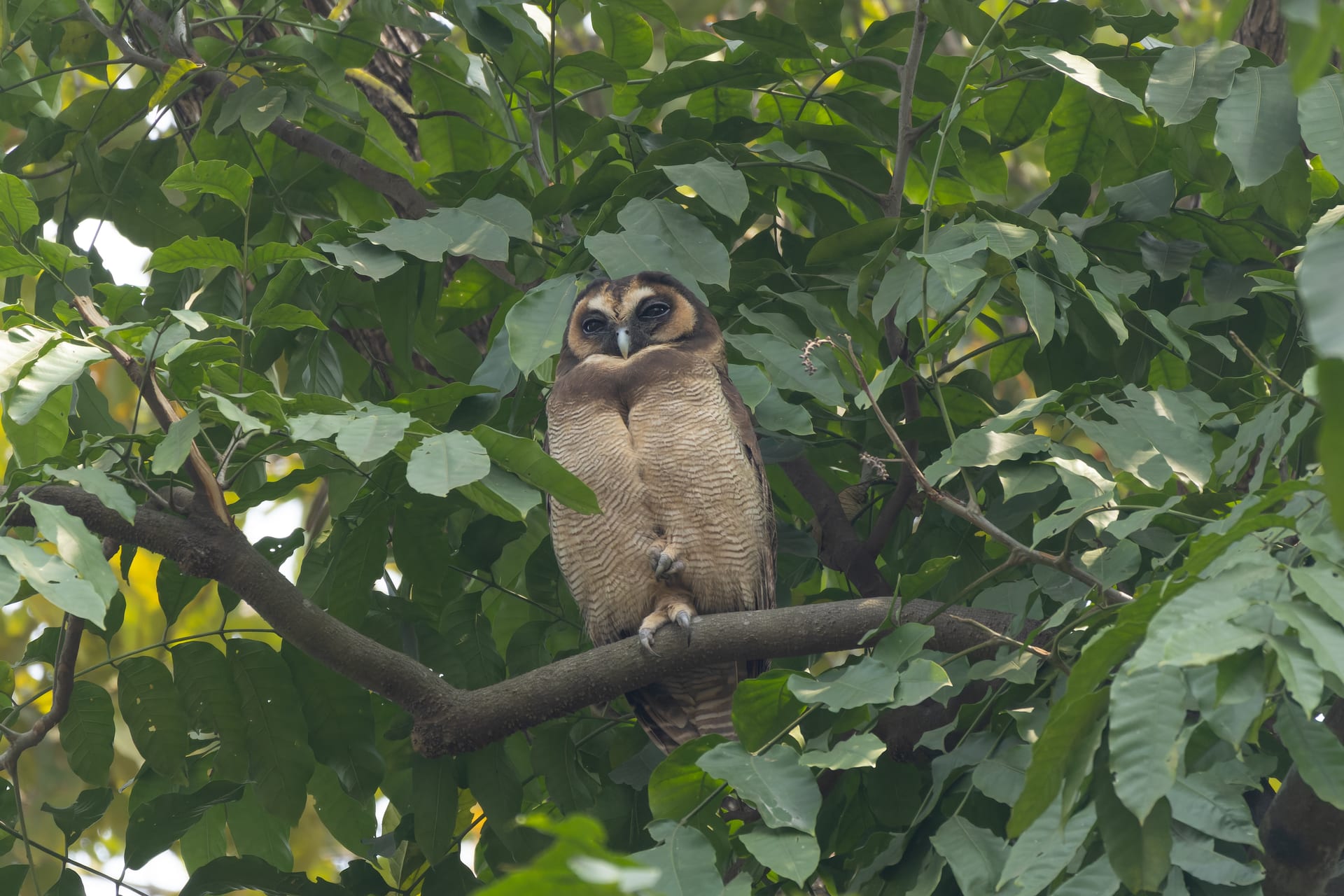
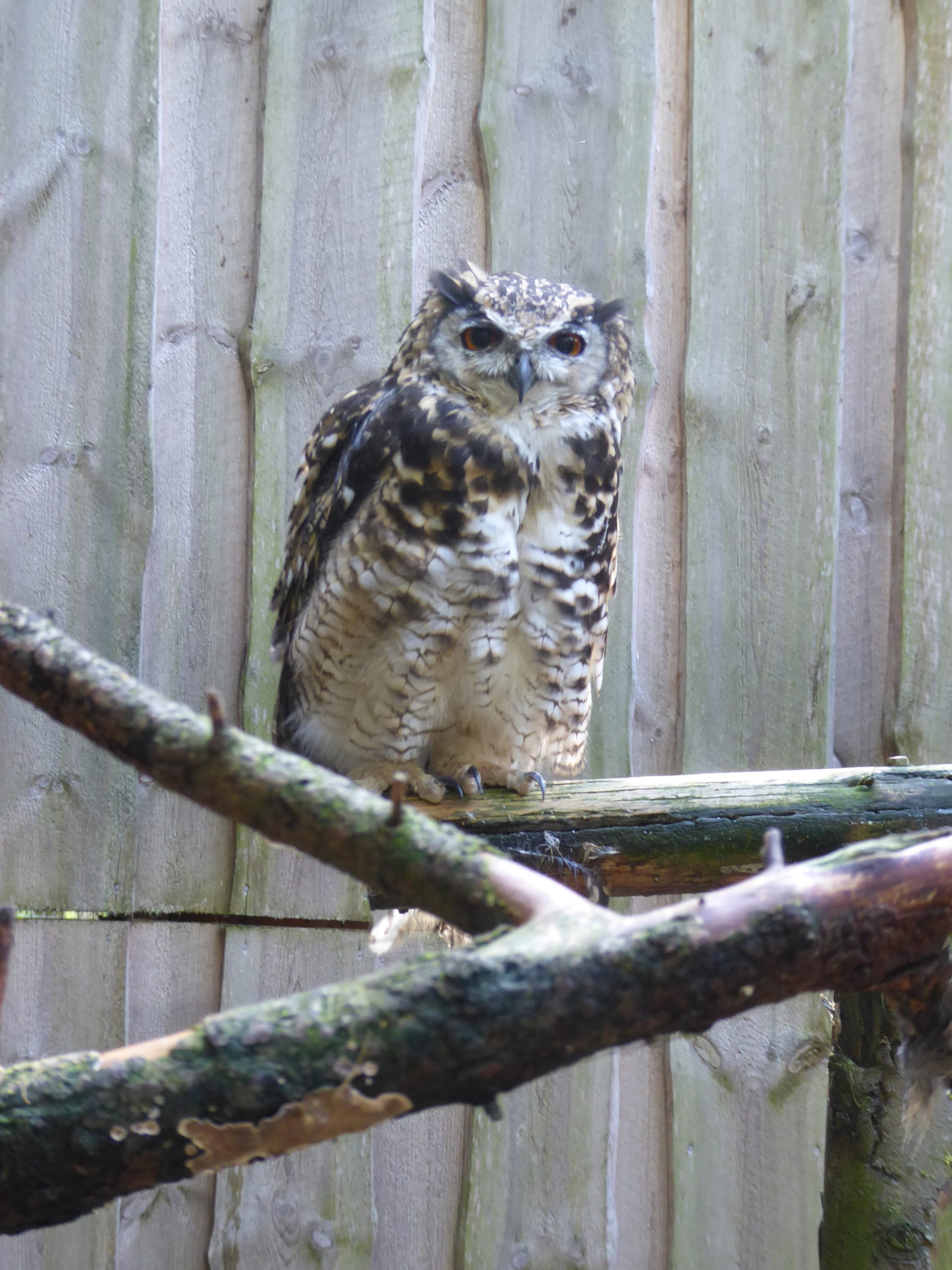
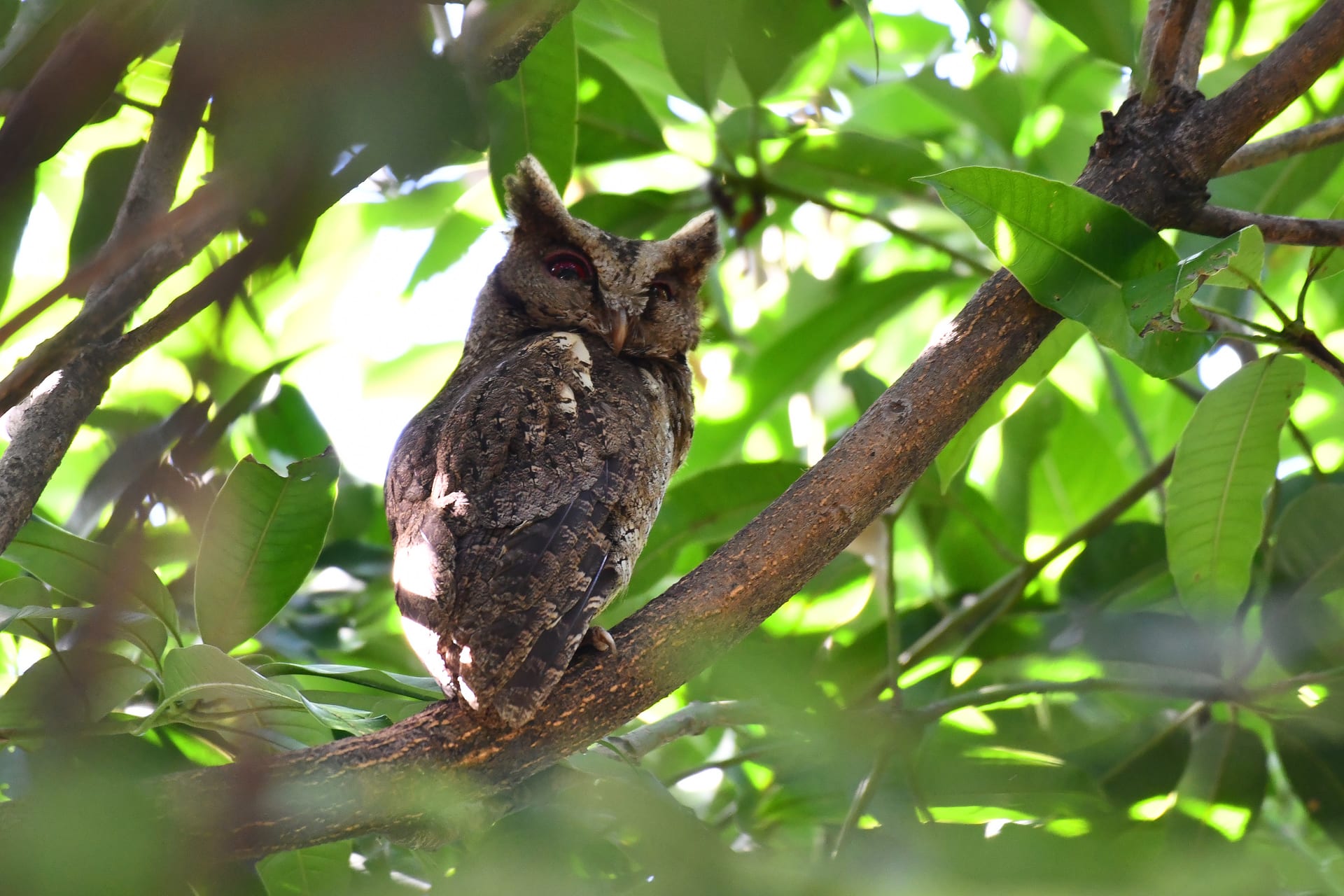
A scops owl endemic to the Philippines with large upright ear tufts and big eyes rimmed with red-orange. Dark brown with black streaks, it is arguably the largest true scops owl and hunts insects and small mammals in the forest understorey.
Difficulty
Advanced
Temperature
15〜30℃
Lifespan
Little data
Size
23-28 cm
Humidity
40〜60%
Diet
Carnivorous: insects and small mammals such as mice
About
The Philippine scops owl (Otus megalotis), also called the Luzon lowland scops owl, is a scops owl endemic to the Philippines. Its name is Ancient Greek for 'large ears', after the big upright ear tufts on its head. Everett's scops owl (O. everetti) and the Negros scops owl (O. nigrorum), once treated as the same species, are now classified separately. Its large eyes are dark in the centre with a red-orange edge. It is dark brown with dark streaks, the ear tufts patterned the same, with a whitish forehead and a dark line around the facial disc. Chicks have fluffy rufous down, sub-adults are black and greyish-white, and adults become brown. A sedentary bird of the forest understorey, it is monogamous, both parents caring for the young, and nests in tree cavities. It is a nocturnal carnivore feeding on insects and small mammals. The IUCN lists it as Least Concern, but it may be vulnerable to deforestation and fragmentation. It is a different species from the Indian scops owl. In Japan a few birds at a time sometimes reach owl specialists.
Source: Wikipedia (CC BY-SA 4.0)
Size of the Philippine Scops Owl
The Philippine Scops Owl grows to 23-28 cm.
It is 23-28 cm long and weighs 125-310 g, females often considerably larger than males, and it is arguably the largest true scops owl.
Basic Info
Origin
Forest understorey of the Philippines (Luzon and nearby)
Lifespan
Little data
Size
23-28 cm
Temperature
15〜30℃
References & Sources
Edited & verified by: BreederDirect editorial team
The taxonomic, regulatory, and husbandry data on this page are compiled and verified against the authoritative primary sources below.
Taxonomy & Authority
Regulations & Conservation Status
CITES Appendix IIIUCN LC · Least Concern
Otus megalotis. Owls are listed in CITES Appendix II apart from a few species, and this species is in Appendix II. International trade needs an export permit, but no registration under Japan's species conservation law is needed to transfer birds within Japan. Imports are subject to animal import notification under the Infectious Diseases Control Law. Birds in trade are foreign captive-bred birds; wild birds in Japan, including native owls, may not in principle be caught or kept under the Wildlife Protection and Hunting Management Law. The IUCN assesses it as Least Concern.
Sources: Species+ (Otus megalotis) / IUCN Red List / Wildlife Protection and Hunting Management Law (Article 8)
Regulations may change. Always verify the latest information with the relevant authorities.
Philippine Scops Owl Listings
Loading latest listingsFind listings for this species