Source: Wikimedia Commons
Spotted Owlet
IntermediateAthene brama
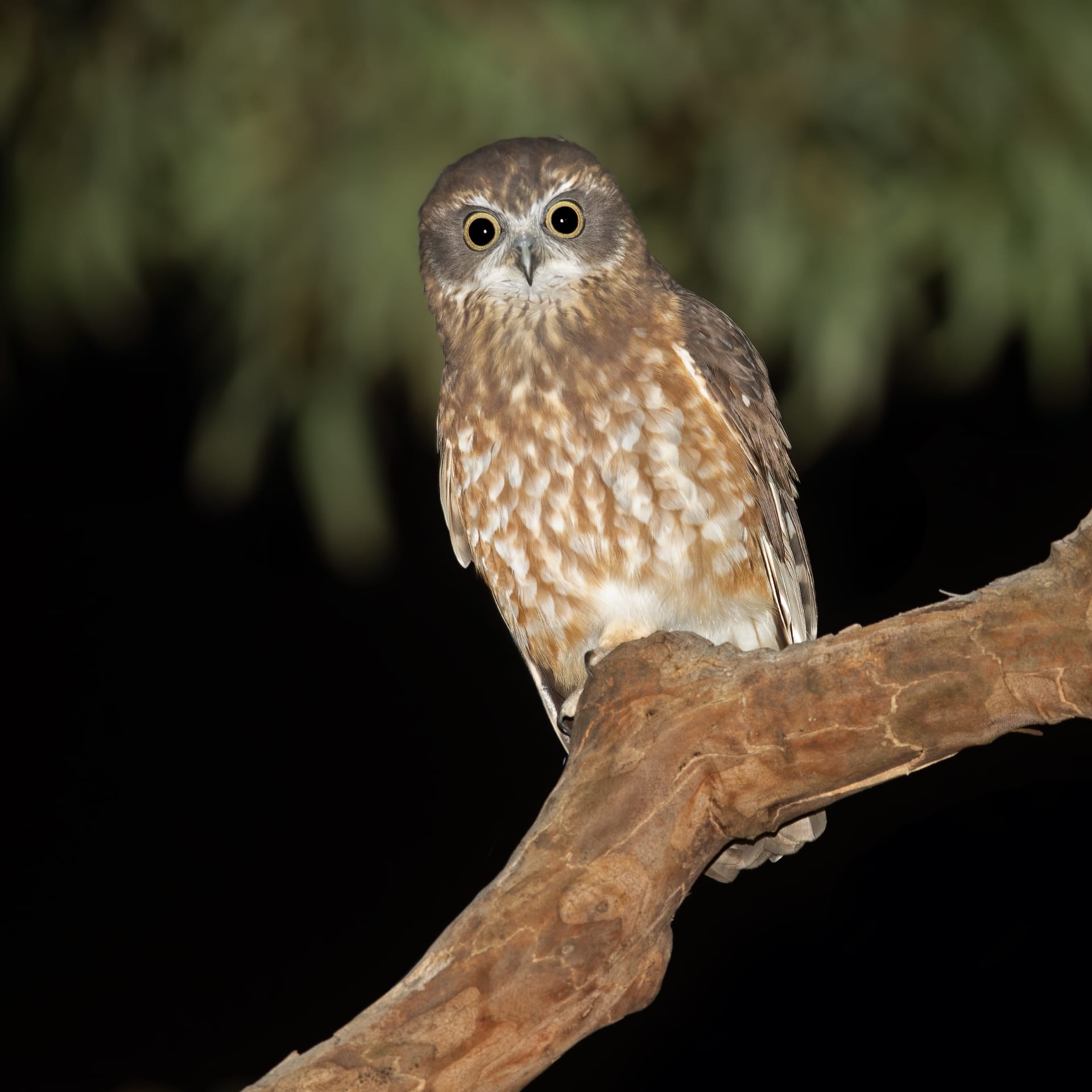
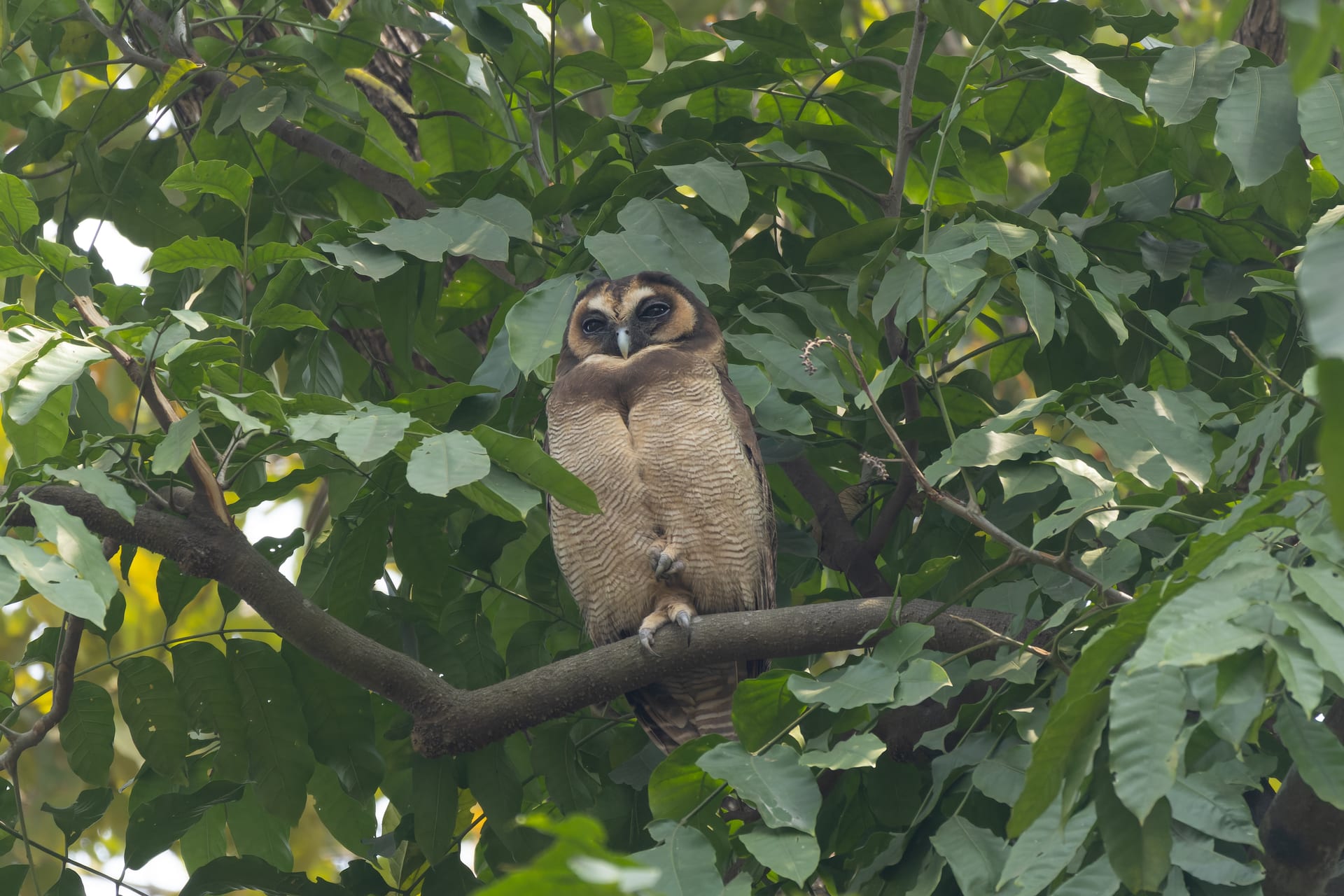
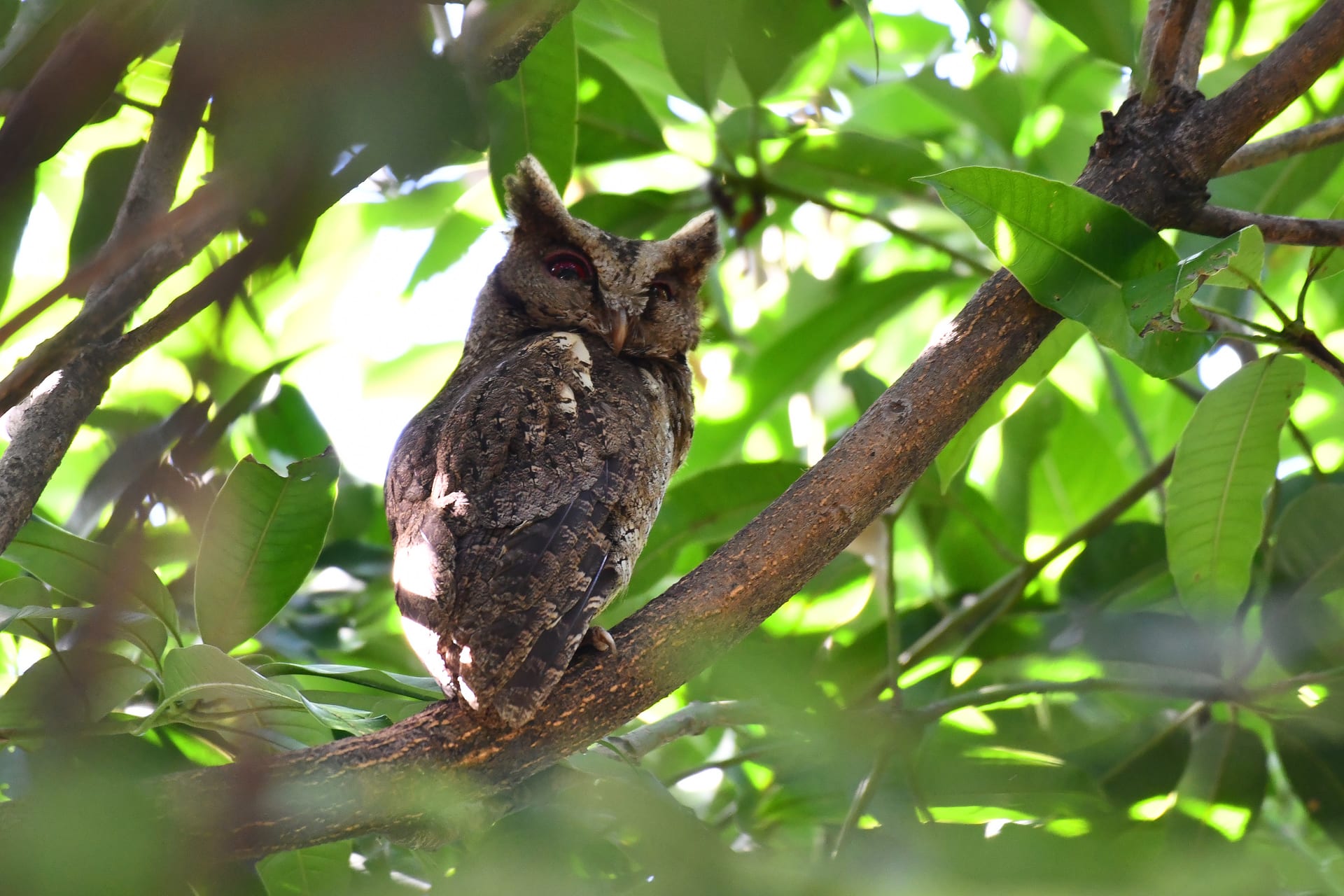
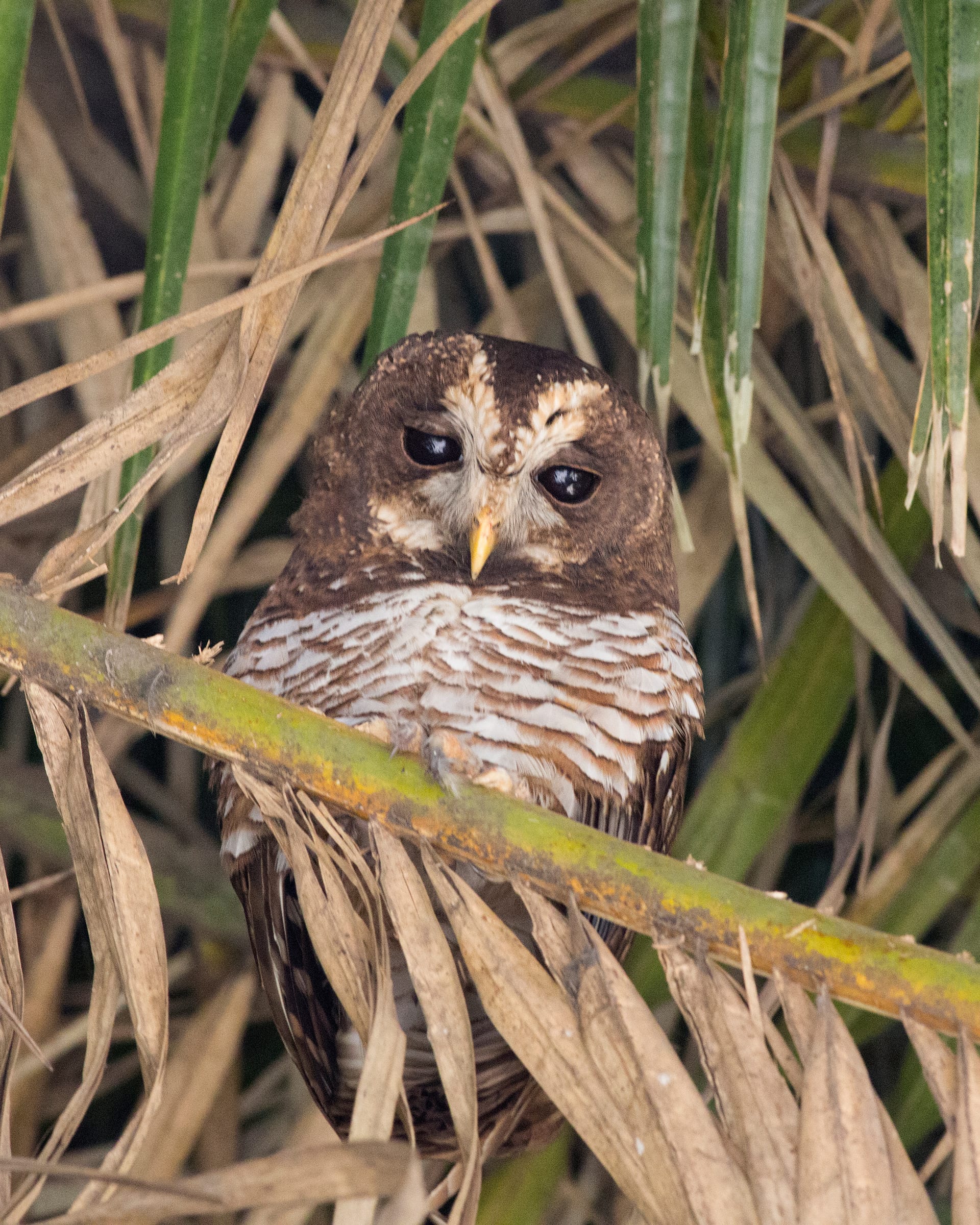
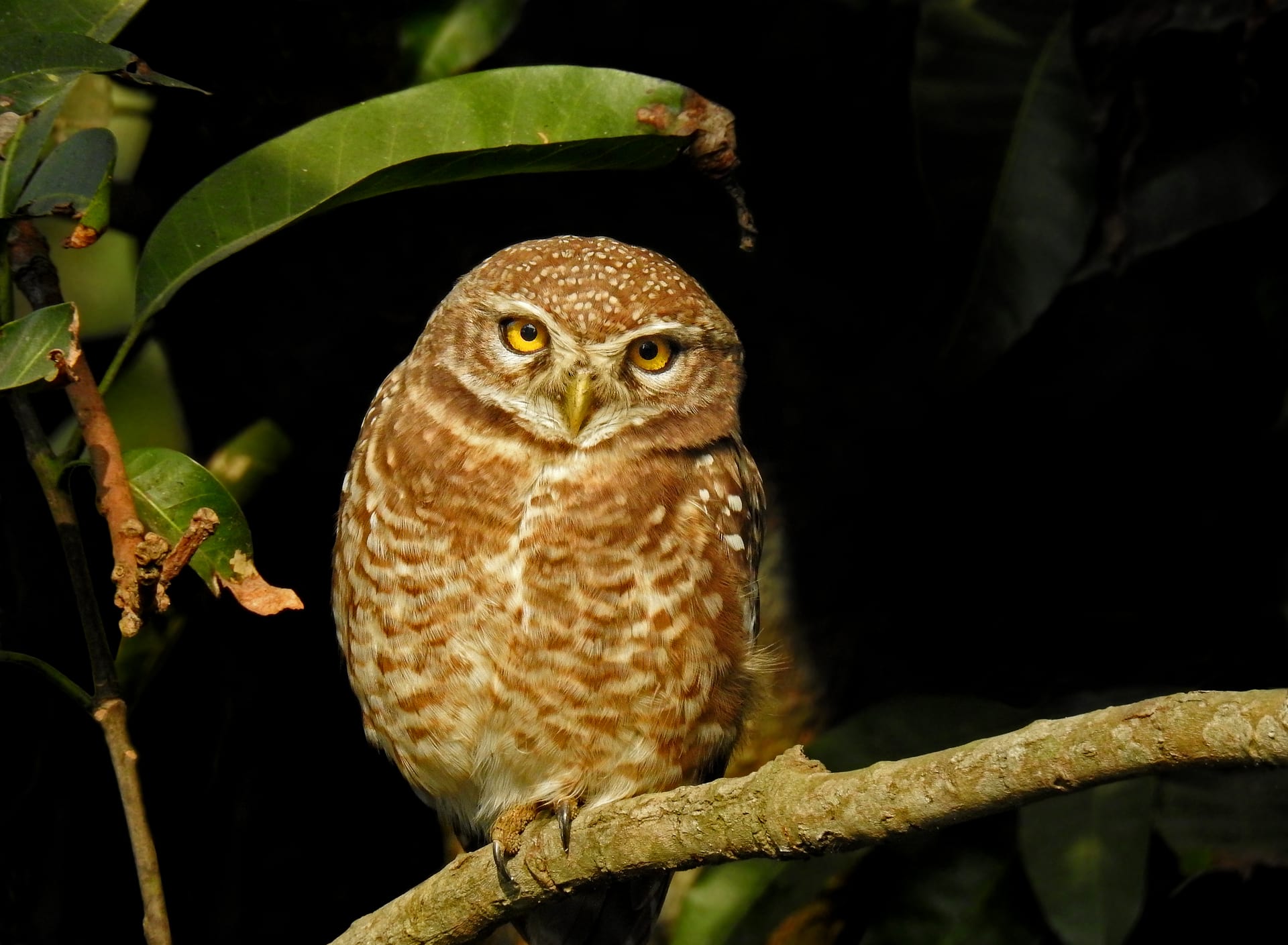
A small owl barely 21 cm long, grey-brown above and heavily spotted with white, with yellow eyes, a white neckband and brows. Adapted to farmland, villages and cities from South to Southeast Asia, it is often seen by day.
Difficulty
Intermediate
Temperature
15〜30℃
Lifespan
Little data
Size
About 21 cm
Humidity
40〜60%
Diet
Carnivorous: small prey such as mice and chicks, plus insects such as crickets
About
The spotted owlet (Athene brama) is a small owl of tropical Asia from northern Pakistan to Southeast Asia. Stocky and barely 21 cm long, it is grey-brown above, heavily spotted with white, and white below streaked with brown. The facial disc is pale, the iris yellow, and it has a white neckband and eyebrow. The sexes are alike, and its flight is deeply undulating. Size decreases from north to south, and forms from dry regions are paler. It is closely related to the little owl (A. noctua), of which it was once sometimes treated as a subspecies, and the two form a superspecies. It is common in open habitats such as farmland and villages and has adapted to cities. It roosts in small groups in tree hollows and crevices in rocks and buildings, and lays 3-5 eggs in a hole in a tree or building. Nocturnal but often seen by day, it bobs its head and stares at intruders when disturbed. Its call is a harsh, loud churring and chuckling, given mainly before dawn and just after sunset. It hunts insects and small vertebrates, taking many rodents in some regions, as well as bats, small snakes and scorpions. It is often compared with the little owl, and although less common in Japan, it does reach specialist shops.
Source: Wikipedia (CC BY-SA 4.0)
Size of the Spotted Owlet
The Spotted Owlet grows to About 21 cm.
Basic Info
Origin
Farmland, villages, towns and other open habitats from northern Pakistan and India to Southeast Asia
Lifespan
Little data
Size
About 21 cm
Temperature
15〜30℃
References & Sources
Edited & verified by: BreederDirect editorial team
The taxonomic, regulatory, and husbandry data on this page are compiled and verified against the authoritative primary sources below.
Taxonomy & Authority
Regulations & Conservation Status
CITES Appendix IIIUCN LC · Least Concern
Athene brama. Owls are listed in CITES Appendix II apart from a few species, and this species is in Appendix II. International trade needs an export permit, but no registration under Japan's species conservation law is needed to transfer birds within Japan. Imports are subject to animal import notification under the Infectious Diseases Control Law. Birds in trade are foreign captive-bred birds; wild birds in Japan, including native owls, may not in principle be caught or kept under the Act on the Protection and Management of Wildlife, and the Optimization of Hunting. The IUCN assesses it as Least Concern.
Sources: Species+ (Athene brama) / IUCN Red List / Act on the Protection and Management of Wildlife, and the Optimization of Hunting (Article 8)
Regulations may change. Always verify the latest information with the relevant authorities.
Spotted Owlet Listings
Loading latest listingsFind listings for this species