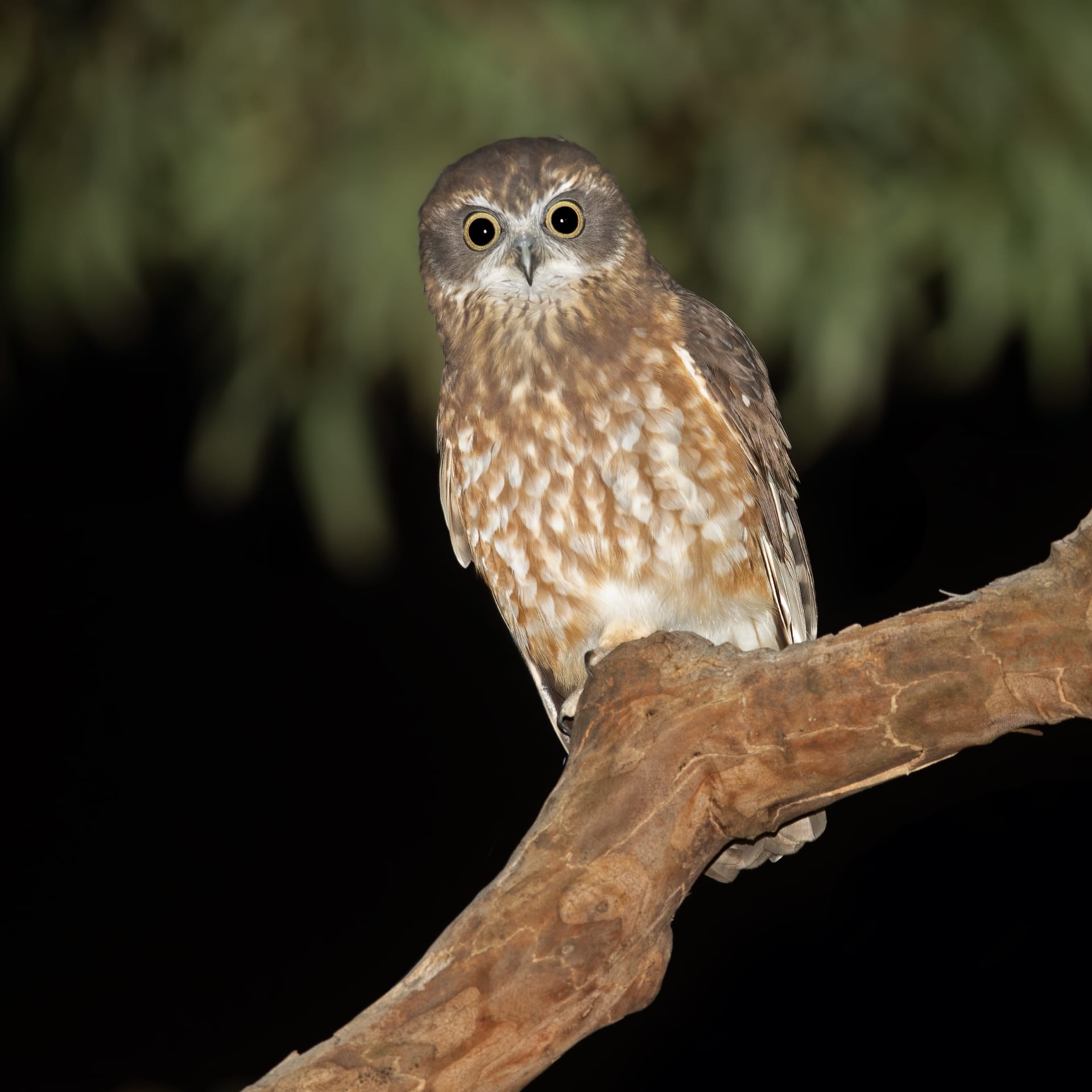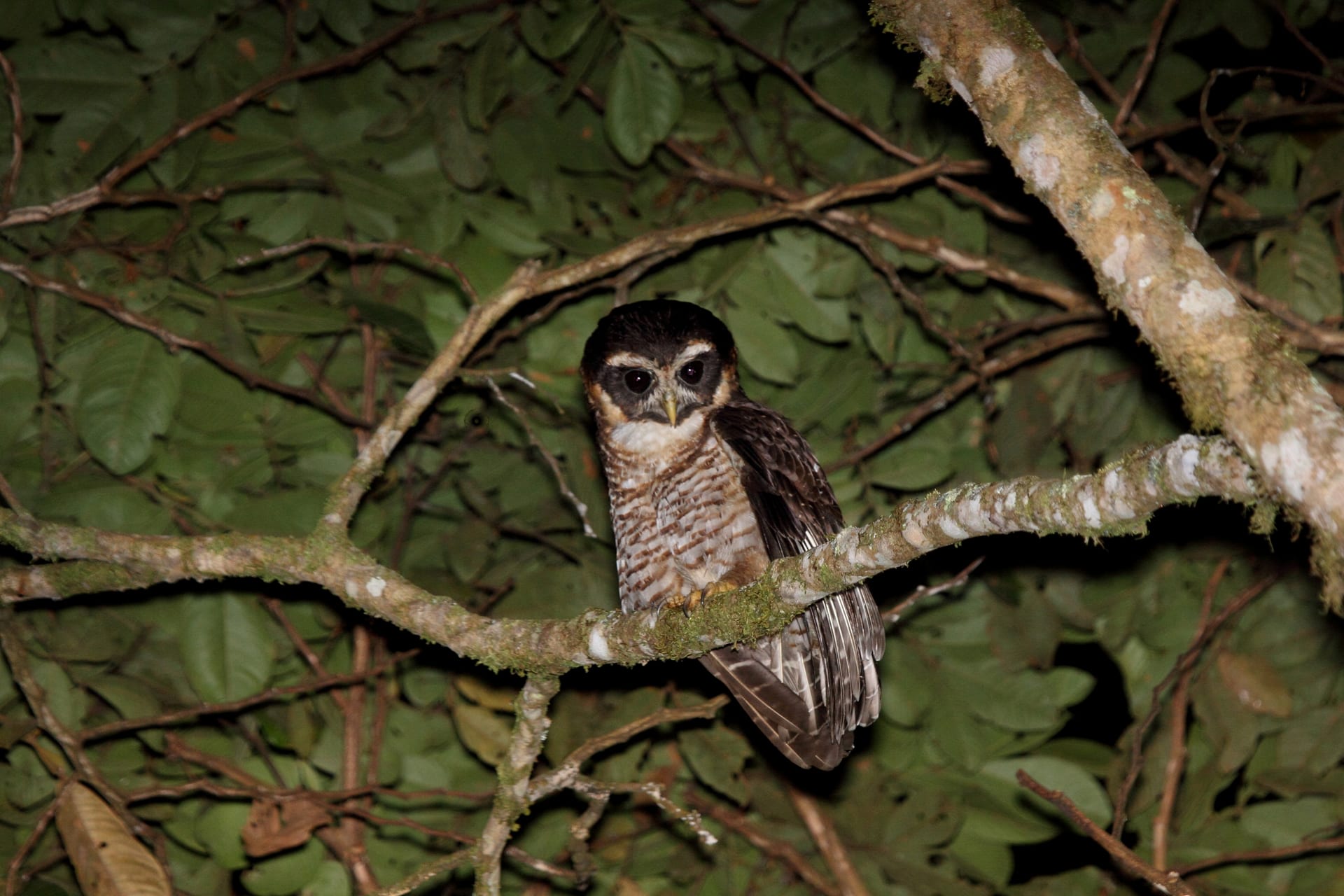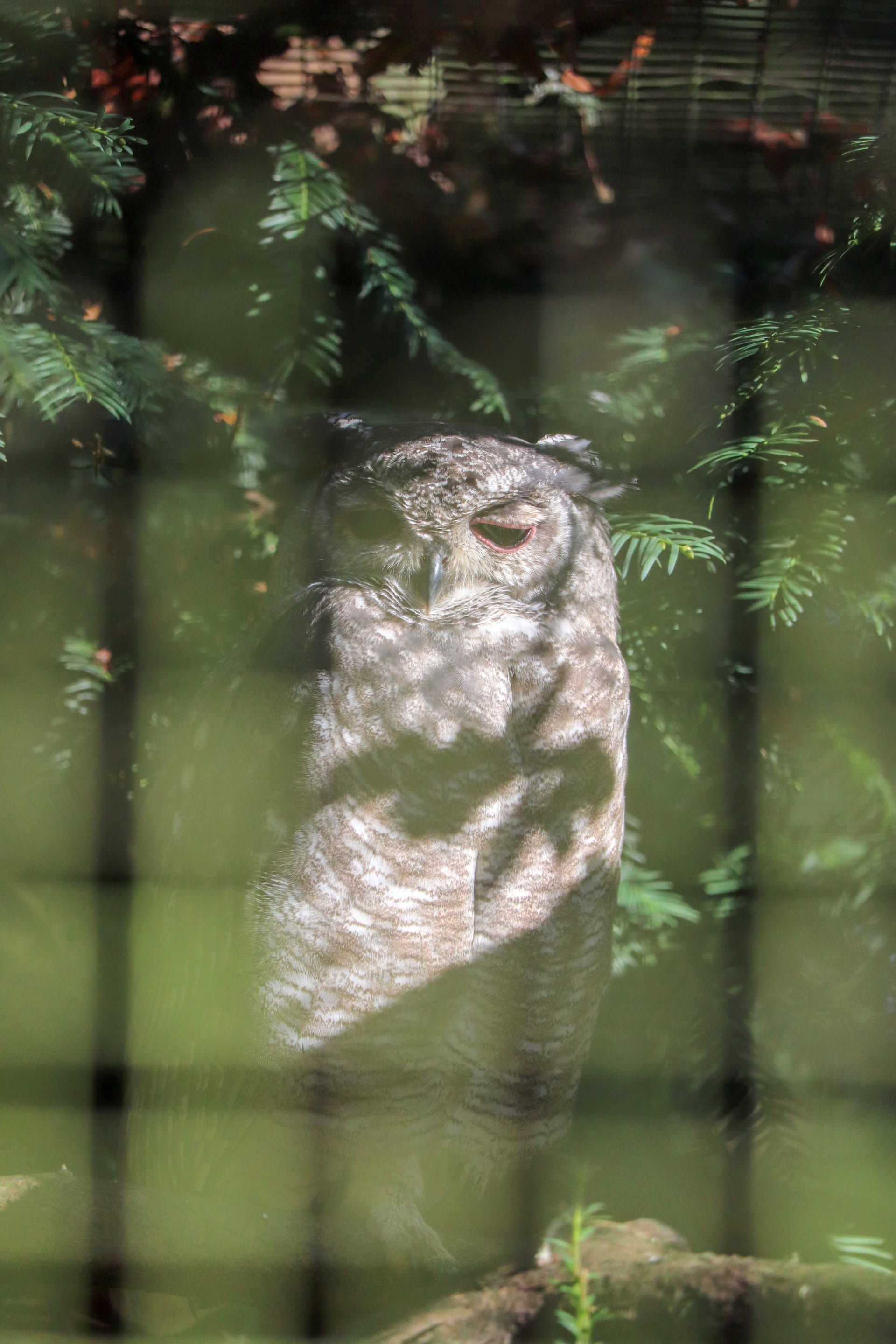
Source: Wikimedia Commons
Greyish Eagle-Owl
AdvancedBubo cinerascens
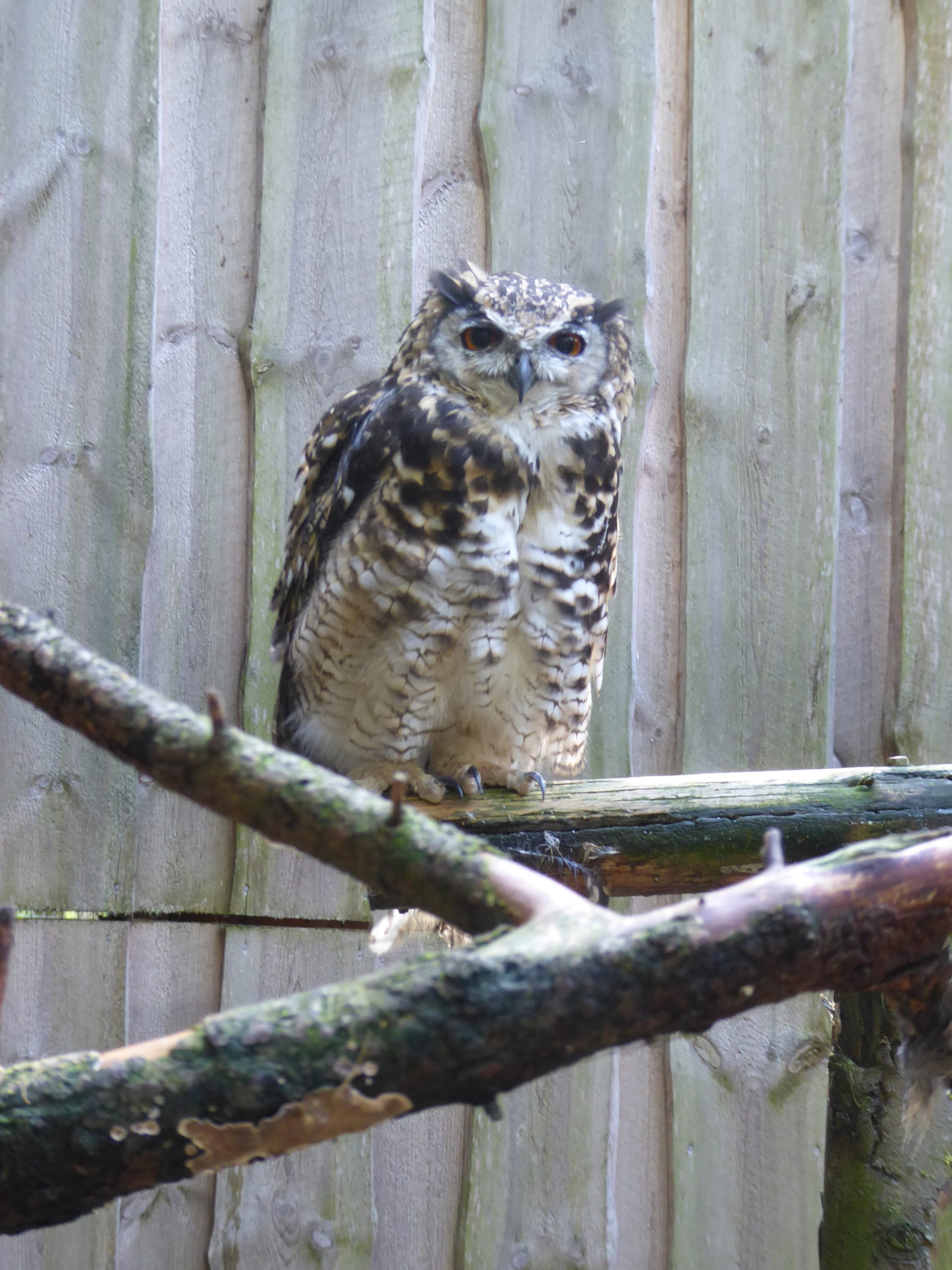
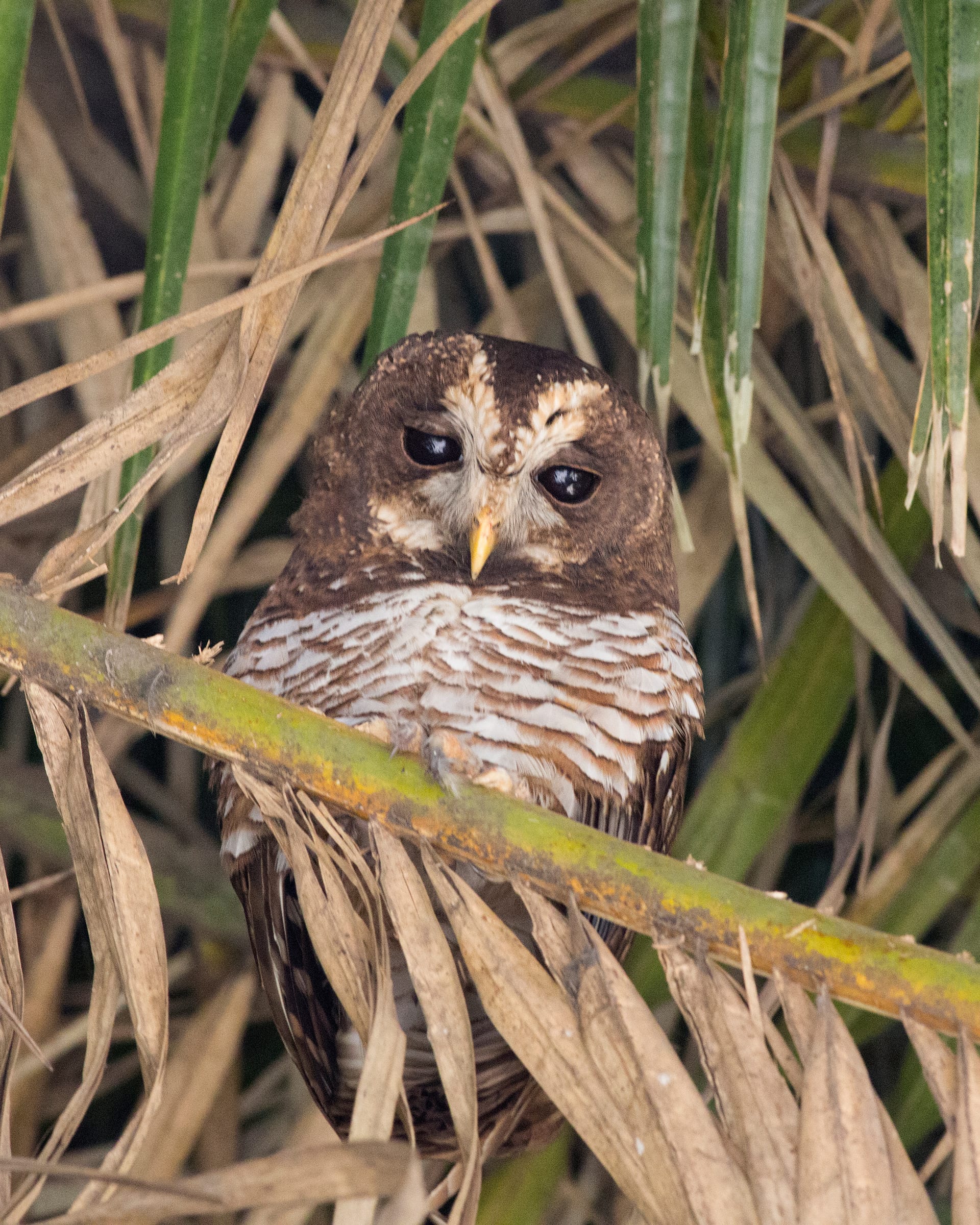
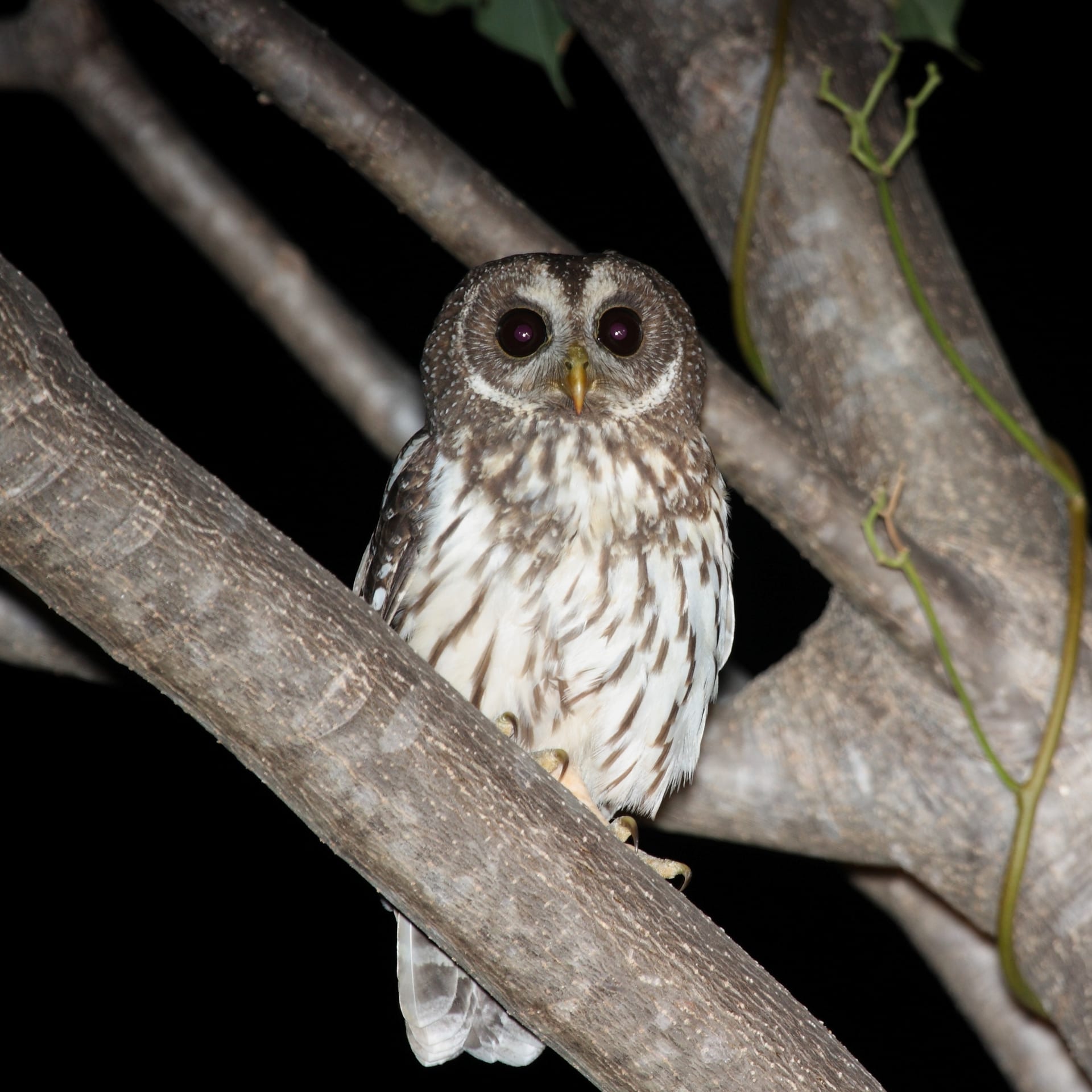
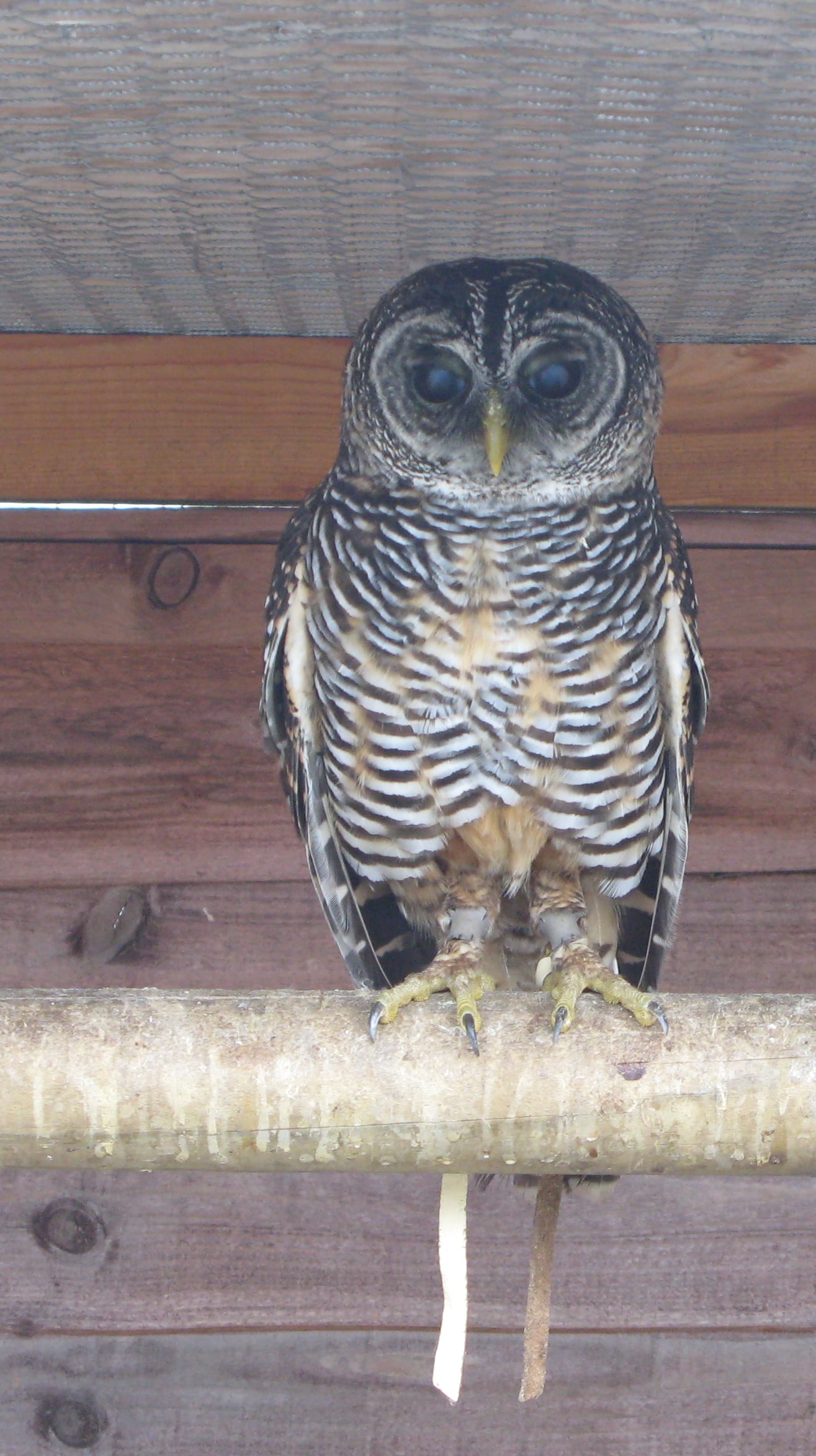
An eagle-owl of the northern African savannas with finely vermiculated greyish-brown underparts, dark brown eyes and a heavy brown ring around each eye. It was formerly treated as the northern subspecies of the spotted eagle-owl.
Difficulty
Advanced
Temperature
15〜30℃
Lifespan
Little data
Size
About 43 cm
Humidity
40〜60%
Diet
Carnivorous: whole small prey such as mice and chicks, plus insects
About
The greyish or vermiculated eagle-owl (Bubo cinerascens) lives in the northern part of sub-Saharan Africa from Mauritania and Liberia to Sudan and Somalia. It is sold in Japan as the 'Abyssinian eagle-owl', a name also used for it in the UK, but in English 'Abyssinian eagle-owl' can also mean the Ethiopian subspecies of the Cape eagle-owl, so check the scientific name. It was formerly treated as the northern subspecies of the spotted eagle-owl (B. africanus). Mottled dark brown, buff and white above and finely barred below, it looks greyish-brown overall. It differs from the spotted eagle-owl in having dark brown rather than yellow eyes, a heavy brown ring around each eye on the facial disc, and a lighter build with shorter tarsi at about the same length. The male calls a two-syllable 'koo-whoo' every few seconds. It inhabits dry rocky desert and open savanna, roosting by day in cliff crevices, among boulders, in bushes, trees or buildings. It feeds on large insects, other arthropods and vertebrates, hunting from a perch and sometimes taking insects and bats in flight. In Japan several specialists handle it.
Source: Wikipedia (CC BY-SA 4.0)
Size of the Greyish Eagle-Owl
The Greyish Eagle-Owl grows to About 43 cm.
It is about 43 cm long and weighs about 500 g.
Basic Info
Origin
Dry rocky desert and savanna of northern sub-Saharan Africa, from Mauritania and Liberia to Sudan and Somalia
Lifespan
Little data
Size
About 43 cm
Temperature
References & Sources
Edited & verified by: BreederDirect editorial team
The taxonomic, regulatory, and husbandry data on this page are compiled and verified against the authoritative primary sources below.
Taxonomy & Authority
Regulations & Conservation Status
CITES Appendix IIIUCN LC · Least Concern
Bubo cinerascens. Owls are listed in CITES Appendix II apart from a few species, and this species is in Appendix II. International trade needs an export permit, but no registration under Japan's species conservation law is needed to transfer birds within Japan. Imports are subject to animal import notification under the Infectious Diseases Control Law. Birds in trade are foreign captive-bred birds; wild birds in Japan, including native owls, may not in principle be caught or kept under the Wildlife Protection and Hunting Management Law. The IUCN assesses it as Least Concern.
Sources: Species+ (Bubo cinerascens) / IUCN Red List / Wildlife Protection and Hunting Management Law (Article 8)
Regulations may change. Always verify the latest information with the relevant authorities.
Greyish Eagle-Owl Listings
Loading latest listingsFind listings for this species