Complete Guide to Keeping African Grey Parrots: Intelligence, Care, Costs, and Longevity Tips
A comprehensive guide to caring for African Grey Parrots, renowned for their high intelligence. We cover essential caging, diet, enrichment toys, longevity tips, maintenance costs, and how to source these remarkable birds.
Key Takeaways
A comprehensive guide to caring for African Grey Parrots, renowned for their high intelligence. We cover essential caging, diet, enrichment toys, longevity tips, maintenance costs, and how to source these remarkable birds.
Related Species
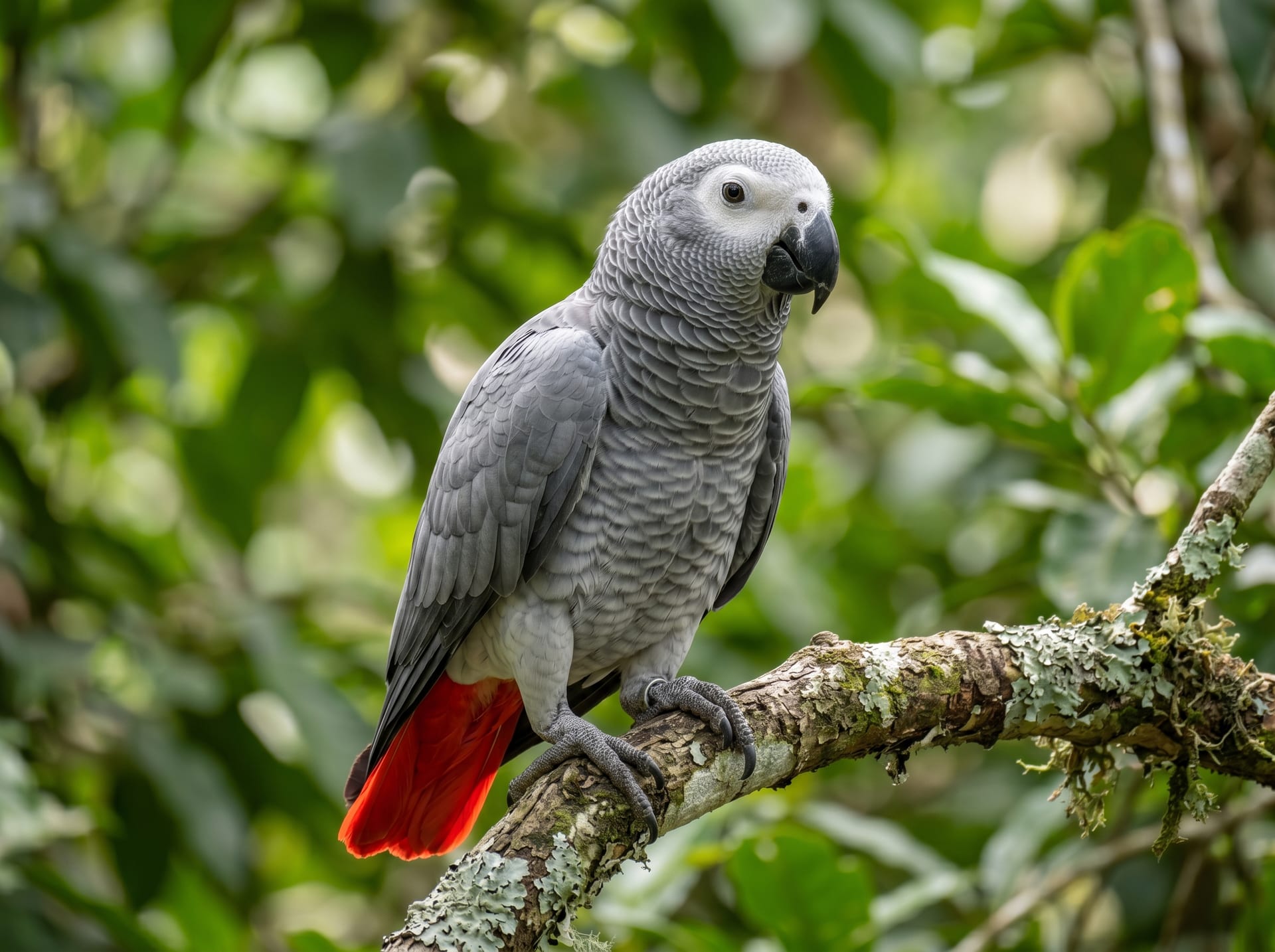
The African Grey Parrot (Yomu) is among the most intelligent birds in the avian world. With cognitive abilities equivalent to a five-year-old human, some individuals can use over 100 words in appropriate contexts. While their intelligence sometimes earns them a reputation for being difficult to care for, with proper knowledge and environment setup, they can become lifelong companions for over 50 years.
Basic Profile and Personality of African Grey Parrots
African Grey Parrots are large parrots native to the tropical rainforests of central-west Africa, measuring approximately 33 cm in length and weighing 400–600 grams. They are distinctively marked with grey plumage throughout their bodies and striking red tail feathers.
Their personality is notably sensitive and emotionally responsive, forming deep bonds of trust with their owners. However, they are prone to stress from environmental changes and loneliness, which can lead to behavioral problems such as feather plucking (feather destruction).
- Congo African Grey: More commonly available in trade; slightly smaller body size
- Timneh African Grey: Larger body; distinctive deeper red tail feathers
For beginners, the Congo African Grey is often recommended as it tends to have calmer individuals, though both subspecies require significant commitment.
Setting Up Appropriate Caging and Living Environment
The fundamental rule for African Grey housing is "as large as possible." At minimum, provide dimensions of 90 cm width × 60 cm depth × 120 cm height. Even large-parrot commercial cages can feel cramped given their size and need to fully extend their wings.
Key Cage Placement Considerations
- Position away from direct sunlight but in a well-ventilated area
- Place against a wall with secure backing (open spaces cause stress)
- Ideally located in common areas like the living room where family activity is felt, but strictly avoid tobacco smoke, fumes from fluorine-coated cookware, and air fresheners
- Maintain room temperature at 20–28°C and humidity at 50–60%
Install multiple natural wood perches (cherry, birch, etc.) with diameters of 2–3 cm. Avoid using perches of uniform thickness throughout, as this creates uneven muscle development in the feet. Clean the bottom tray daily, and wash the entire cage weekly as part of basic hygiene management.
Dietary Management: What to Feed
In the wild, African Greys forage on nuts, seeds, fruits, and leaves—a highly varied diet. In captivity, the recommended diet consists of pellets as the staple (60–70% of total intake) supplemented with vegetables, fruits, and grains.
Safe Foods
- Pellets (from trusted brands like Harrison's or ZuPreem)
- Leafy greens (mustard greens, bok choy, kale)
- Root vegetables and vegetables (carrots, broccoli, bell peppers)
- Limited fruits (apples, pears, blueberries)
- Nuts 2–3 times per week (walnuts, almonds)
Strictly Avoid
- Avocado (contains persin; can be fatal)
- Chocolate and caffeine
- Onions and garlic family
- High-sodium processed foods
- Alcohol
African Greys are prone to calcium deficiency leading to hypocalcemia. Keep cuttlebones and mineral blocks available and conduct regular blood tests to monitor mineral balance—a key strategy for promoting longevity.
Enrichment and Play: Mental Stimulation is Critical
The greatest challenge in keeping African Greys is preventing "intellectual boredom." Without opportunities to exercise their minds, they develop behavioral problems. Daily mental enrichment sessions are essential.
Recommended Enrichment Activities
- Foraging Toys: Hide food inside puzzle mechanisms so they must extract it themselves. Mimics natural foraging behavior and can occupy them for hours
- Puzzle Feeders: Available in various difficulty levels—drawers, rotating designs, and more. Switch to new puzzles regularly to prevent boredom
- Language Training: Talk to them daily, repeating object names and actions. Focus on natural conversational exchange rather than forced drills
- Hand Training: Start with target training (touching a stick with their beak) and gradually teach tricks progressively
Allocate at least 2–3 hours daily for out-of-cage time ("flight time"). Secure the room against hazards (prevent window and mirror collisions, remove toxic plants), and direct interaction with their owner promotes psychological stability.
Costs and Sourcing
African Greys require substantial initial and ongoing investment compared to other bird species. Understanding the financial commitment beforehand is crucial.
Initial Costs (Approximate)
| Item | Cost |
|---|---|
| Bird (domestic captive-bred) | ¥200,000–600,000 |
| Large cage | ¥30,000–80,000 |
| Perches and supplies | ¥10,000–30,000 |
| Initial veterinary exam | ¥5,000–10,000 |
Monthly Maintenance Costs (Approximate)
- Pellets and supplementary food: ¥3,000–5,000
- Toys and consumables: ¥1,000–3,000
- Veterinary care (annualized, including checkups): equivalent to ¥5,000–10,000 monthly
Acquisition is regulated under CITES Appendix I, requiring strict import permits. Sourcing from reputable domestic breeders is the standard approach. When selecting a breeder, always verify their rearing environment, provision of health certificates, and quality of after-care support.
Health Management for Longevity
With proper care, African Greys live 40–60 years in the wild and over 50 years in captivity. Key points for promoting long life:
Regular Health Checkups
Annual or biannual exams by an avian veterinarian are essential. Blood tests monitoring calcium, vitamin D3, and iron levels enable early detection of abnormalities.
Recognize Signs of Stress
- Feather plucking or biting behavior
- Excessive vocalization or self-injury
- Loss of appetite and decreased activity
- Repetitive stereotyped behaviors
When these signs appear, prioritize reviewing the environment and consulting a veterinarian.
Socialization and Consistent Routine
Maintaining a regular sleep-wake schedule with consistent wake and sleep times reduces stress. Additionally, building positive relationships between all family members and the parrot prevents over-dependency ("one-person bird" syndrome.
Welcoming an African Grey requires as much commitment as owning a dog or cat—if not more. However, the reward is an unparalleled partnership built on deep connection and remarkable communication. With the resolve to share 50 years of life together, an African Grey is a genuinely extraordinary companion.