Source: Wikimedia Commons
Blue-breasted Cordon-bleu
BeginnerUraeginthus angolensis
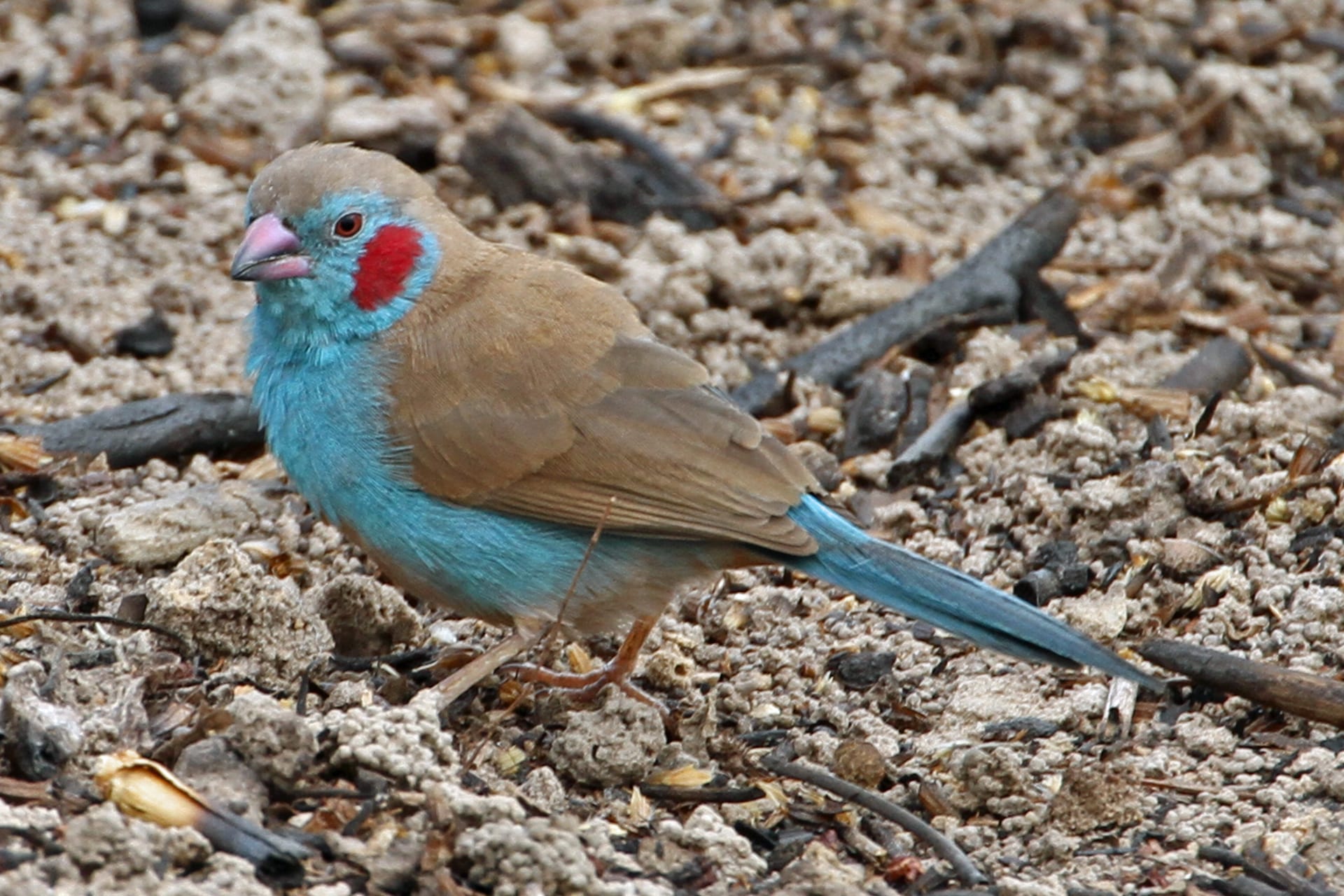
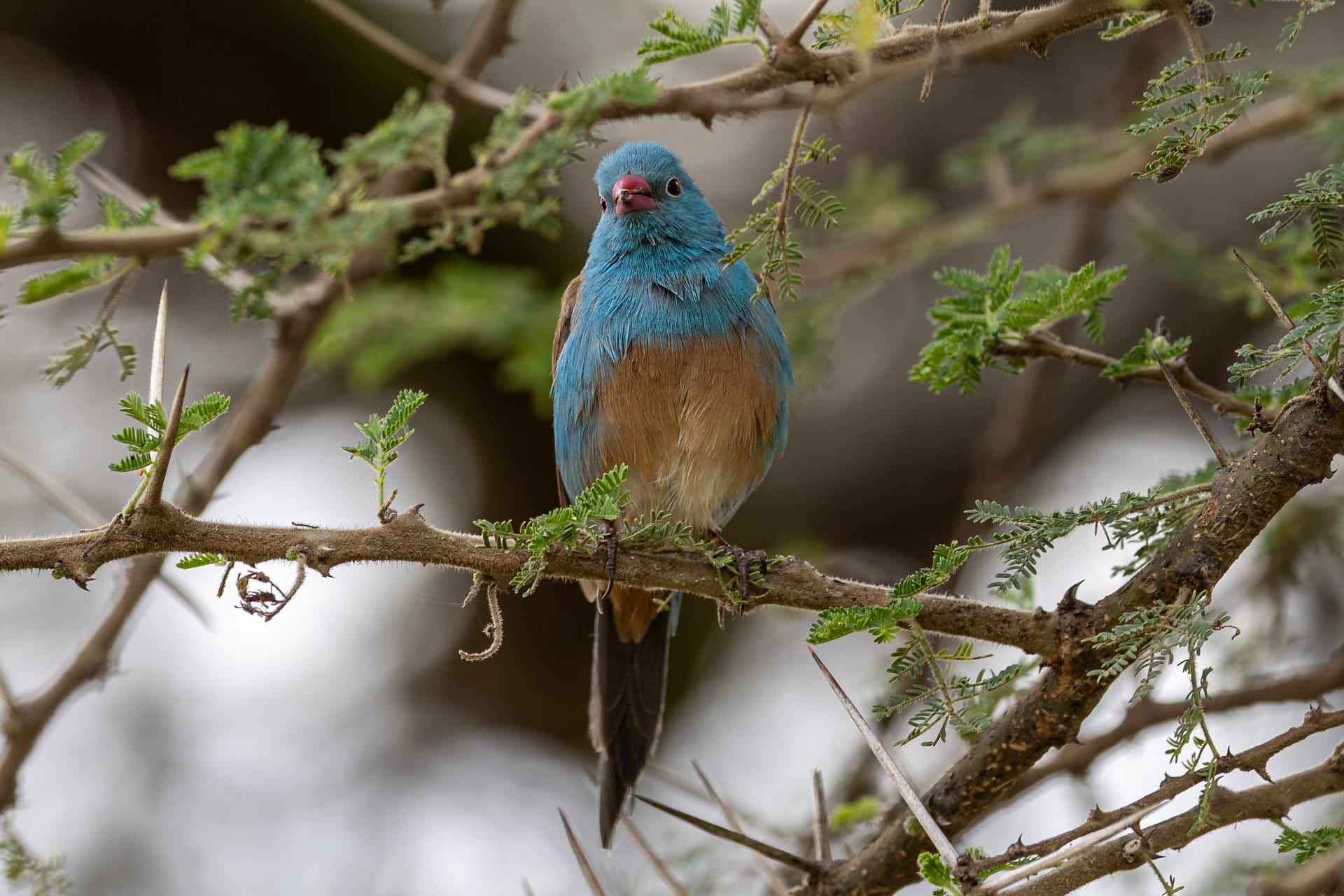
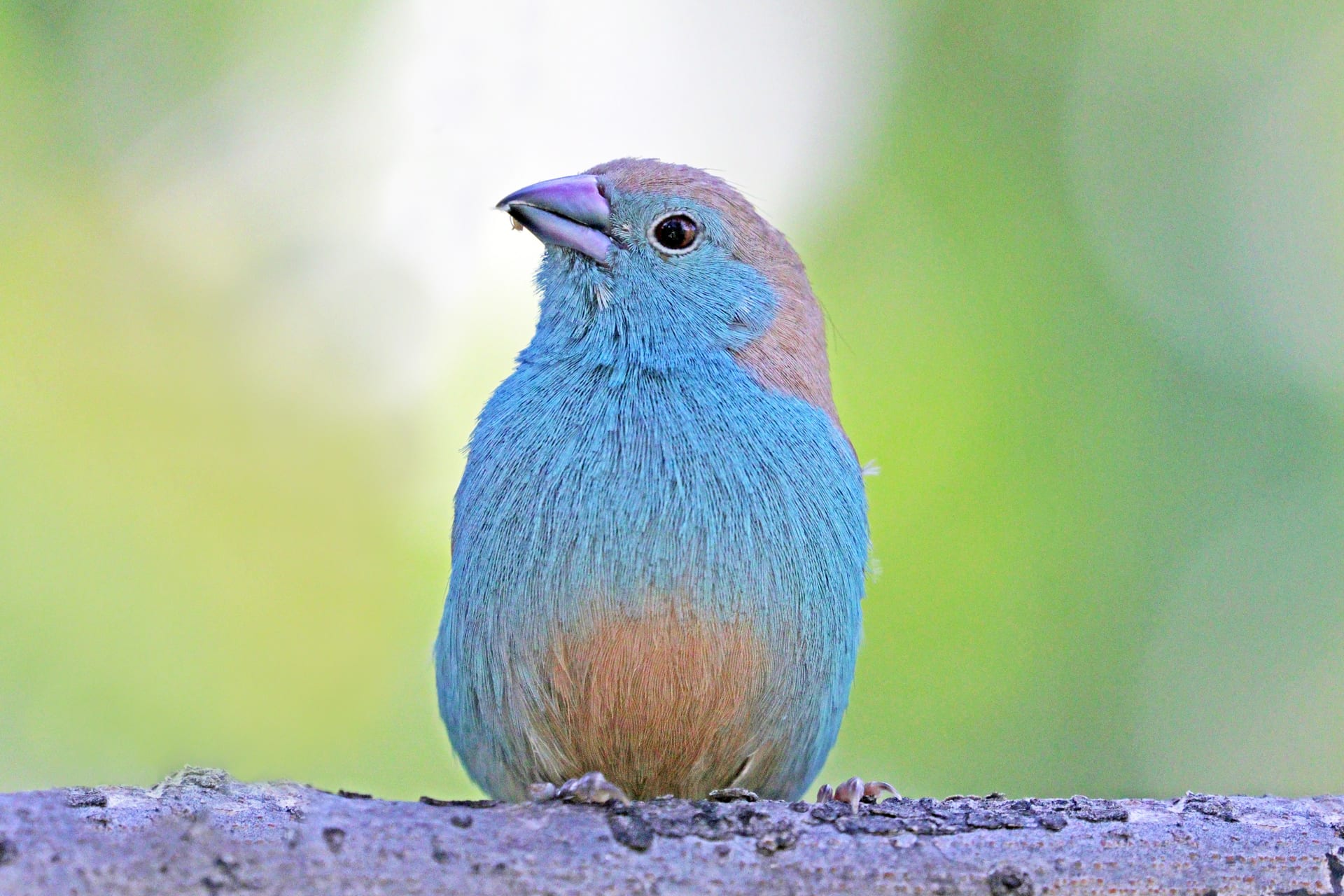
Similar to the red-cheeked cordon-bleu but without the red cheek patch, this southern African estrildid is uniformly powder-blue from face to breast and rump. The female shows less blue and is paler overall.
Difficulty
Beginner
Temperature
15〜30℃
Lifespan
5-7 years
Size
12-13cm
Humidity
40〜60%
Diet
Mixed seed, spray millet, greens, small livefood
About
The blue waxbill (Uraeginthus angolensis) is an estrildid finch widespread in southern Africa. It is 12-13 cm long, with powder-blue face, breast, flanks and rump and pale brown upperparts. Unlike the closely related red-cheeked cordon-bleu it has no red cheek patch, which is the origin of its Japanese name. The female is paler, her blue confined to rump, tail, head and upper breast, the remaining underparts buffy brown. The call is a soft seee-seee repeated as the bird works through the lower parts of bushes. It prefers well-watered and semi-arid savanna, especially where umbrella thorn grows, and also enters natural growth in cultivated land and forest edges. Three subspecies are recognised. Both sexes build the oval grass nest, which has a short entrance tunnel at the side, and pairs often site it near a wasp nest. It is fairly commonly kept in aviaries, though captive breeding records are not numerous.
Source: Wikipedia (CC BY-SA 4.0)
Lifespan of the Blue-breasted Cordon-bleu
The Blue-breasted Cordon-bleu lives 5-7 years.
Size of the Blue-breasted Cordon-bleu
The Blue-breasted Cordon-bleu grows to 12-13cm.
Basic Info
Origin
Savanna of southern Africa (Cabinda and the Congo to Kenya and Tanzania, south to northern South Africa)
Lifespan
5-7 years
Size
12-13cm
Temperature
Care Specifications
References & Sources
Edited & verified by: BreederDirect editorial team
The taxonomic, regulatory, and husbandry data on this page are compiled and verified against the authoritative primary sources below.
Taxonomy & Authority
Accepted name: Uraeginthus angolensis (Linnaeus, 1758)
Synonyms: Fringilla angolensis
Authority databases: GBIF
Nomenclature follows global taxonomic authority databases.
Regulations & Conservation Status
Not CITES-listedIUCN LC · Least Concern
Uraeginthus angolensis. The family Estrildidae is not listed in the CITES Appendices, so this species is not covered. The IUCN assesses it as Least Concern.
Sources: CITES Appendices (Estrildidae not listed) / IUCN Red List
Regulations may change. Always verify the latest information with the relevant authorities.
Blue-breasted Cordon-bleu Listings
Loading latest listingsFind listings for this species