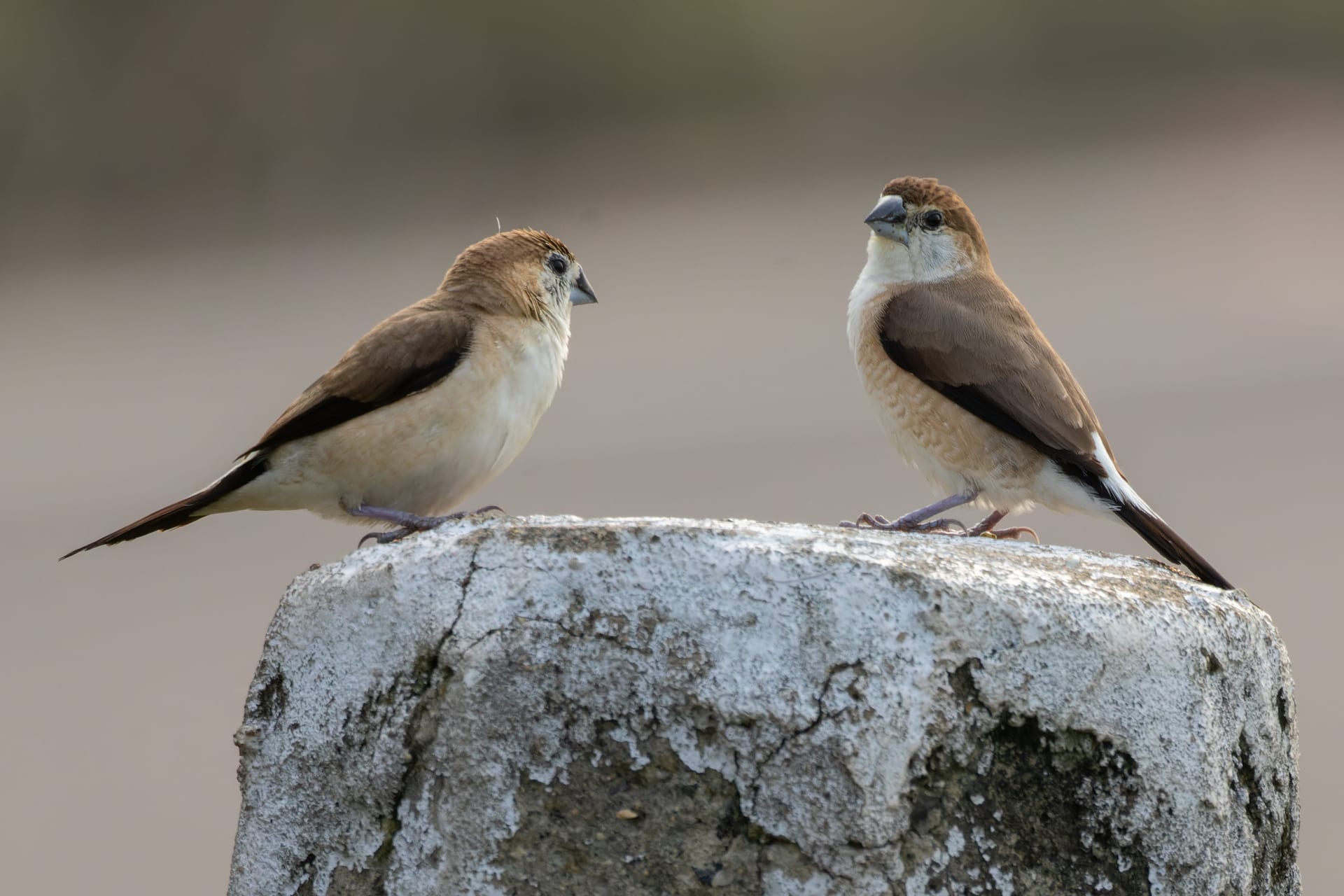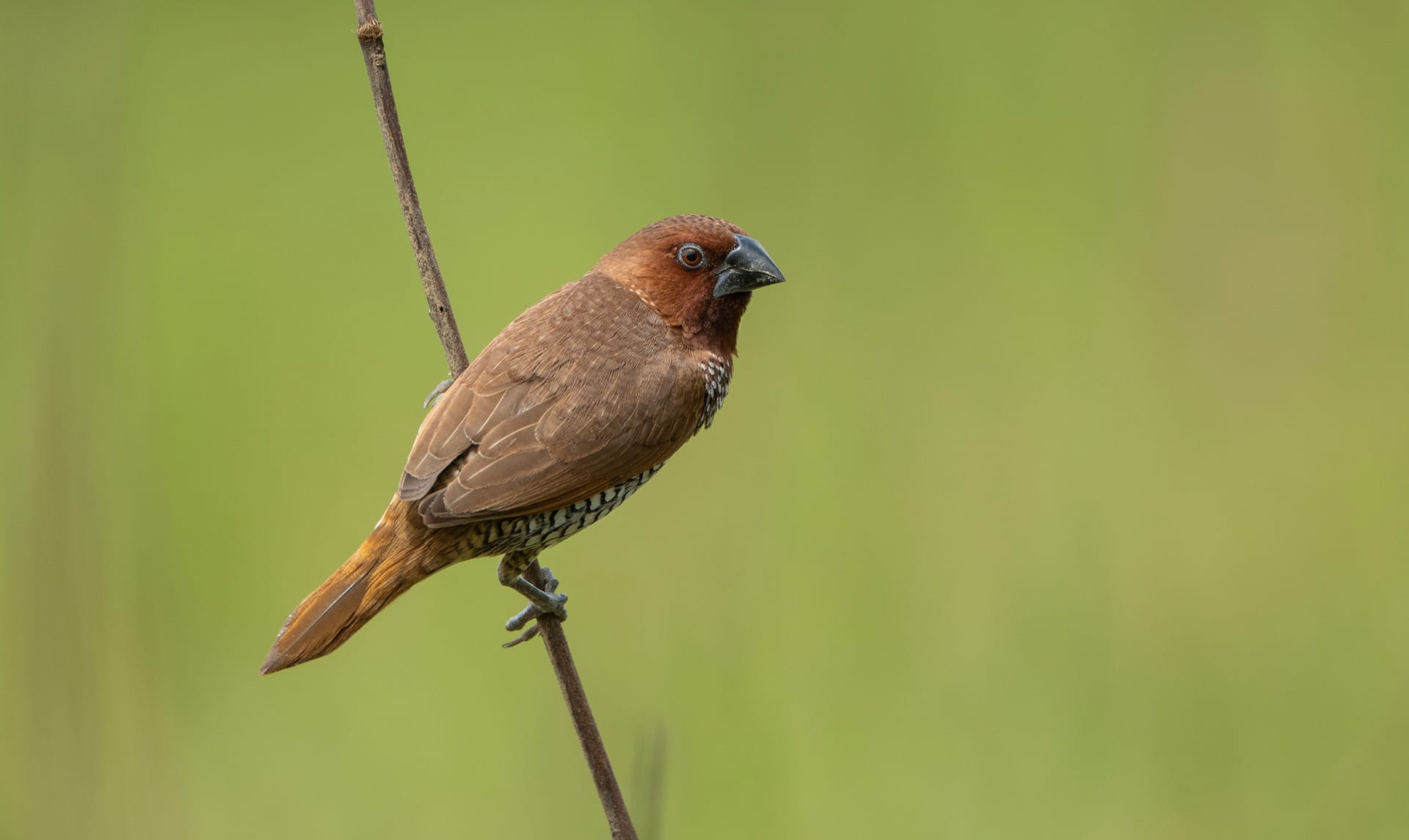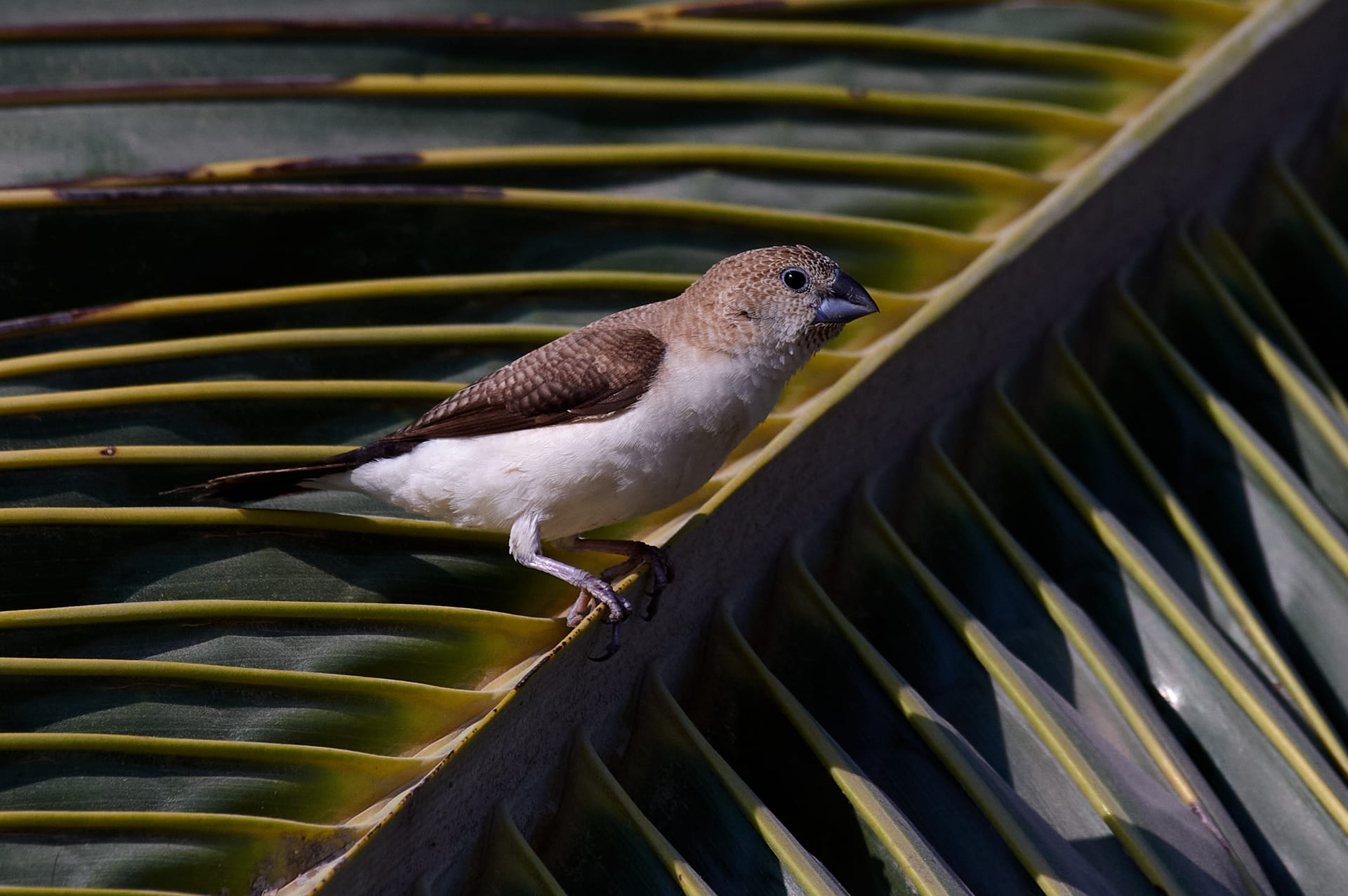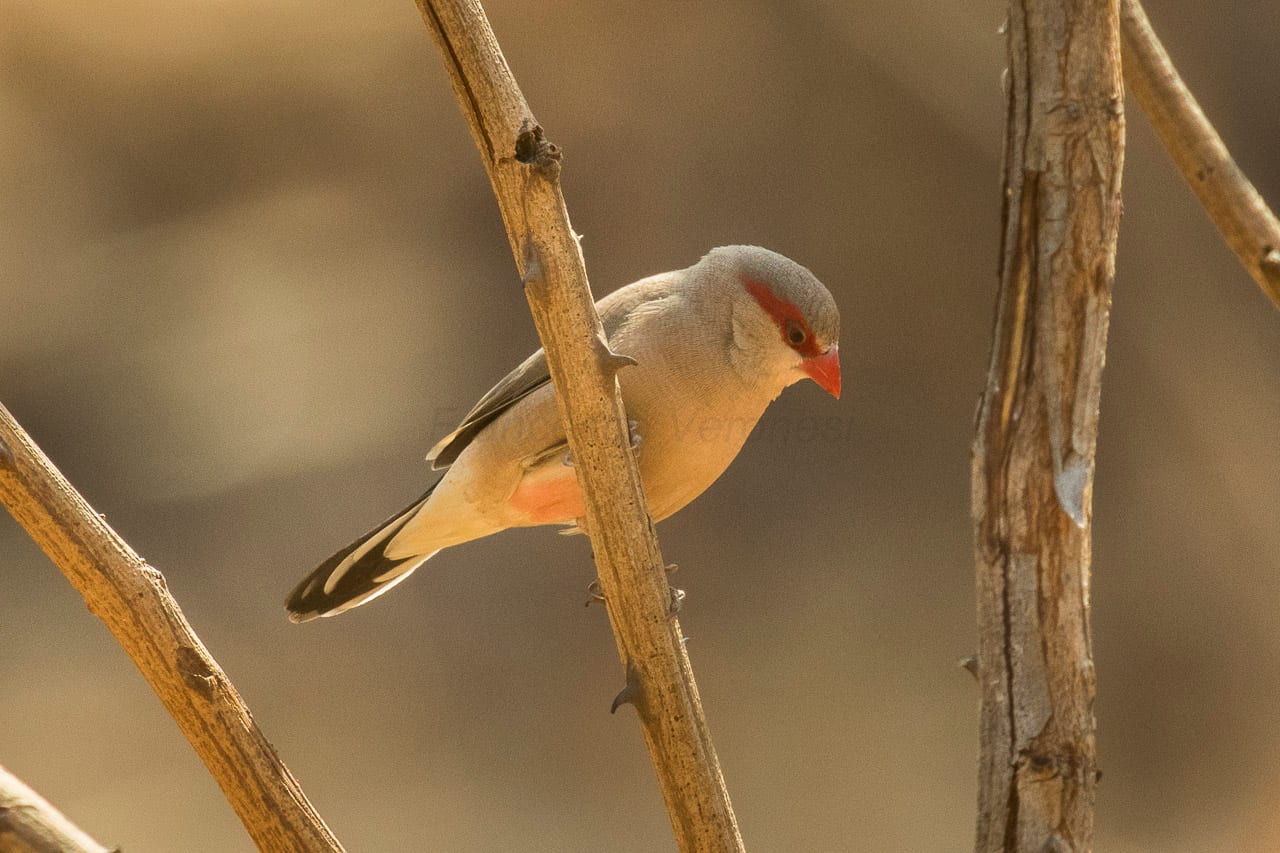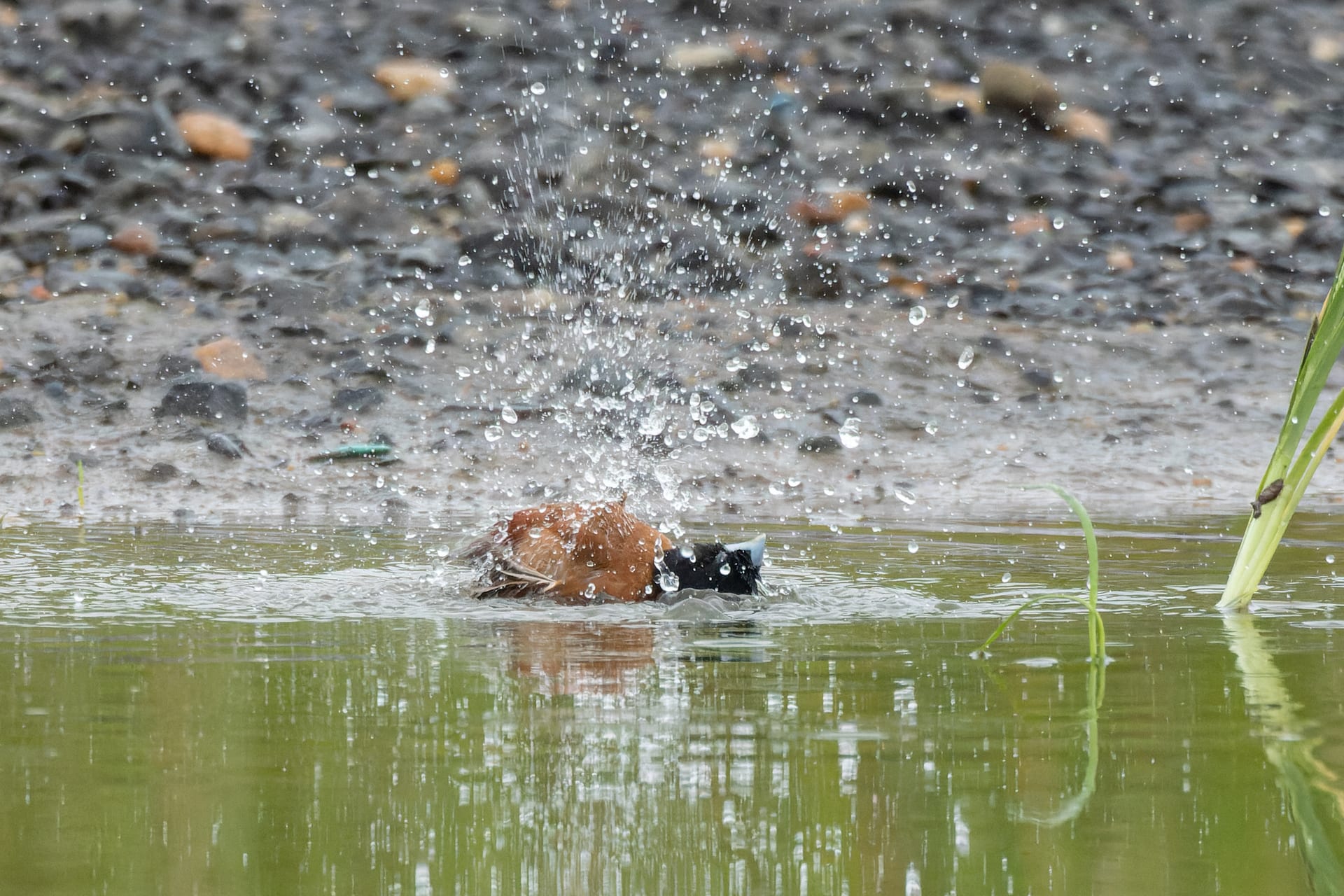
Source: Wikimedia Commons
Chestnut Munia
BeginnerLonchura atricapilla
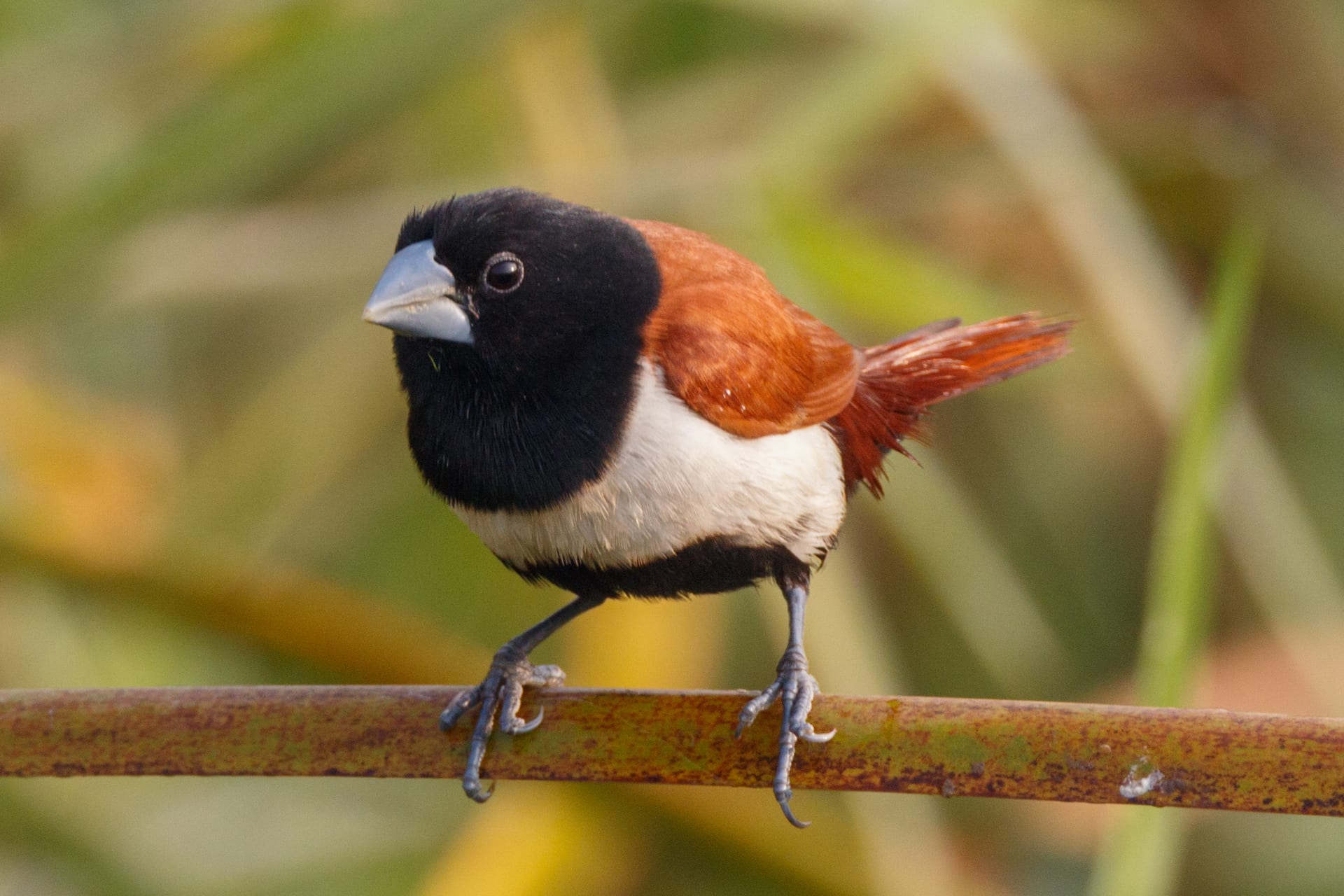
An estrildid finch with a black head, chestnut body and a stubby blue-grey bill. A brick-red patch on the lower back, visible only in flight, separates it from close relatives.
Difficulty
Beginner
Temperature
15〜30℃
Lifespan
7-10 years
Size
11-12cm
Humidity
40〜60%
Diet
Small finch seed mix of millet and canary seed, greens, cuttlebone or oyster grit
About
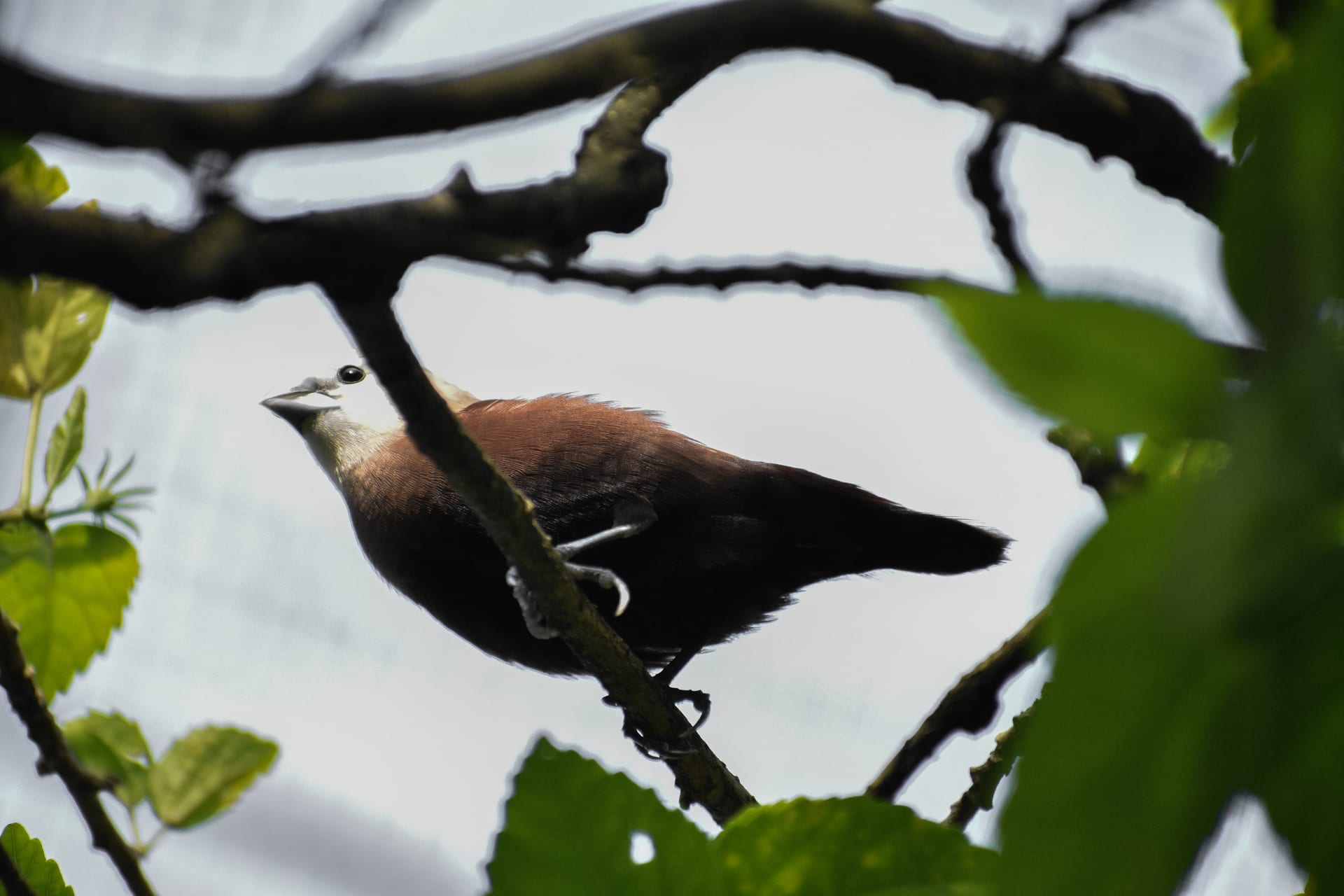
The chestnut munia (Lonchura atricapilla) is an estrildid finch widespread from South and Southeast Asia to the Philippines. It is 11-12 cm long, with a stubby pale blue-grey bill, a black head and a brown to chestnut body, plus a brick-red patch on the lower back that shows only in flight. The sexes look alike, and immature birds have uniform pale brown upperparts and lack the dark head; some races also show a black belly. It was formerly treated as conspecific with the tricoloured munia but is now widely regarded as a separate species. Until 1995 it was the national bird of the Philippines, where Tagalog speakers call it mayang pula, red maya, for the red rump. It lives in flocks in grassland and paddy, building a large domed grass nest in a bush or tall grass and laying 4-7 white eggs.
Source: Wikipedia (CC BY-SA 4.0)
Lifespan of the Chestnut Munia
The Chestnut Munia lives 7-10 years.
Size of the Chestnut Munia
The Chestnut Munia grows to 11-12cm.
Basic Info
Origin
South and Southeast Asia (India, southern China, Southeast Asia and the Philippines; introduced to Hawaii)
Lifespan
7-10 years
Size
11-12cm
Temperature
15〜30℃
Care Specifications
PeacefulGroup
Sources: Wikipedia - Chestnut munia / Wikipedia - Chestnut munia, Japanese edition (taxonomy)
References & Sources
Edited & verified by: BreederDirect editorial team
The taxonomic, regulatory, and husbandry data on this page are compiled and verified against the authoritative primary sources below.
Taxonomy & Authority
Accepted name: Lonchura atricapilla (Vieillot, 1807)
Synonyms: Loxia atricapilla, Lonchura malacca atricapilla
Authority databases: GBIF
Nomenclature follows global taxonomic authority databases.
Regulations & Conservation Status
Not CITES-listedIUCN LC · Least Concern
Lonchura atricapilla. The family Estrildidae is not listed in the CITES Appendices, so this species is not covered.
Sources: CITES Appendices (Estrildidae not listed) / IUCN Red List
Regulations may change. Always verify the latest information with the relevant authorities.
Chestnut Munia Listings
Loading latest listingsFind listings for this species