Source: Wikimedia Commons
Scaly-breasted Munia
BeginnerLonchura punctulata
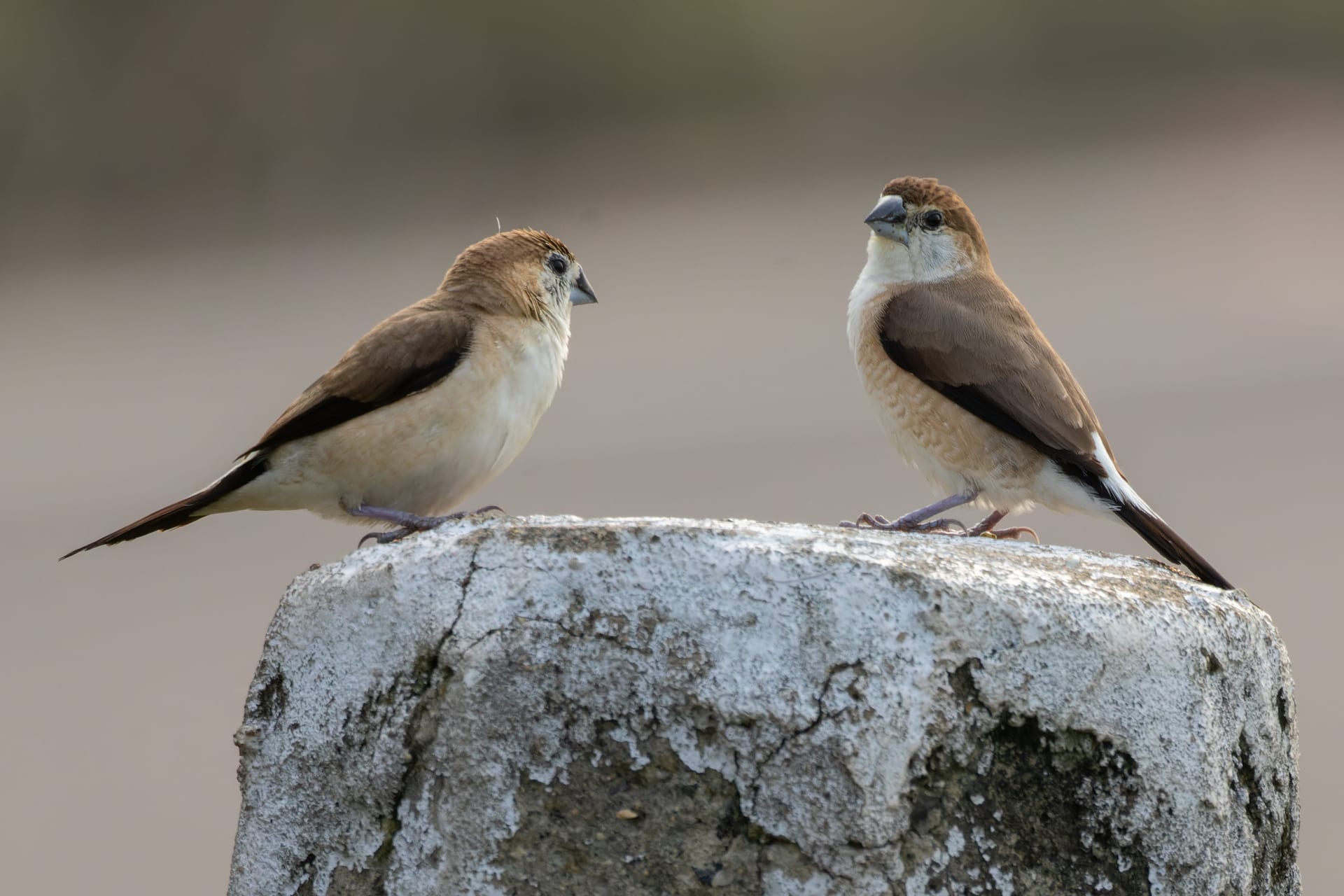
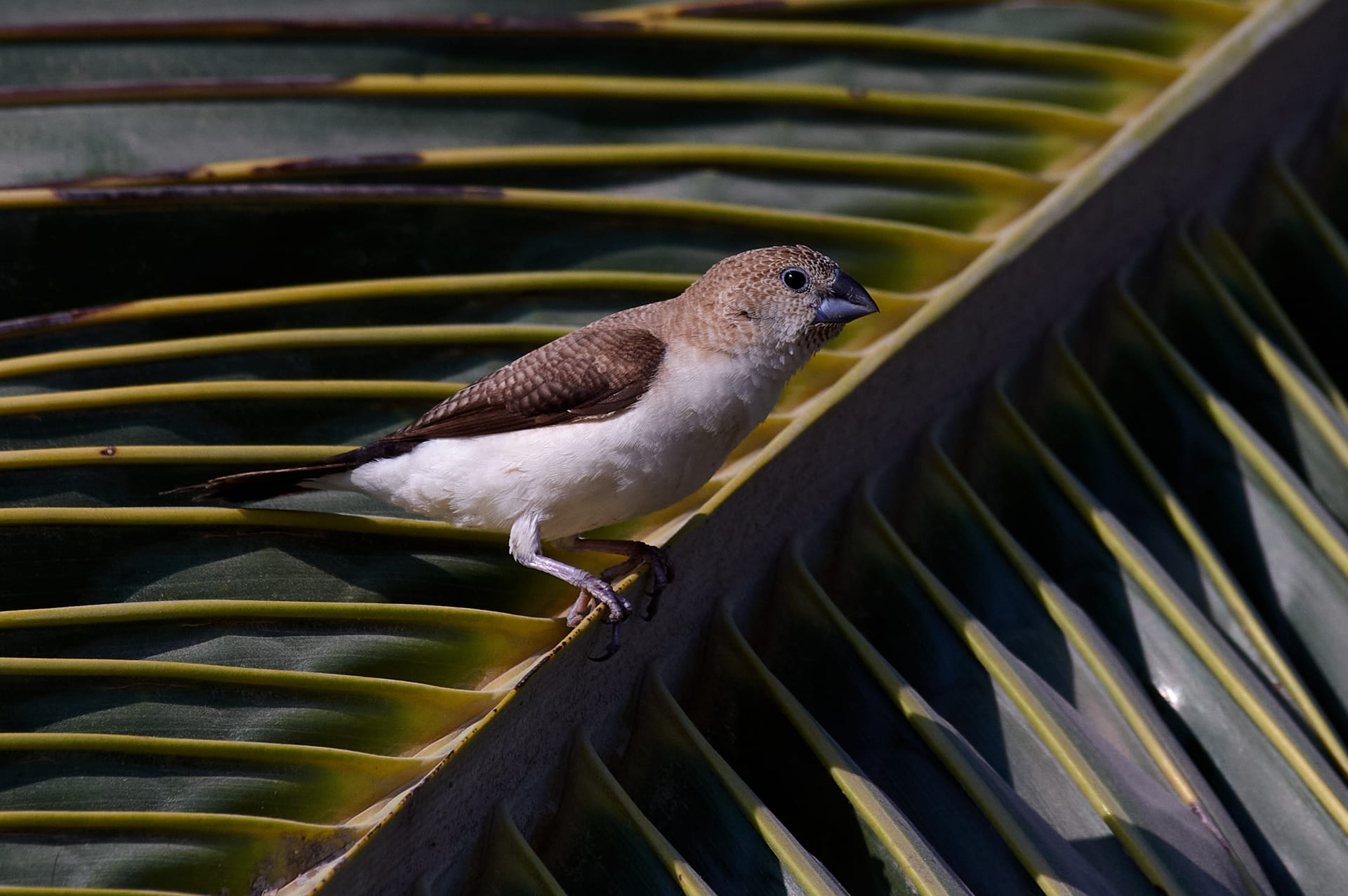
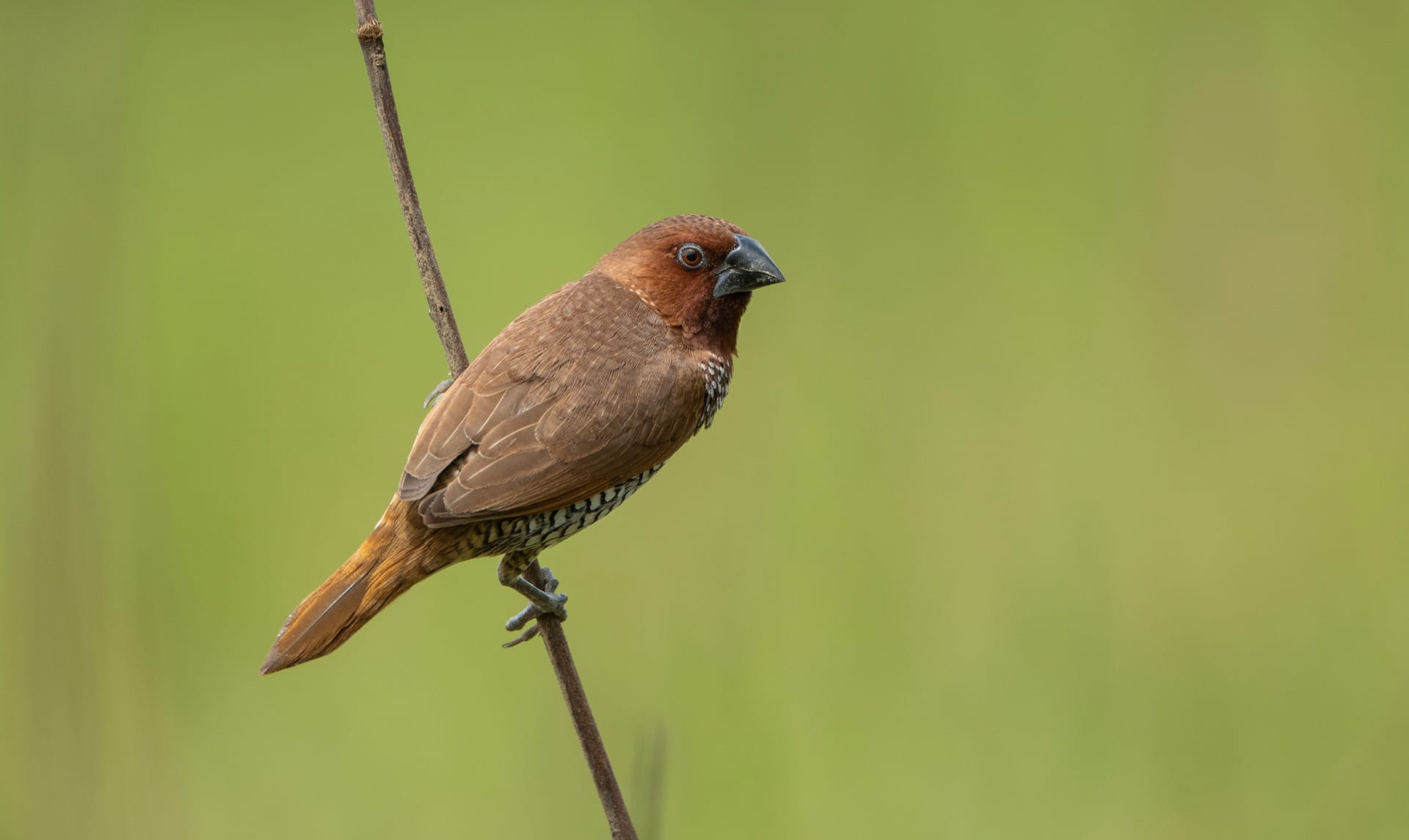
An estrildid finch whose breast and belly carry scale-like wavy markings, with a stout dark grey bill. It is hardy and suits group housing, though the plain pale-brown juveniles are hard to tell from related species. Flocks can reach a hundred birds.
Difficulty
Beginner
Temperature
15〜30℃
Lifespan
5-8 years
Size
About 11cm
Humidity
40〜60%
Diet
Small finch seed mix of millet and canary seed, greens, cuttlebone or oyster grit
About
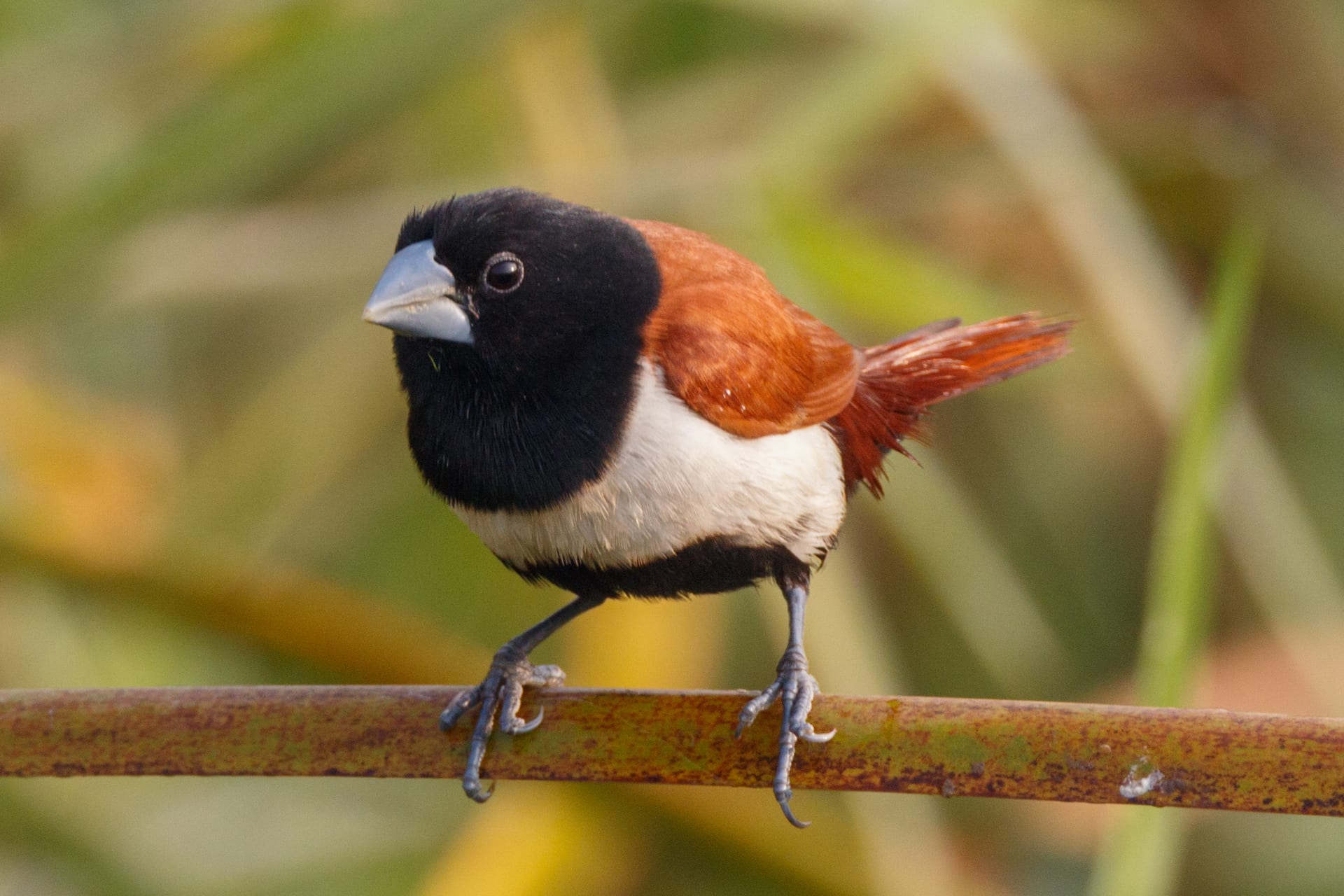
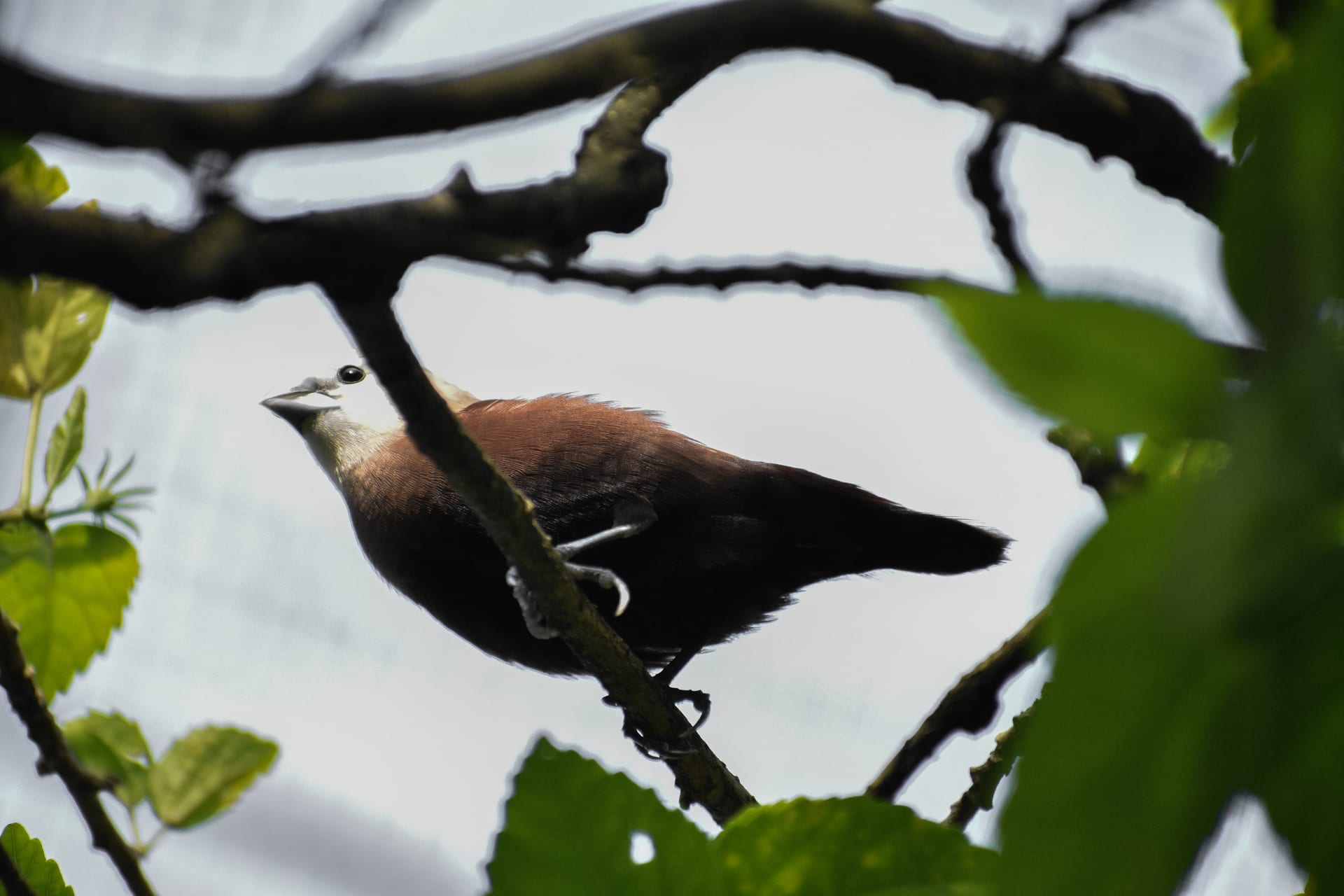
The scaly-breasted munia (Lonchura punctulata) is an estrildid finch ranging from India and Sri Lanka through southern China and Southeast Asia to the Philippines. Linnaeus described it as Loxia punctulata in 1758. It is about 11 cm long; adults are brown from the head across the back, wings and tail, white below, with scale-like wavy markings from the breast along the flanks that give the bird both its English and Japanese names. The stout conical bill is dark grey. The sexes look alike, and juveniles are a uniform pale brown without the scaling, making them very hard to separate from young chestnut or white-headed munias. Eleven subspecies are recognised across the range. The diet is mainly grass seed, with some berries and small insects. Flocks of up to a hundred birds keep contact with short whistled calls, and breeding pairs build a domed nest of woven grass or bamboo leaves. Carried worldwide as a cage bird, escapees have established feral populations in Hawaii (since 1883), Puerto Rico, the southern United States and Japan.
Source: Wikipedia (CC BY-SA 4.0)
Lifespan of the Scaly-breasted Munia
The Scaly-breasted Munia lives 5-8 years.
Size of the Scaly-breasted Munia
The Scaly-breasted Munia grows to About 11cm.
Basic Info
Origin
South and Southeast Asia (India, Sri Lanka, southern China, Taiwan, the Malay Peninsula, Indonesia and the Philippines)
Lifespan
5-8 years
Size
About 11cm
Care Specifications
References & Sources
Edited & verified by: BreederDirect editorial team
The taxonomic, regulatory, and husbandry data on this page are compiled and verified against the authoritative primary sources below.
Taxonomy & Authority
Accepted name: Lonchura punctulata (Linnaeus, 1758)
Synonyms: Loxia punctulata
Authority databases: GBIF
Nomenclature follows global taxonomic authority databases.
Regulations & Conservation Status
Not CITES-listedIUCN LC · Least Concern
Domestic law: It is not designated as an Invasive Alien Species in Japan, but escaped cage birds have gone feral there and the species is listed in the National Institute for Environmental Studies invasive species database. Releasing or letting birds escape is strictly to be avoided.
Lonchura punctulata. The family Estrildidae is not listed in the CITES Appendices, so this species is not covered.
Sources: CITES Appendices (Estrildidae not listed) / IUCN Red List / National Institute for Environmental Studies: Invasive Species of Japan
Regulations may change. Always verify the latest information with the relevant authorities.
Scaly-breasted Munia Listings
Loading latest listingsFind listings for this species