Source: Wikimedia Commons
Indian Silverbill
BeginnerEuodice malabarica
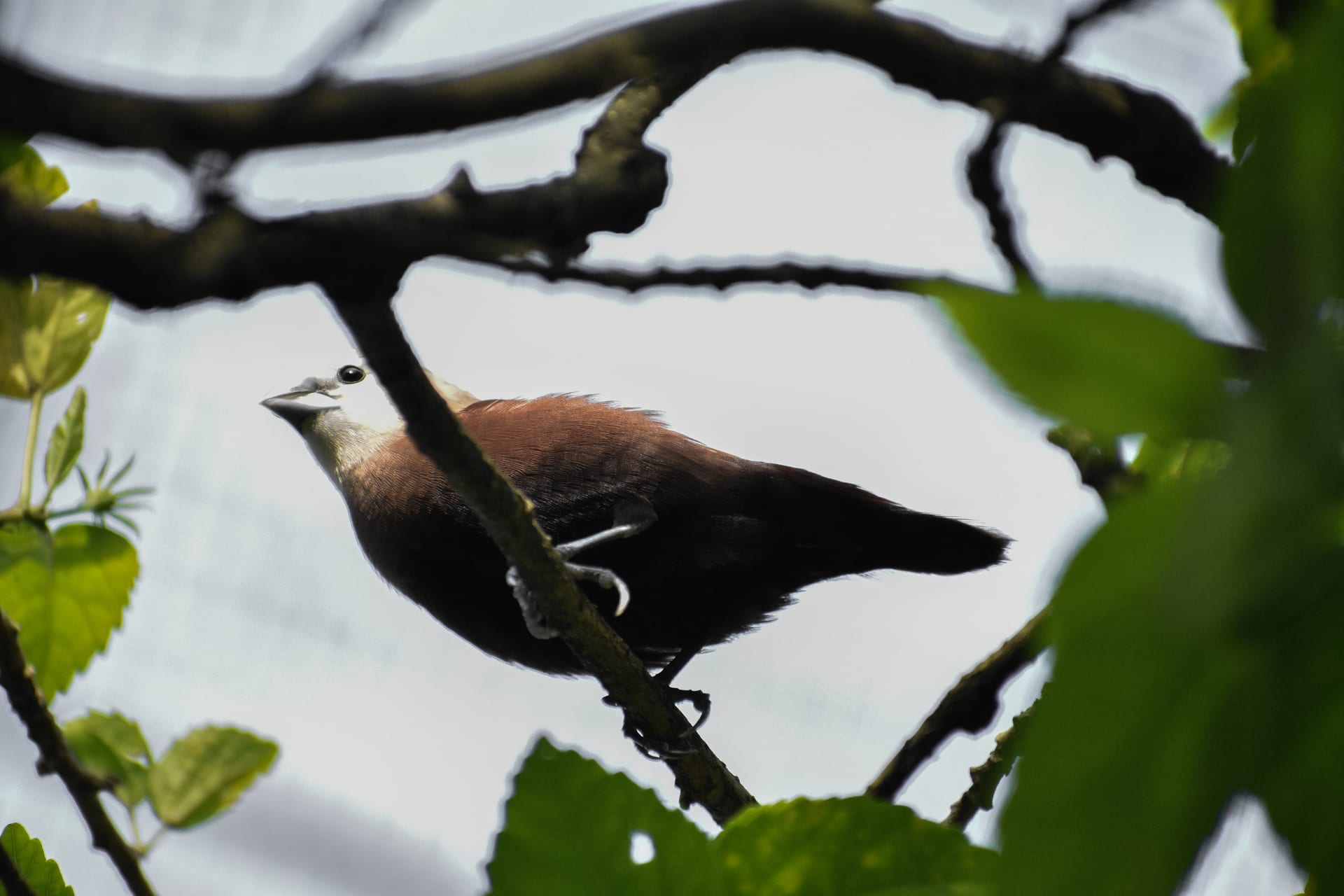
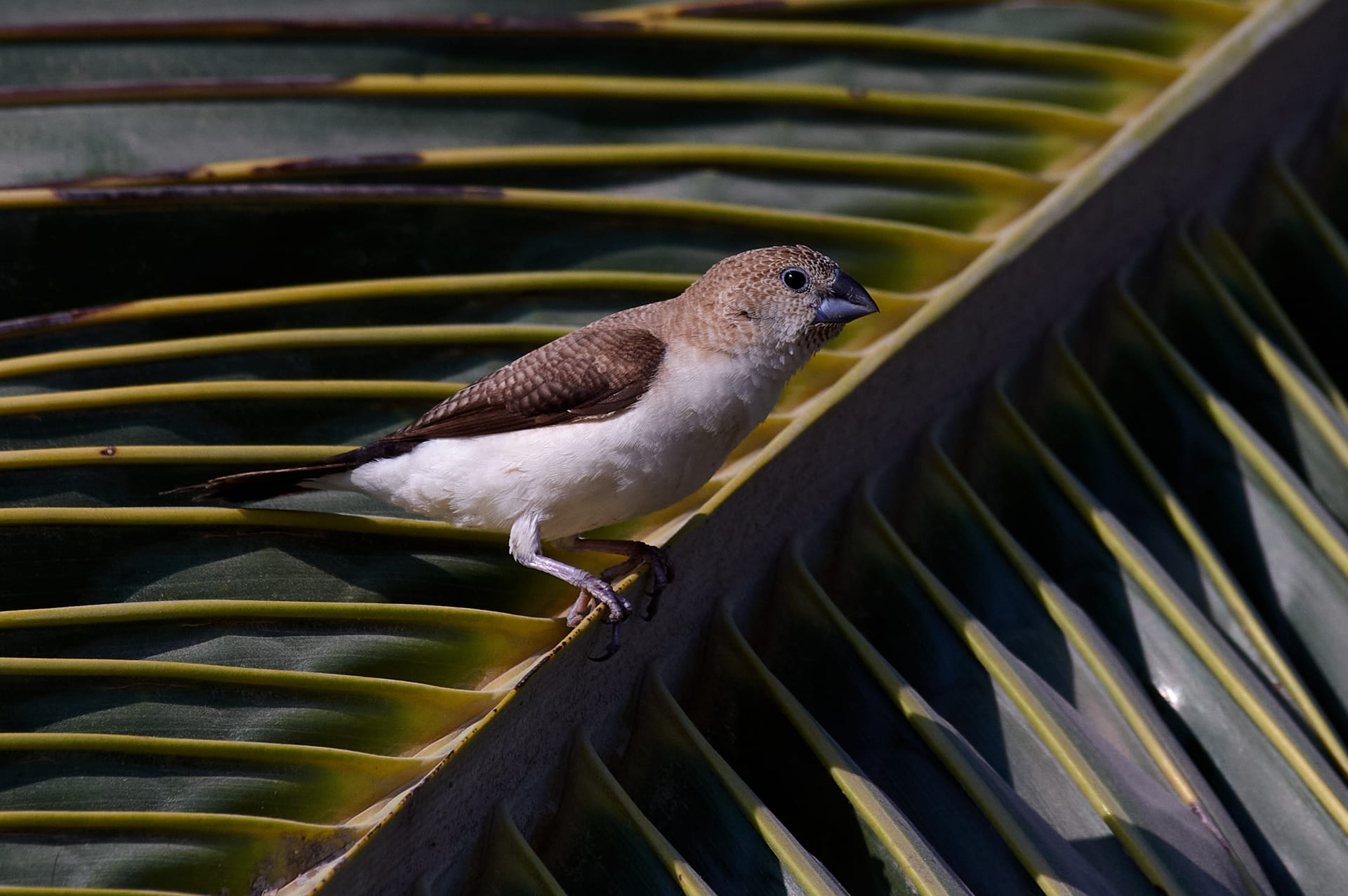
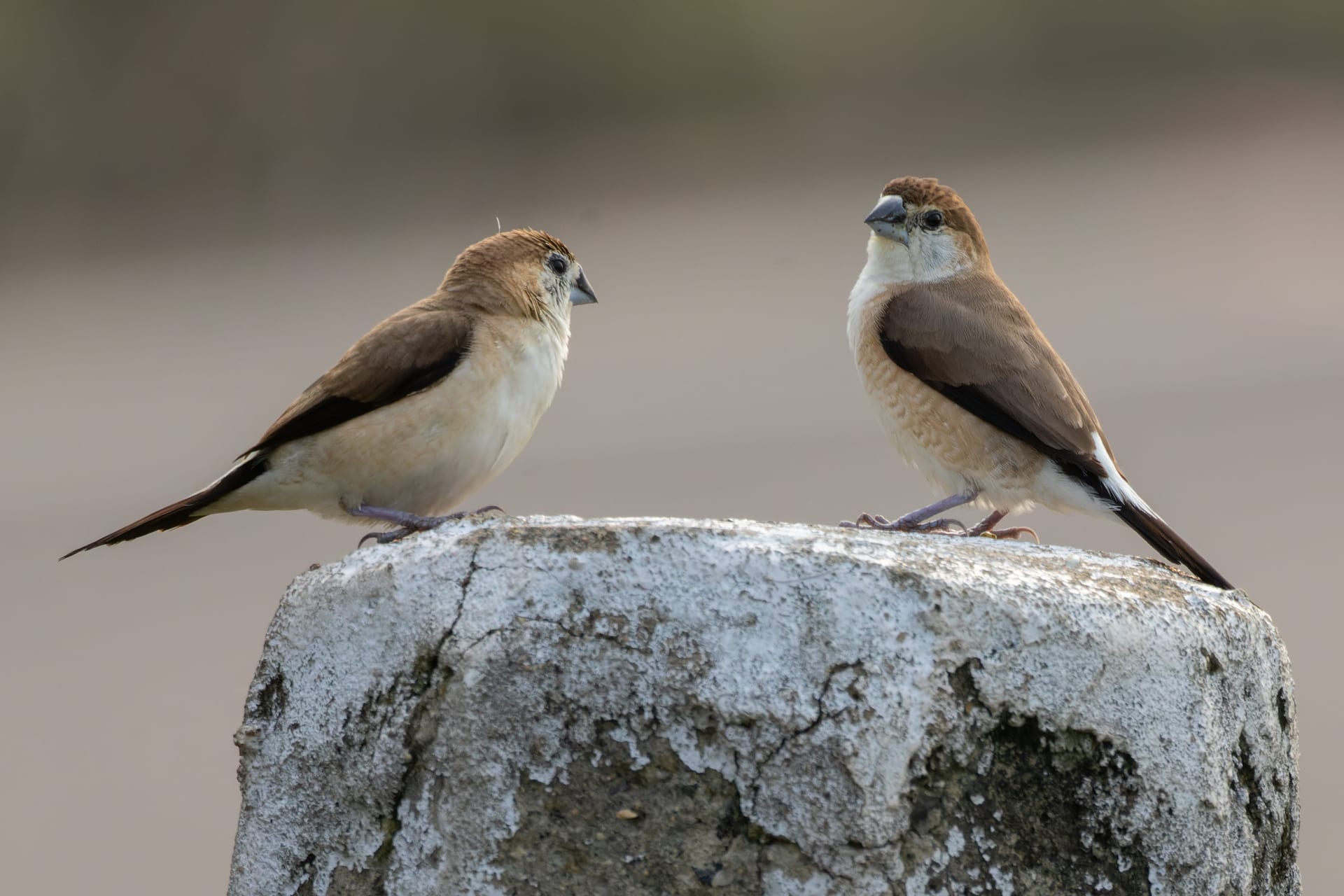
An estrildid finch marked by a stout silver-grey bill and the contrast of a white rump against a black tail. Plain buff above and white below, it is hardy and suits group housing. The tail looks pointed because its feathers shorten outwards.
Difficulty
Beginner
Temperature
15〜30℃
Lifespan
6-9 years
Size
11-11.5cm
Humidity
40〜60%
Diet
Small finch seed mix of millet and canary seed, greens, cuttlebone or oyster grit
About
The Indian silverbill (Euodice malabarica) is an estrildid finch of the arid zones from the Indian subcontinent to the Middle East. Linnaeus described it as Loxia malabarica in 1758, and it is treated as monotypic. It is 11-11.5 cm long, with a stout conical silver-grey bill, buff-brown upperparts, white underparts and buffy flanks. The wings and tail are black, contrasting sharply with a white rump, and the tail looks pointed because the feathers shorten from the centre outwards. The sexes are alike; immatures are buff below with a shorter tail. It frequents dry scrub, fallow land and cultivation, foraging in flocks of up to sixty birds on the ground and on low grass stalks. The breeding season varies by region, in winter in southern India and after summer in the north. The nest is an untidy ball of grass placed in a low thorny shrub such as an acacia, and the birds also take over old baya weaver nests. The clutch of 4-8 eggs is incubated by both parents for about eleven days.
Source: Wikipedia (CC BY-SA 4.0)
Lifespan of the Indian Silverbill
The Indian Silverbill lives 6-9 years.
Size of the Indian Silverbill
The Indian Silverbill grows to 11-11.5cm.
Basic Info
Origin
Arid regions of the Indian subcontinent and the Middle East (Pakistan, Nepal, Bangladesh, India, Sri Lanka, Iran and Israel)
Lifespan
6-9 years
Size
11-11.5cm
Care Specifications
PeacefulGroup
Sources: Wikipedia - Indian silverbill / Wikipedia - Estrildidae, Japanese edition (Japanese names)
References & Sources
Edited & verified by: BreederDirect editorial team
The taxonomic, regulatory, and husbandry data on this page are compiled and verified against the authoritative primary sources below.
Taxonomy & Authority
Accepted name: Euodice malabarica (Linnaeus, 1758)
Synonyms: Loxia malabarica, Lonchura malabarica
Authority databases: GBIF
Nomenclature follows global taxonomic authority databases.
Regulations & Conservation Status
Not CITES-listedIUCN LC · Least Concern
Euodice malabarica. The family Estrildidae is not listed in the CITES Appendices, so this species is not covered.
Sources: CITES Appendices (Estrildidae not listed) / IUCN Red List
Regulations may change. Always verify the latest information with the relevant authorities.
Indian Silverbill Listings
Loading latest listingsFind listings for this species