Source: Wikimedia Commons
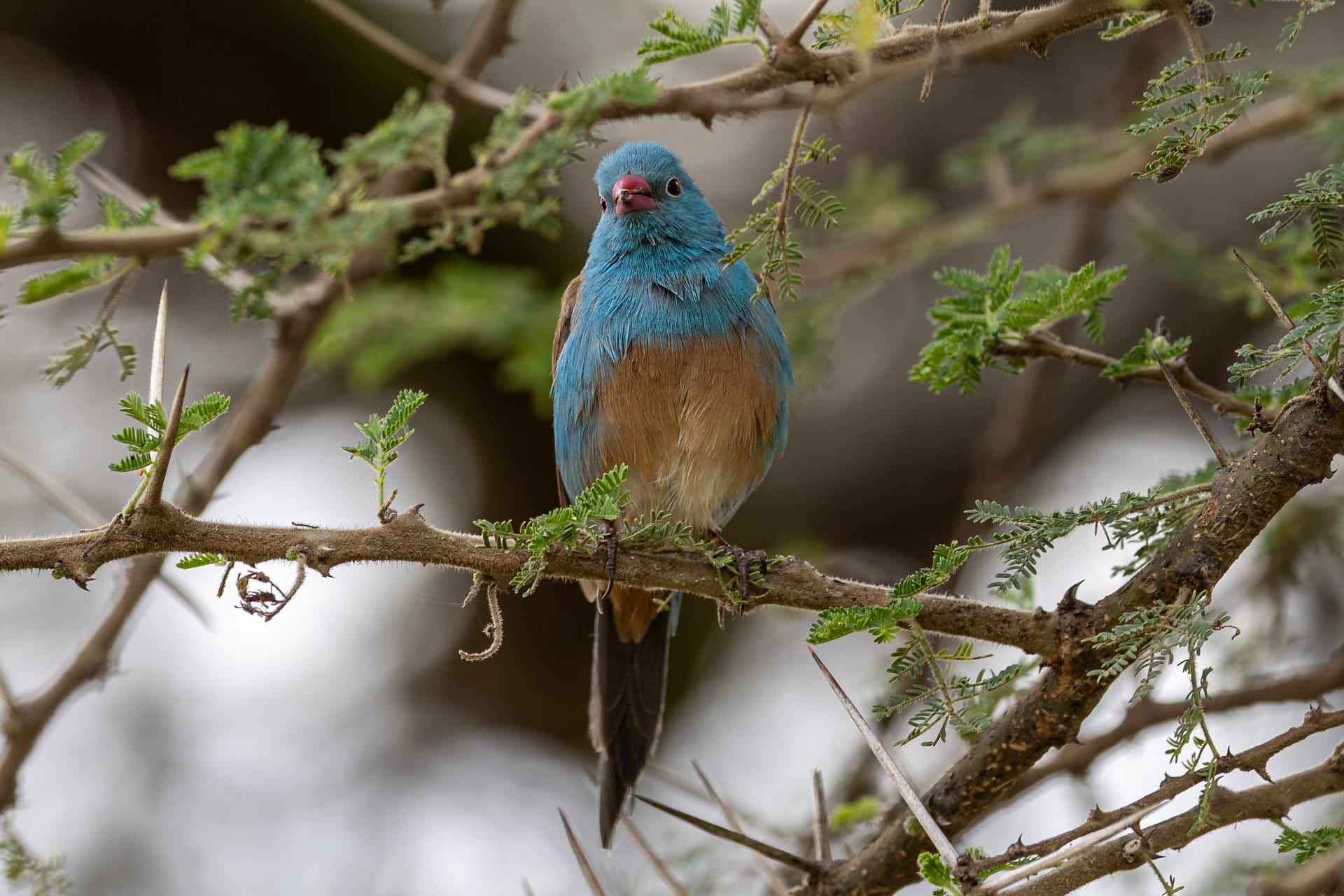
Blue-capped Cordon-bleu
AdvancedUraeginthus cyanocephalus
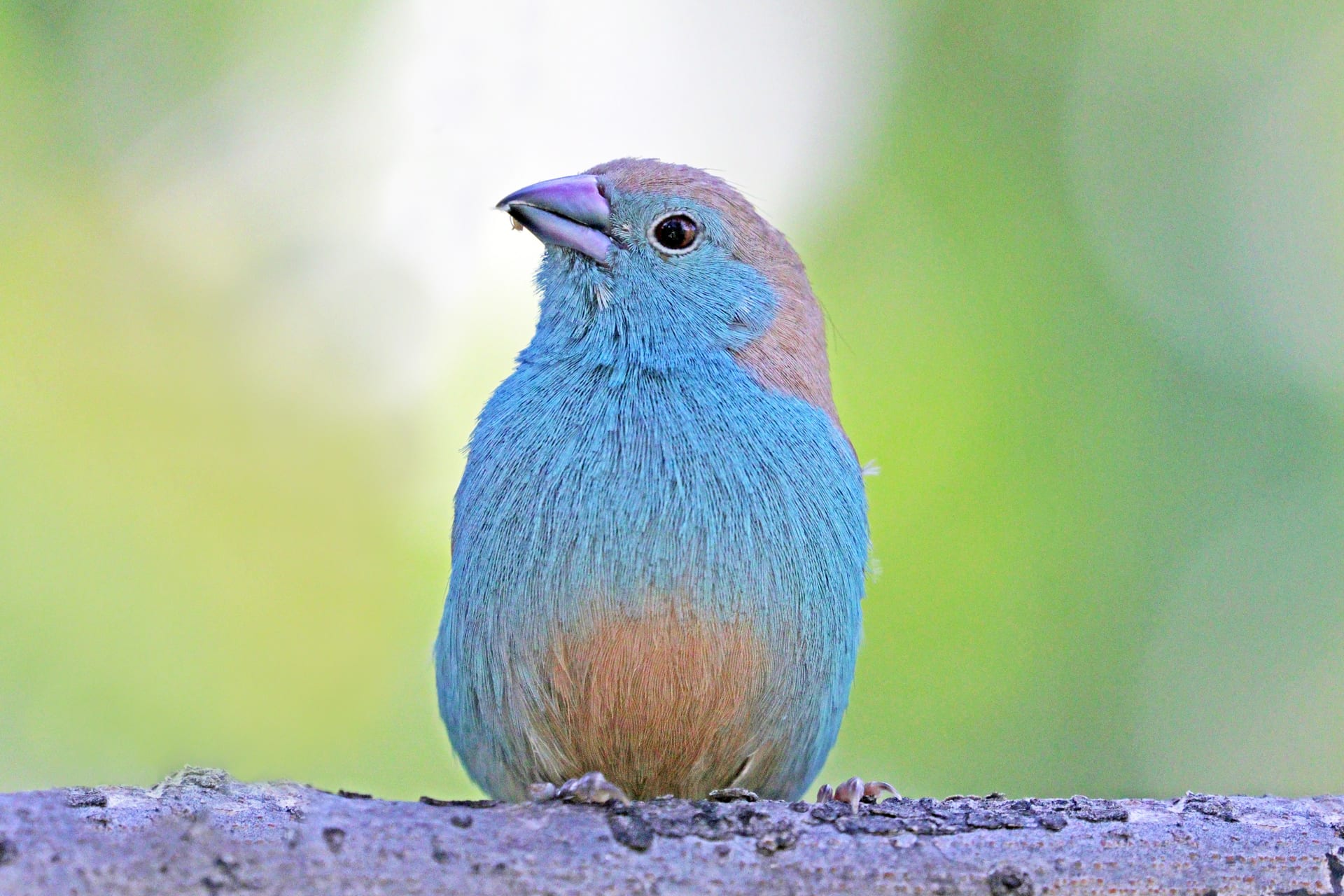
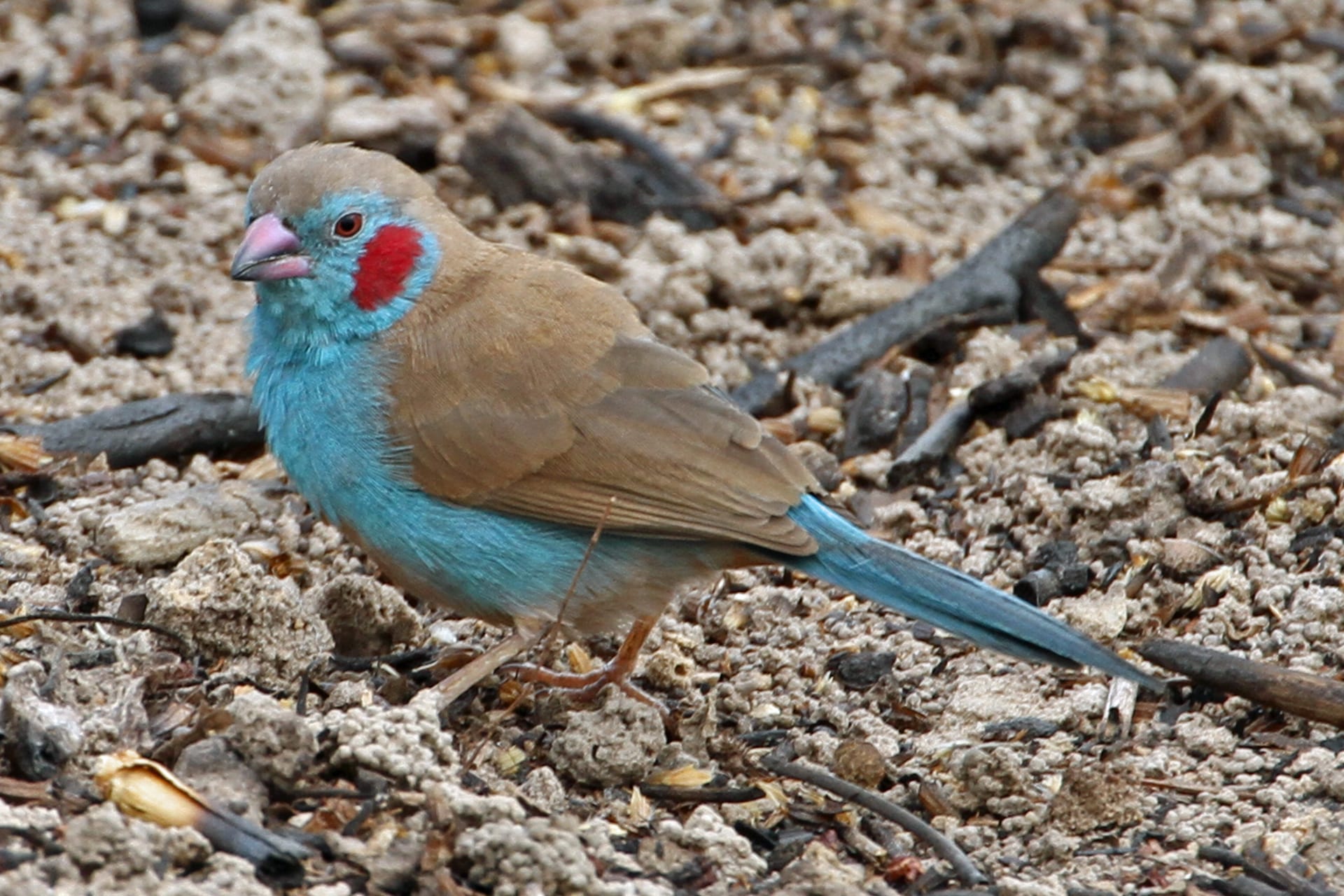
A cordon-bleu of arid East Africa. The male's blue extends over the crown, while the female's crown is light brown. It keeps reasonably well but is regarded as difficult to breed.
Difficulty
Advanced
Temperature
15〜30℃
Lifespan
4-6 years
Size
About 14cm
Humidity
40〜60%
Diet
Mixed seed, spray millet, greens, small insects
About
The blue-capped cordon-bleu (Uraeginthus cyanocephalus) is an estrildid finch of Ethiopia, Kenya, Somalia, South Sudan and Tanzania, living in dry grassland, shrubland and desert. At about 14 cm it is one of the larger estrildids. The male's vivid blue extends over the crown and he is more strongly coloured overall; on the female the light brown of the wings continues over the nape and crown, so the head colour separates the sexes. It is omnivorous, taking small insects as well as seed, and is quiet compared with other finches. Pairs perform a courtship dance holding a thin twig in the bill, and high-speed film shows partners tapping their feet twenty-five to fifty times a second. The first import to Europe was to England in 1927 and the first captive breeding was achieved in France in 1930. It keeps well enough given adequate conditions, but breeding is said to be quite difficult.
Source: Wikipedia (CC BY-SA 4.0)
Lifespan of the Blue-capped Cordon-bleu
The Blue-capped Cordon-bleu lives 4-6 years.
Size of the Blue-capped Cordon-bleu
The Blue-capped Cordon-bleu grows to About 14cm.
Basic Info
Origin
Arid grassland, shrubland and desert of East Africa (Ethiopia, Kenya, Somalia, South Sudan and Tanzania)
Lifespan
4-6 years
Size
About 14cm
Temperature
Care Specifications
References & Sources
Edited & verified by: BreederDirect editorial team
The taxonomic, regulatory, and husbandry data on this page are compiled and verified against the authoritative primary sources below.
Taxonomy & Authority
Accepted name: Uraeginthus cyanocephalus (Richmond, 1897)
Authority databases: GBIF
Nomenclature follows global taxonomic authority databases.
Regulations & Conservation Status
Not CITES-listedIUCN LC · Least Concern
Uraeginthus cyanocephalus. The family Estrildidae is not listed in the CITES Appendices, so this species is not covered. The IUCN assesses it as Least Concern.
Sources: CITES Appendices (Estrildidae not listed) / IUCN Red List
Regulations may change. Always verify the latest information with the relevant authorities.
Blue-capped Cordon-bleu Listings
Loading latest listingsFind listings for this species