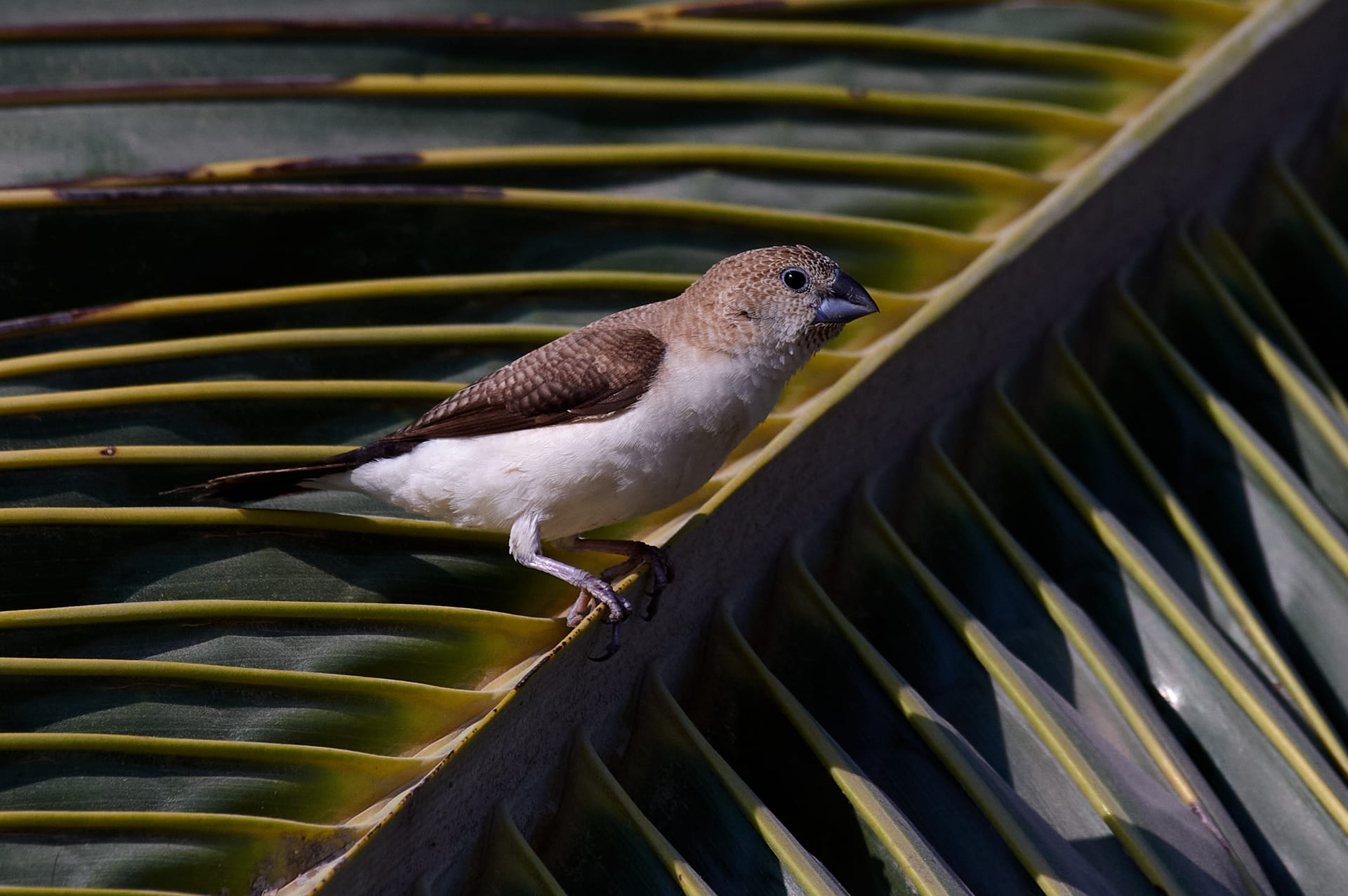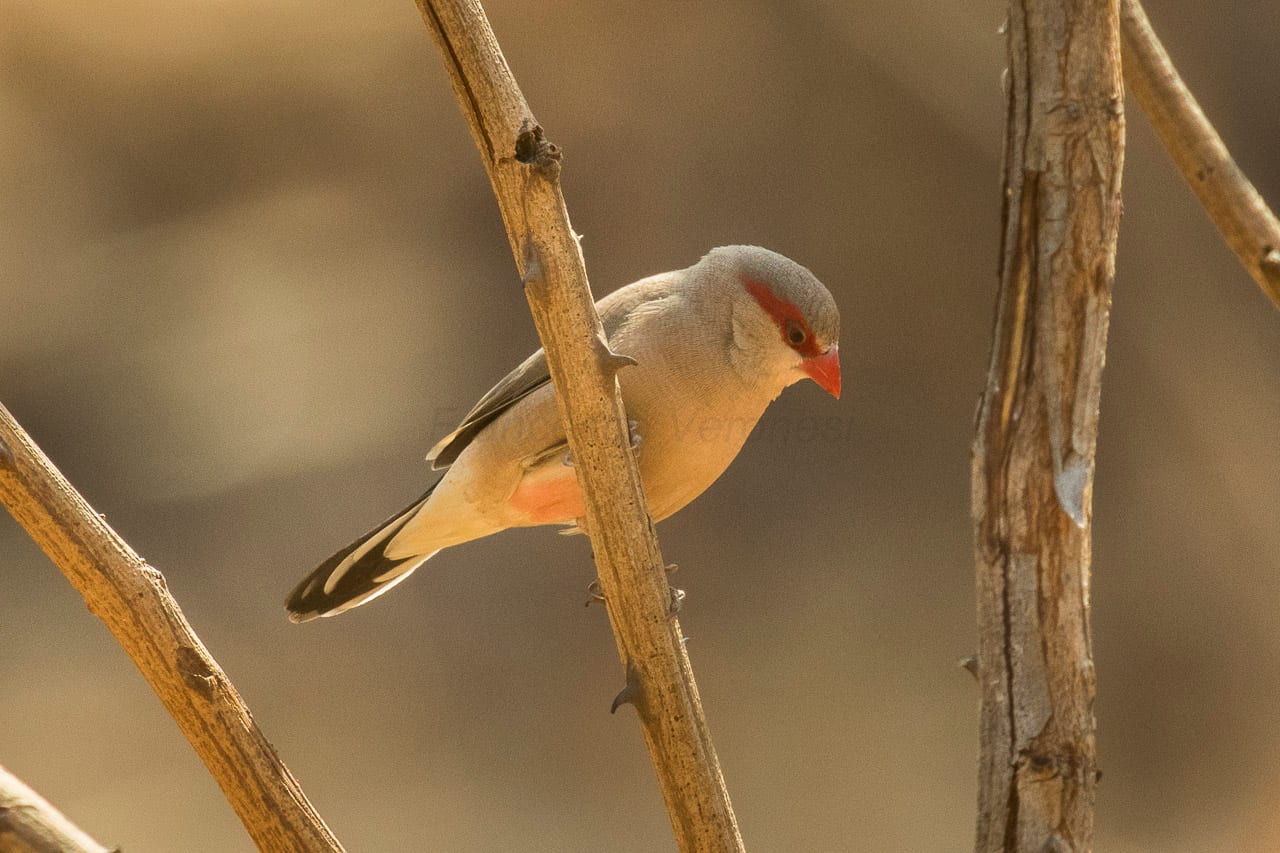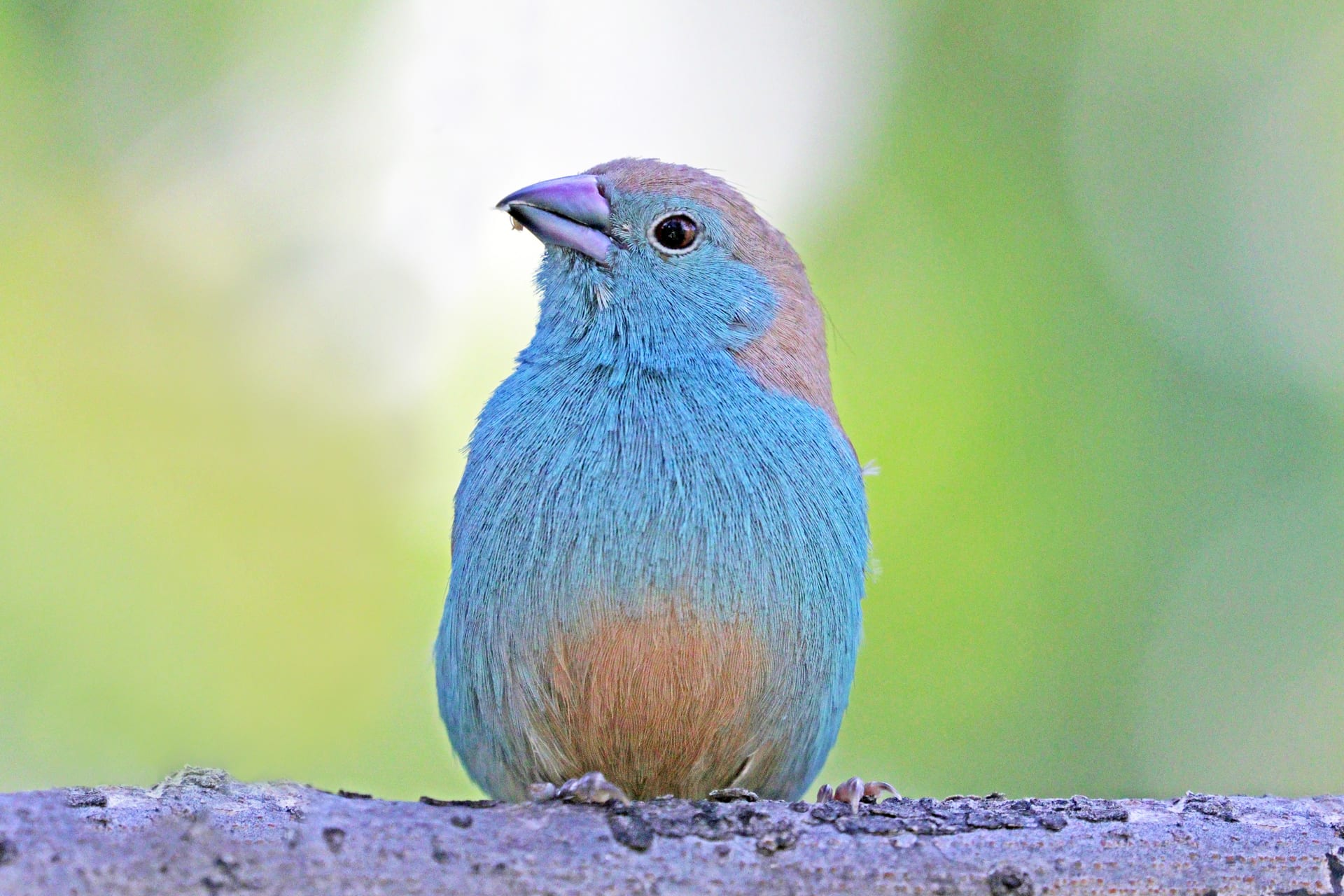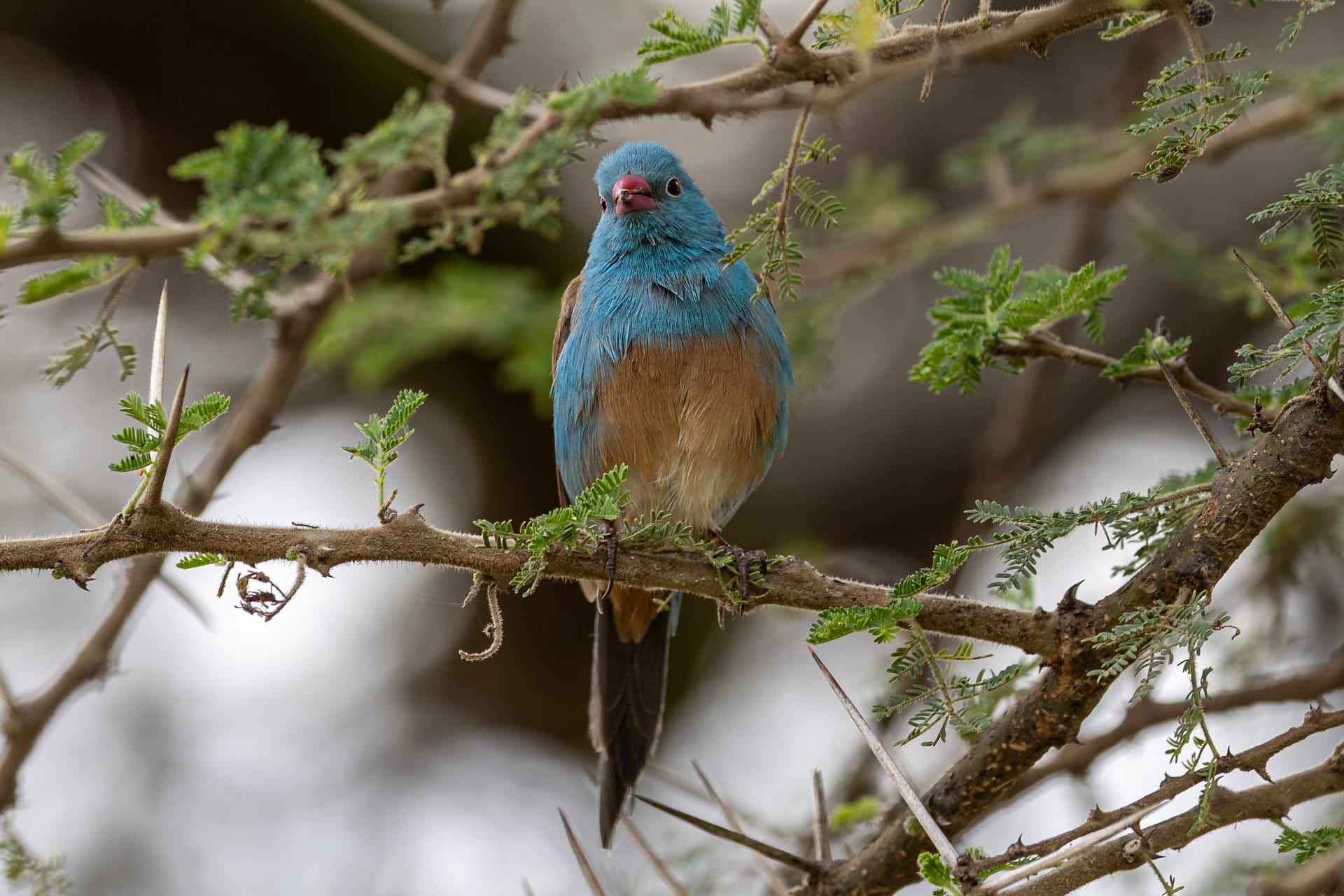
Source: Wikimedia Commons
Green-winged Pytilia (Melba Finch)
AdvancedPytilia melba
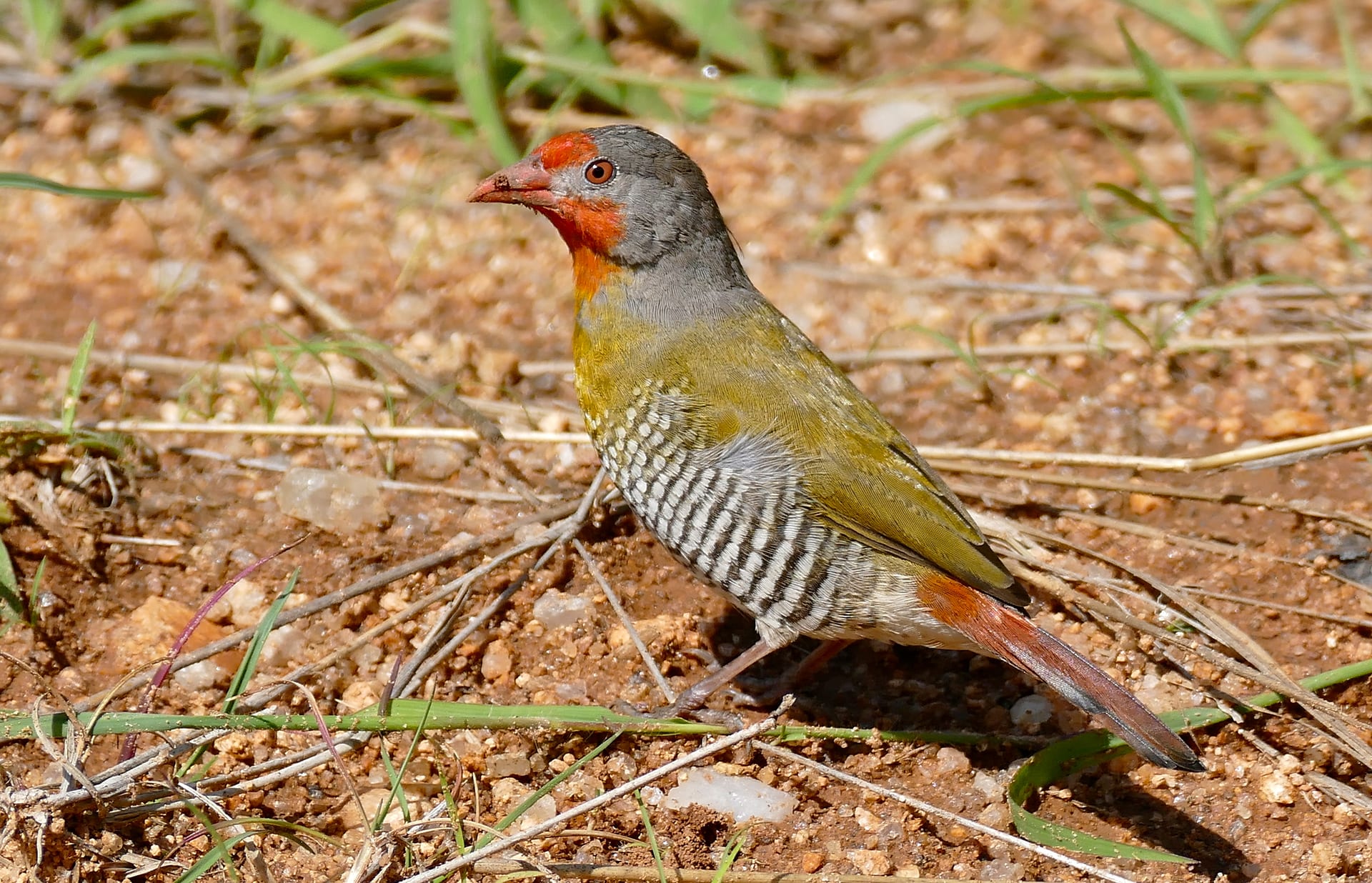
An African estrildid combining a grey head with a red face, olive-green wings and finely barred underparts. Its aggressive temper and need for a large aviary make it a bird for experienced keepers.
Difficulty
Advanced
Temperature
15〜30℃
Lifespan
5-8 years
Size
12-13cm
Humidity
40〜60%
Diet
Mixed seed, spray millet, greens, small livefood when breeding
About
The green-winged pytilia (Pytilia melba) is an estrildid finch widespread across sub-Saharan Africa. It is 12-13 cm long, with a grey head, a red face mask in the male, olive-green wings, finely barred underparts and a red rump. Eight subspecies are recognised, separated by colour and range. Linnaeus described it in 1758 as Fringilla melba, and Swainson erected the present genus Pytilia in 1837. It is the principal host of the long-tailed paradise whydah, whose males mimic its song. It reached Europe early and has been traded continuously since 1953, but very few keepers breed it, and most birds in the trade are wild-caught and arrive in poor condition. It is unsuited to cage keeping and does best in a spacious indoor aviary opening onto a densely planted outdoor flight. It is an aggressive bird, and is especially hostile towards closely related pytilias that also have a red face mask.
Source: Wikipedia (CC BY-SA 4.0)
Lifespan of the Green-winged Pytilia (Melba Finch)
The Green-winged Pytilia (Melba Finch) lives 5-8 years.
Size of the Green-winged Pytilia (Melba Finch)
The Green-winged Pytilia (Melba Finch) grows to 12-13cm.
Basic Info
Origin
Sub-Saharan Africa, though scarcer in central, far southern and coastal western regions
Lifespan
5-8 years
Size
12-13cm
Care Specifications
References & Sources
Edited & verified by: BreederDirect editorial team
The taxonomic, regulatory, and husbandry data on this page are compiled and verified against the authoritative primary sources below.
Taxonomy & Authority
Accepted name: Pytilia melba (Linnaeus, 1758)
Synonyms: Fringilla melba
Authority databases: GBIF
Nomenclature follows global taxonomic authority databases.
Regulations & Conservation Status
Not CITES-listedIUCN LC · Least Concern
Pytilia melba. The family Estrildidae is not listed in the CITES Appendices, so this species is not covered. The IUCN assesses it as Least Concern.
Sources: CITES Appendices (Estrildidae not listed) / IUCN Red List
Regulations may change. Always verify the latest information with the relevant authorities.
Green-winged Pytilia (Melba Finch) Listings
Loading latest listingsFind listings for this species