Source: Wikimedia Commons
Violet-eared Waxbill
AdvancedGranatina granatina
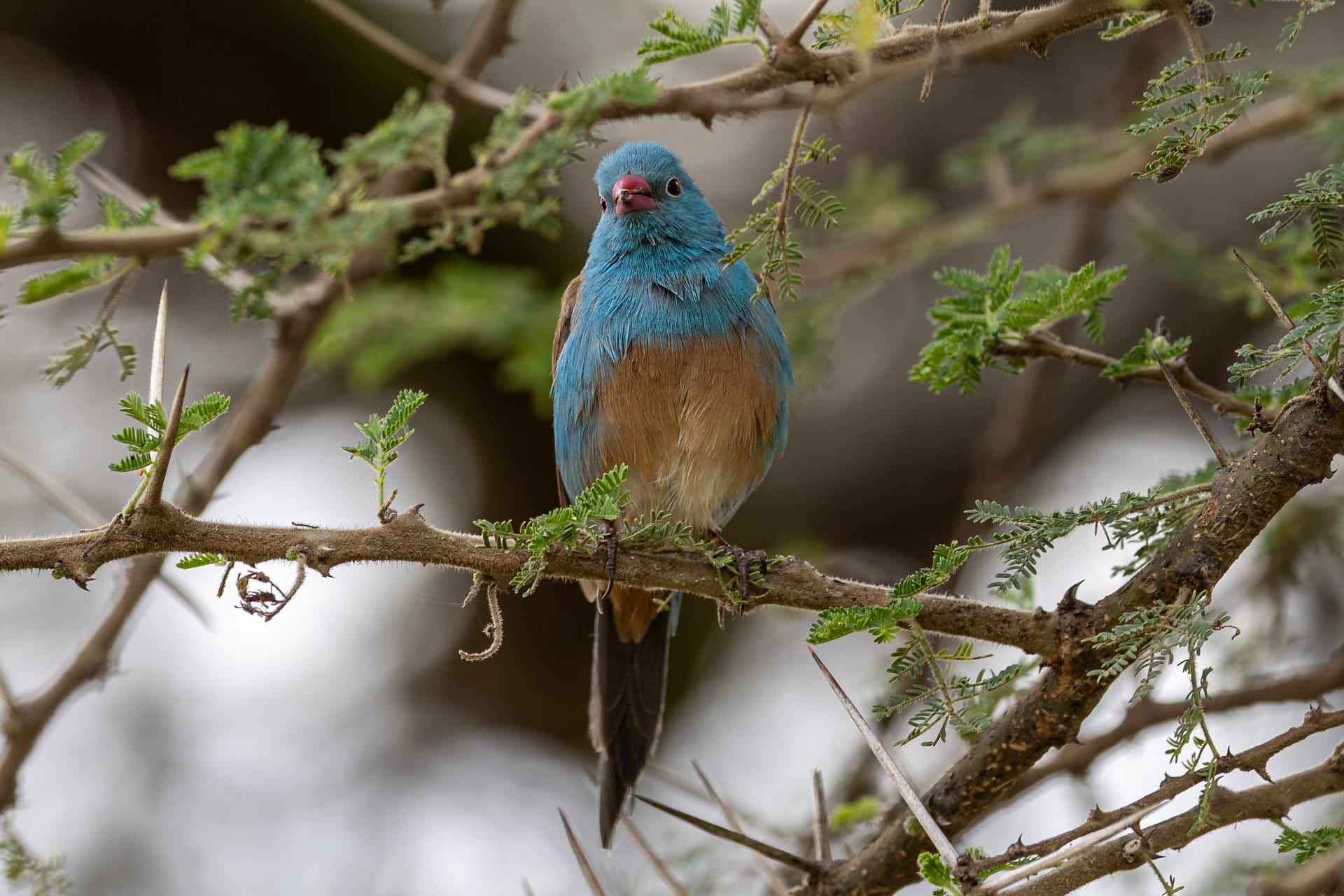
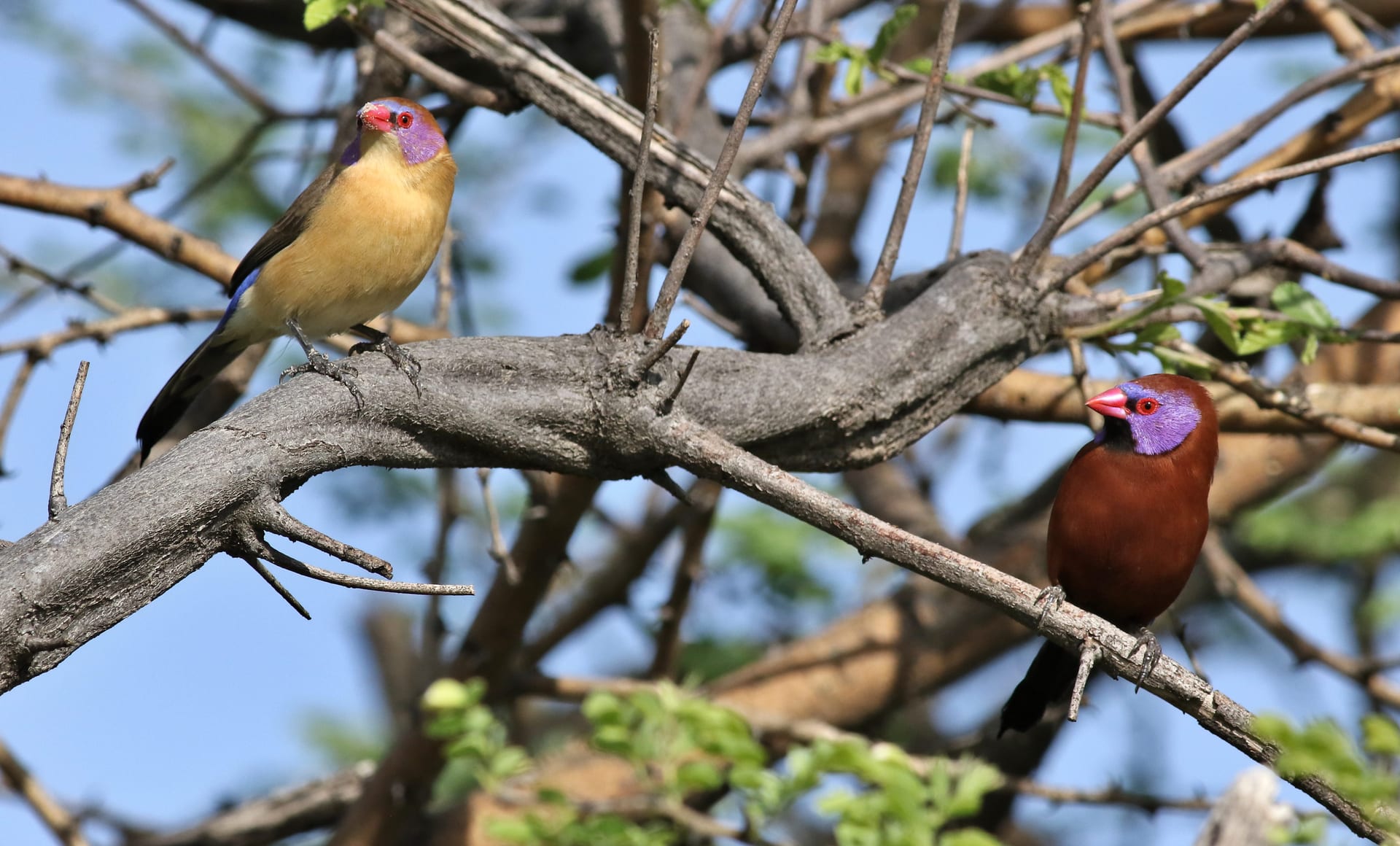
A southern African estrildid combining chestnut plumage with violet ear patches, a blue forehead and a red bill. One of the larger estrildids, it needs warmth and long daylight and suits experienced keepers.
Difficulty
Advanced
Lifespan
7-10 years
Size
13-14cm
Humidity
40〜60%
Diet
Mixed seed, spray millet, greens, small livefood
About
The violet-eared waxbill (Granatina granatina) is an estrildid finch of dry shrubland and savanna in southern Africa. At 13-14 cm it is one of the larger estrildids, and it is treated as monotypic with no subspecies recognised. Linnaeus described it in 1766 as Fringilla granatina but mistakenly gave the locality as Brazil; this was later corrected to Angola and then restricted to Huila Province. The genus Granatina was erected by Sharpe in 1890 and is followed by the IOC World Bird List. It has a long history in aviculture: the first European keeper is said to have been Madame de Pompadour, who was given a male in 1754. The species loves sun and warmth, requiring a large indoor or garden aviary with a shelter kept above 25 degrees Celsius, and twelve to fourteen hours of light a day even in winter. Only a small number of specialists breed it successfully.
Source: Wikipedia (CC BY-SA 4.0)
Lifespan of the Violet-eared Waxbill
The Violet-eared Waxbill lives 7-10 years.
Size of the Violet-eared Waxbill
The Violet-eared Waxbill grows to 13-14cm.
Basic Info
Origin
Dry shrubland and savanna of southern Africa (Angola, Botswana, Mozambique, Namibia, South Africa, Zambia and Zimbabwe)
Lifespan
7-10 years
Size
13-14cm
Humidity
Care Specifications
References & Sources
Edited & verified by: BreederDirect editorial team
The taxonomic, regulatory, and husbandry data on this page are compiled and verified against the authoritative primary sources below.
Taxonomy & Authority
Accepted name: Granatina granatina (Linnaeus, 1766)
Synonyms: Fringilla granatina, Uraeginthus granatinus
Authority databases: GBIF
Nomenclature follows global taxonomic authority databases.
Regulations & Conservation Status
Not CITES-listedIUCN LC · Least Concern
Granatina granatina. The family Estrildidae is not listed in the CITES Appendices, so this species is not covered. The IUCN assesses it as Least Concern.
Sources: CITES Appendices (Estrildidae not listed) / IUCN Red List
Regulations may change. Always verify the latest information with the relevant authorities.
Violet-eared Waxbill Listings
Loading latest listingsFind listings for this species