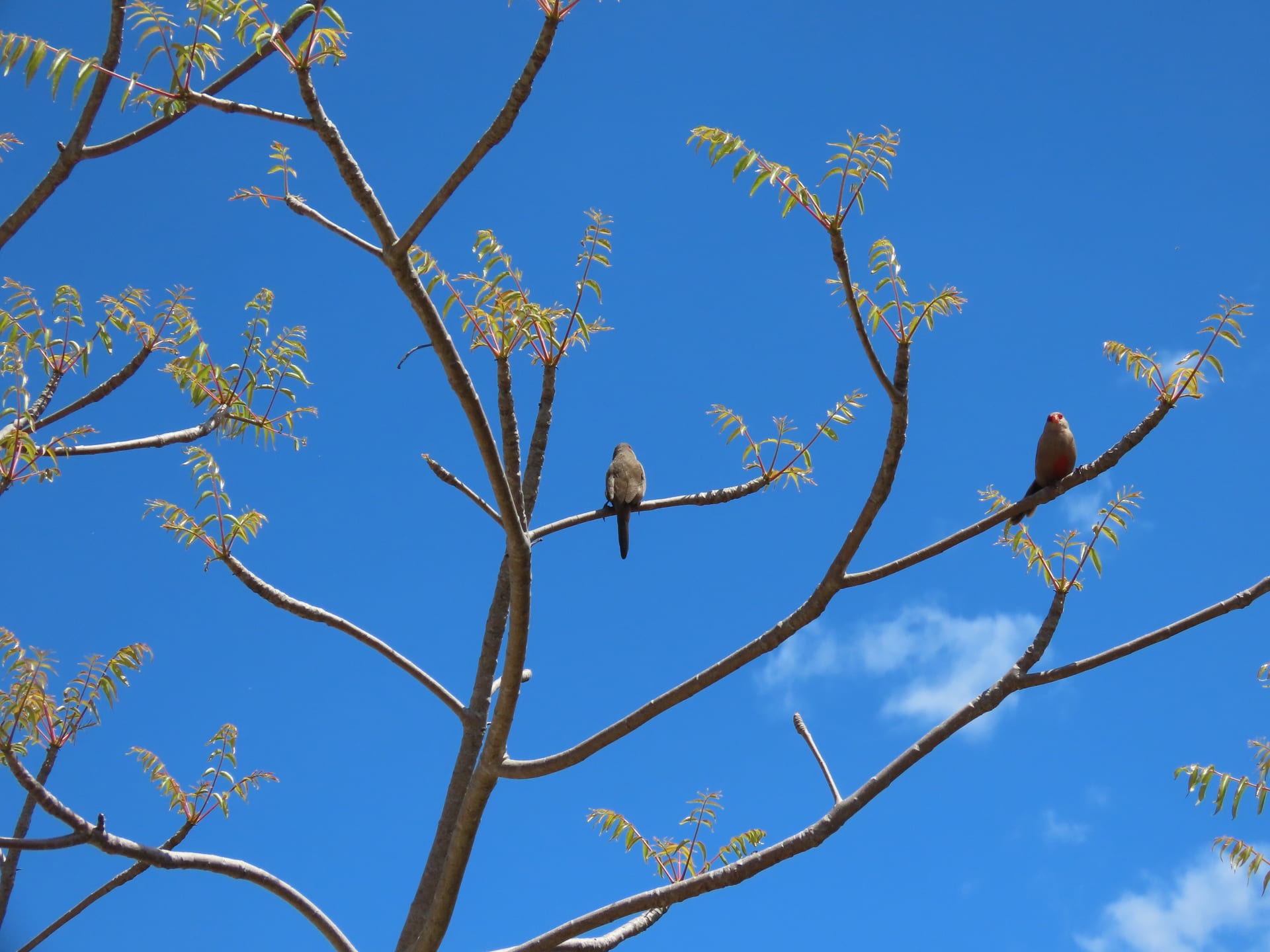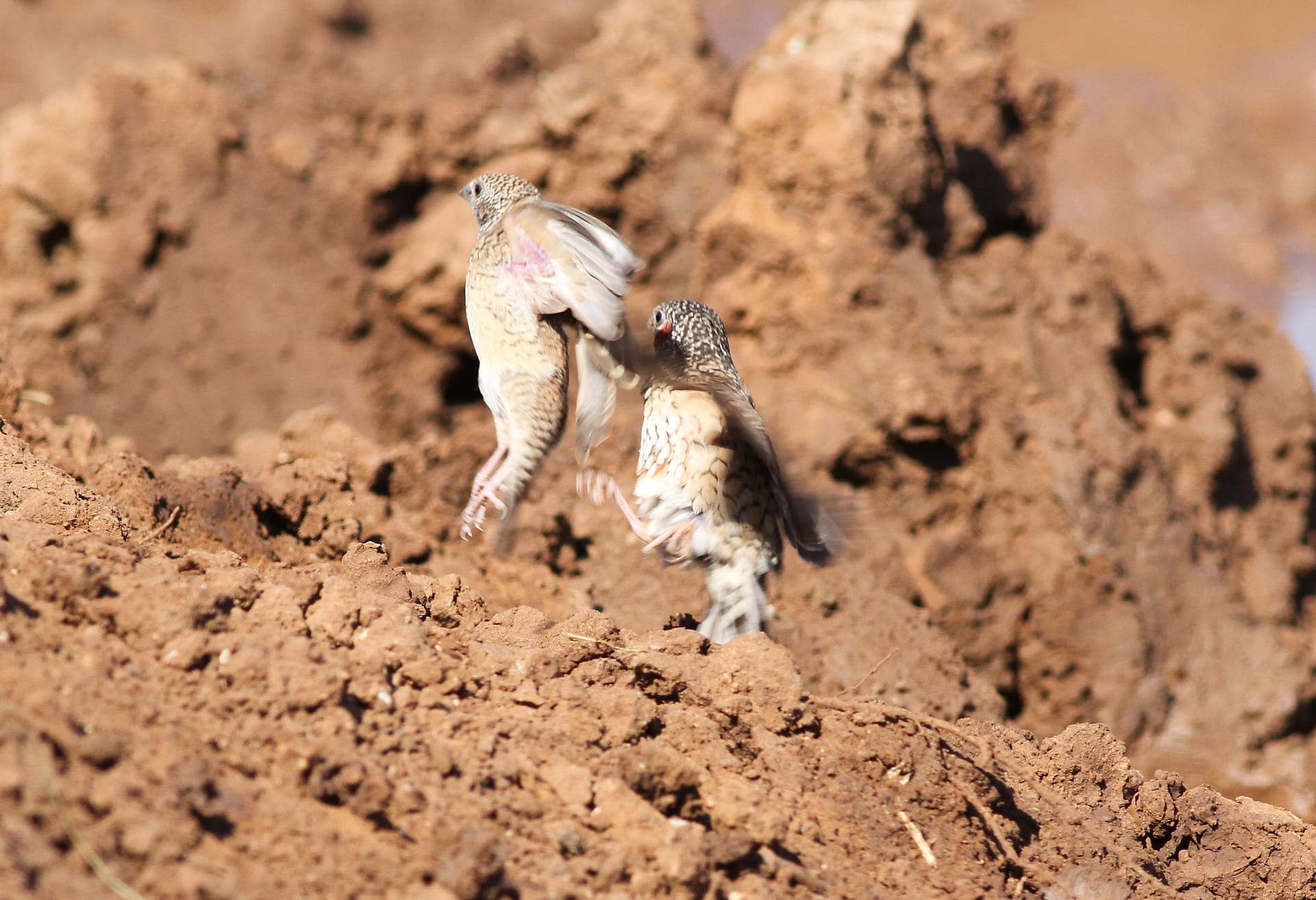
Source: Wikimedia Commons
Red-cheeked Cordon-bleu
IntermediateUraeginthus bengalus
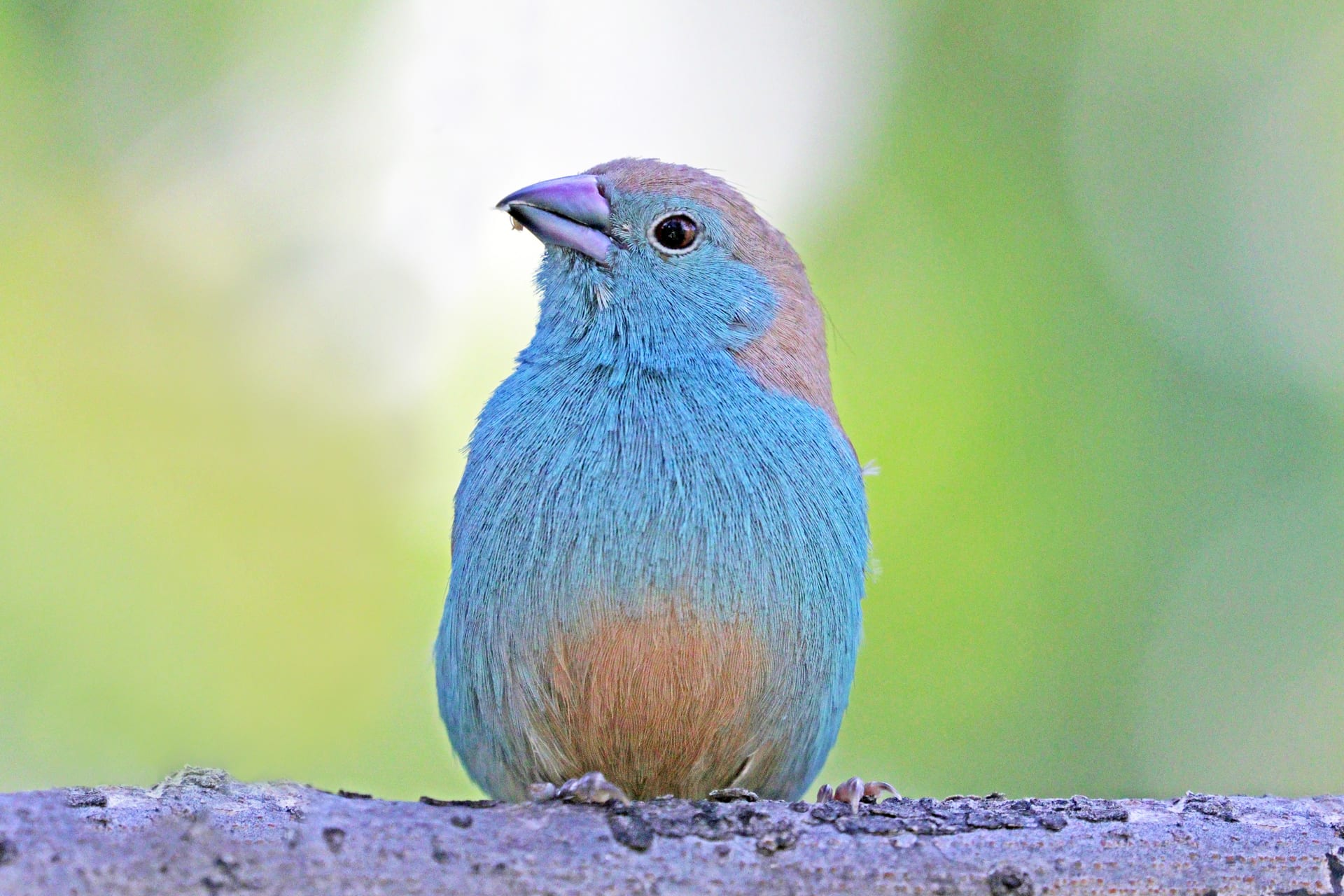
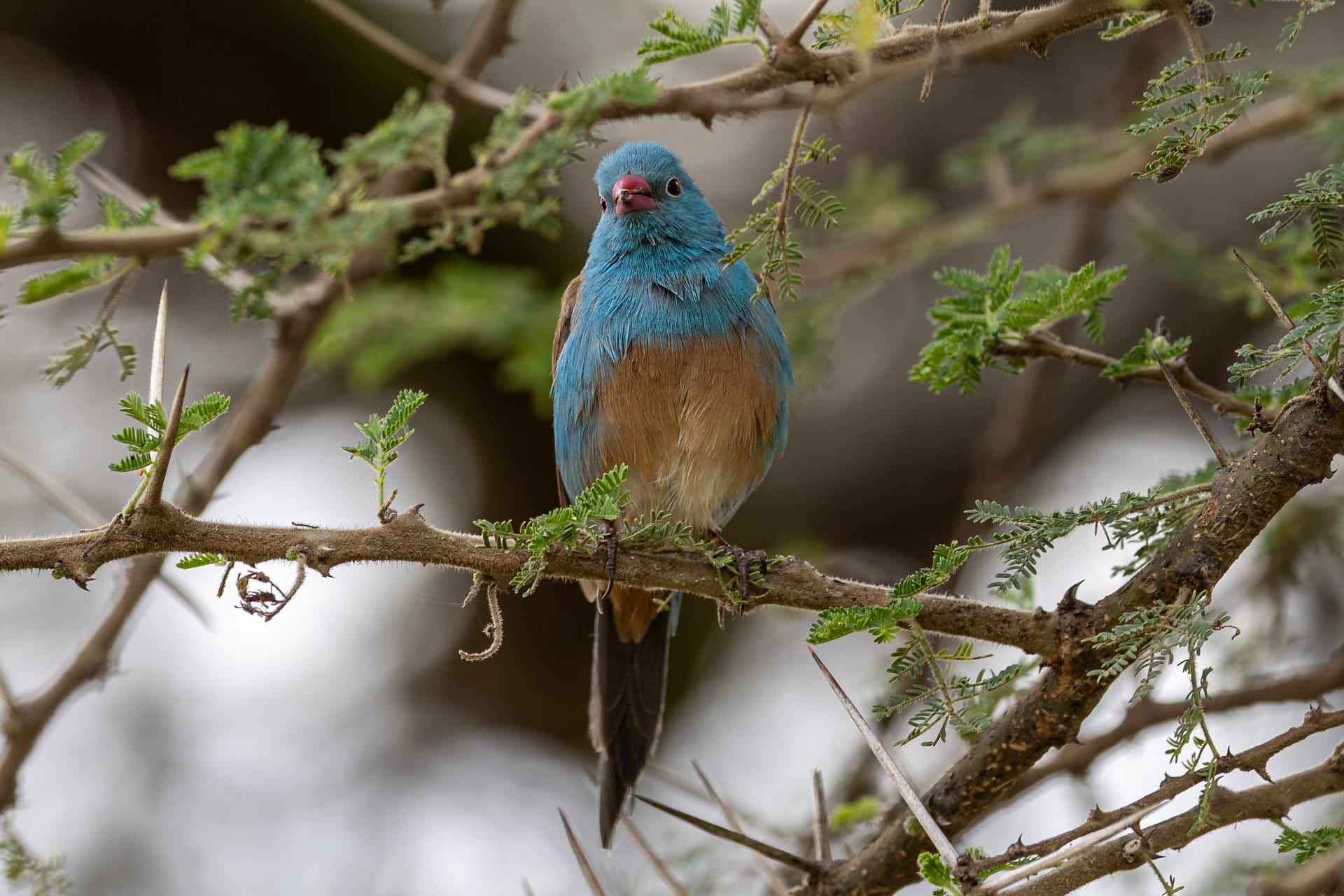
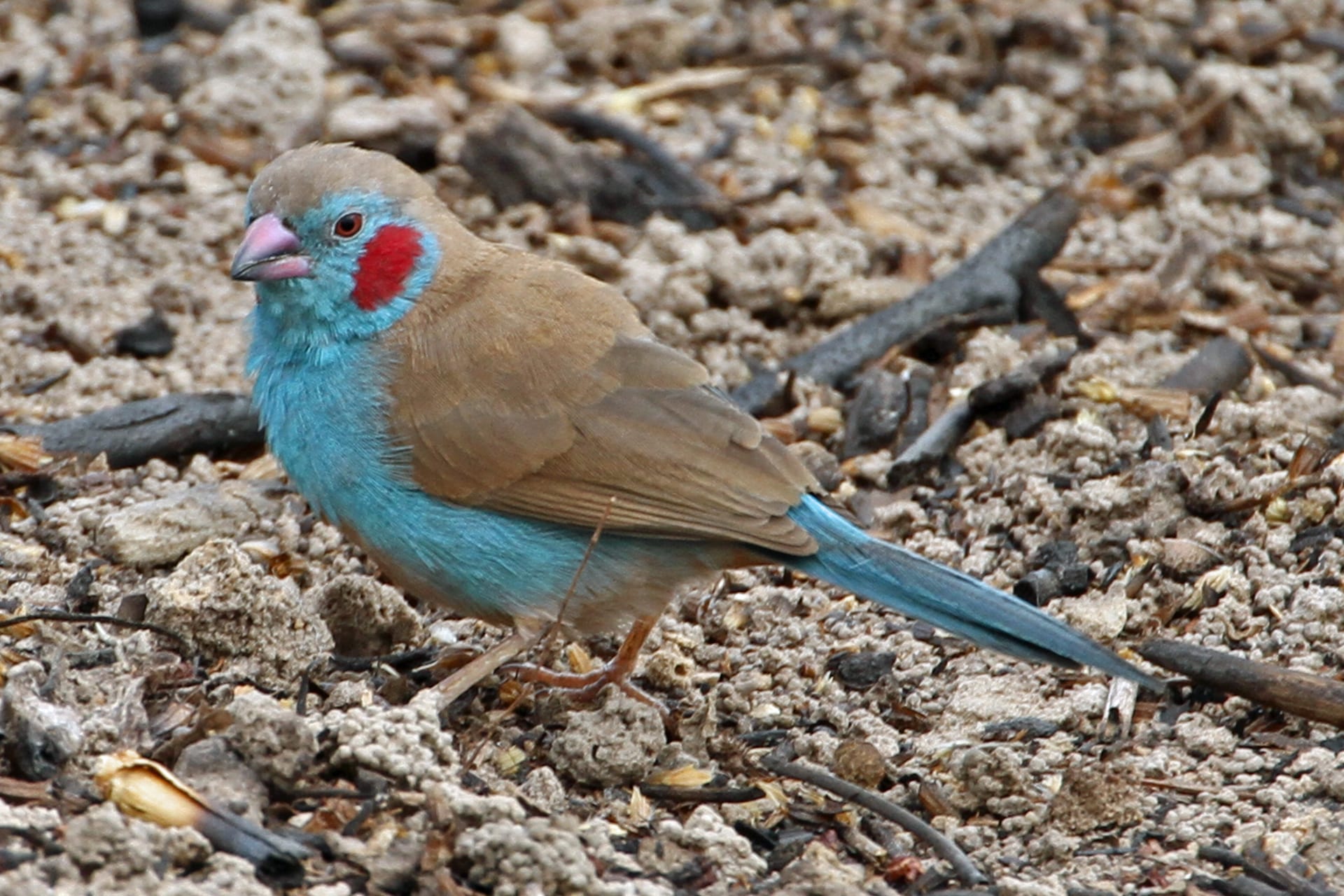
A small estrildid washed sky-blue from face through breast and rump to the long thin tail. The male has a bright red cheek patch that the female lacks. One of the most popular African finches.
Difficulty
Intermediate
Temperature
15〜30℃
Lifespan
5-7 years
Size
12.5-13cm
Humidity
40〜60%
Diet
Mixed seed, spray millet, greens, mealworms and small livefood when breeding
About
The red-cheeked cordon-bleu (Uraeginthus bengalus) is a small estrildid finch of drier tropical sub-Saharan Africa. It is 12.5-13 cm long and averages 9.9 g, with wild extremes of 8.9-11 g. The male is continuously sky-blue from face through breast, flanks and rump to the tip of the long thin pointed tail, with light brown wings and lower belly. A bright red cheek patch distinguishes him easily from the female, which lacks it. Four subspecies are recognised, differing chiefly in how much blue the female shows on face and underparts. The specific name bengalus reflects an early mistaken belief that the species came from Bengal. It forms a species group with the blue-capped cordon-bleu and the blue waxbill. In aviculture it is the most widely kept African estrildid, but imported birds cope poorly with the stress of transport and males in particular are easily lost.
Source: Wikipedia (CC BY-SA 4.0)
Lifespan of the Red-cheeked Cordon-bleu
The Red-cheeked Cordon-bleu lives 5-7 years.
Size of the Red-cheeked Cordon-bleu
The Red-cheeked Cordon-bleu grows to 12.5-13cm.
Basic Info
Origin
Drier regions of tropical sub-Saharan Africa (southern Mauritania to Ethiopia, Uganda, Kenya, Tanzania and Zambia)
Lifespan
5-7 years
Size
12.5-13cm
Temperature
Care Specifications
References & Sources
Edited & verified by: BreederDirect editorial team
The taxonomic, regulatory, and husbandry data on this page are compiled and verified against the authoritative primary sources below.
Taxonomy & Authority
Accepted name: Uraeginthus bengalus (Linnaeus, 1766)
Synonyms: Fringilla bengalus
Authority databases: GBIF
Nomenclature follows global taxonomic authority databases.
Regulations & Conservation Status
Not CITES-listedIUCN LC · Least Concern
Uraeginthus bengalus. The family Estrildidae is not listed in the CITES Appendices, so this species is not covered. The IUCN assesses it as Least Concern.
Sources: CITES Appendices (Estrildidae not listed) / IUCN Red List
Regulations may change. Always verify the latest information with the relevant authorities.
Red-cheeked Cordon-bleu Listings
Loading latest listingsFind listings for this species