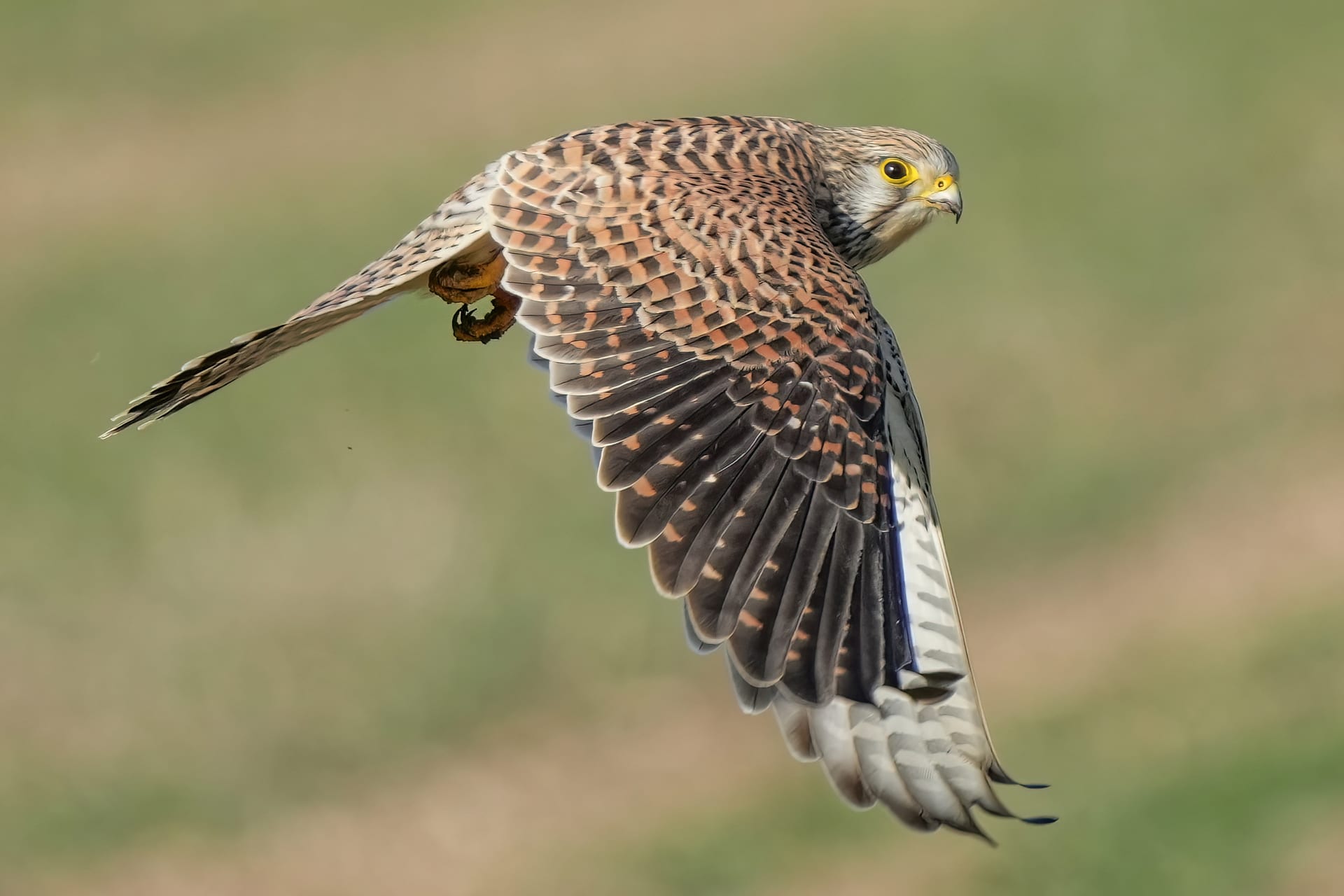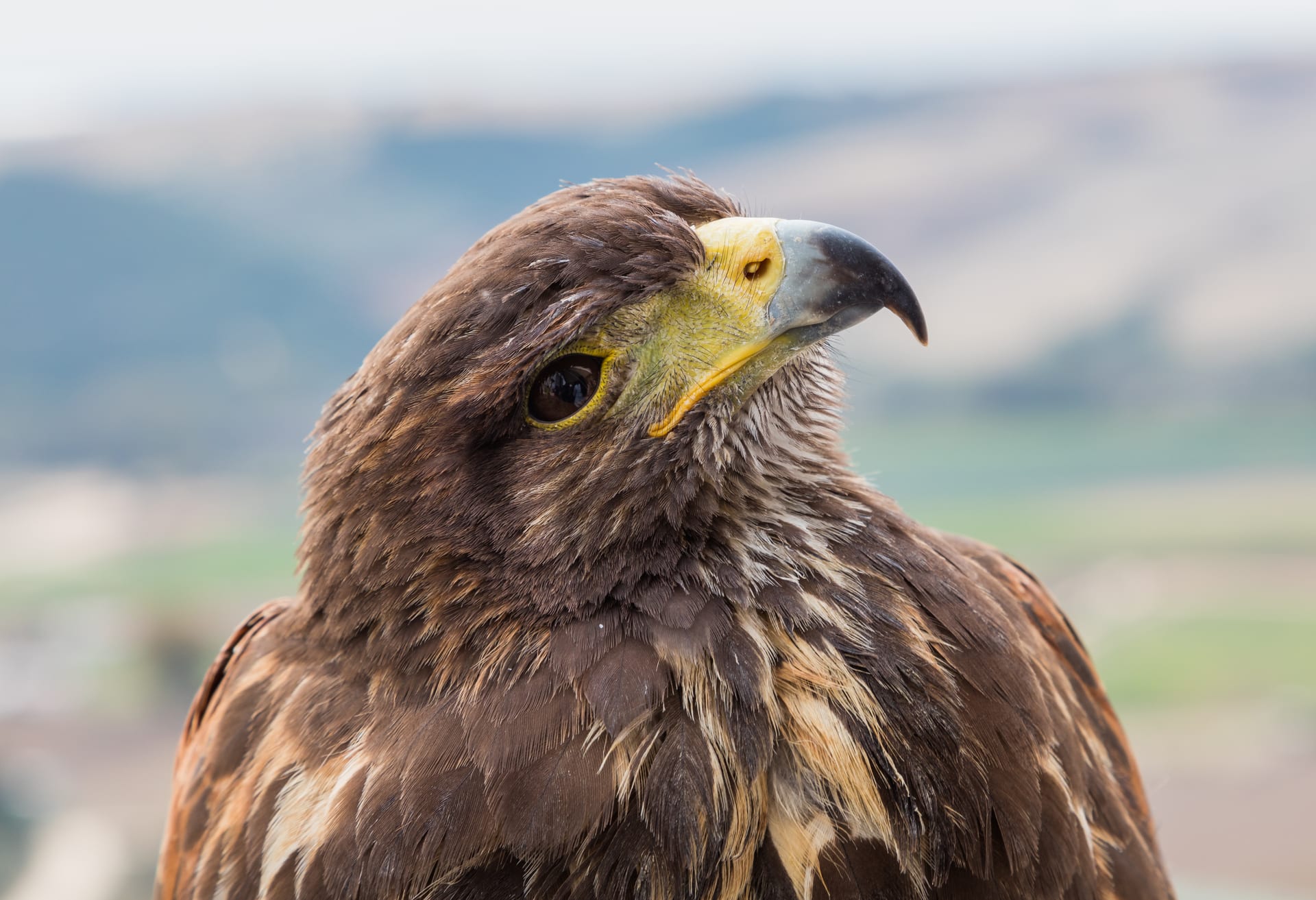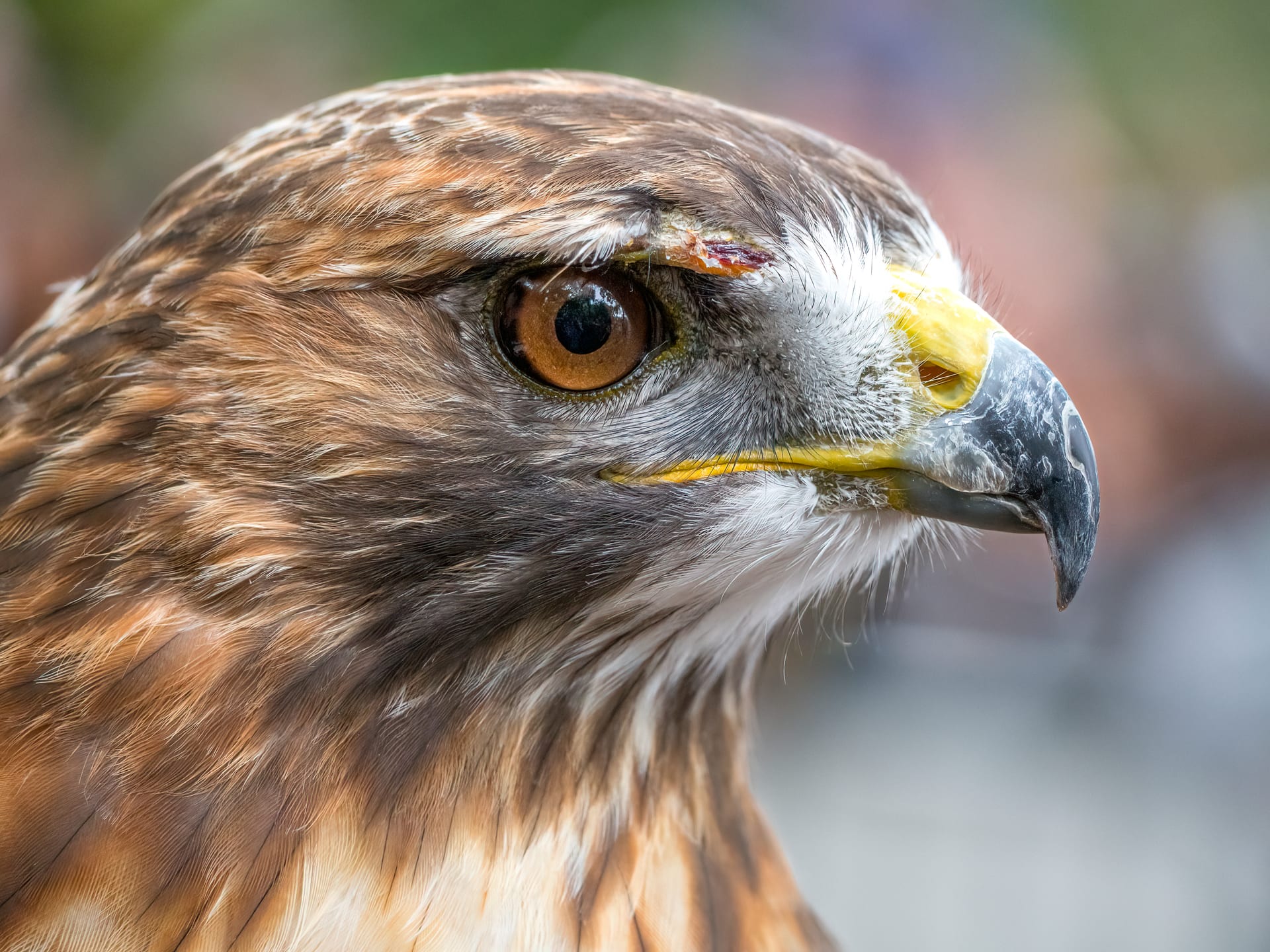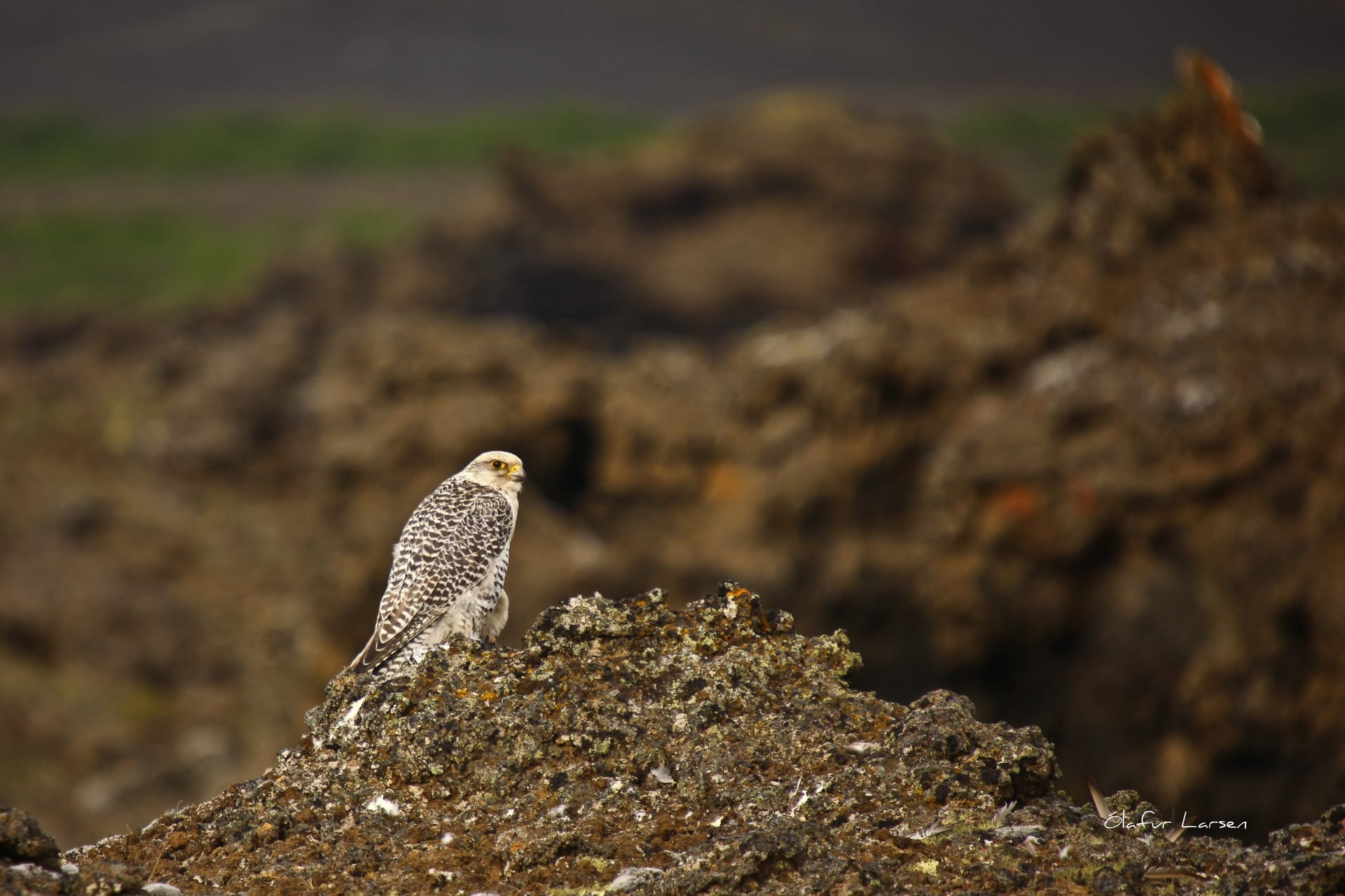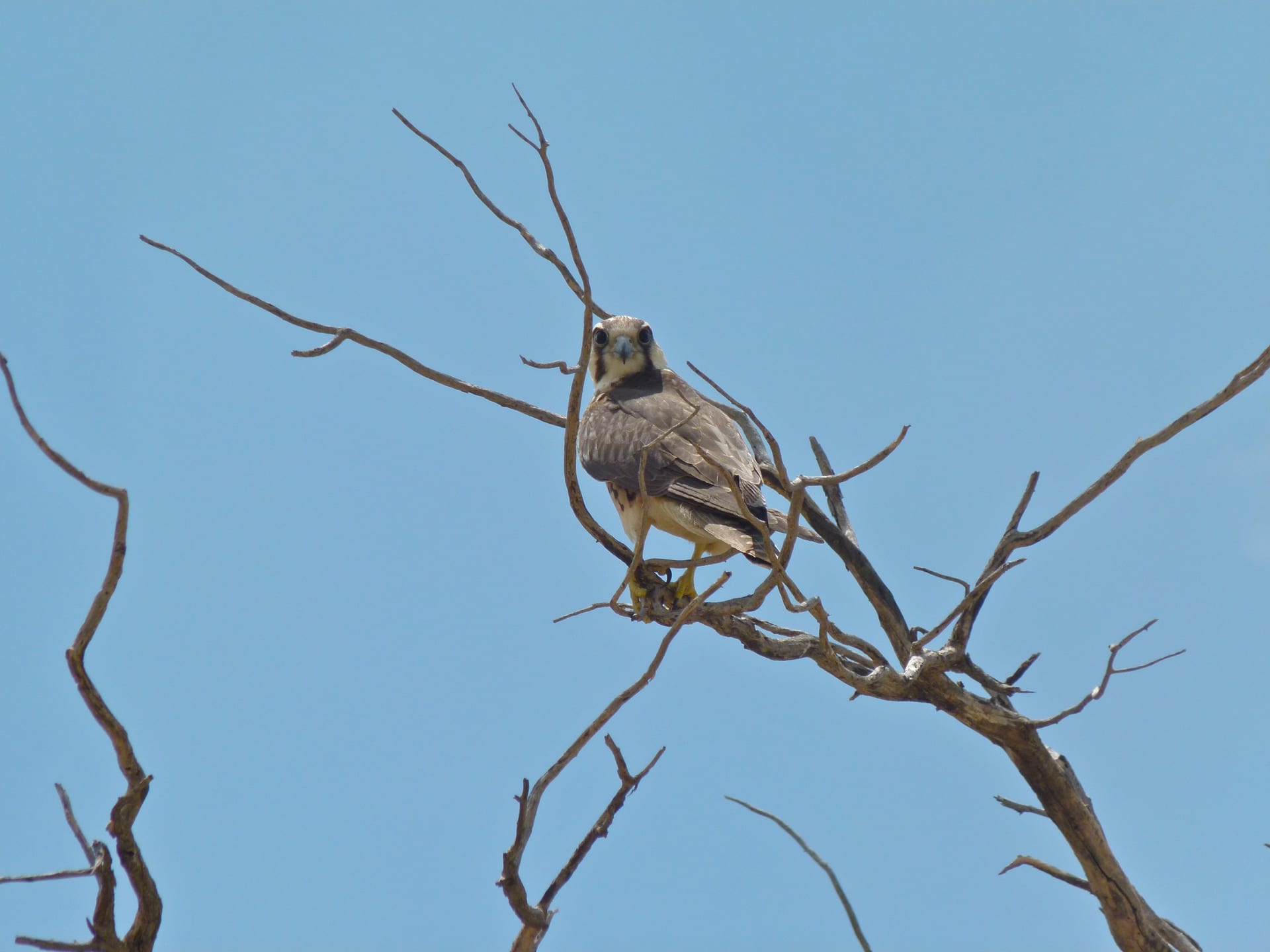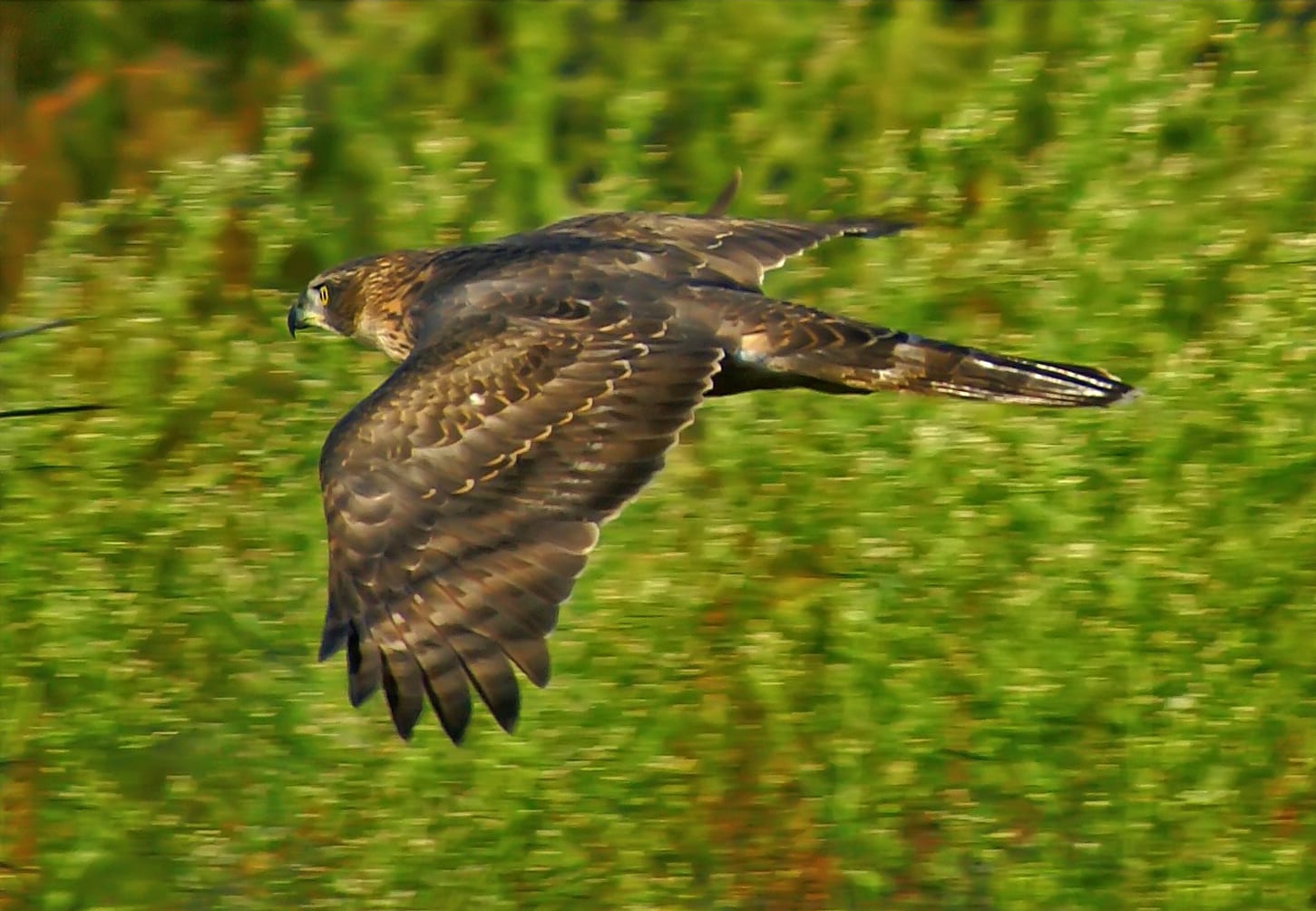
Source: Wikimedia Commons
Northern Goshawk
AdvancedAstur gentilis
A medium-large raptor, slate-grey above with finely barred underparts, and the classic bird of Japanese falconry. In Japan only captive-bred and imported birds are traded; taking wild birds is not permitted. Short wings and a long tail suit it to flying inside forest.
Difficulty
Advanced
Temperature
15〜30℃
Lifespan
20-25 years
Size
Males about 50cm, females about 56.5cm (wingspan about 100-130cm; weights vary by region, averaging 865g in males and 1,414g in females in central Fennoscandia, with medians of 690g and 1,050g in Spain)
Humidity
40〜60%
Diet
Frozen raptor food such as quail, day-old chicks and mice; in the wild birds and small to medium mammals
About
The Eurasian goshawk (Astur gentilis) is a medium-large accipitrid of temperate Eurasia. It was formerly placed in Accipiter, but that genus proved paraphyletic and was split, moving this species to Astur. Males are about 50 cm long and females about 56.5 cm, with a wingspan of roughly 100-130 cm - slightly smaller than a black kite and about crow-sized, but longer-tailed. In the scientific name astur means hawk and gentilis noble, because in medieval Europe only the nobility were permitted to fly goshawks. In Japan, falconry with goshawks taking cranes and pheasants larger than the hawk itself developed from the sixteenth century and flourished in the mid-Edo period. Japanese numbers collapsed with habitat development, a 1984 survey finding only about 400 birds, but protection as a nationally endangered species from 1993 brought recovery, with about 5,800 birds recorded around the Kanto region alone by 2008. The designation was lifted on 21 September 2017, yet capture, trade, import and export remain restricted under the wildlife protection law except for purposes such as academic research.
Source: Wikipedia (CC BY-SA 4.0)
Lifespan of the Northern Goshawk
The Northern Goshawk lives 20-25 years.
Size of the Northern Goshawk
The Northern Goshawk grows to Males about 50cm, females about 56.5cm (wingspan about 100-130cm; weights vary by region, averaging 865g in males and 1,414g in females in central Fennoscandia, with medians of 690g and 1,050g in Spain).
Weight varies regionally: in central Fennoscandia males average 865 g and females 1,414 g, while in Spain the medians are 690 g and 1,050 g.
Basic Info
Origin
Widespread across temperate Eurasia; in Japan it breeds nationwide
Care Specifications
AggressiveSolitary
Sources: Wikipedia - Eurasian goshawk / Wikipedia - Eurasian goshawk, Japanese edition (morphology, population, falconry)
References & Sources
Edited & verified by: BreederDirect editorial team
The taxonomic, regulatory, and husbandry data on this page are compiled and verified against the authoritative primary sources below.
Primary sources
- Wikipedia
- CITES Appendices (Appendix II)
- IUCN Red List
- Cabinet Order under the Act on Welfare and Management of Animals, appended table (designated dangerous animals)
- Wildlife Protection, Control and Hunting Management Act (Ministry of the Environment, Japan)
- Wikipedia - Eurasian goshawk, Japanese edition (morphology, population, falconry)
- GBIF
Taxonomy & Authority
Accepted name: Astur gentilis (Linnaeus, 1758)
Synonyms: Accipiter gentilis, Falco gentilis
Authority databases: GBIF
Nomenclature follows global taxonomic authority databases.
Regulations & Conservation Status
CITES Appendix IIIUCN LC · Least Concern
Domestic law: Listed as a nationally endangered species in 1993, the designation was lifted on 21 September 2017 as numbers recovered. Capture, trade, import and export nonetheless remain restricted under the wildlife protection law except for purposes such as academic research, and only captive-bred birds, domestic or imported, are traded.
Astur gentilis, formerly Accipiter gentilis. Covered by the order-level listing of Accipitriformes in CITES Appendix II, so international trade requires an export permit. It is not among Japan's designated dangerous animals, and the Japanese Red List assesses it as Near Threatened.
Sources: CITES Appendices (Appendix II) / IUCN Red List / Cabinet Order under the Act on Welfare and Management of Animals, appended table (designated dangerous animals) / Wildlife Protection, Control and Hunting Management Act (Ministry of the Environment, Japan)
Regulations may change. Always verify the latest information with the relevant authorities.
Northern Goshawk Listings
Loading latest listingsFind listings for this species