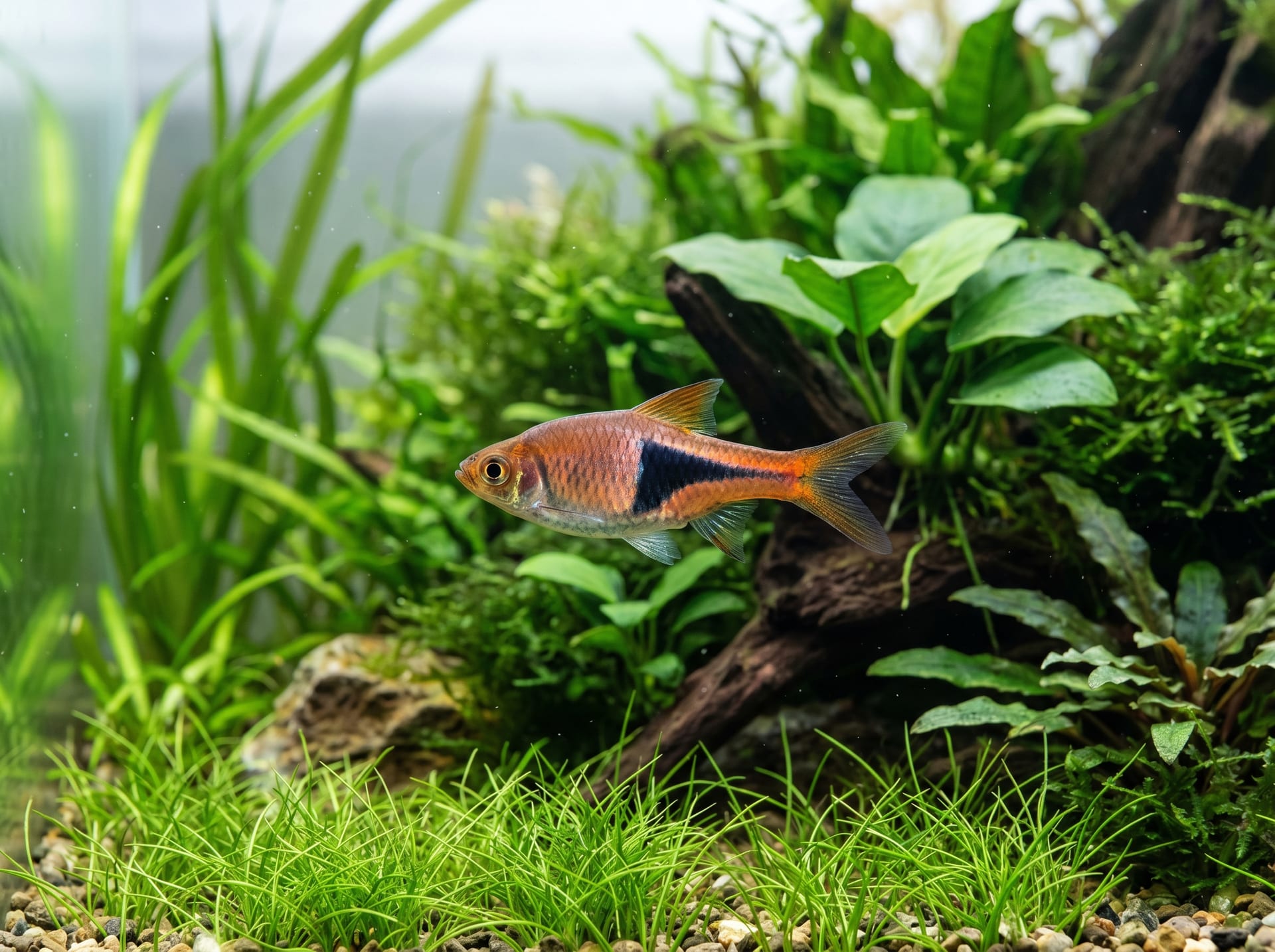
Driftwood and Tannin Guide | From Removing Impurities to Water Quality Adjustment
Explains how to use driftwood in tropical fish tanks. Introduces the steps for removing impurities, the effects of tannins on water quality, layout tips, and how to cultivate aquatic plants that attach to driftwood.
Key Takeaways
Explains how to use driftwood in tropical fish tanks. Introduces the steps for removing impurities, the effects of tannins on water quality, layout tips, and how to cultivate aquatic plants that attach to driftwood.
Related Species
Driftwood is an essential natural material for aquarium layouts and at the same time a functional material that influences water quality through the release of tannins. Properly treated and positioned driftwood creates a natural atmosphere in the tank, provides hiding places for fish, and serves as a substrate for aquatic plants to attach. However, incorrect selection or treatment of driftwood can cause problems such as water discoloration and sudden changes in water quality. This article provides comprehensive guidance from selecting types of driftwood to removing impurities, layout, and utilizing tannins.
Types of Driftwood and How to Choose
There are several types of driftwood that can be used in aquariums.
Type
Characteristics
Malaysian Driftwood
The most common and easy to obtain at reasonable prices. Many pieces have complex shapes, allowing high freedom in layout, but sufficient removal of impurities is necessary because they release large amounts of tannins
Branch Wood (Branching Driftwood)
Characterized by thin branches intricately tangled together, suitable for delicate layouts. The drawback is that it is light and does not sink easily, but it will sink after several weeks of being submerged in water
ADA Driftwood (Horn Wood, Old Black Wood, etc.)
Driftwood quality-controlled by a specialist manufacturer, with beautiful shapes and relatively easy removal of impurities
Spider Wood
Characterized by a shape resembling spider legs, popularity has been rapidly increasing in recent years. Initial mold growth is common, but it stands out as an accent in planted tanks
✍️
BreederDirect Editorial
The BreederDirect editorial team specializes in care information for animals, covering veterinary care and breeding to deliver beginner-friendly guides.
Find Tropical Fish on BreederDirect
Buy directly from verified breeders
Browse Related Listings
Find Tropical Fish listings related to this article on BreederDirect. Buy directly from verified breeders.
Key points in selecting driftwood are balance with tank size, the completed layout image, and safety. Driftwood collected from nature has a risk of contamination from resin and pesticides, so it is safer to purchase from a trusted shop.
Methods and Steps for Removing Impurities
Tannins and humic acids that leach from driftwood stain water tea-brown, which is called impurity. Whether to completely remove the impurity or intentionally leave it depends on the keeper's preference and the type of fish being raised, but first let us understand the methods for removing impurities.
Method
Details
Soaking Method
Submerge driftwood in a large bucket and change the water every time it turns brown. The duration is typically 1 to 4 weeks, continuing until the water no longer discolors
Boiling Method
Place driftwood in a large pot and bring to a boil, simmering for 30 minutes to 1 hour. The cooking liquid will turn dark brown so discard it and repeat boiling in fresh water 2 to 3 times. Since it also has a sterilizing effect, it can reduce the risk of parasites and harmful bacteria. Large driftwood may not fit in a household pot, in which case pouring hot water is used as an alternative
Activated Carbon
By placing it in a filter, it adsorbs and removes tannins that have leached into the water. Since activated carbon's adsorption capacity decreases after 2 to 3 weeks, it should be replaced regularly
Tannins (humic acid and fulvic acid) that are removed during impurity removal appear to be a nuisance that dirties water, but they actually have many beneficial effects.
They have antibacterial and antifungal properties, and it has been reported that they suppress the occurrence of ich and cotton wool disease
They have the effect of gradually lowering pH, making them suitable for raising fish such as tetras, rasboras, and bettas that prefer slightly acidic water
It is also said that they reduce fish stress and improve the coloration of their body color
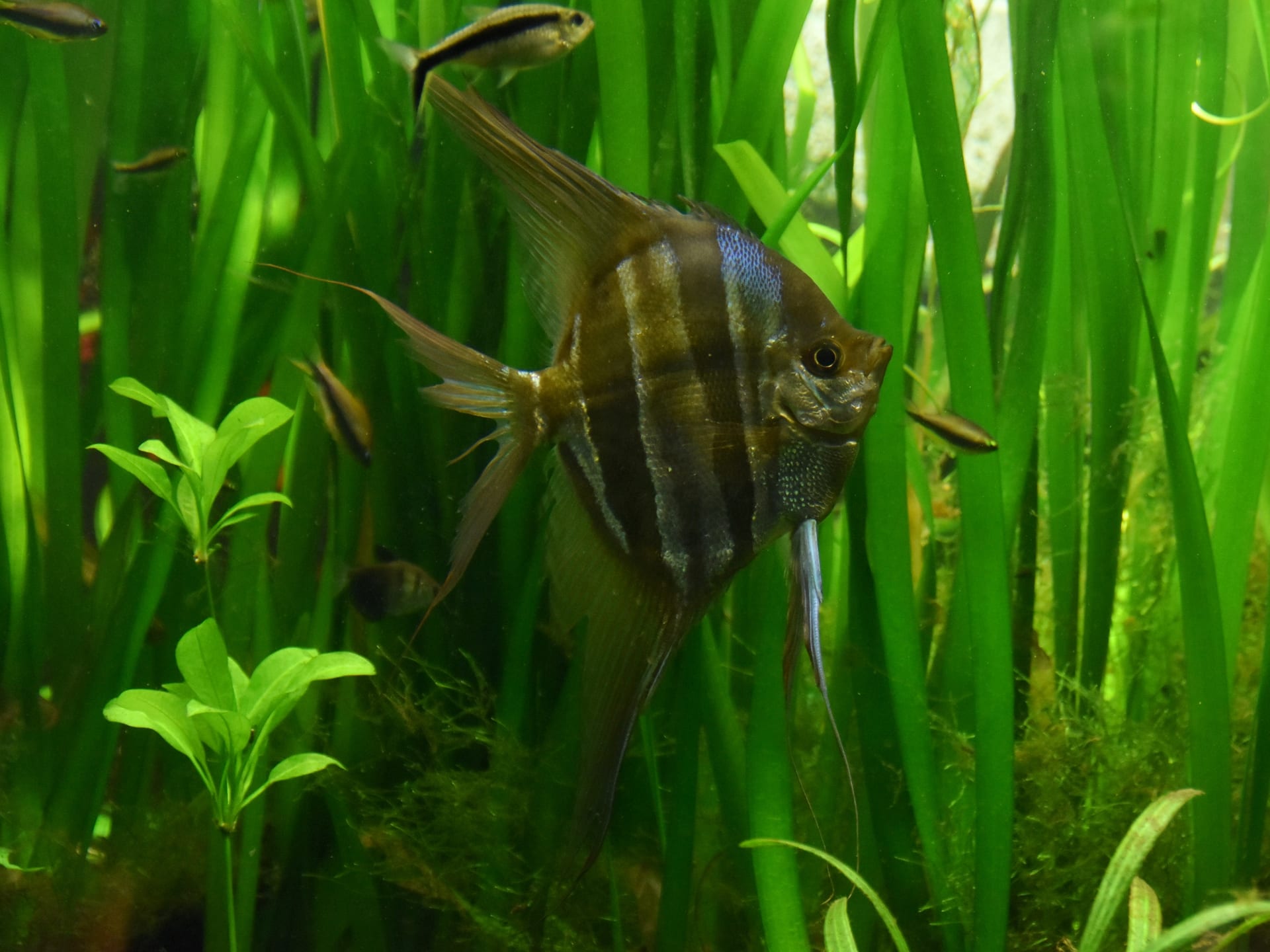
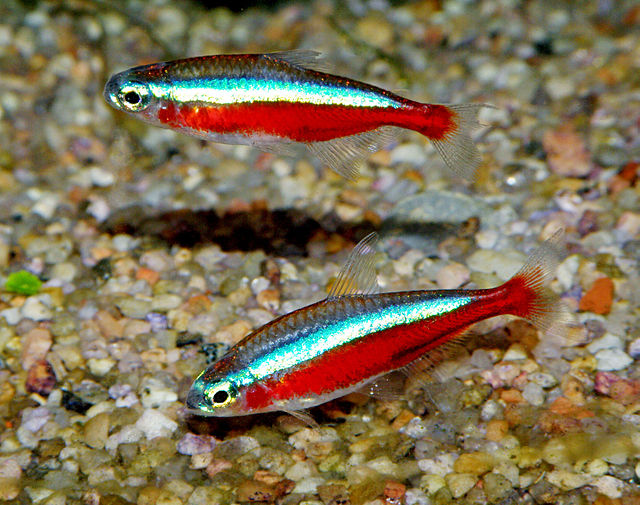
In tributaries of the Amazon River and Indonesian peatlands, black water stained tea-brown by tannins leached from fallen leaves and decaying wood spreads widely, and this is the original habitat of many tropical fish. A black water tank is a rearing style that reproduces natural black water by intentionally leaving the impurities from driftwood and adding magic leaves and alder cone fruits. Species such as cardinal tetras and altum angels display their true beauty most in black water environments.
How to Attach Aquatic Plants to Driftwood
What brings out the attraction of driftwood further is the attachment of aquatic plants. Representative aquatic plants that attach to driftwood are willow moss, Anubias nana, Microsorum (fern type), and Bucephalandra.
Willow moss: Wrap around driftwood with cotton thread or nylon thread and it will attach within 2 to 4 weeks. The trick is to spread it thinly and evenly; if layered too thickly, light inside will be blocked and it will die. Recently, a method of instantly attaching it with aquarium-specific adhesive (cyanoacrylate-based) has also become common
Anubias nana, Microsorum (fern type): Fix the rhizome to driftwood with nylon thread, and within 3 to 6 weeks the roots will entwine with the driftwood and naturally attach. The key point is to place the rhizome in contact with the driftwood surface without burying it, as burying it will cause it to rot
Bucephalandra: A recently popular attached aquatic plant that attaches beautifully to driftwood and stone and can even flower underwater
The advantage of attached aquatic plants is that they do not need to be planted in substrate, allowing for high freedom in layout and not getting in the way when cleaning the substrate. Before attaching newly purchased aquatic plants to driftwood, preprocessing according to Complete Guide to Pesticide Removal from Aquatic Plants will prevent pesticide damage to shrimp and fry.
Tips for Driftwood Layout and Maintenance
Here are tips for creating beautiful aquascapes using driftwood. The basic rule is triangular composition, creating a landscape with depth and movement by making one side of the tank high and the opposite side low. When combining multiple pieces of driftwood, using the same type of driftwood creates unity. Try positioning the driftwood multiple times before adding water and fix it after finding the ideal composition. If driftwood floats, there are the following methods.
Place stones as weights
Fix it to the bottom plate with suction cup-equipped stainless steel screws
Not only the driftwood itself, but also by referring to Complete Guide to Choosing Substrate and Bedding for Tropical Fish Tanks and devising the combination of colors and textures with substrate, the overall completion of the layout improves. For maintenance, a white mold-like film sometimes forms on the surface of driftwood. This is biofilm (a collective of bacteria) and is commonly seen in the early stages of tank establishment. Fish and shrimp often eat it, and it usually disappears naturally within a few weeks. If it bothers you, it can be removed by gently scrubbing with a toothbrush. Over the long term, driftwood gradually decays and softens, but complete decomposition takes several years to over a decade, so it is not a problem during normal keeping periods.
Choose Fish That Match Your Driftwood Layout at BreederDirect
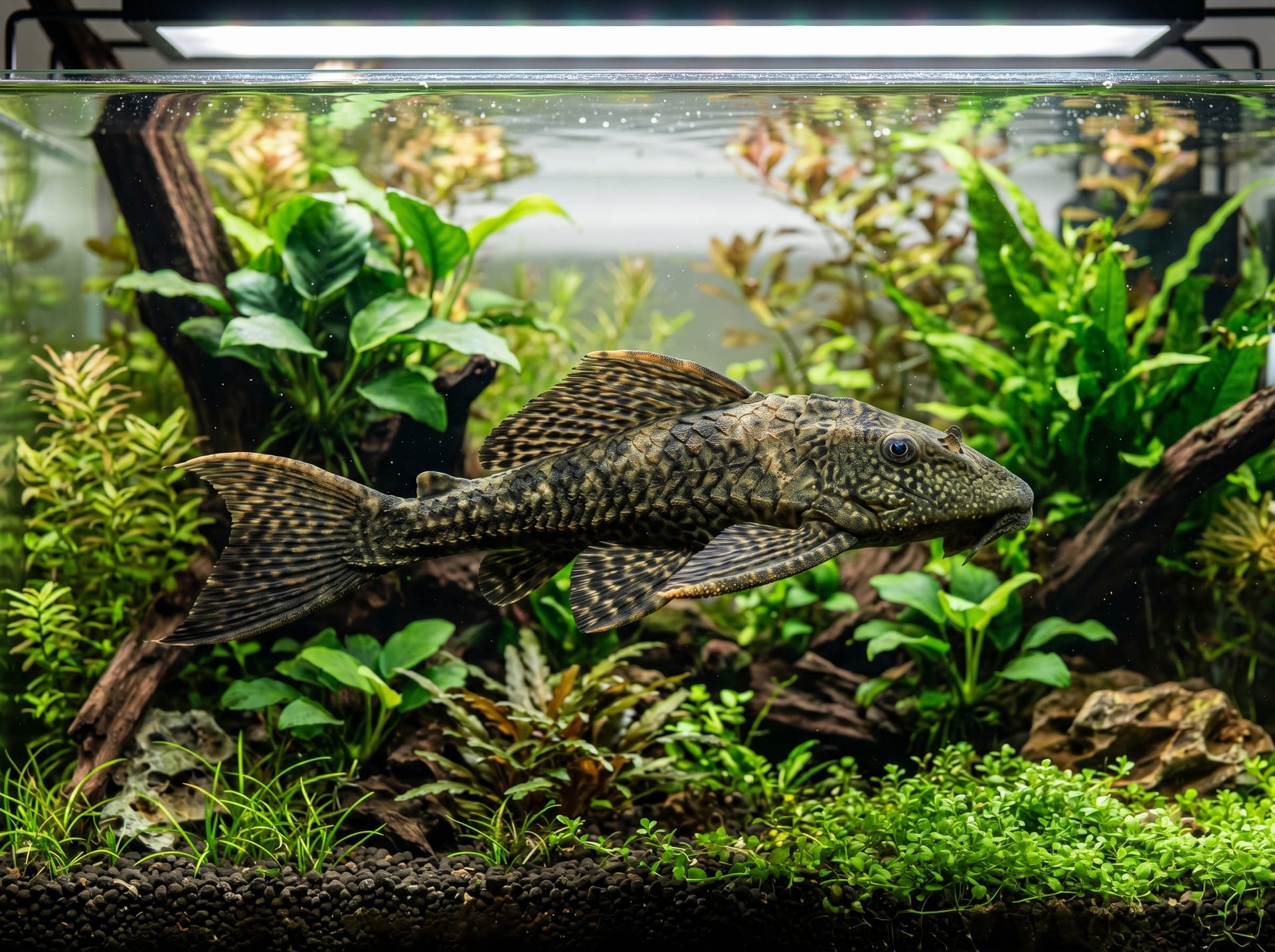
Tanks that make use of driftwood are suited to fish full of natural feeling. At BreederDirect, you can purchase directly from breeders fish that stand out in driftwood layouts, such as tetras and wild bettas that prefer black water environments, and plecos that hide in the gaps of driftwood. You can also consult on choosing fish to match the atmosphere of your layout, so please use it for creating your ideal aquarium.