Guide to compatible fish and plant combinations in planted tanks, identifying plant-safe fish and recommended pairing patterns.
Key Takeaways
Guide to compatible fish and plant combinations in planted tanks, identifying plant-safe fish and recommended pairing patterns.
Aquarium tanks combining aquatic plants and tropical fish represent the true essence of aquascaping. Small schools of colorful tropical fish swimming through lush green aquatic plants create a miniature paradise that captures the beauty of nature. However, not all tropical fish are suitable for planted aquariums. Some species eat aquatic plants, uproot them, dig up the substrate—these fish can destroy a carefully designed aquatic landscape.
Fish appropriate for planted aquarium layouts share several common traits:
Here are some specific combination patterns.
Characin and Stem Plant Layout
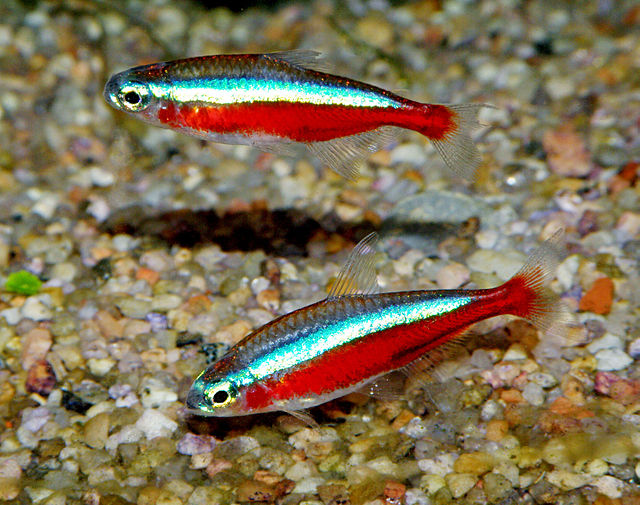
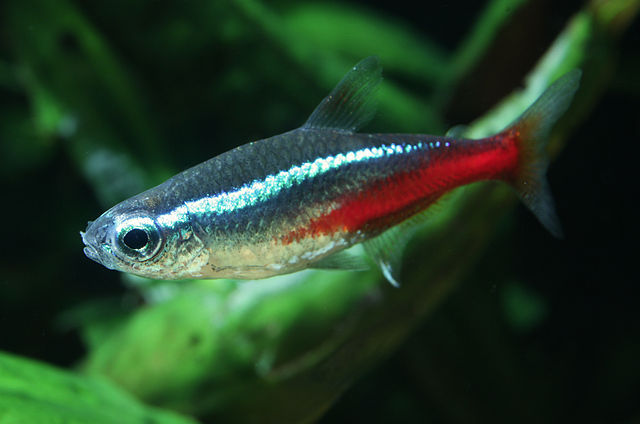
Small characins such as neon tetras, cardinal tetras, and rummy-nose tetras are the classic choice for planted aquariums. Their schooling behavior creates beautiful contrast against the green aquatic plants. Plant stem plants like rotala rotundifolia, ludwigia, and green rotala densely in the background, cryptocorynes in the middle ground, and foreground plants like glossostigma or cuba pearl grass in the front to create a layout with depth.
Rasbora and Shade-Loving Plant Layout
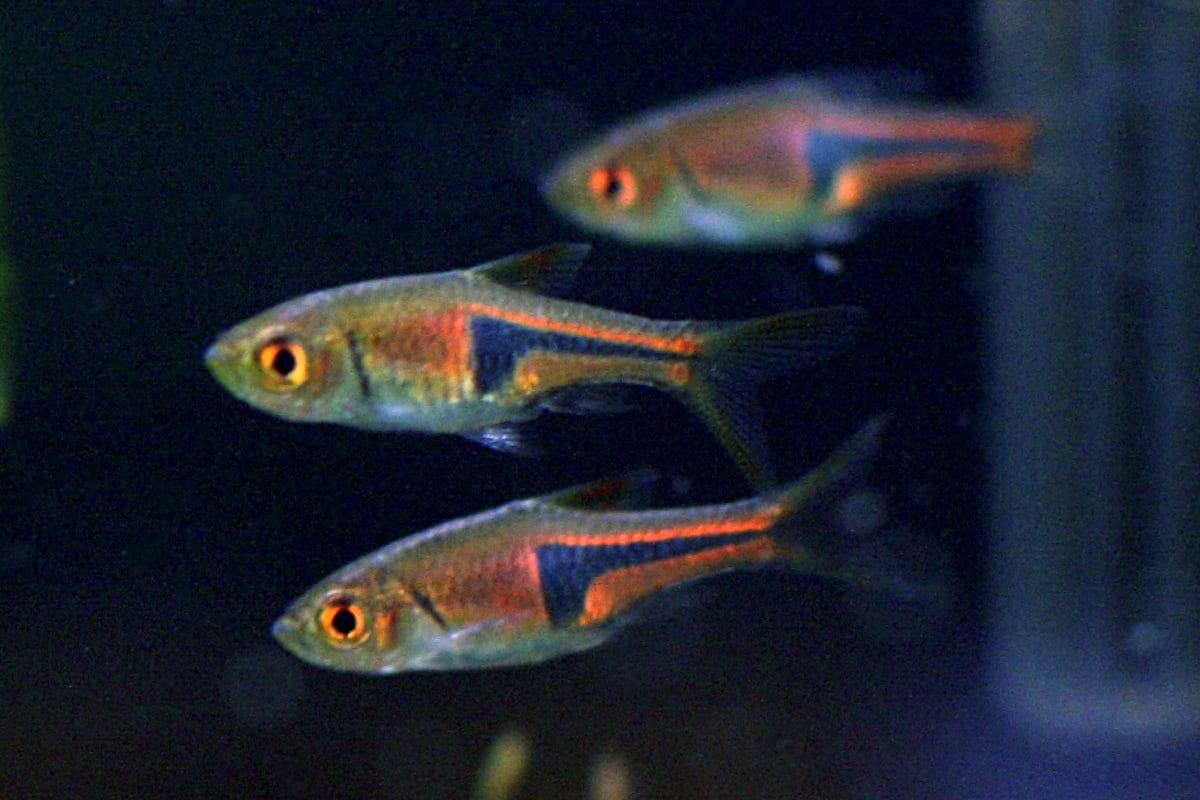
Rasbora heteromorpha and rasbora espei have peaceful temperaments and pair exceptionally well with aquatic plants. When combined with shade-loving plants such as anubias nana, microsorum, and bolbitis, you can maintain an aquarium without CO2 supplementation. Attach anubias and microsorum to driftwood to create a natural atmosphere.
Corydoras and Foreground Plant Layout
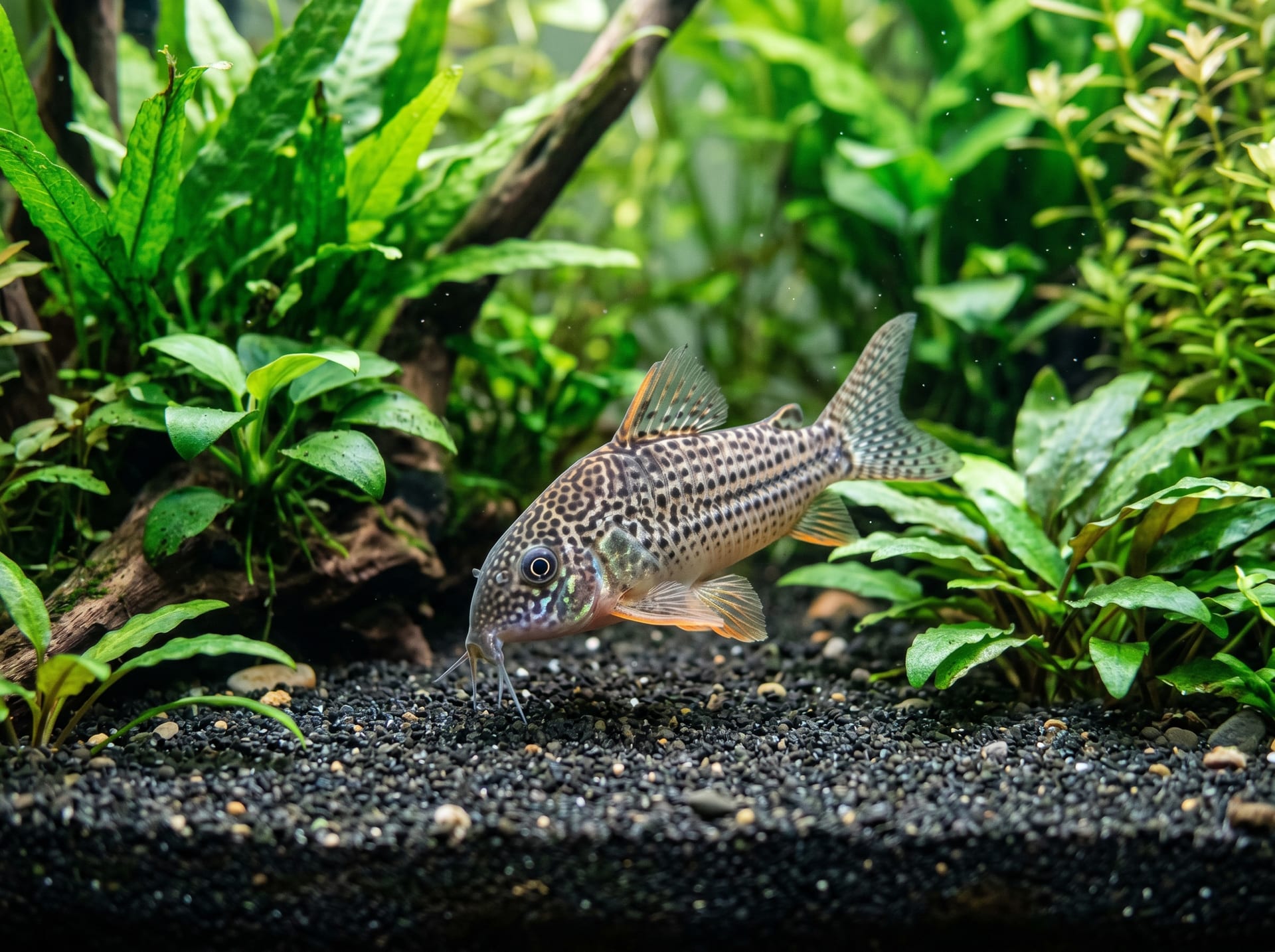
Corydoras such as corydoras panda and corydoras sterbai inhabit the bottom layer, allowing them to coexist with mid- and upper-level fish. However, they have a habit of digging in the sand, so it's important to introduce them after foreground plants are well-established. Using fine-grained sand (such as aquarium soil or bottom sand) prevents damage to the corydoras' barbels and promotes good root growth for the plants.
Betta and Bucephalandra Layout
Bettas are typically kept singly, but they pair well with planted aquariums. To match the betta's preference for calm water flow, design layouts with low-light plants like bucephalandra and cryptocoryne. Placing large-leaved plants in the middle layer gives bettas a place to rest, and you may see the charming sight of a betta resting on a leaf.
You should also know which fish to avoid in planted aquariums.
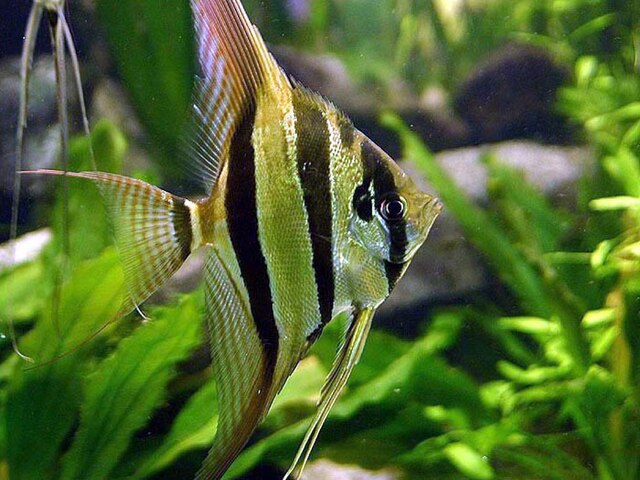
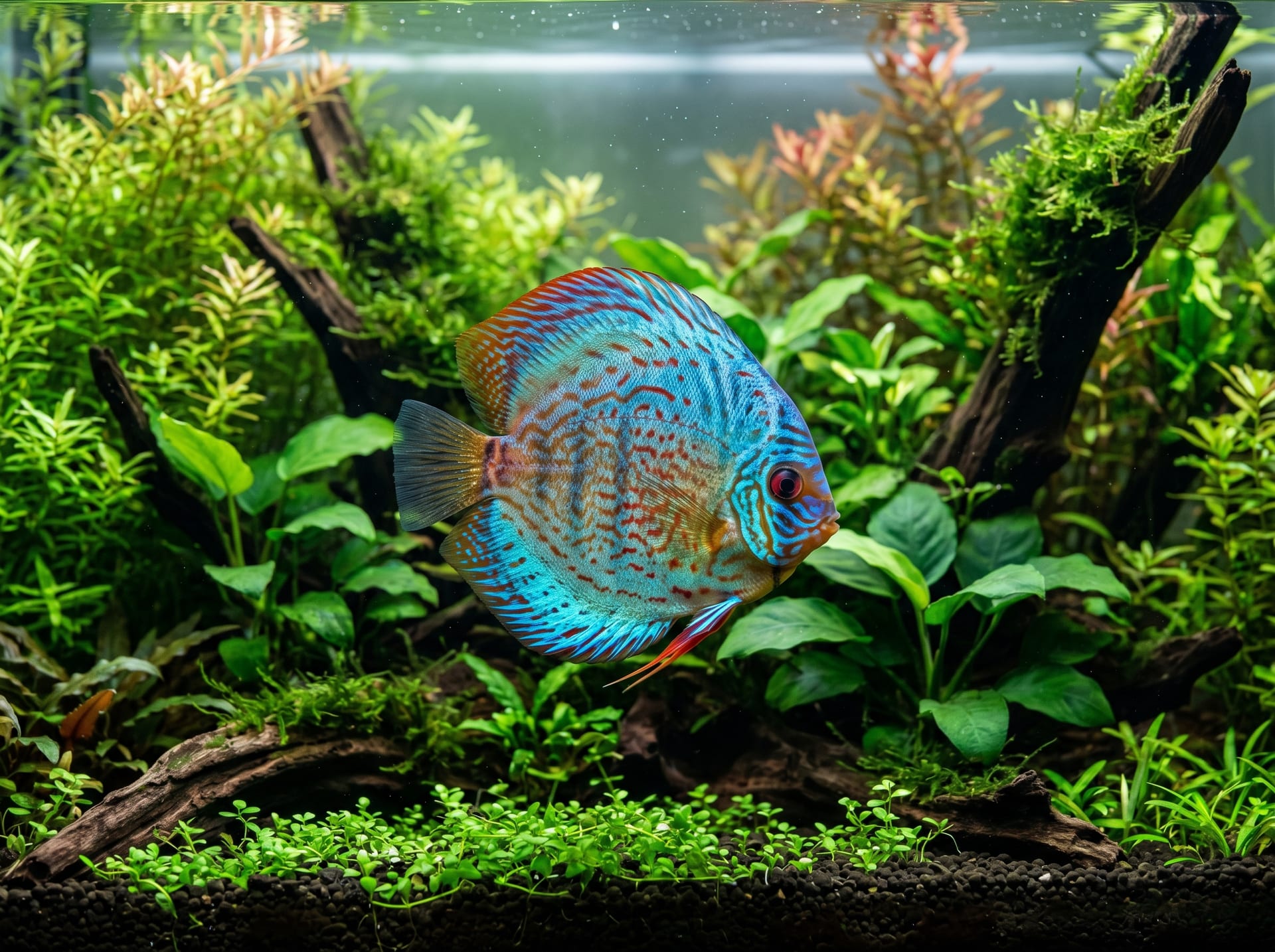
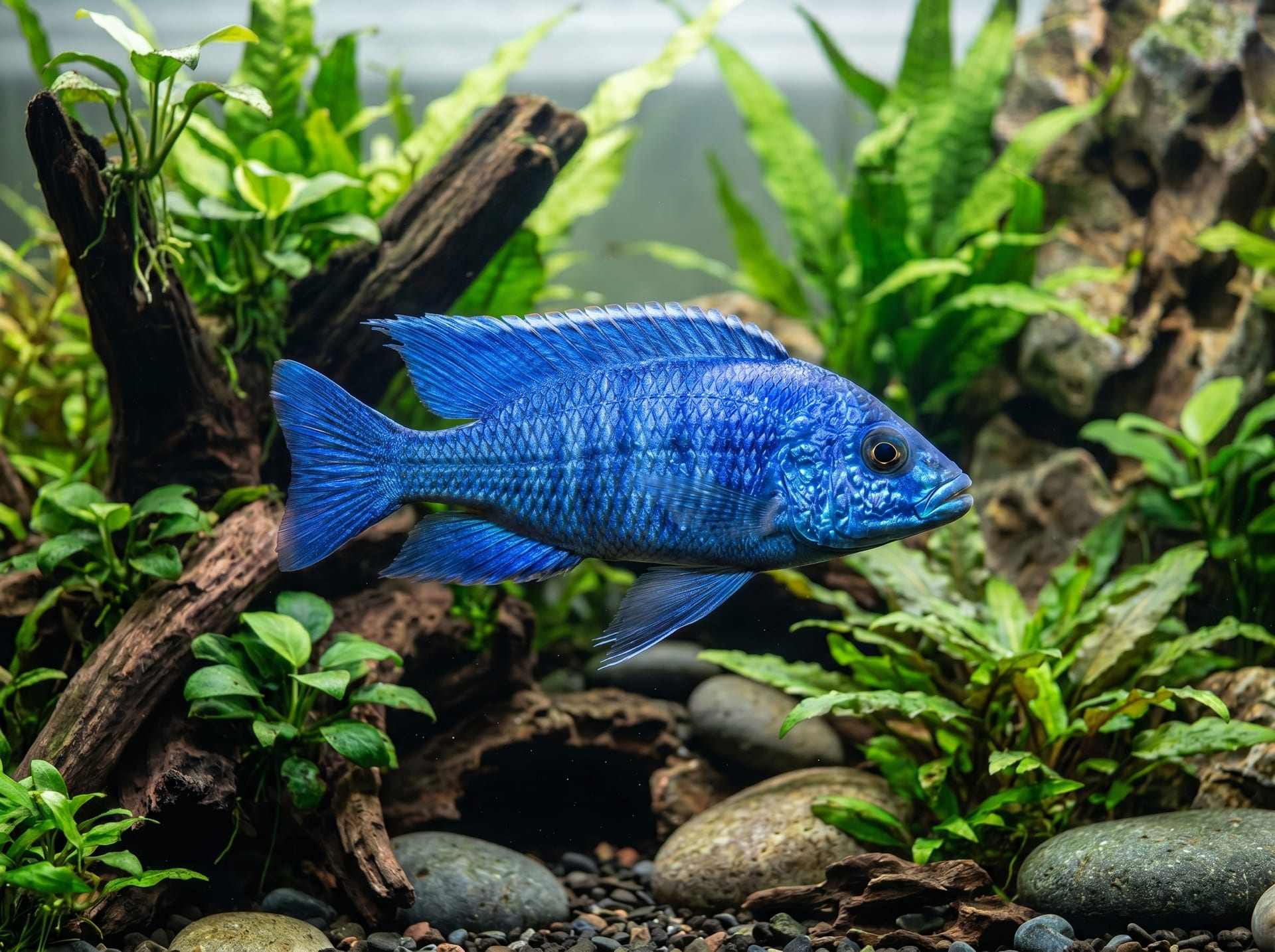
Cichlids (some species): Angelfish can be kept in planted aquariums, but many African cichlids have a strong habit of digging up substrate and are unsuitable for planted layouts. Discus prefer weakly acidic, soft water and pair well with aquatic plants, but they require high temperatures (28-30°C), limiting the aquatic plants that can adapt.
Plecos (large species): Large plecos such as sailfin plecos and royal plecos may damage aquatic plants through herbivory. Smaller species like tiger plecos and imperial zebra plecos are less harmful to plants and can be kept in planted aquariums.
Goldfish: Goldfish tend to eat aquatic plants, and soft plants are almost certainly damaged. It's best to avoid combining goldfish with planted aquariums.
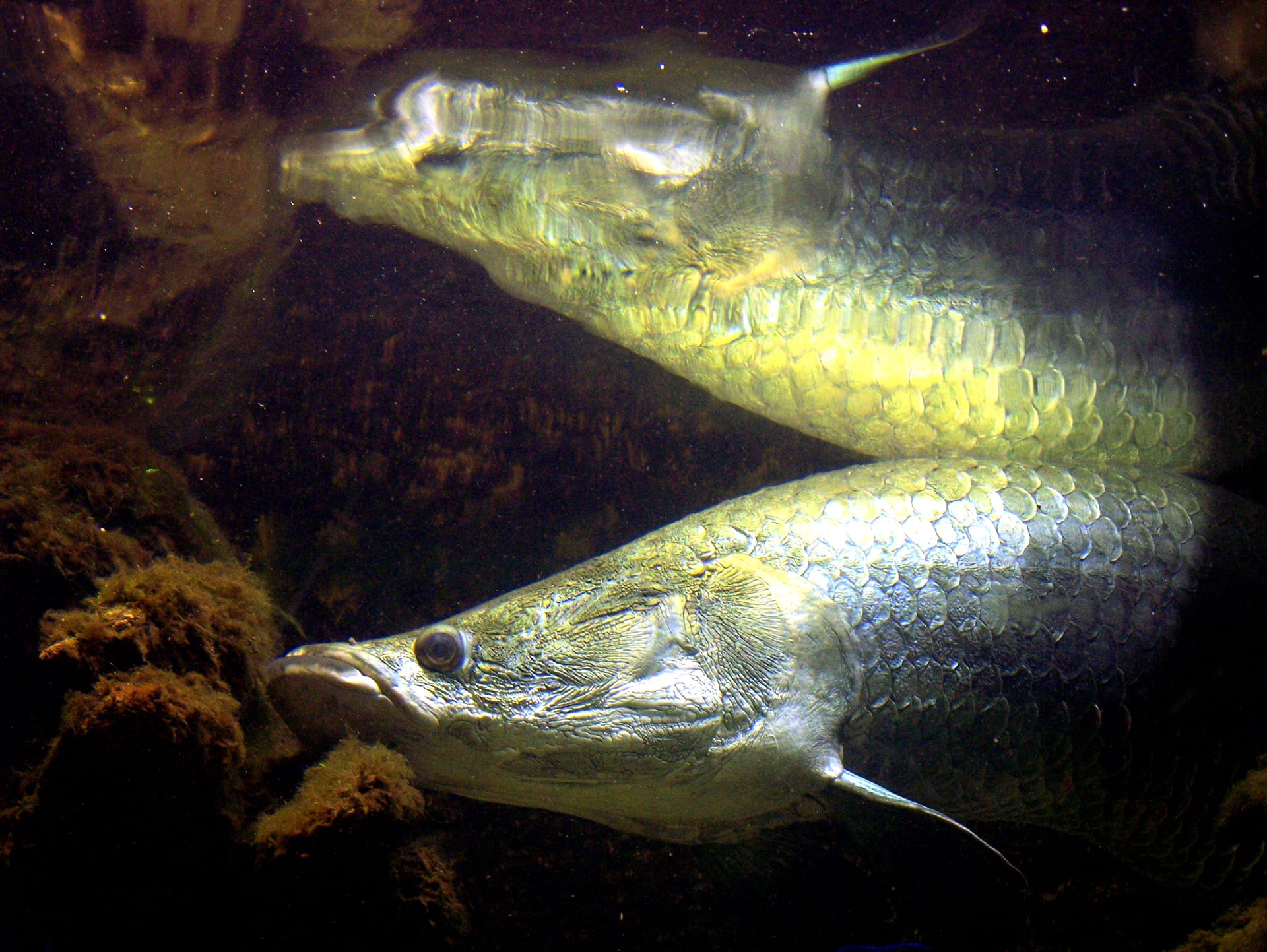
Large catfish species: Large fish like red-tailed catfish and arapaima destroy plants simply by their size.
Maintaining both aquatic plants and tropical fish requires careful attention to the balance of CO2 supplementation and fertilizers.
A good guideline for CO2 levels is when a drop checker shows yellow-green coloration (approximately 30 ppm). If CO2 concentration is too high, fish may experience oxygen deficiency, so it's safer to stop CO2 supplementation at night and switch to aeration. Using a timer to automate the coordination of lighting and CO2 makes management easier.
Liquid fertilizers should be adjusted considering the nitrogen and phosphorus supplied by fish waste. In tanks with many fish, nitrogen may accumulate excessively, so it's common to add potassium-based fertilizers. Conversely, in plant-focused tanks with fewer fish, supplementation of nitrogen and phosphorus may be necessary.
Master the basic composition principles for creating beautiful planted aquariums.
Triangular composition: A composition with a height peak on either the left or right side, accessible even for beginners. Stem plants or ferns are placed on the taller side, gradually lowering toward the opposite side.
Convex composition: A composition with a higher section in the center of the tank and lower sections on both sides. This composition is ideal for layouts with driftwood as the center focal point, surrounded by aquatic plants.
Concave composition: A composition with height on both sides and a lower center. This composition creates a sense of openness with views extending to the back and is ideal for showcasing schooling fish.
In any composition, it's important to maintain sufficient open space for fish to swim. Overly dense planting can cause stress to fish and create poor water flow.
In tanks where aquatic plants and fish coexist, timing of trimming is crucial. When stem plants reach the water surface, perform cut-back trimming to allow light to reach lower-level plants. When trimming, collect trimmings with a net to prevent them from scattering in the water. Trimmings clogging the filter can cause water quality deterioration.
Perform water changes once weekly, changing approximately 30% of the water. Planted aquariums accumulate nitrates slowly, but regular water changes are essential for replenishing trace elements and removing phosphates.
Selecting healthy, peaceful fish for your planted aquarium is important. At Breeders Direct, you can consult with breeders and choose tropical fish species and individuals suited for planted aquariums from those they have carefully raised. Receiving advice directly from breeders about compatibility with aquatic plants and rearing environments will help you create your ideal planted aquarium.
Find Tropical Fish listings related to this article on BreederDirect. Buy directly from verified breeders.
Aquarium Volume Calculator
Calculate water volume, weight, and heater wattage from tank dimensions
Water Quality Checker
Find compatible fish, shrimp, plants & corals based on pH, temperature & hardness
Feeding Guide
Check feeding frequency, portion sizes & supplements by species and growth stage
Compatibility Checker
Check compatibility between two species on a 5-level scale